


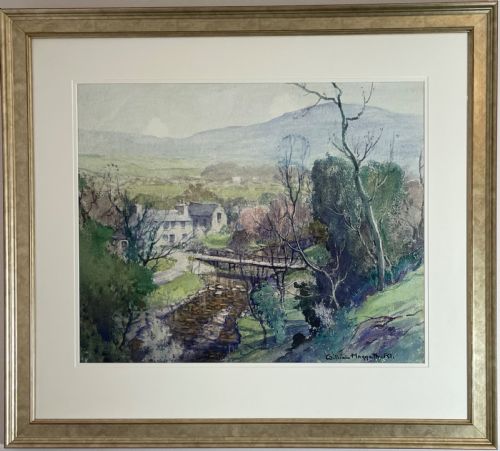
British Rural Watercolour
British rural watercolour paintings capture the quiet charm of the countryside through delicate pigments on paper.
British Rural Watercolour
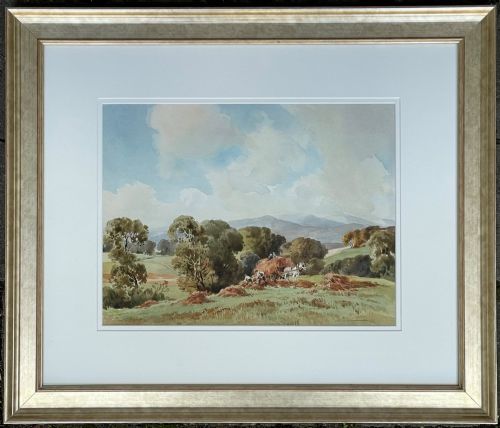
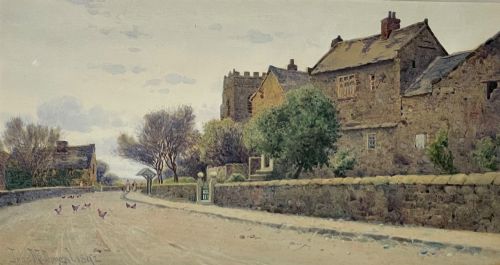
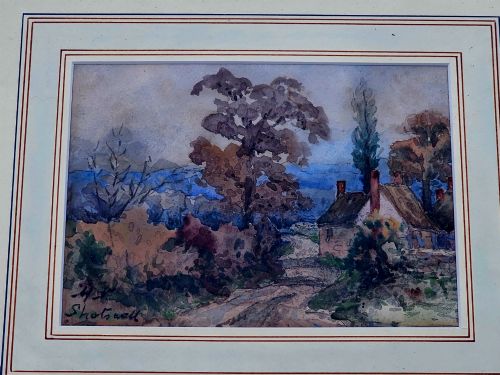
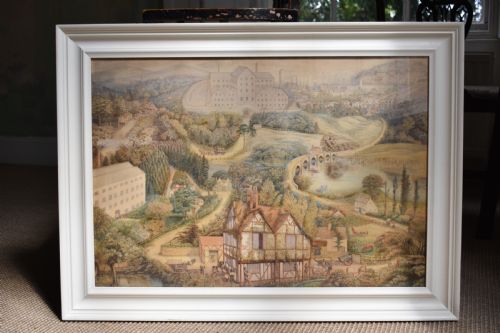
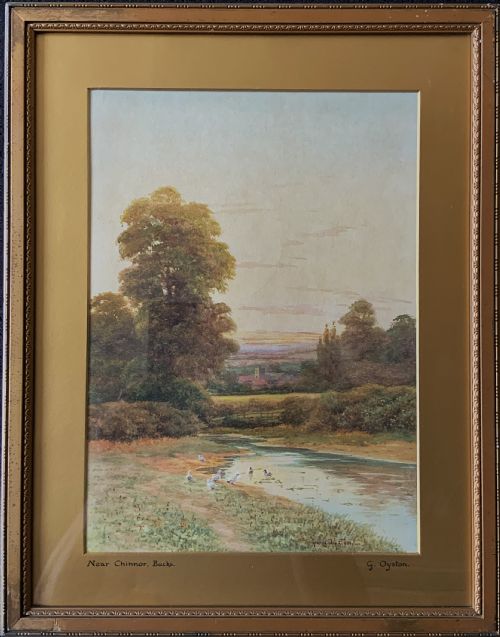
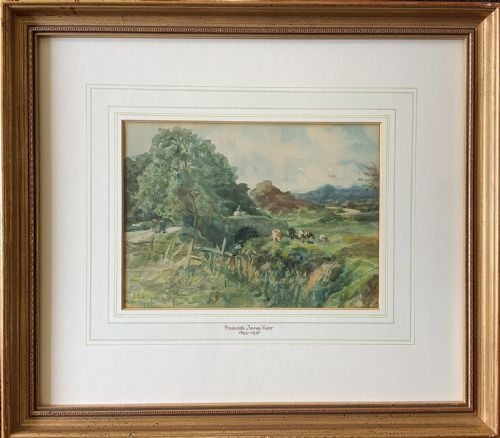
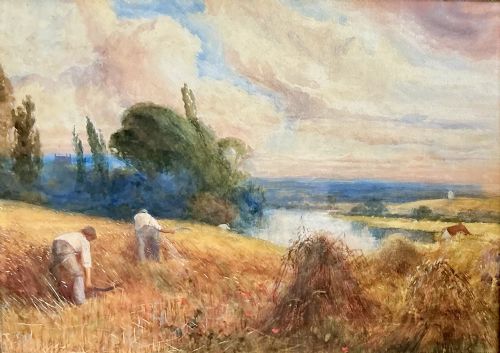
A british rural watercolour brings fields, farmyards, and country cottages directly into focus. These works record local landmarks, agricultural labour, and pastoral scenes across generations.
Most examples found here date from the Victorian and Edwardian eras through to the early twentieth century. Painters of this period favoured natural light and traditional rural life over industrial subjects.
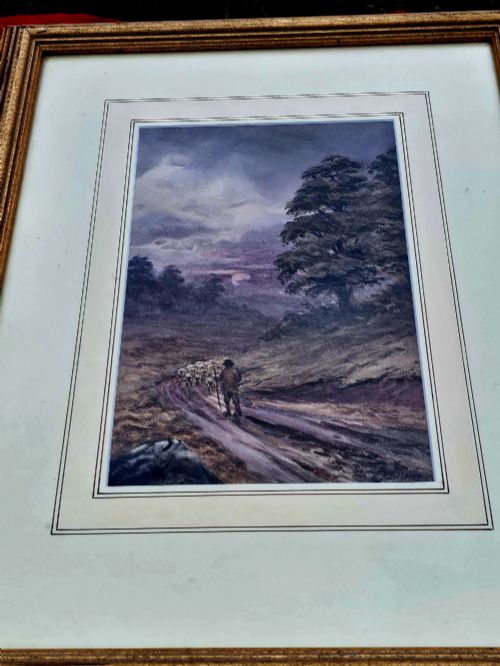
Compositions range from intimate river views and harvested fields to bustling farmyards with cattle or sheep. Each piece preserves a specific place and time in the British countryside.
Materials and Technique
Artists applied watercolour pigment onto heavy paper supports, often building translucent washes to capture shifting daylight. Many surviving works retain their original wood and glass framing to protect the delicate surface from moisture.
Gilt wood and gold leaf frames occasionally appear on higher status pieces, adding depth to the visual presentation. The primary medium remains water-soluble paint, manipulated to achieve fine detail in foliage, water, and animal textures.
British Rural Watercolour Retail Price Guide 2026
Typical asking prices for british rural watercolour among the pieces listed under this phrase on Sellingantiques today, from the lower quarter to the upper quarter. They describe what is for sale here now, not the wider market.
Watch for stray sheep persistently wandering into the background of otherwise peaceful rural tea breaks.
Assessing Quality and Execution
Superior works demonstrate confident brushwork and a strong grasp of atmospheric perspective, rendering skies and open fields with natural depth. Weaker examples often rely on rigid outlines and flat colour washes without tonal variation.
The skill with which an artist handles light and shadow dictates the visual impact of the scene. Individual mastery over pigment dilution separates standard topographical records from compelling artistic statements.
Percy Lancaster·John McDougal·George Oyston·Frederick James Kerr·Frederick Hines·Edgar Woollatt·Oswald Garside·Henry Charles Fox·Fred Lawson·Cuthbert Crossley·William Hoggatt·Ernest Pile Bucknall·James Orrock·John Atkinson·Linnie Watt·Robert Winchester Fraser·George Soper·William Joseph Boyes·John Edward Bale·Bernard Walter Evans·Adrian Jones·William Stephen Coleman·Harry Sylvester Stannard·Will Anderson·Robert Hollands Walker
The British Rural Watercolour Glossary
- Watercolour pigment
- The finely ground colouring material mixed with a binder for painting on paper. These pigments react sensitively to light and atmospheric changes over time.
- Edwardian Pastoral
- An artistic style celebrating rural tranquility during the early twentieth century. This aesthetic focuses on idyllic farm labour and untouched countryside landscapes.
- Gilt wood
- Timber frames finished with a thin layer of gold leaf or metallic paint. They provide traditional decorative borders for works on paper.
- Wash
- A thin, semi-transparent layer of diluted watercolour paint spread across the paper. Artists use this technique to create smooth skies and water surfaces.
British Rural Watercolour: Frequently Asked Questions
What subjects appear in these watercolours?
Artists painted working farms, harvested fields, and remote village cottages across Britain. Scenes frequently include livestock, hay carts, and local agricultural labourers.
Views also capture rivers, country lanes, and coastal landscapes from the nineteenth and early twentieth centuries.
How should I frame and display them?
Watercolours require protection behind glass and acid-free mounts to prevent fading from direct sunlight. Keeping pieces away from damp environments preserves the paper support.
Traditional wood frames complement the age and aesthetic of these historical British artworks.
How do I identify the date of a piece?
Signatures, dates inscribed by the artist, and framing styles provide primary clues for dating. Costume details on figures and agricultural methods also point to specific decades.
Late Victorian and Edwardian examples often display characteristic pastel tones and pastoral subject matter.
Are these works original paintings?
The listings feature original hand-painted watercolours rather than mass-produced prints. Each piece represents a unique application of pigment onto paper by the named artist.
Brushstrokes and variations in wash density confirm the direct hand of the creator.