



British Post War Painting
British post war painting captures the spirit of mid-century creativity through diverse canvases and boards.
British Post War Painting
British post war painting embraces works produced during the tumultuous and transformative decades of the nineteen-forties, fifties, and sixties. These artworks reflect a period of intense artistic re-evaluation, spanning from wartime creations to the vibrant emergence of mid-century modernism.
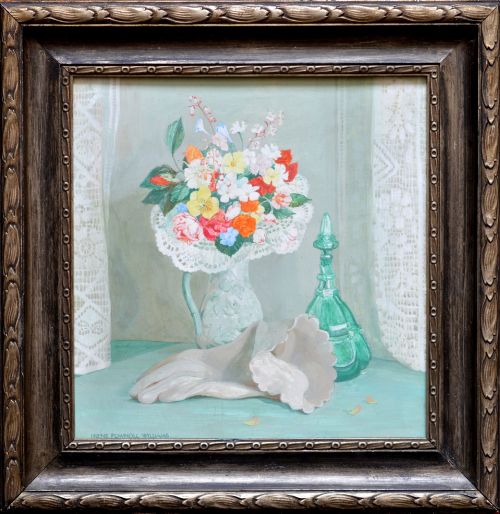
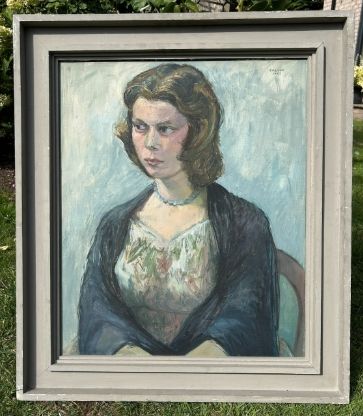
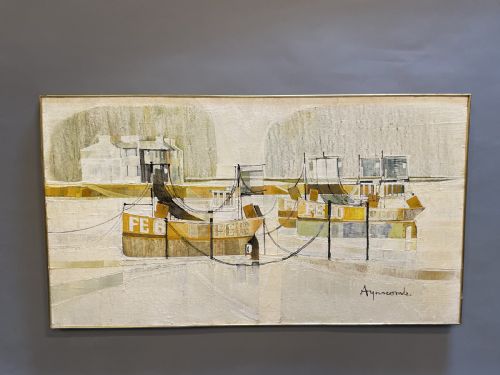
Buyers encountering this category will find a rich variety of subjects, including maritime landscapes, industrial scenes, intimate portraits, and still lifes. Works range from expressive watercolours on paper to substantial oil paintings on canvas and board.
Materials and methods
Artists of this era predominantly utilised oil paint applied to traditional supports such as canvas, wooden panel, and board. These durable materials allowed for textured brushwork and rich layering, characteristic of the period's output.
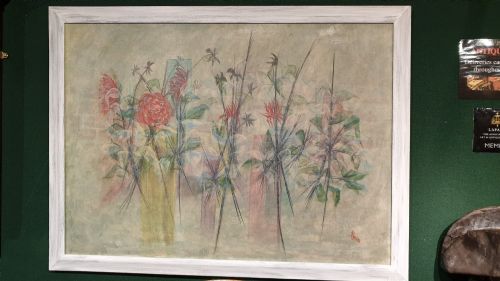
Works on paper, including gouache and watercolour, also feature prominently, showcasing the fluid techniques employed by painters capturing fleeting landscapes and delicate still lifes.
Listings feature works dated across the 1940s, 1950s, and 1960s, executed in oil, watercolour, and gouache.
Assessing quality and execution
The distinction between works rests largely on the confidence of the brushwork and the clarity of the composition, whether handling a complex industrial constructivist scene or a quiet portrait. Stronger examples demonstrate a confident command of medium and form that defines mid-century achievement.
Provenance and association with notable artistic circles, such as the St Ives School or Royal Academy exhibitions, elevate individual pieces. Works with documented exhibition histories or direct links to significant regional movements command greater scholarly and collector interest.
Irene Christobelle Pownoll Williams·Kenneth Cozens·Mark Ingram·Denis Mitchell·James Tower·William McCance·John Osborn·John Gilroy
The British Post War Painting Glossary
- Mid-Century Modern
- A stylistic approach spanning roughly the middle decades of the twentieth century, emphasising clean lines and simplified forms. This aesthetic heavily influenced both abstract and realist painting across Britain.
- Constructivism
- An artistic movement focusing on abstract structures and industrial forms. In this period, it manifested in geometric compositions depicting factories and modern machinery.
- St Ives School
- A group of artists based in Cornwall associated with the development of British modernism. Painters linked to this coastal hub often explored abstracted landscapes and maritime themes.
- Gouache
- An opaque water-based medium used on paper. It provides rich, flat areas of colour favoured by mid-century artists for illustrative and preparatory works.
- Tempera
- A permanent, fast-drying painting medium consisting of coloured pigments mixed with a water-soluble binder. It produces a matte surface prized for still life and detailed panel works.
British Post War Painting: Frequently Asked Questions
What defines a British post war painting?
These works encompass paintings created in Britain during the nineteen-forties, fifties, and sixties. They reflect the shifting cultural landscape following the Second World War.
The category includes diverse styles ranging from traditional portraiture and country landscapes to bold constructivist and modernist experiments.
How do I care for these paintings?
Protect oil paintings and watercolours from direct sunlight to prevent fading of pigments and degradation of canvas or paper supports. Stable room temperatures ensure the wood and canvas do not warp over time.
Keep framed works away from damp environments to protect both the paint surface and the original backing materials.
Are watercolours as durable as oils?
Works on paper require careful framing behind glass to protect them from airborne pollutants and moisture. When properly sealed, watercolours and gouaches remain stable for generations.
Oil paintings on board or canvas offer a more robust surface but still benefit from professional framing practices.
How do I identify a mid-century style?
Look for a distinct focus on simplified forms, muted or earthy palettes, and subjects rooted in British industry, coastlines, and rural life. Abstracted elements often hint at the progressive ideals of the era.
Signatures, framing styles, and materials specific to the nineteen-fifties help confirm the period of execution.