


British Pastoral Watercolour
These works capture the quiet beauty of the countryside through delicate brushwork and traditional pigments.
British Pastoral Watercolour
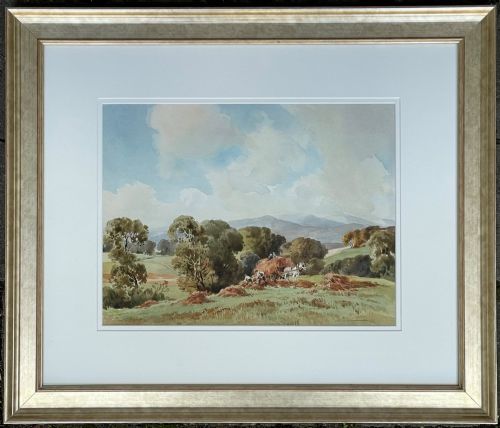
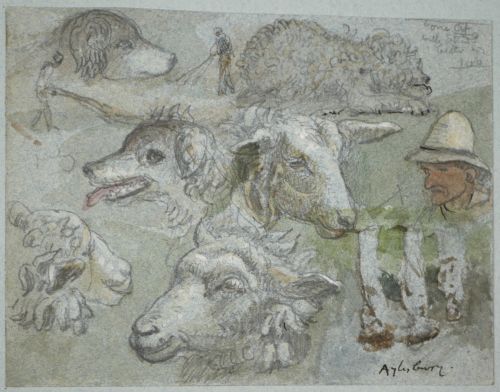
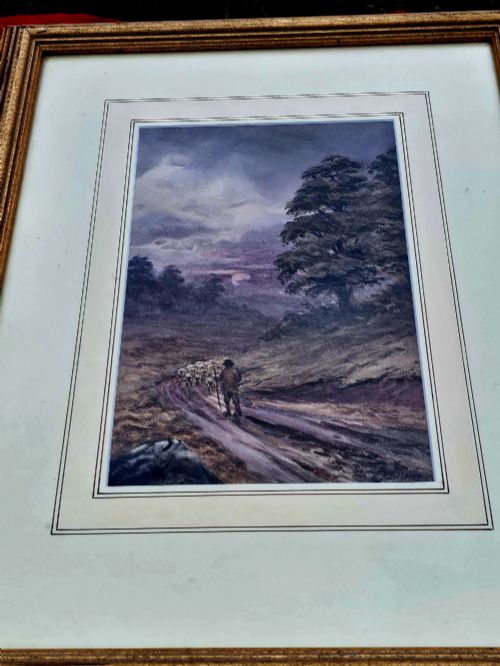
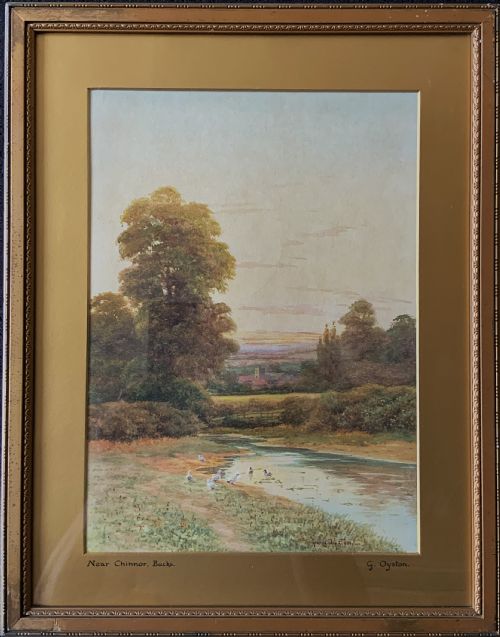
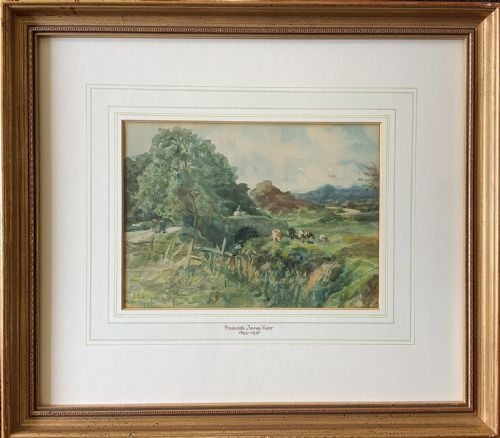
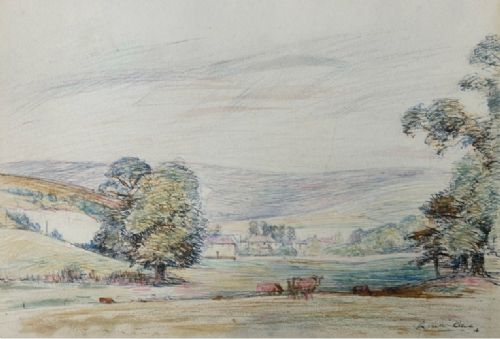
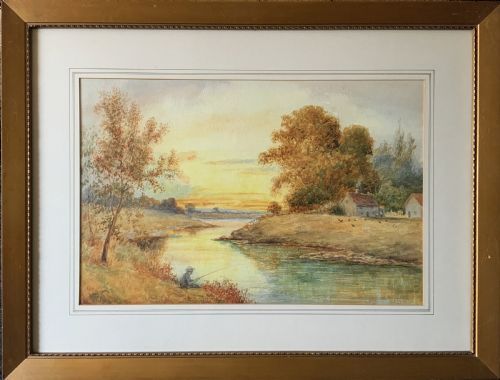
A british pastoral watercolour depicts rural life, farming scenes, and countryside views across the nineteenth and early twentieth centuries. These works frequently feature cattle, sheep, rivers, and thatched cottages set against English and Welsh landscapes.
The pieces available on this page span from the Victorian era into the 1930s, executed by named artists and regional practitioners. Most examples record traditional agricultural scenes, fieldwork, and riverbanks captured in delicate tones.
Buyers encounter framed paintings that reflect both traditional British fine art and English school traditions. These compositions preserve a vanished rural atmosphere through direct observation of nature and agricultural life.
Materials and technique
Artists painted primarily with watercolour pigment upon paper substrates, occasionally integrating gold leaf into the finished composition. Works were subsequently preserved behind glass within protective wooden frames, some retaining original gilt surrounds.
The technique relies on transparent washes of pigment to build atmospheric light, capturing skies, water, and foliage with subtle tonal gradations. Draftsmanship forms the structural base, visible in the careful delineation of figures, animals, and rural architecture.
The inventory records traditional British pastoral styles, including Victorian fine art and English school landscape painting.
Assessing quality
Quality rests upon the sureness of the draftsmanship and the artist's ability to render light and atmosphere convincingly across the paper. Stronger pieces display confident brushwork in complex subjects such as livestock and working figures, whereas weaker examples rely on formulaic foliage and static compositions.
The condition of the pigment and paper surface governs visual success, as prolonged exposure to light diminishes subtle tones. Original framing and provenance also elevate certain works, linking specific topographical studies to documented exhibition histories.
Percy Lancaster·James Smetham·EJ Letheren·George Oyston·Frederick James Kerr·Russell Sidney Reeves·Frederick Hines·Oswald Garside·Cornelius Pearson·Henry Charles Fox·Henry John Kinnaird·Frederick Septimus Lewis·Ernest Pile Bucknall·Thomas Hunn·James Orrock·Robert Thorne Waite·John Atkinson·George Soper·Bernard Walter Evans·Edmund George Warren·William Stephen Coleman·Harry Sylvester Stannard·Will Anderson·Robert Hollands Walker·Thomas James Lloyd
The British Pastoral Watercolour Glossary
- Watercolour pigment
- Finely ground colour suspended in a water-soluble binder, applied in washes to paper. This medium allows for luminous effects and delicate blending.
- Gilt wood
- Timber framing coated with a thin layer of gold leaf or metallic gilt. Such frames often complement the age and palette of nineteenth-century watercolours.
- English school
- A loose grouping of artists working within British traditions of landscape and figurative painting. This category encompasses regional painters and academic exhibitors alike.
- Victorian fine art
- Works produced during the reign of Queen Victoria that adhere to academic standards of composition and finish. These pieces frequently emphasise narrative detail and tonal harmony.
British Pastoral Watercolour: Frequently Asked Questions
What subjects appear in these watercolours?
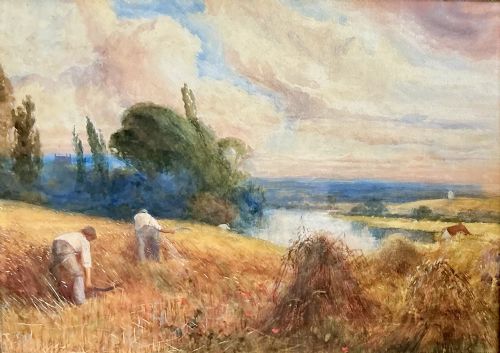
These works focus primarily on traditional rural life, featuring cattle herding, ploughing horses, hay cutting, and figures beside rivers or thatched cottages.
Artists recorded specific countryside locations across Britain, documenting agricultural labour and pastoral landscapes before mechanisation altered the terrain.
How should I frame and display them?
Watercolours require careful placement away from direct sunlight to prevent the pigments from fading over time. Using acid-free mounts preserves the paper integrity within the frame.
Displaying them in traditional wooden or gilt frames maintains the historical context of the Victorian and Edwardian periods.
How do I identify the period of a painting?
Dating relies upon costume details in the figures, agricultural methods depicted, and stylistic traits associated with nineteenth and early twentieth-century schools.
Signatures, framing materials, and inscribed locations on the mount or reverse also provide clear chronological markers for attribution.
Who painted these rural scenes?
The creators include both nationally exhibited members of art societies and regional painters who recorded the British countryside. Many practitioners specialised in topographical views and agricultural life.
Their training within the English school ensured a shared dedication to direct observation of light, weather, and landscape.