



British Military Sword Scabbard
These british military sword scabbard pieces are protective cases for historical blades, offering collectors authentic connections to past military campaigns.
British Military Sword Scabbard
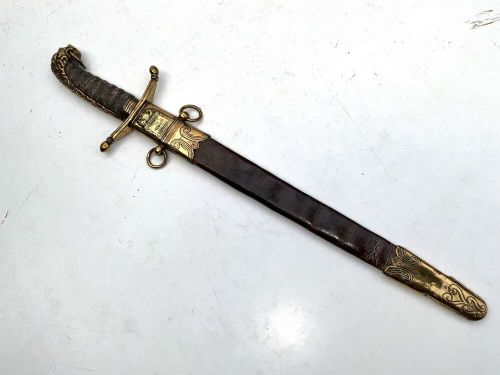
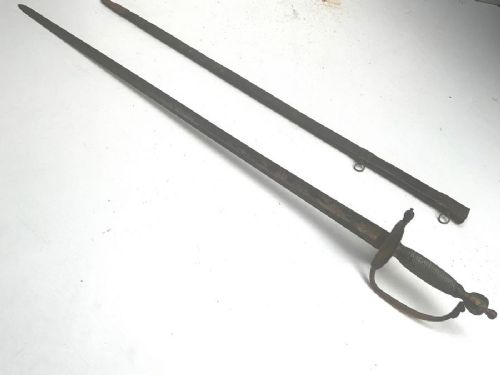
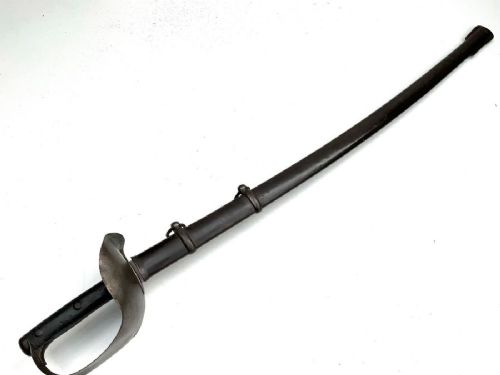
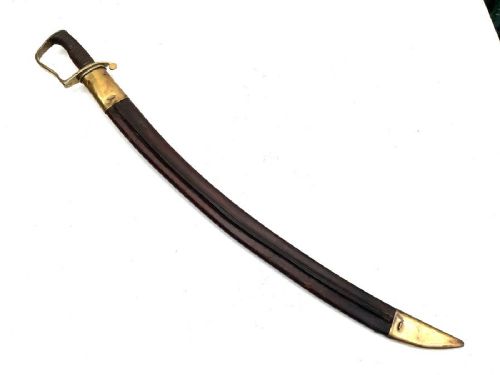
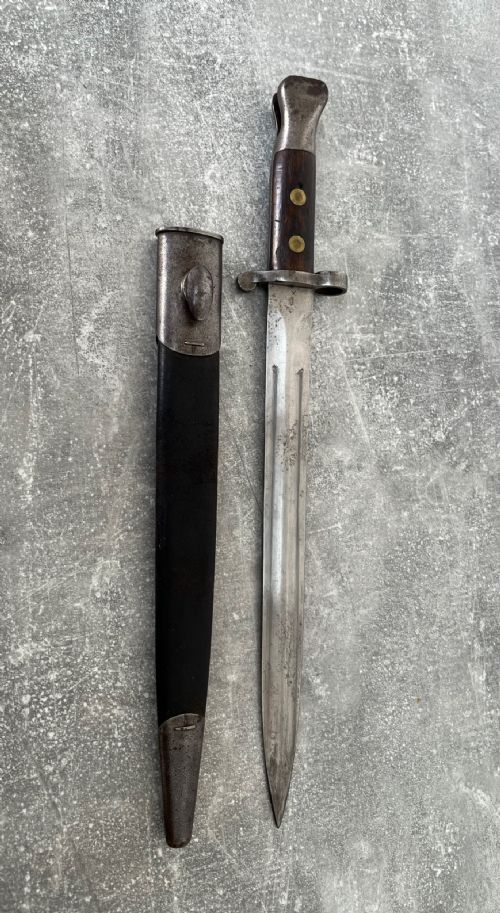
A british military sword scabbard protects the blade and allows a soldier to carry it safely at the waist or on a saddle. Collectors encounter various forms here, ranging from naval officer dirks and heavy cavalry sabres to infantry spadroons and bayonets.
The selections span the Georgian and Victorian eras, reflecting the changing design priorities of the armed forces through the nineteenth century. These housings accompany edged weapons dating from eighteen hundred up to eighteen ninety, showing distinct military patterns.
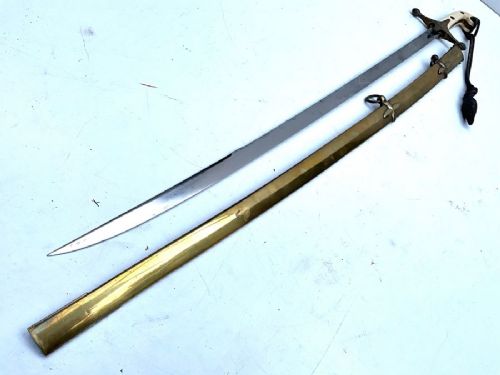
Most examples originate from British service contexts, including specific patterns like the seventeen ninety-six light cavalry sabre and the eighteen thirty-one mameluke. Buyers will find variations tied to naval, infantry, and cavalry regiments of the period.
Materials and construction
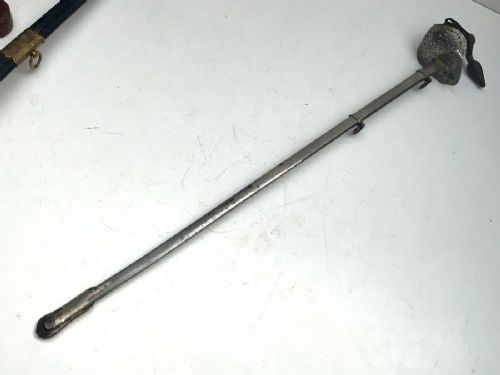
Makers utilised a combination of steel, iron, brass, and gilt brass to construct these robust protective housings. Leather also appears frequently, sometimes paired with metal mounts to secure the blade and absorb impacts during active service.
Additional elements such as wire and bone appear on specific handles and fittings associated with the blades these scabbards protect. Craftsmanship focused on durability and functional service in the field rather than purely decorative display.
Every scabbard spent decades bumping against military wool trousers and horse saddles.
Judging quality and preservation
Quality separates through the integrity of the materials, such as the preservation of leather suppleness and the crispness of metal mountings. Finer examples retain their original structural form without excessive distortion or replacement parts.
The relationship between the scabbard and its original blade influences overall desirability among collectors. Original patination and untouched surfaces indicate how well the item survived its operational lifetime.
E Thurkle of Soho·H Wilkinson
The British Military Sword Scabbard Glossary
- Scabbard
- A protective sheath or case for a sword, dagger, or bayonet. It prevents injury to the user and damage to the blade.
- Spadroon
- A lightweight cutting and thrusting sword popular with British officers during the late eighteenth and nineteenth centuries.
- Mameluke
- A curved sabre style adopted by British general officers, inspired by Middle Eastern weapons encountered during campaigns.
- Bayonet
- A solid blade designed to attach to the muzzle end of a rifle for close combat. Examples here include the eighteen eighty-eight and eighteen ninety-nine patterns.
- Gilt Brass
- Brass treated with a thin layer of gold or gold-coloured material to enhance appearance and resist corrosion.
British Military Sword Scabbard: Frequently Asked Questions
What is a british military sword scabbard?
It is a protective sheath designed to hold a military blade safely. These items accompanied officers and troopers on active service.
They form an essential part of historical edged weapons collections, often surviving alongside the original sword.
How do I care for leather scabbards?
Leather scabbards require stable humidity and gentle handling to prevent the material from drying out. Avoid excessive moisture and direct sunlight.
Proper storage ensures the historical structure remains stable for years to come.
How are different periods identified?
Periods are identified through specific patterns, regulation dates, and manufacturing styles. The inventory here covers Georgian and Victorian eras.
Markings and metal types also help narrow down the decade of production.
Were these used in active combat?
Many of these pieces saw service during nineteenth-century military campaigns and daily garrison duties. Their construction reflects the practical needs of soldiers.
Wear patterns often tell the story of their operational use.
What materials make up these scabbards?
Makers constructed them using durable metals like steel, iron, and brass alongside treated leather. Gilt brass and wire also appear on officer variations.
These materials provided the necessary strength for military life.