

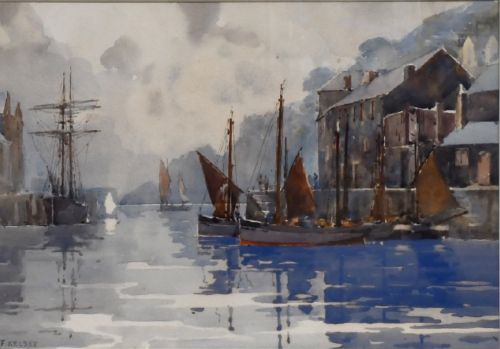


British Impressionist Watercolour Painting
British impressionist watercolour painting captures fleeting light and atmosphere across landscapes, coastal scenes and rural life through fluid pigment on paper.
British Impressionist Watercolour Painting
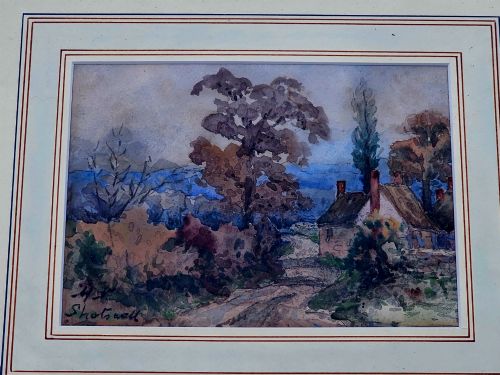
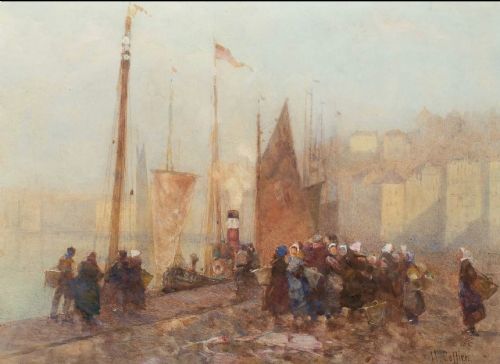
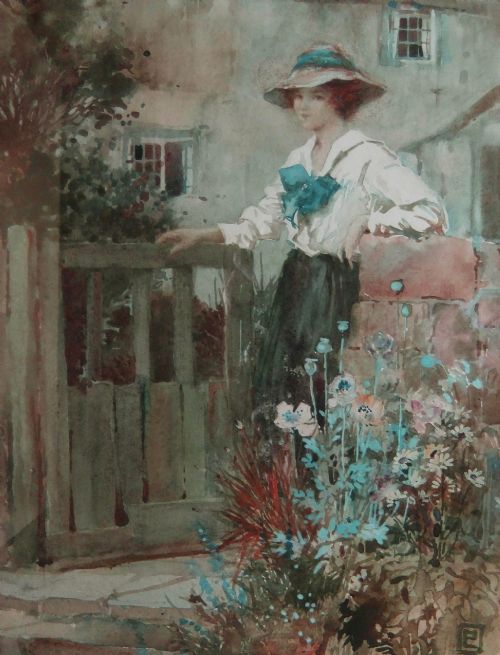
A british impressionist watercolour painting records subjects ranging from Cornish harbours and Yorkshire dales to bustling street scenes and quiet gardens. These works emerged across the nineteenth and twentieth centuries, spanning Victorian, Edwardian and mid-century periods.
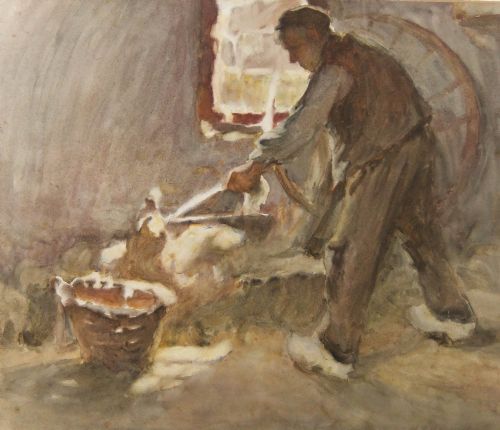
The format typically involves delicate pigment applied to paper, often protected behind glass and housed within wooden or gilt frames. Common subjects include domestic farmyards, coastal fishing communities and plein air landscapes.
Makers associated with these works include notable regional groups such as the Newlyn School and Staithes artists, alongside named painters who recorded British and continental views.
How they were made
Artists utilised watercolour pigment suspended in water, applying washes directly onto paper to build luminosity and tonal depth. This medium allowed for rapid execution suited to capturing changing light conditions outdoors.
Works are frequently mounted in timber frames, sometimes finished with gilt wood, and glazed with glass to protect the fragile paper surface from atmospheric moisture and handling.
Several watercolours record bustling market feasts and quiet gypsy caravans, proving that nineteenth-century artists found wonder in roadside camps as much as grand canals.
What varies in quality
Quality rests in the surety of the brushwork and the artist's command of light and atmosphere across the paper. Stronger examples display confident washes and accurate tonal balance rather than overworked detail.
The vibrancy of the surviving watercolour pigment and the integrity of the paper support influence the visual impact of each piece. Framing materials, from simple wood to ornate gilt settings, also reflect the original presentation standards.
William Banks Fortescue·Henry Silkstone Hopwood·Hector Caffieri·Percy Lancaster·Edgar Woollatt·William Lee Hankey·Fred Lawson·Arthur Reginald Smith·Edward Seago·George Graham·Arthur Tucker·Charles James Lauder·Ernest Pile Bucknall·Rowland Henry Hill·John Atkinson·Florence Hess·James Watson·Lester Sutcliffe·Owen Bowen·George Soper·Lilian Stannard·Frederick William Hattersley·Nora Cundell·Sir Herbert Hughes-Stanton·Ernest F. Hill
The British Impressionist Watercolour Painting Glossary
- Watercolour pigment
- Finely ground colour particles mixed with a water-soluble binder, applied in fluid washes to paper. This medium defines the core technique of the genre.
- Gilt wood
- Timber framing finished with a thin layer of gold leaf or metallic gilt paint. Such frames frequently enclose finished works on paper.
- Newlyn School
- An artist colony based in Cornwall during the late nineteenth and early twentieth centuries. Painters in this circle focused on naturalistic depictions of local fishing and rural communities.
- Staithes Group
- A collection of northern artists influenced by impressionism who painted coastal scenes and Yorkshire landscapes. Their work often utilised rapid watercolour techniques to record local weather and light.
British Impressionist Watercolour Painting: Frequently Asked Questions
What periods do these watercolours cover?
The listings span from the nineteenth century through the Edwardian era into the mid-twentieth century, including works dated from the 1900s to the 1950s.
This broad timeline demonstrates how British artists adapted impressionist techniques over several decades while maintaining traditional watercolour methods.
Where were these rural and coastal scenes painted?
Artists travelled widely across Britain and the continent, recording locations such as Staithes, St Ives, Polperro, London and Brittany.
Many works reflect regional artist communities that gathered in coastal fishing villages and farming valleys.
How should framed watercolours be displayed?
These works on paper require placement away from direct sunlight to prevent the watercolour pigment from fading over time.
Keeping them behind glass within their wooden or gilt frames protects the delicate paper surface from dust and humidity.
How do styles differ between decades?
Earlier pieces often align with Victorian and Edwardian traditions, while later works from the 1930s onwards embrace broader twentieth-century British modernism.
Despite these shifts, the reliance on fluid pigment and paper remains consistent across the periods.