


British Hunting Scene
A british hunting scene brings nineteenth-century sporting life onto the wall through oils and watercolours of hounds, horses, and riders.
British Hunting Scene
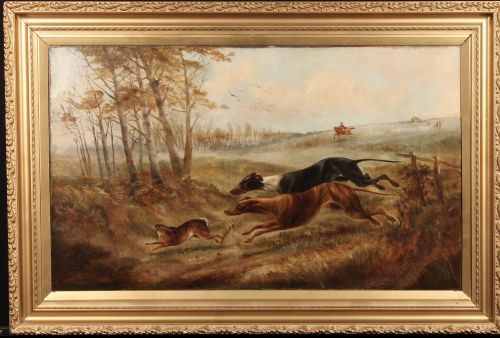
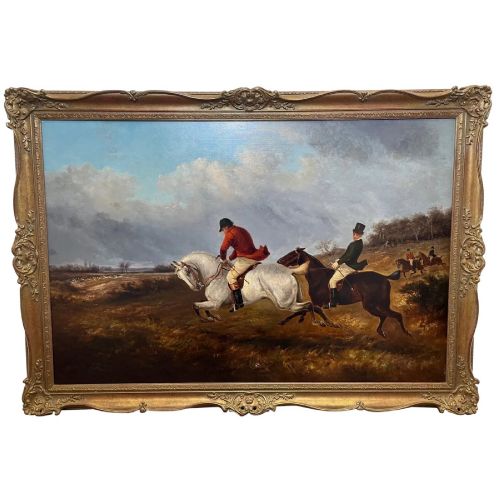
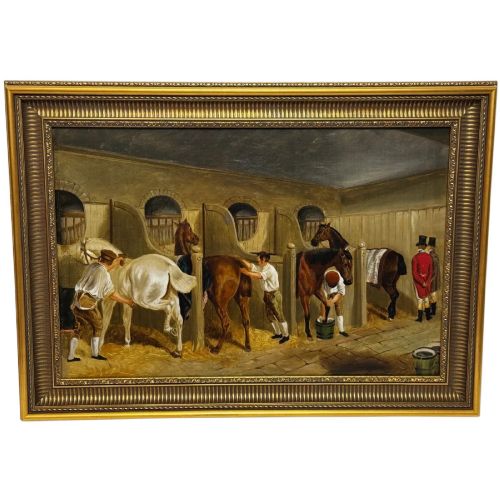
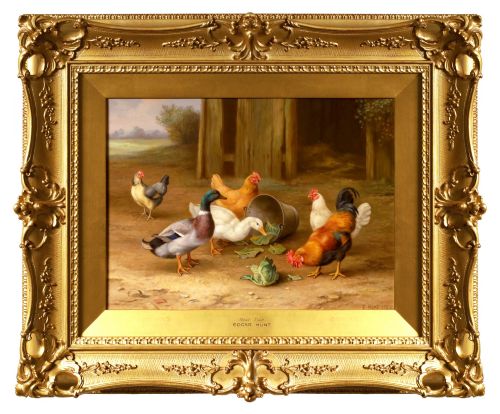
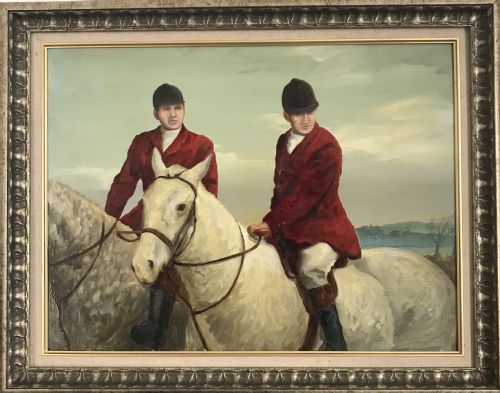
When you search for a british hunting scene, you encounter works from the Victorian, Edwardian, and later periods that record the visual language of rural sport, coaching, and animalier subjects. These works appear most frequently as oil paintings on canvas and framed watercolours on paper, often housed in their original gilt wood frames.
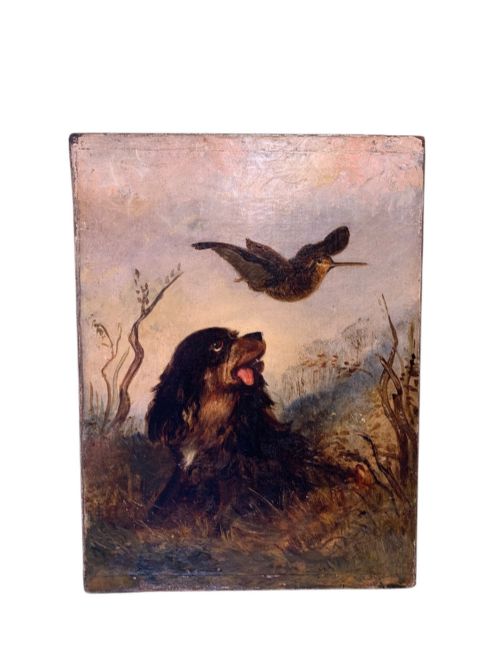
The pieces on this page span styles such as traditional British sporting art and Victorian sporting art, showing subjects ranging from the Berkeley Hunt and hare coursing to coaching scenes and domestic animal studies. Most examples date from the nineteenth century through the early decades of the twentieth century, reflecting a sustained cultural interest in equestrian and canine subjects.
Makers and painters represented include named artists such as George Armfield, Thomas Smythe, Edgar Hunt, John Arthur Lomax, George Wright, Philip Henry Rideout, John Sanderson Wells, Thomas Ivester Lloyd, George Goodwin Kilburne, Snaffles, Godfrey Douglas Giles, Frank Dadd, Charles Hunt Jnr, James Pollard, and Charles Ashmore.
Materials and technique
The physical objects rely principally on oil paint applied to canvas and watercolour applied to paper, capturing fine details of horses, hounds, and countryside landscapes. Pigments are handled to render the textures of animal coats, winter snow drifts, and heavy hunting pinks.
Many works are preserved within period gilt wood frames that complement the tonal warmth of the painted scenes. Paper works use mount boards and glass to protect fragile watercolours and engravings from environmental damage.
Listings feature works across Victorian, Edwardian, and mid-twentieth-century periods, utilising oil on canvas, watercolour, and paper engravings.
Quality variations
Quality rests in the anatomical accuracy of the horses and hounds, the natural rendering of light across a landscape, and the firmness of the brushwork in the figures. Stronger works capture motion and expression with confident handling, while lesser examples rely on stiffer, formulaic compositions.
The integrity of the surface and the retention of the original gilt wood frame contribute significantly to the standing of a piece. Works that show minimal restoration and retain their period framing maintain a clearer connection to their original creation.
George Armfield·Thomas Smythe·Edgar Hunt·John Arthur Lomax·George Wright·Philip Henry Rideout·John Sanderson Wells·Thomas Ivester Lloyd·George Goodwin Kilburne·Snaffles·Godfrey Douglas Giles·Frank Dadd·Charles Hunt Jnr·James Pollard·Charles Ashmore
The British Hunting Scene Glossary
- Sporting art
- A genre of painting and engraving dedicated to the depiction of sports, hunting, shooting, racing, and animals. This category forms the core of nineteenth-century British rural visual culture.
- Watercolour
- A painting method in which the paints are made of pigments suspended in a water-soluble vehicle. These works on paper require glass protection.
- Oil on canvas
- Pigments bound in a medium of drying oil applied to a stretched cloth surface. This combination provides rich colour depth and durability.
- Gilt wood frame
- A wooden picture surround coated with gold leaf or gold-coloured pigment. Period frames provide key contextual evidence for dating artwork.
British Hunting Scene: Frequently Asked Questions
What periods do these pieces come from?
The works originate largely from the Victorian and Edwardian eras, spanning the nineteenth century through the early twentieth century.
Dates recorded in the evidence extend from the 1870s up to the 1960s, capturing shifts in British sporting and genre painting.
How should I hang an oil painting?
Choose a wall away from direct sunlight and sudden temperature changes to protect the canvas and the gilt wood frame.
Ensure the wall fixings match the weight of the frame, particularly for large works depicting horses and hounds.
What is the difference between watercolours and oils?
Watercolours use pigment on paper under glass, offering lighter tones and delicate washes suited to intimate countryside scenes.
Oils utilise paint on canvas, providing heavier texture, richer colour saturation, and greater durability for large hunting compositions.