


British Gold Jewellery
British gold jewellery brings together centuries of goldsmithing traditions, offering everything from heavy Victorian gate link bracelets to sharp mid-century modernist designs.
British Gold Jewellery
British gold jewellery spans several distinct eras, with pieces ranging from late Victorian and Edwardian items to mid-century and later designs. Buyers searching for British gold jewellery will encounter a variety of forms, including rings, bangles, bracelets, earrings, and pendants.
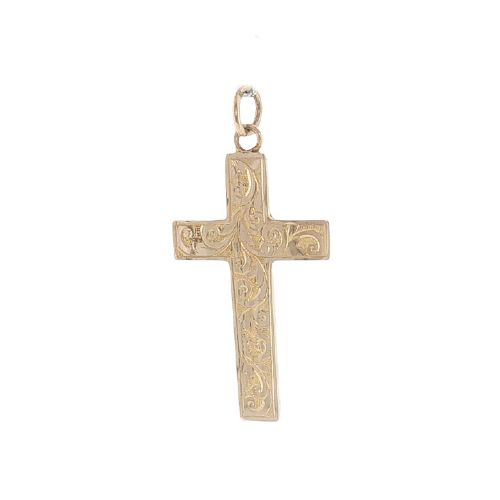
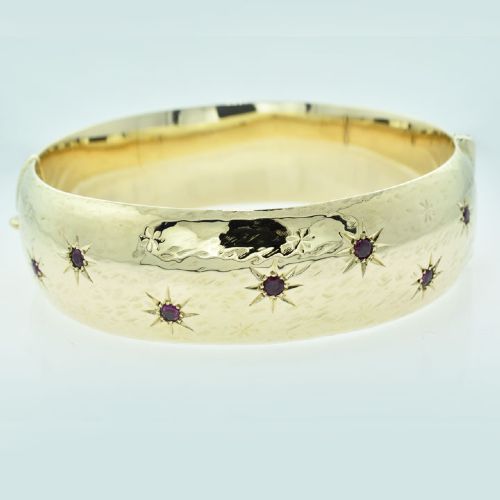
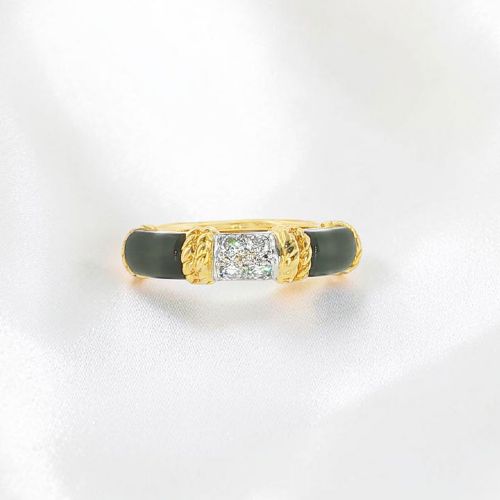
The selection on this page relies heavily on items from the Victorian, Edwardian, and mid-century periods. Common formats include engraved cross pendants, gate link bracelets, and gem-set rings featuring diamonds, rubies, and sapphires.
Origins are tied to British assay offices and makers working across the nineteenth and twentieth centuries. Pieces often display specific regional characteristics shaped by the period of their manufacture.
Materials and construction
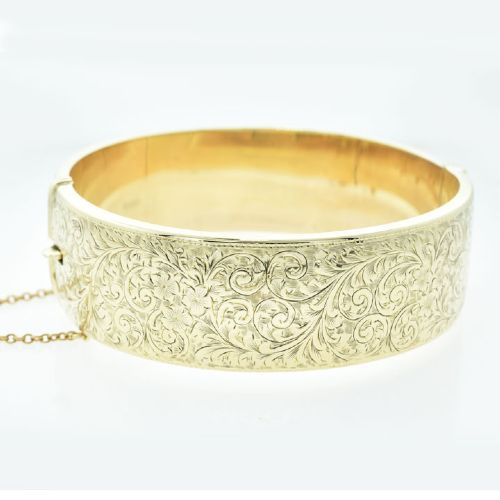
Gold forms the primary material, utilised in varying purities such as 9ct gold, 15ct gold, and 18ct gold, alongside distinct shades like yellow gold and rose gold. Construction techniques include traditional hand engraving, solid casting, and complex link assembly as seen in gate link bracelets.
Gemstones are integrated through secure settings, incorporating diamonds, rubies, sapphires, black onyx, and blue John. Many pieces retain official hallmarks that confirm the metal purity, assay office, and year of manufacture.
A tiny carved Beefeater charm stands ready to guard your charm bracelet from the year 1952.
Assessing the pieces
Quality in these items rests on the crispness of hand-engraving and the structural integrity of structural elements like hinges on bangles and links on bracelets. Substantial weight and solid construction separate finer examples from lighter mass-produced items.
The precision of the gem-setting and the clarity of the official hallmarks contribute significantly to the standing of a piece. Maker attribution, particularly pieces associated with known firms, adds an additional layer of distinction.
Smith and Pepper·Kutchinsky·Andrew Grima
The British Gold Jewellery Glossary
- Hallmark
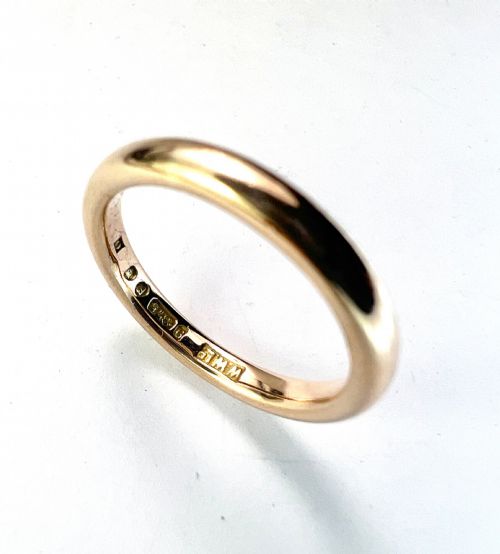
- An official stamp applied by an assay office to indicate the metal purity, origin, and year of manufacture. These marks provide a reliable method for dating British pieces.
- Gate link
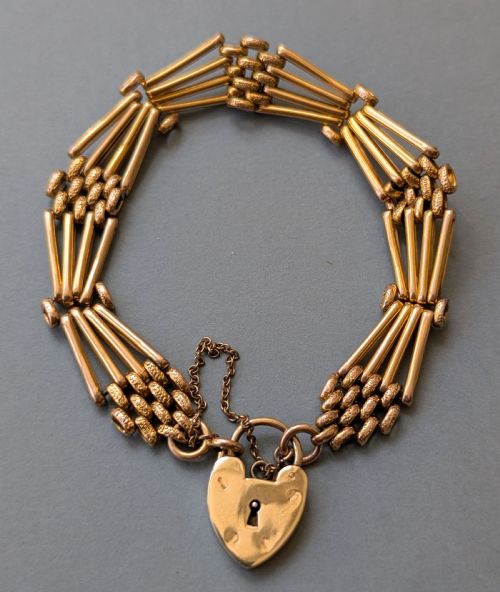
- A bracelet style formed of stacked parallel bars connected by vertical links, originating in the Victorian era. This construction results in a flexible and substantial band.
- Assay office
- An official body charged with testing the purity of precious metals and stamping them with a hallmark. British offices include Birmingham, Chester, and London.
- Rose gold
- An alloy of gold and copper valued for its warm reddish tint. It appears frequently in vintage bangles and Edwardian pendants.
British Gold Jewellery: Frequently Asked Questions
How do I read British gold hallmarks?
British hallmarks typically include a sponsor's mark, a standard mark for gold purity, an assay office symbol, and a date letter. Together these elements reveal who made the piece, where it was tested, and when it was finished.
Familiarising yourself with the specific symbols used by offices such as Birmingham, Chester, and London makes dating straightforward. The date letter sequence changes every few cycles, requiring comparison against standard assay charts.
What is a gate link bracelet?
A gate link bracelet is constructed from repeating rows of linked metal bars that resemble a traditional paddock gate. This design yields a flexible, heavy band that hugs the wrist comfortably.
Victorian and mid-century examples often feature solid construction with secure padlock clasps and safety chains. They remain among the most recognizable forms of British gold work.
How do I care for antique gold jewellery?
Antique gold items benefit from gentle cleaning using warm water, mild soap, and a soft cloth to remove everyday oils and dust. Avoid harsh chemical dips, particularly on pieces containing softer gemstones or organic materials.
Store pieces individually in soft pouches to prevent scratching between items. Regular checks by a professional jeweler will ensure settings and clasps remain secure.
Can I wear these rings every day?
Many solid gold rings are robust enough for daily wear, provided the band retains sufficient thickness and the stone settings are secure. Heavier stacking bands and plain gold wedding rings handle daily use particularly well.
Gemstone rings with delicate stones or antique settings require more mindful wear to prevent damage. Rotating your rings and removing them during manual tasks helps preserve their condition.