



British Floral Oil Painting
A british floral oil painting brings centuries of botanical study into a room through pigment and canvas.
British Floral Oil Painting
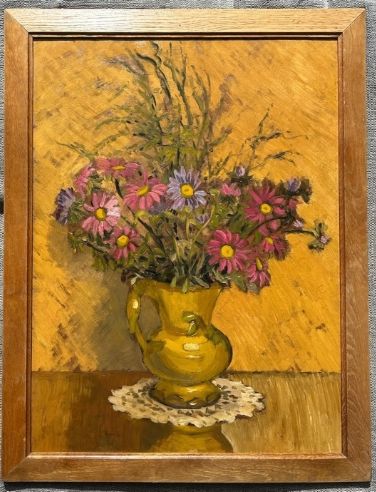
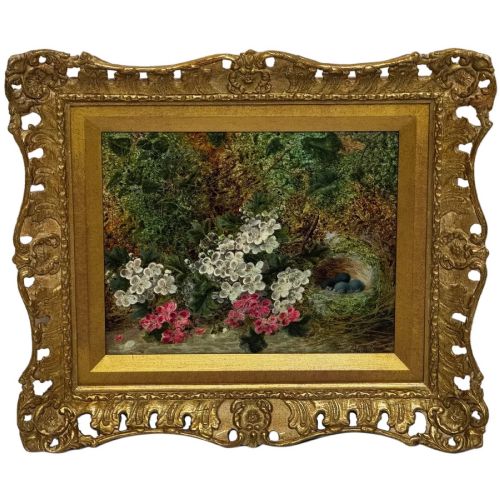
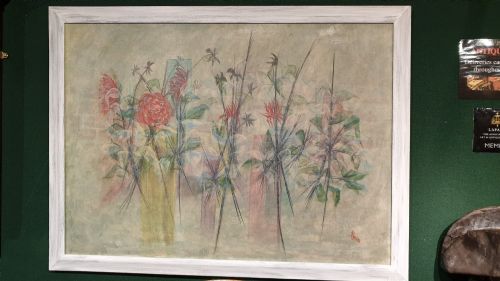
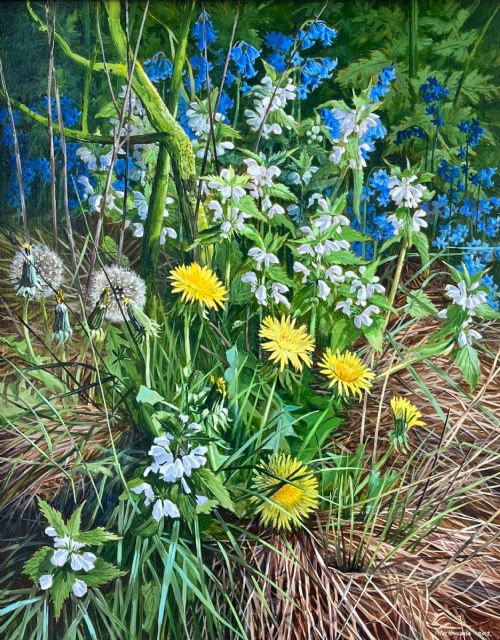
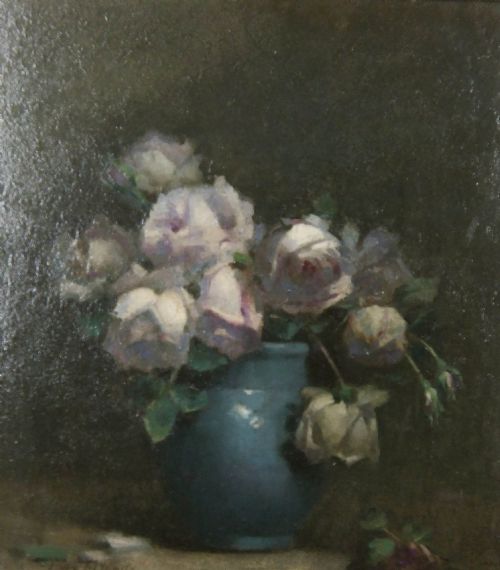
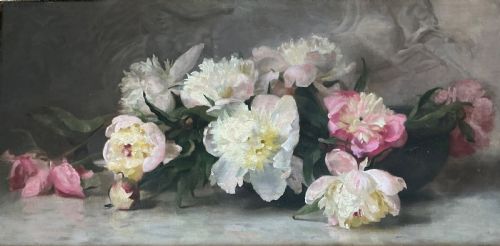
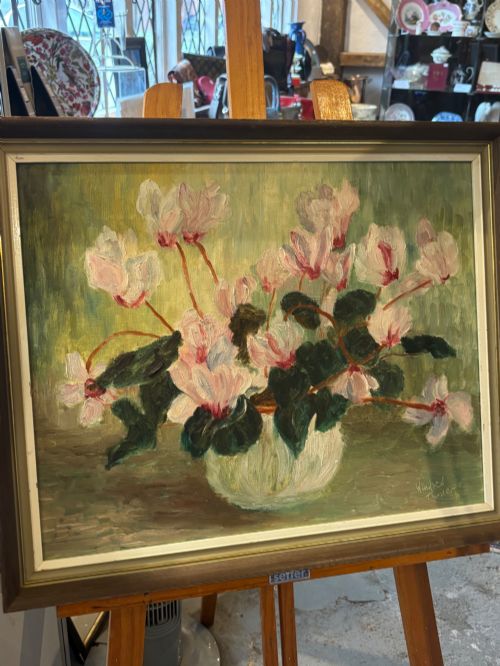
A british floral oil painting captures garden blooms and hedgerow gatherings through the lens of domestic arrangement and natural history. These works span from Victorian studies to mid-century modernist interpretations, recording the shifting tastes of British painters across decades.
The most common examples on this page date from the nineteenth century through the mid-twentieth century, encompassing Edwardian and Victorian still life traditions alongside later realist approaches. Artists render everything from single roses to dense summer bouquets on canvas and board.
Makers in this category include regional practitioners from groups such as the Staithes group alongside nationally recognised painters. Their subjects range from structured studio vase arrangements to informal garden corners.
Materials and Construction
Pigments applied in oil paint form the primary medium for these works, bound in oil and layered across prepared canvas or wood boards. This combination allows for rich colour saturation and subtle tonal shifts within petal and leaf formations.
Many works retain their period framing, utilising carved wood moulding finished with gesso and gold leaf to complement the painted surface. The ground preparation of the canvas or board provides the foundational structure that supports the paint layer over time.
The listings span from the nineteenth century through the nineteen-sixties, incorporating canvas, wood, oil paint, and gesso.
Assessing Quality in Composition and Surface
Quality rests in the handling of light across natural forms and the structural confidence of the brushwork. Stronger examples demonstrate precise tonal control in rendering the translucency of petals and the density of foliage.
The preservation of the original paint surface and the integrity of the ground layer dictate the visual impact of the piece. Works that retain their unlined canvas and period framing offer a complete historical record of the maker's intent.
Oliver Clare·Owen Bowen·Ernest Higgins Rigg·Kershaw Schofield·Freda Marston
The British Floral Oil Painting Glossary
- Oil Paint
- A slow-drying paint made by mixing pigments with oils such as linseed. This medium allows artists to blend tones smoothly and build thick impasto layers.
- Canvas
- A heavy woven fabric stretched across a wooden frame to serve as a durable support for painting. It provides a flexible yet resilient surface for oil application.
- Gesso
- A plaster-like mixture used to coat wooden panels and frames before gilding or painting. It creates a smooth and stable ground for decorative work.
- Impasto
- Paint applied thickly to a canvas, standing out from the surface so that the brush or palette knife marks remain visible. This technique adds tactile dimension to floral arrangements.
- Staithes Group
- A collection of northern British artists inspired by French impressionism who painted plein air scenes and coastal gardens. Their work often employs vigorous brushwork and vibrant palettes.
British Floral Oil Painting: Frequently Asked Questions
How do I date a floral painting?
Dating relies on stylistic markers, framing techniques, and the material composition of the canvas or board. Victorian works often feature tight botanical accuracy, while mid-century pieces show looser brushwork.
Examining the stretcher bars and any signatures on the reverse provides further context for the period of execution.
Where should I hang a floral painting?
These works suit dining rooms, libraries, and drawing rooms where natural light complements the botanical subject matter. Placing them away from direct sunlight protects the oil pigments from fading.
Pairing a framed piece with traditional interior decor enhances its historical character.
How do I care for an oil painting?
Maintenance involves keeping the canvas in a stable environment with moderate humidity and temperature levels. Dusting should be done gently with a soft, dry brush.
Professional conservation is recommended for any cleaning of the paint surface or repair of the gesso frame.
What defines British impressionism?
British impressionism incorporates loose brushwork and a focus on natural light, often applied to domestic gardens and landscapes. Painters adopted continental techniques while retaining distinct local subject matter.
This style appears frequently in works from the early twentieth century.