

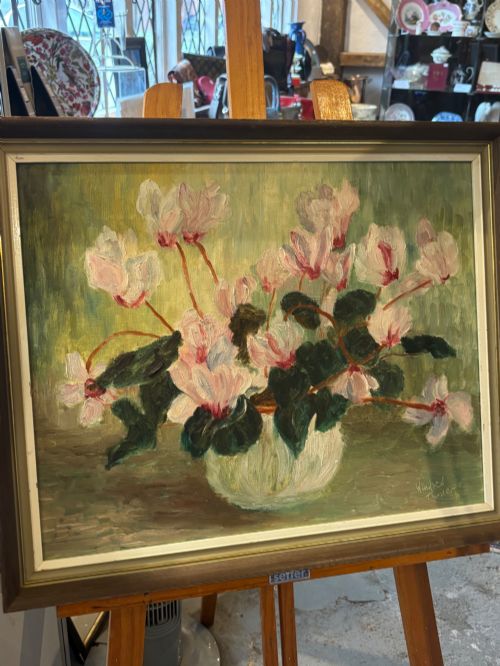


Pink Floral Artwork
Pink floral artwork spans centuries of botanical studies and still life paintings, capturing garden blooms in delicate watercolour and rich oil paint.
Pink Floral Artwork
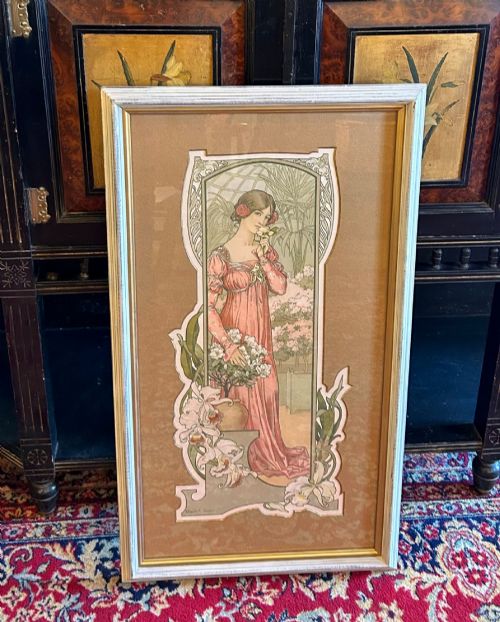
Pink floral artwork brings together centuries of painted garden scenes, individual botanical studies, and still life arrangements rendered across multiple periods. When searching for pink floral artwork, collectors encounter Victorian watercolours, Edwardian compositions, and mid-century modernist interpretations.
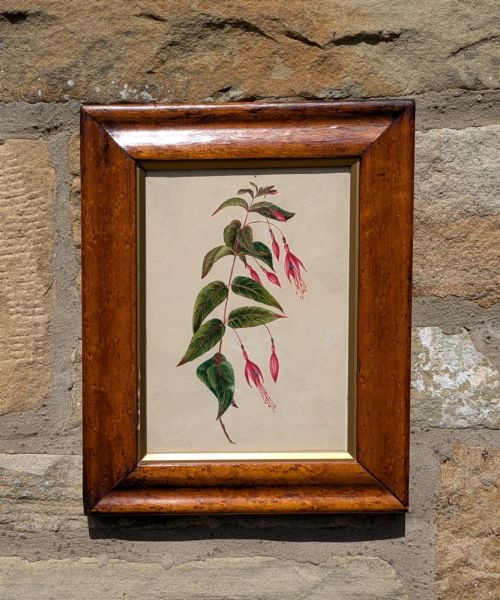
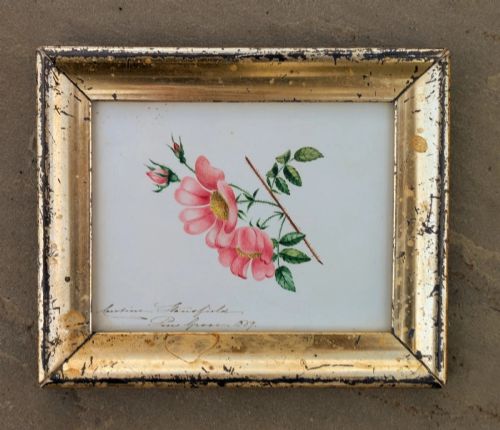
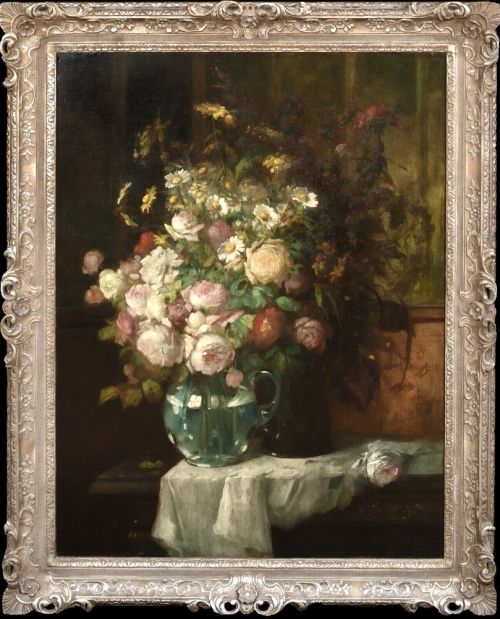
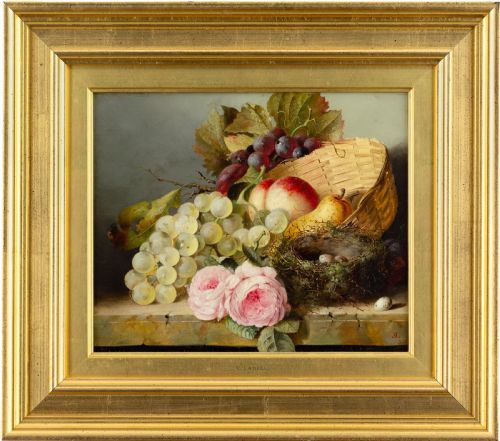
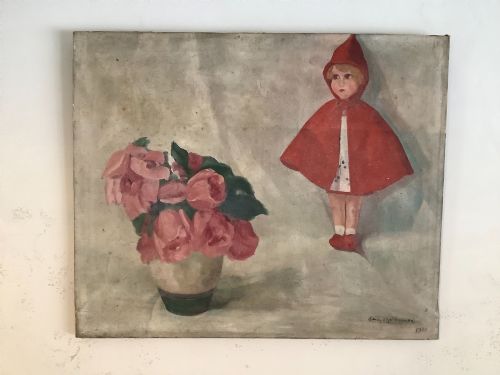
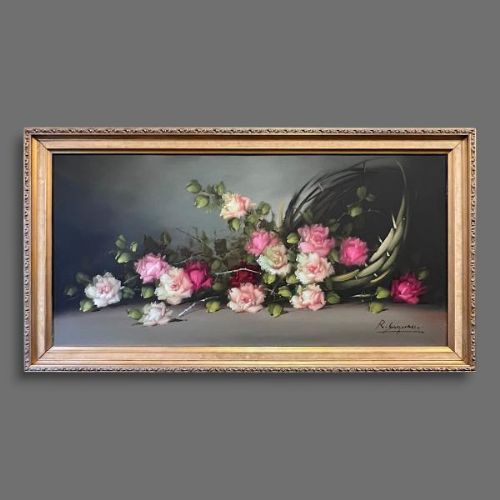
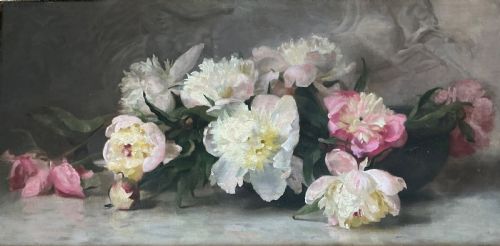
The selection ranges from detailed nineteenth-century watercolours of fuscias, wild roses, and pelargoniums to twentieth-century oil paintings and mixed media garden scenes. These pieces frequently capture roses, peonies, and anemones arranged in vases, baskets, or growing within walled gardens.
Originating from British, French, Flemish, and Austrian hands, these paintings reflect changing domestic tastes through the nineteenth and twentieth centuries. The typical piece on this page utilises paper, canvas, or board to preserve fleeting moments of floral colour.
Materials and methods
Artists rendering these floral subjects relied primarily on oil paint or watercolour applied to paper, canvas, board, or gouache supports. Watercolour works utilise translucent washes on paper to capture the delicate transparency of rose petals and azalea flowers.
Oil paintings employ heavier pigments on canvas or board, allowing for textured depictions of roses spilling from wicker baskets or grouped in ceramic jugs. Mixed media and tempera appear alongside lithographs and pastels in later twentieth-century examples.
Several artists recorded the exact contents of their garden borders, preserving forgotten nineteenth-century roses and sweet williams in paint.
Factors of quality
Quality in these botanical and still life paintings rests upon the surety of the brushwork and the observation of light upon petals. Masterly handling distinguishes a lifelike study of peonies or sweet williams from a rigid, mechanical copy.
The sophistication of the colour harmony and composition dictates the standing of a piece within the range. Works that capture natural vitality through confident pigment application command greater appreciation than routine decorative studies.
Elisabeth Sonrel·Edward Ladell·Winifred Turner·Lester Sutcliffe·Ernest Higgins Rigg·Lilian Stannard·William Hough·Owen Bowen·Freda Marston·Stuart Armfield·Lena M Alexander·Jabez Bligh·Henry Schouten·Charlotte Isa James·Marion Broom·Annie Mary Youngman·William Thomas Wood·Edith Alice Andrews
The Pink Floral Artwork Glossary
- Lithograph
- A print made from a flat stone or metal plate on which an image is drawn with a greasy substance. This technique allows for reproducible botanical illustrations.
- Gouache
- An opaque water-based paint that includes a white pigment binder. It creates a heavier, more solid colour surface than traditional watercolour.
- Tempera
- A permanent, fast-drying painting medium consisting of coloured pigment mixed with a water-soluble binder. It produces a matte surface seen in mid-century still life works.
- Still life
- A painting or drawing depicting mostly inanimate subject matter, typically commonplace objects which may be either natural or man-made. Floral arrangements form a central subset of this genre.
Pink Floral Artwork: Frequently Asked Questions
How do I date a floral painting?
Dating relies on the support material, framing style, and the painter's documented working period. Victorian examples often show detailed botanical precision, while mid-century pieces adopt looser brushwork.
Signatures and exhibition labels on the reverse provide further chronological clues. Comparing the pigment handling to dated works by the same artist confirms the era.
Where should I hang these paintings?
These botanical and garden scenes suit drawing rooms, studies, and hallways where natural light complements the painted flora. Small watercolours benefit from intimate spaces, while large oil canvases anchor a main wall.
Keep them away from direct sunlight to protect watercolours and oil pigments from fading. Stable indoor humidity preserves the paper and canvas supports.
What is the difference between watercolour and oil?
Watercolour paintings utilise water-soluble pigments on paper, creating a light, luminous finish that requires glass protection. Oil paintings use slow-drying mediums on canvas or board, offering rich textures and deep colour saturation.
Oils are more durable and typically hang without glass framing. Watercolours demand careful conservation regarding light exposure and moisture.
Are these paintings original works?
The selection includes original hand-painted watercolours, oils, gouaches, and pastels created directly by the artists. Each piece represents a unique historical study of garden flowers or arranged bouquets.
Lithographs on the page are noted as printed editions from the period. Reading individual listings clarifies the specific medium and execution method.