


British Edwardian Artwork
British edwardian artwork brings together domestic landscapes, maritime watercolours and characterful portraits from the turn of the twentieth century.
British Edwardian Artwork
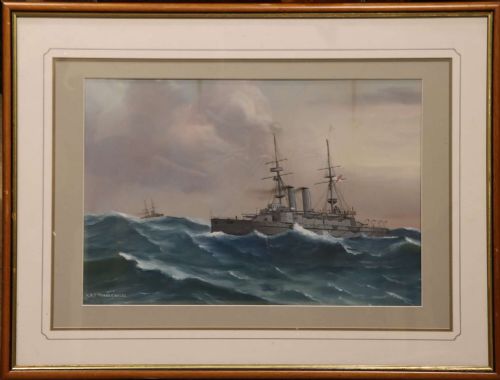
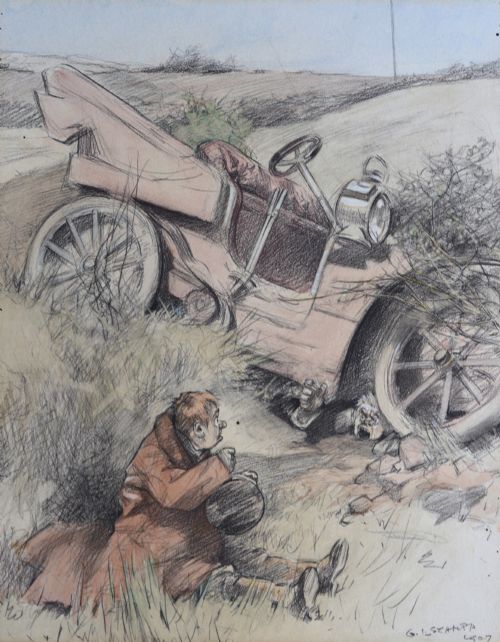
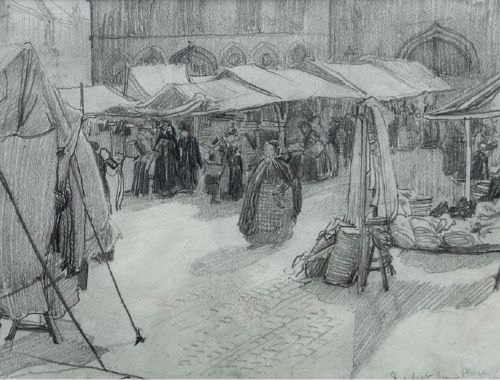
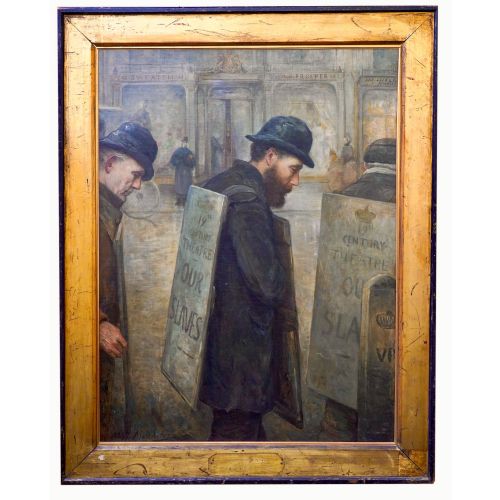
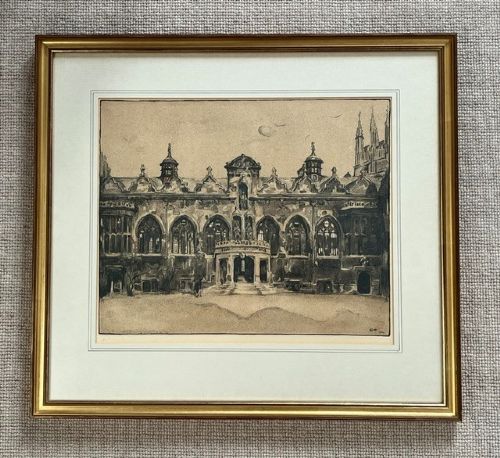
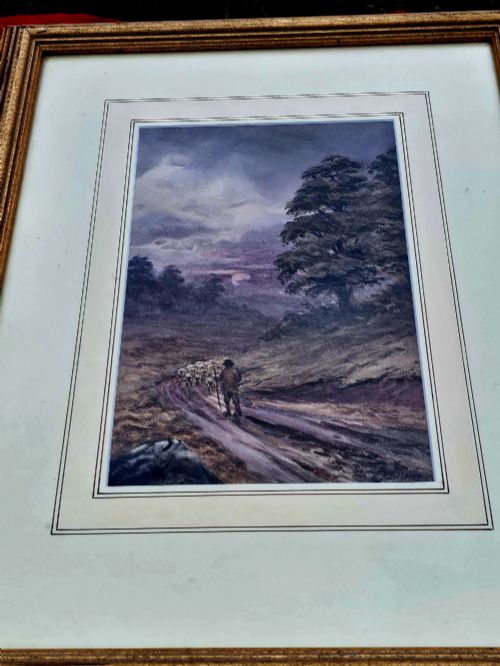
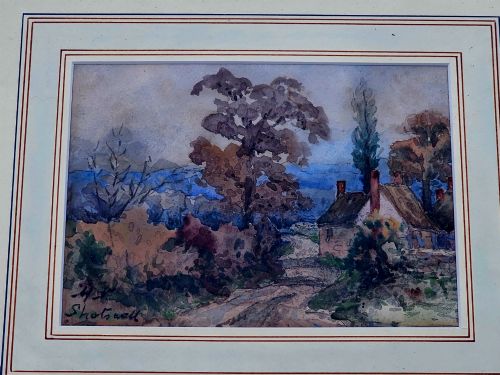
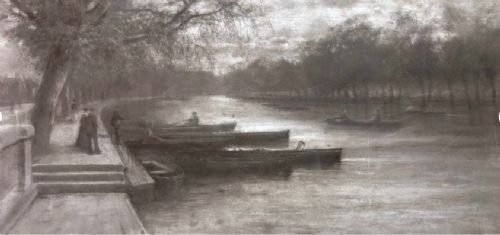
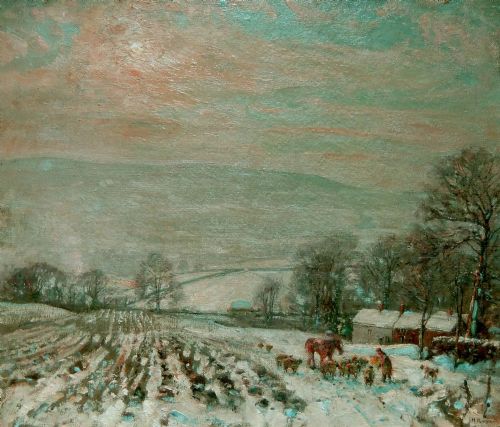
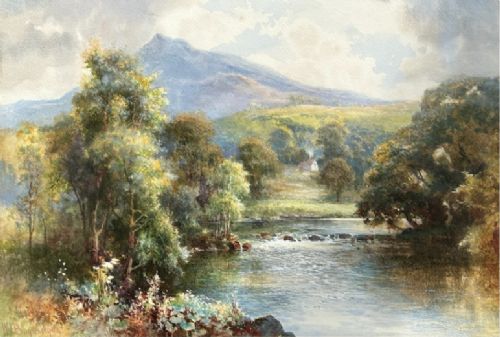
British edwardian artwork encompasses oil paintings, watercolours, charcoal drawings and etchings produced during the early twentieth century and surrounding decades. These works record rural landscapes, livestock, bustling markets and domestic interior scenes with straightforward observation.
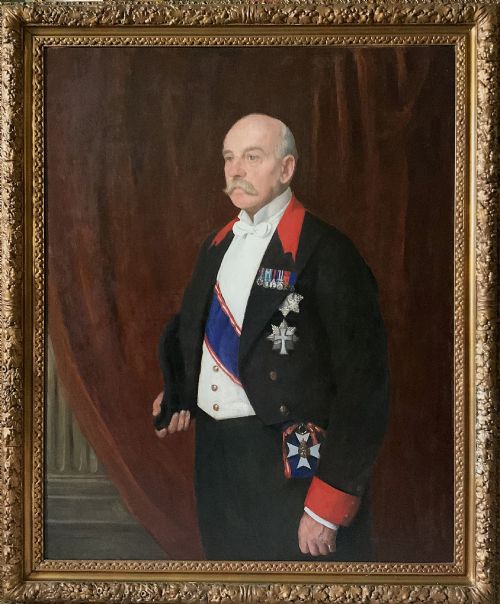
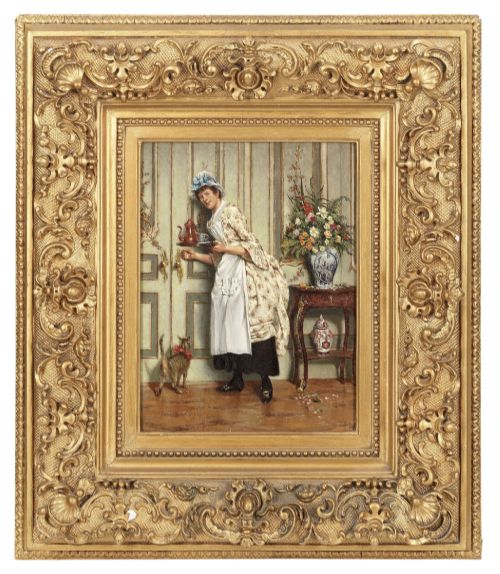
Watercolours and oil paintings dominate the selection, often framed in wood or giltwood alongside framed lithographs and hand-painted porcelain plaques. Pieces stretch from intimate pencil studies to monumental social history portraits reflecting British artistic output of the era.
How they were made
Artists worked primarily on paper, canvas or wood panels, applying watercolour washes, oil pigments or charcoal to capture light and atmosphere. Giltwood and plain wooden frames complete the construction of these works.
Techniques range from precise pencil sketching and detailed etching to loose impressionist brushwork. Pigments were applied directly to support materials using traditional methods characteristic of early twentieth-century British studios.
Pigeons, lurchers and cattle share the gallery walls with society portraits, proving Edwardian patrons loved their livestock just as much as their generals.
What varies in quality
Quality rests upon the sureness of the draughtsmanship and the strength of composition across the painted surface. Works showing confident handling of light and distinctive subject matter stand apart from more formulaic student exercises.
The preservation of the paper or canvas surface, alongside the integrity of the original framing materials, marks the difference between standard decorative pieces and notable examples by established practitioners.
George Lorain Stampa·Henry Percy Huggill·Felix Stone Moscheles·William H Myers·Emily Eyres·Thomas Ellison·Sir William Nicholson·EJ Letheren·Herbert Royle·Stephen Samuel Lewin·William Joseph Boyes·Henry Silkstone Hopwood·Robert John Hammond·Frank William Scarbrough·John Smith Atherton·Augustus John·Hector Caffieri·John Hodgson Lobley·George Oyston·Frederick James Kerr·Edgar Hunt·James Stinton·George Wright·William Albert Clarke·Herbert Dicksee
The British Edwardian Artwork Glossary
- Giltwood
- Carved wood treated with gold leaf or gold paint to create a decorative frame. This finish protects the perimeter of paintings and works on paper.
- Etching
- A printmaking process where lines are bitten into a metal plate with acid before ink is applied. The plate then transfers the image onto paper under pressure.
- Watercolour
- A paint consisting of pigment suspended in a water-soluble binder applied to paper. It relies on the white of the paper showing through thin washes for its luminosity.
- Gesso
- A plaster-like mixture applied to wood panels or frames to prepare a smooth surface for painting or gilding. It provides a stable base for fine decorative work.
- Lithograph
- A planographic printing method based on the repulsion of oil and water. Artists draw directly onto a stone or metal plate to produce multiple impressions.
British Edwardian Artwork: Frequently Asked Questions
What subjects appear most often in these artworks?
Rural landscapes, pastoral scenes with livestock, and coastal harbour views dominate the painted works in this category. Portraits and interior domestic studies also feature frequently.
Artists frequently documented everyday British life, agricultural labour, and familiar town markets rather than grand historical narratives.
How do watercolours differ from oil paintings here?
Watercolours utilise transparent pigments on paper supports, creating lighter, more luminous effects that often required protective glass framing. Oil paintings utilise thick pigments on canvas or wood panels, offering richer textures and deeper colour saturation.
Both mediums captured the changing seasons and rural light of the British countryside during the Edwardian period.
How should these framed works be displayed?
Pieces require placement away from direct sunlight and excessive moisture to protect paper supports, watercolours, and giltwood frames from fading or warping. Stable indoor environments preserve the original materials.
Wall mounting should utilise appropriate fixings suited to the substantial weight of antique wooden and gilt frames.
Can I identify the period from the framing?
Original giltwood and wooden frames often match the production era of the artwork, displaying period-specific mouldings and joinery. However, many works have been reframed over subsequent decades.
Signatures, artist dates, and backing materials provide more reliable chronological markers than the frame alone.