







British Canal Painting
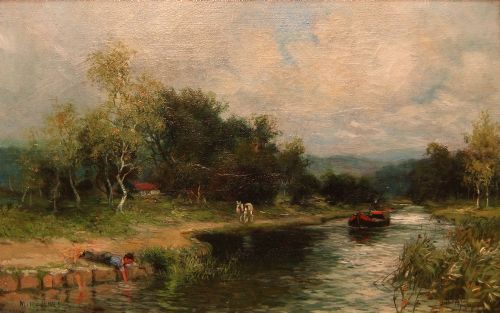
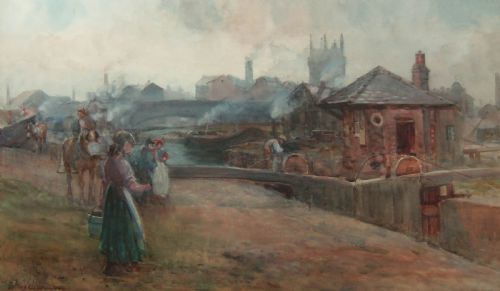
British canal painting captures inland waterways and Venetian canals across the nineteenth and twentieth centuries in oil and watercolour.
British Canal Painting
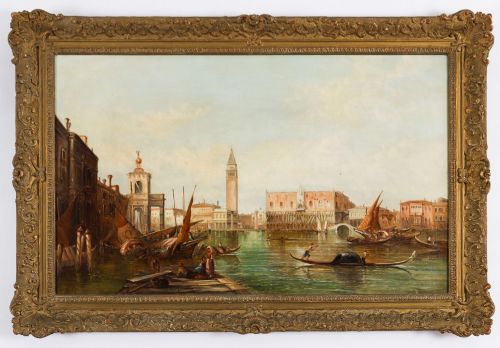
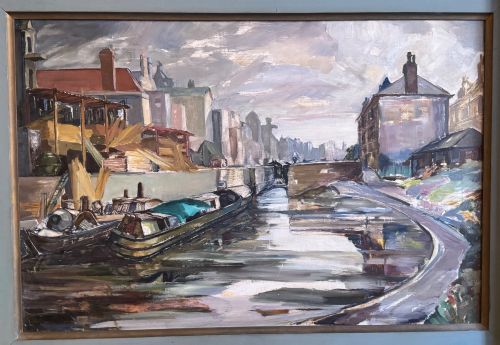
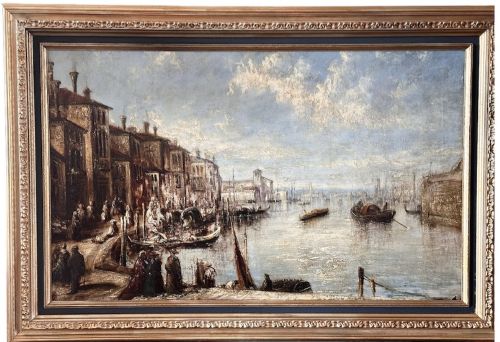
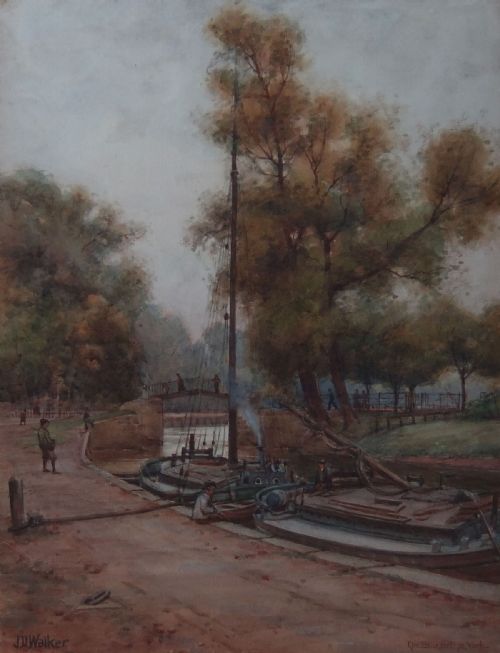
A british canal painting portrays waterways, locks, docks and moored boats through the nineteenth and twentieth centuries. These works record industrial infrastructure, rural navigations and historic Venetian scenes.
The most common examples on this page are watercolours and oil paintings on canvas or paper. Artists range from Victorian realists to twentieth-century British impressionists working across England and Italy.
How they were made
Painters used oil paint on canvas or wood panels, and watercolour paint on paper. Works often incorporate glass and wooden framing to protect the delicate watercolours and oils.
Techniques span detailed Victorian fine art realism to looser impressionistic washes. Pencil and grisaille wash also appear in preparatory and finished works.
British Canal Painting Retail Price Guide 2026
Typical asking prices for british canal painting among the pieces listed under this phrase on Sellingantiques today, from the lower quarter to the upper quarter. They describe what is for sale here now, not the wider market.
Artists swapped rainy Yorkshire locks for sunlit Venetian steps, painting both with equal enthusiasm.
What varies in quality
Quality rests in the precision of brushwork and the handling of light on water. Stronger pieces capture atmospheric conditions and architectural perspective with confidence.
The reputation of the artist and the documentary value of the specific lock, dock or canal scene elevate individual works. Materials such as heavy canvas and stable oil paint also contribute to longevity.
Francis Moltino·Thomas Baker·Fred Lawson·Herbert Royle·Alfred Pollentine
The British Canal Painting Glossary
- Watercolour
- A paint consisting of colour pigments suspended in a water-based solution. It is traditionally applied to paper to create translucent washes.
- Oil on Canvas
- A painting medium where pigments are bound in drying oil and applied to stretched fabric. This combination allows for rich colour depth and textured brushstrokes.
- Lock
- A device used for raising and lowering boats between stretches of water on river and canal navigations. It appears frequently in nineteenth-century English waterway scenes.
- Grisaille
- A painting executed entirely in shades of grey or neutral greyish-brown. Artists used this monochrome method for underpainting or as a finished tonal work.
British Canal Painting: Frequently Asked Questions
What periods do these paintings cover?
The works span from the nineteenth century through the mid twentieth century. Most pieces reflect Victorian and early twentieth-century artistic movements.
Dates align with the working periods of the recorded artists, capturing both industrial expansion and scenic waterways.
Where were these canal scenes painted?
Subjects include English canal locations such as Leeds, Huddersfield, Stratford-upon-Avon and Manchester. Other works depict the grand canals and lagoons of Venice.
Artists travelled between local navigations and continental waterways, recording working docks and picturesque bridges.
How do I care for a watercolour painting?
Watercolours require protection from direct sunlight to prevent the pigments from fading over time. Framing behind glass with acid-free mounts preserves the paper and paint.
Keep these works in rooms with stable humidity to avoid warping the paper support.
Are these works signed by the artists?
Many of the listed paintings bear artist signatures, initials or contemporaneous attributions. Documentation often links specific titles to known nineteenth and twentieth-century painters.
Signatures typically appear in the lower corners of the canvas or paper.