




British Botanical Still Life
British botanical still life paintings capture domestic blooms and fruit, bringing quiet Victorian and mid-century interiors directly to modern walls.
British Botanical Still Life
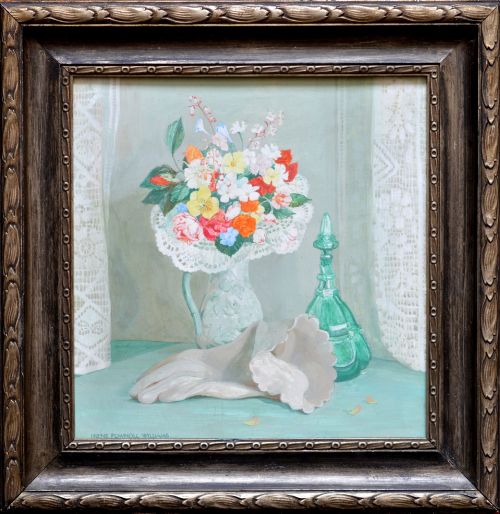
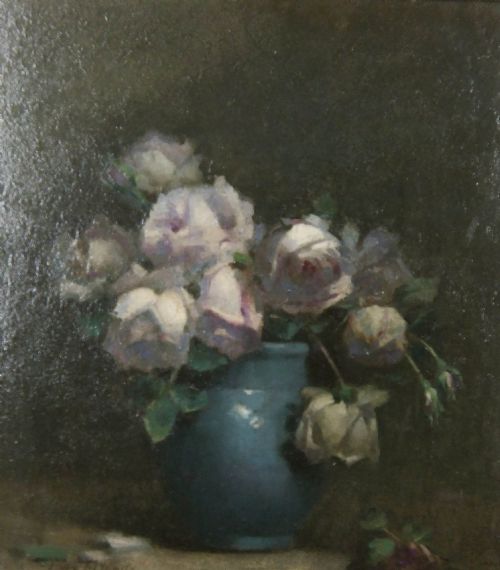
A British botanical still life focuses closely on natural subjects such as roses, fruit, and cut flowers arranged in jugs or baskets. These works span from the Victorian period through to the mid-century modern era, reflecting changing tastes in domestic art.
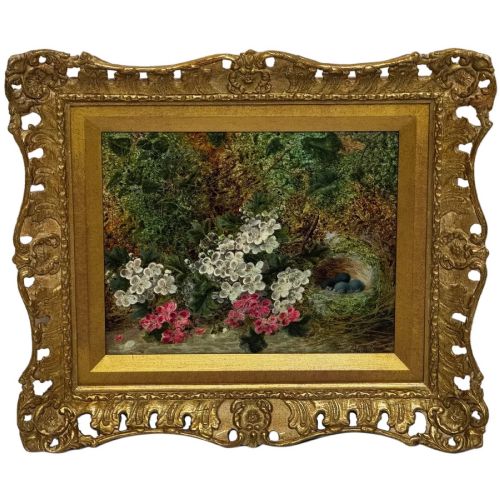
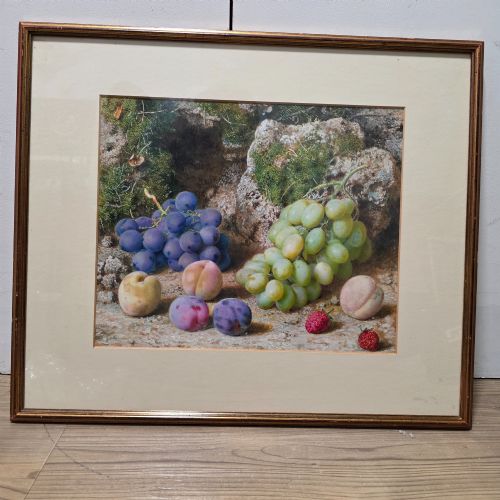
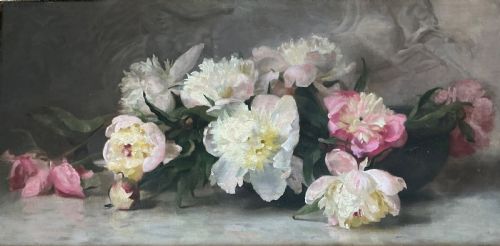
The most common examples on this page are watercolours and oil paintings created during the early twentieth century and the nineteenth century. Painters record specific blooms like camellias, peonies, and apple blossoms with careful attention to colour and form.
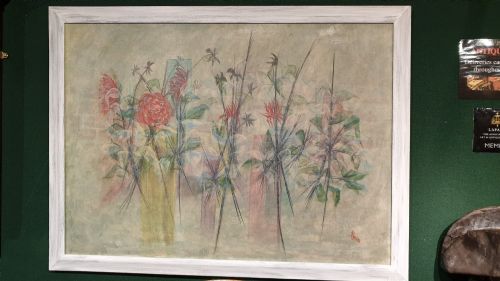
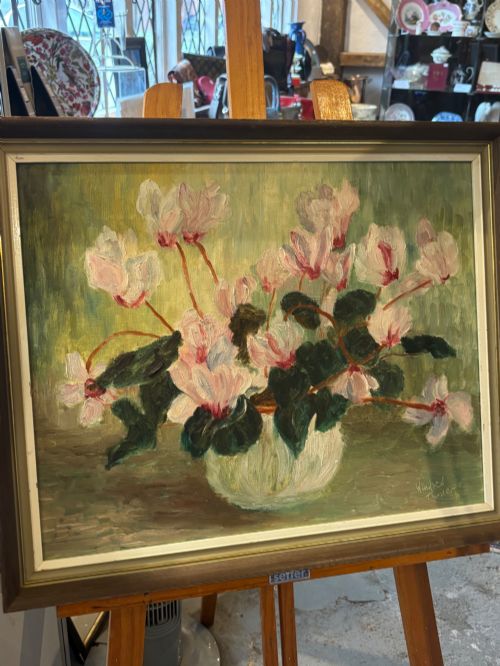
Compositions range from detailed nineteenth-century studies of birds' nests and grapes to looser twentieth-century interpretations influenced by British impressionism. Each piece documents a traditional approach to capturing seasonal flora within domestic spaces.
Materials and methods
Artists painted primarily in oil or watercolour, applying pigment to canvas, wood panels, paper, or board. Oil paint allows for rich, layered textures on canvas, whilst watercolour provides transparency and delicate detail on paper supports.
Some works utilise tempera or gouache to achieve flat areas of colour and distinct opaque finishes on panel or paper. Framing protects these fragile paper and canvas surfaces, preserving the original pigments across decades.
Listings feature works spanning from the nineteenth century through the 1960s, executed in oil, watercolour, and tempera.
Factors that define quality
Quality rests on the artist's ability to render natural textures convincingly, from the soft petals of a rose to the polished skin of fruit. Stronger works demonstrate confident brushwork and a balanced composition that anchors the vase or basket within the space.
Condition plays a part in the overall standard, particularly the preservation of paper against foxing and the stability of paint on canvas or panel. The strength of the colour palette and the clarity of the botanical arrangement separate routine decorative studies from accomplished pieces.
Irene Christobelle Pownoll Williams·Oliver Clare·William Thomas Wood·John Sherrin·Owen Bowen·James Tower·Gertrude Hayes·Winifred Turner·William Edward Fox·Lester Sutcliffe·Vincent Clare·Kershaw Schofield·Sir Matthew Smith·Edith Barrow·Freda Marston·Rowland Henry Hill·Stuart Armfield·Phyllis I Hibbert·Lena M Alexander·Jabez Bligh·Jennifer Toombs·Elizabeth T. Sutcliffe·Alice Macallan Swan·Marion Broom·Margaret Evangeline Wilson
The British Botanical Still Life Glossary
- Watercolour
- A paint consisting of pigment suspended in a water-soluble binder, traditionally applied to paper. It allows for delicate washes and translucent botanical details.
- Tempera
- A permanent, fast-drying painting medium consisting of coloured pigment mixed with a water-soluble binder. Artists often apply it to wood panels for a smooth matte finish.
- Gouache
- An opaque water-based paint that includes a white pigment to create heavier, solid areas of colour. It offers a more saturated look than traditional watercolour.
- Panel
- A flat piece of wood used as a rigid support for oil or tempera paintings. It provides a stable surface that prevents the cracking often found on aged canvas.
- Impressionism
- An artistic approach focused on capturing light and spontaneous brushstrokes rather than microscopic detail. British interpretations of this style soften the rigid outlines found in earlier Victorian painting.
British Botanical Still Life: Frequently Asked Questions
How do I date a botanical painting?
Dating relies on stylistic clues, framing methods, and the recorded active periods of the artists. Victorian pieces often show dense realism, whereas mid-century examples lean towards looser brushwork.
Signatures, inscriptions on the reverse, and the type of paper or canvas also help narrow down the decade of creation.
Where should I hang these artworks?
These paintings suit traditional living rooms, studies, or kitchens where their natural subjects complement domestic spaces. Keeping them away from direct sunlight protects vulnerable watercolours and oil pigments from fading.
Pairing a small floral study with antique wooden furniture enhances the traditional British country house aesthetic.
What is the difference between oil and watercolour studies?
Oil paintings use heavy pigments on canvas or board, offering deep colours and textured surfaces that stand out on a wall. Watercolours are lighter works on paper that require protective glass framing.
Both mediums capture botanical subjects, but oils provide a heavier finish while watercolours present a softer transparency.
How do I care for antique paper paintings?
Watercolours and pastels on paper need protection from moisture and direct ultraviolet light to prevent fading and paper degradation. Acid-free mounting during framing prevents discolouration over time.
Displaying them in stable indoor environments ensures the pigments remain vibrant for decades.