






British Chest
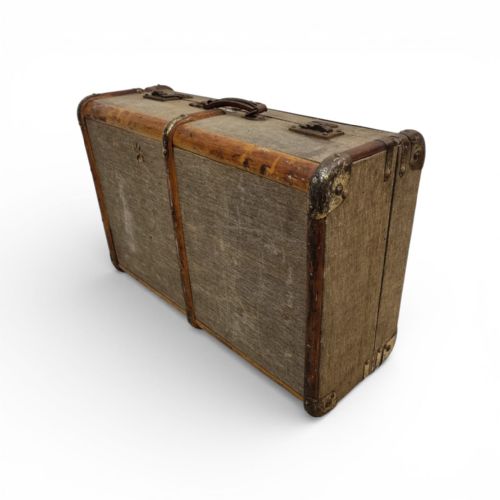
A British antique chest brings centuries of practical craftsmanship into a room, offering robust storage built for travel or traditional domestic life.
British Chest
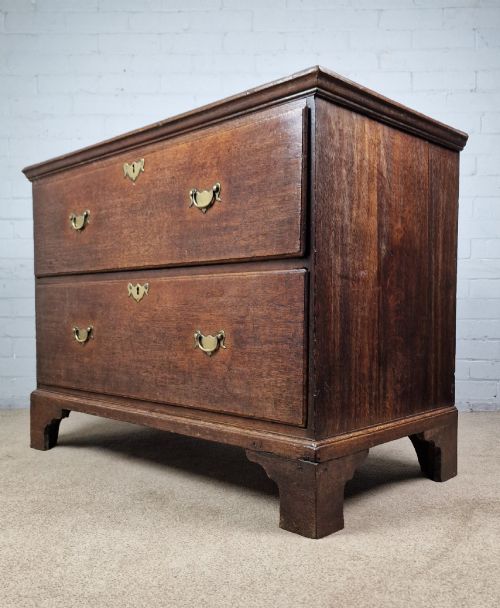
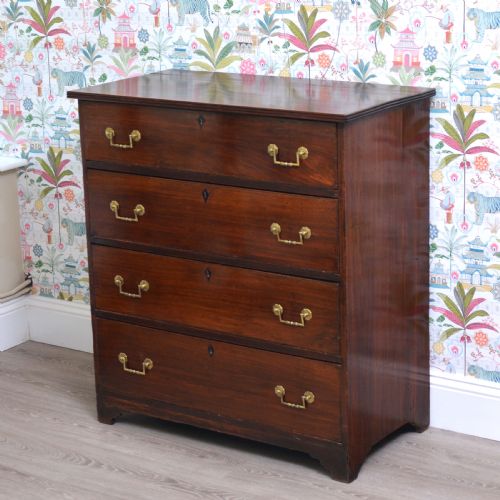
When you search for a british antique chest, you encounter a diverse selection ranging from utilitarian campaign furniture to traditional domestic oak and walnut storage pieces.
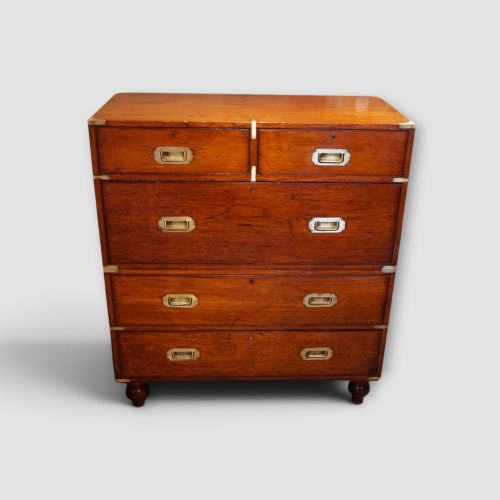
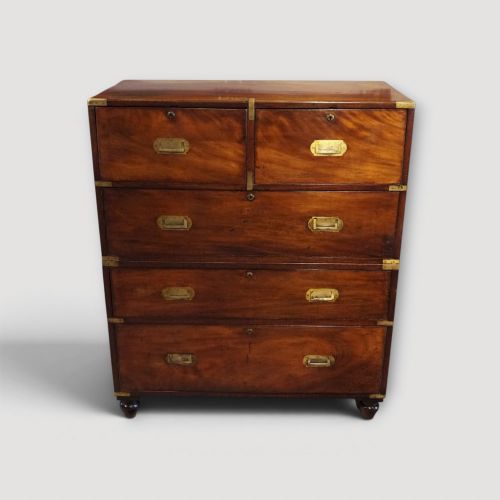
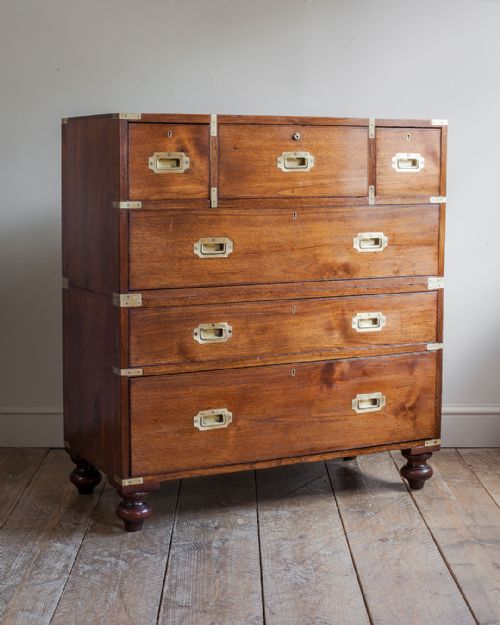
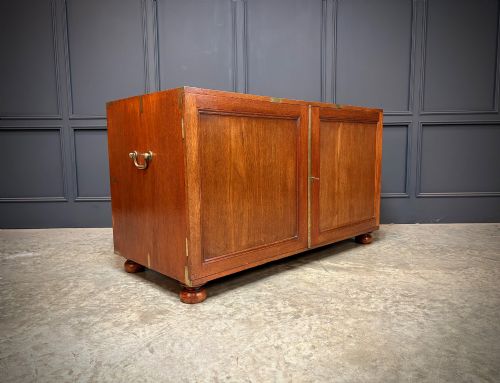
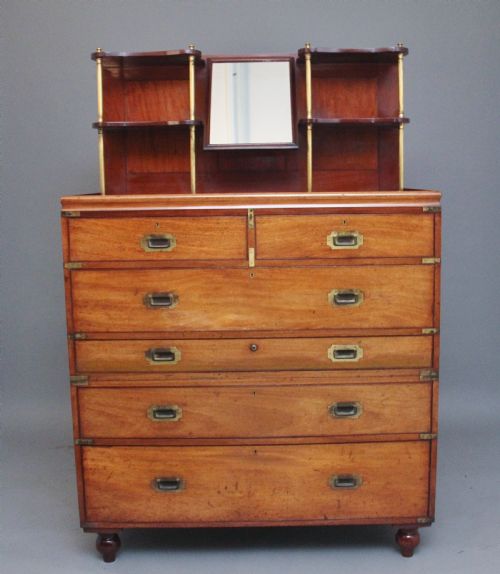
The version you are most likely to meet on this page is the Victorian campaign chest, typically constructed in two modular parts from teak, mahogany, or padauk with recessed brass handles and brass corner mounts.
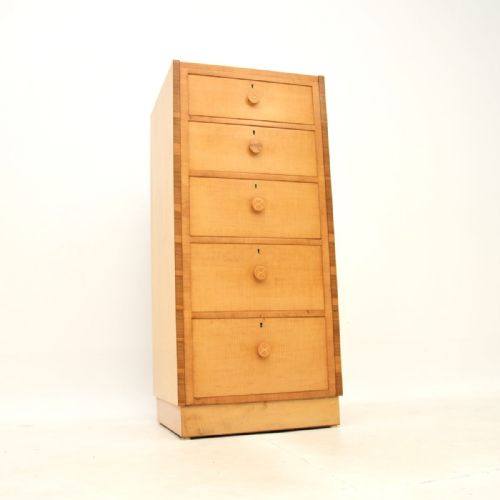
Earlier domestic examples include 18th century carved oak coffers and tallboys, alongside later 1930s modernist cabinets reflecting changing twentieth-century tastes.
Factors of quality
Quality rests upon the selection of timber and the precision of the brass hardware integration into the cabinet body.
Finer examples retain original maker stamps, such as Army & Navy Stores, alongside intact secretaire drawers with fitted pigeonholes and writing surfaces.
The integrity of the structural joints and the smooth operation of modular stacking sections distinguish superior craftsmanship from standard utility pieces.
British Chest Retail Price Guide 2026
Typical asking prices for british chest among the pieces listed under this phrase on Sellingantiques today, from the lower quarter to the upper quarter. They describe what is for sale here now, not the wider market.
Some campaign chests carry invisible scars from the Boer War, having served military officers across dusty colonial outposts before retiring to quiet living rooms.
Army & Navy Stores·Betty Joel
The British Chest Glossary
- Campaign chest
- A modular chest of drawers built in two sections for easy transport by military officers on active service.
- Secretaire
- A drawer fitted with a drop-front writing surface, small drawers, and pigeonholes for correspondence.
- Coffer
- A heavy wooden box or chest traditionally used for storing valuables, linens, or documents.
- Tallboy
- A tall chest of drawers consisting of one chest stacked on top of a larger base chest.
- Padauk
- A dense, heavy tropical hardwood prized for its deep reddish-brown colour and durability in colonial furniture.
British Chest: Frequently Asked Questions
What is a campaign chest?
A campaign chest is a piece of modular furniture designed to be easily packed and transported by military officers during the nineteenth century. These chests typically separate into two distinct sections and feature flush brass handles to prevent snagging during travel.
Built from durable hardwoods like teak and mahogany, they combine robust field functionality with refined domestic storage suitable for permanent homes after active service concludes.
How do I identify an 18th century oak chest?
An 18th century oak chest or coffer displays hand-carved decorative motifs, pegged joinery, and heavy timber construction that predates the standard drawer configurations of later periods. The wood develops a deep, rich patina over centuries of handling and polishing.
These earlier pieces generally lack the brass mounts and modular stacking systems associated with later Victorian military furniture, relying instead on traditional box construction and lid or drawer formats.
Why are campaign chests made in two parts?
Campaign chests were constructed in two separate modular sections to facilitate loading onto pack animals, wagons, and ships during military campaigns across the British Empire. Each upper and lower half could be carried independently by a single person.
Metal brackets and internal pins secured the two halves together stably when stationary, allowing officers to maintain organised clothing and document storage on the move.
What woods were used in British campaign furniture?
Makers predominantly used dense tropical hardwoods such as teak, mahogany, and padauk because these materials resisted warping in humid climates and endured rough handling. Camphorwood was also utilised for its insect-repellent properties, safeguarding stored uniforms and textiles.
Brass and iron hardware reinforced the corners and edges, providing additional structural strength while protecting the vulnerable wooden joints during transit.