


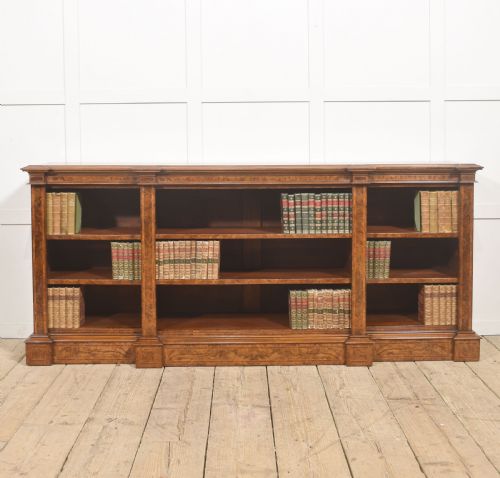

Breakfront Library Shelving
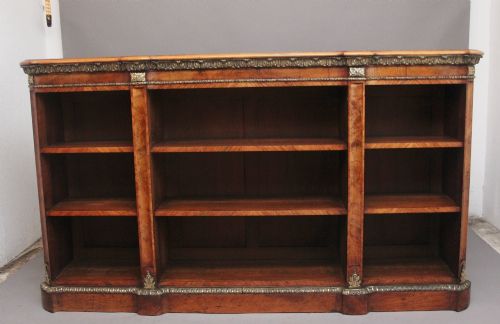
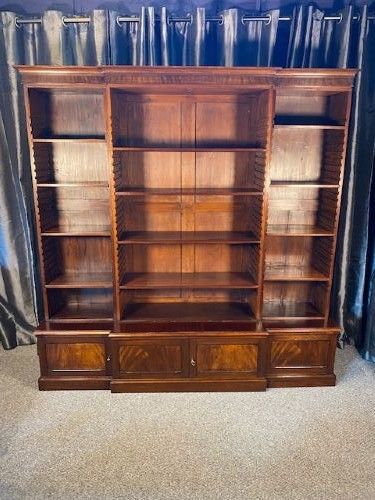
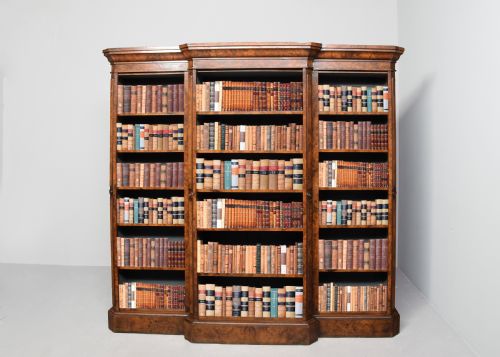
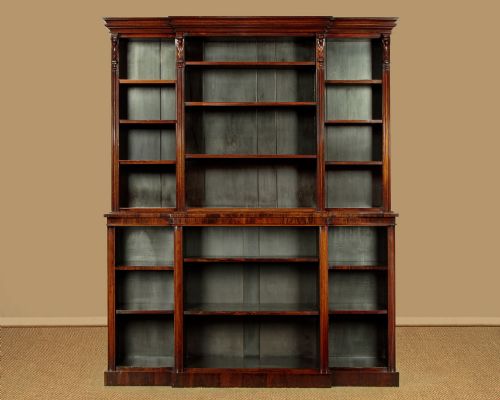
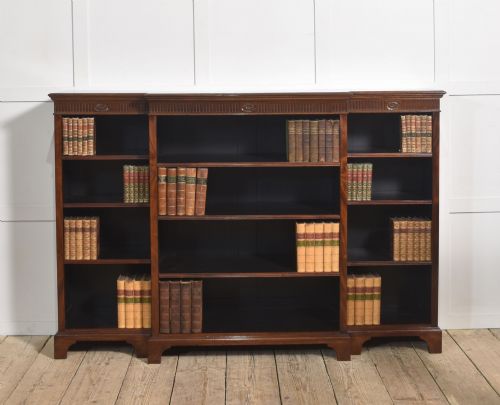
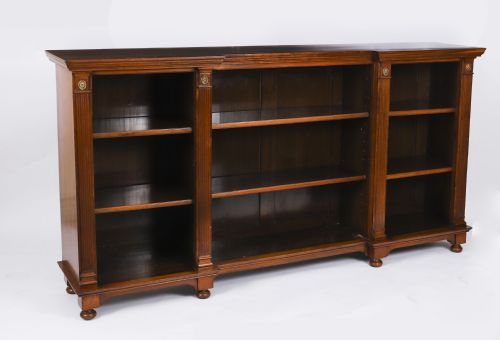
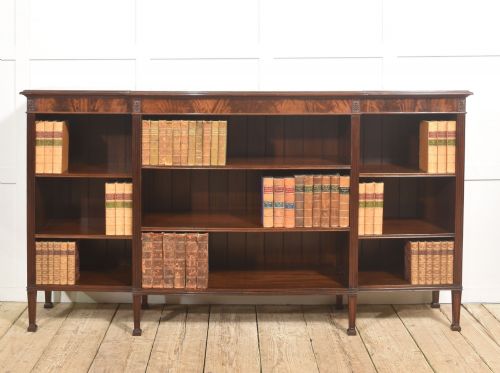
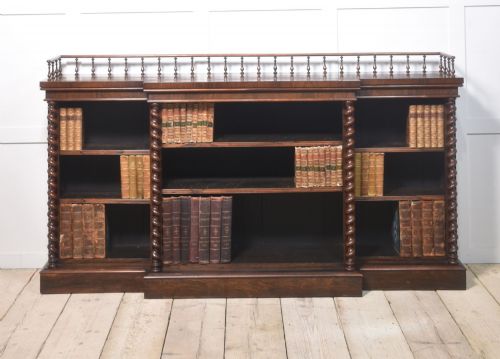
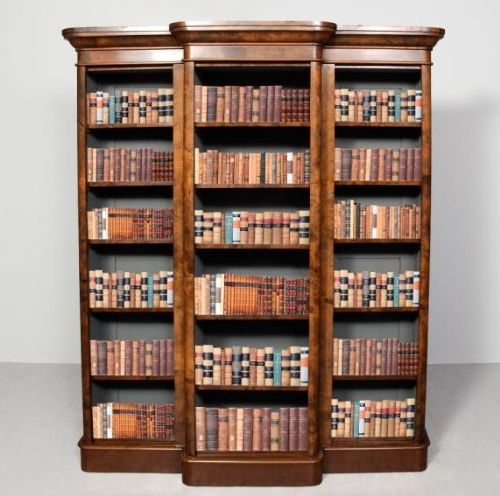
Breakfront library shelving offers commanding proportions and disciplined rows of volumes, projecting central sections forward to anchor a serious room.
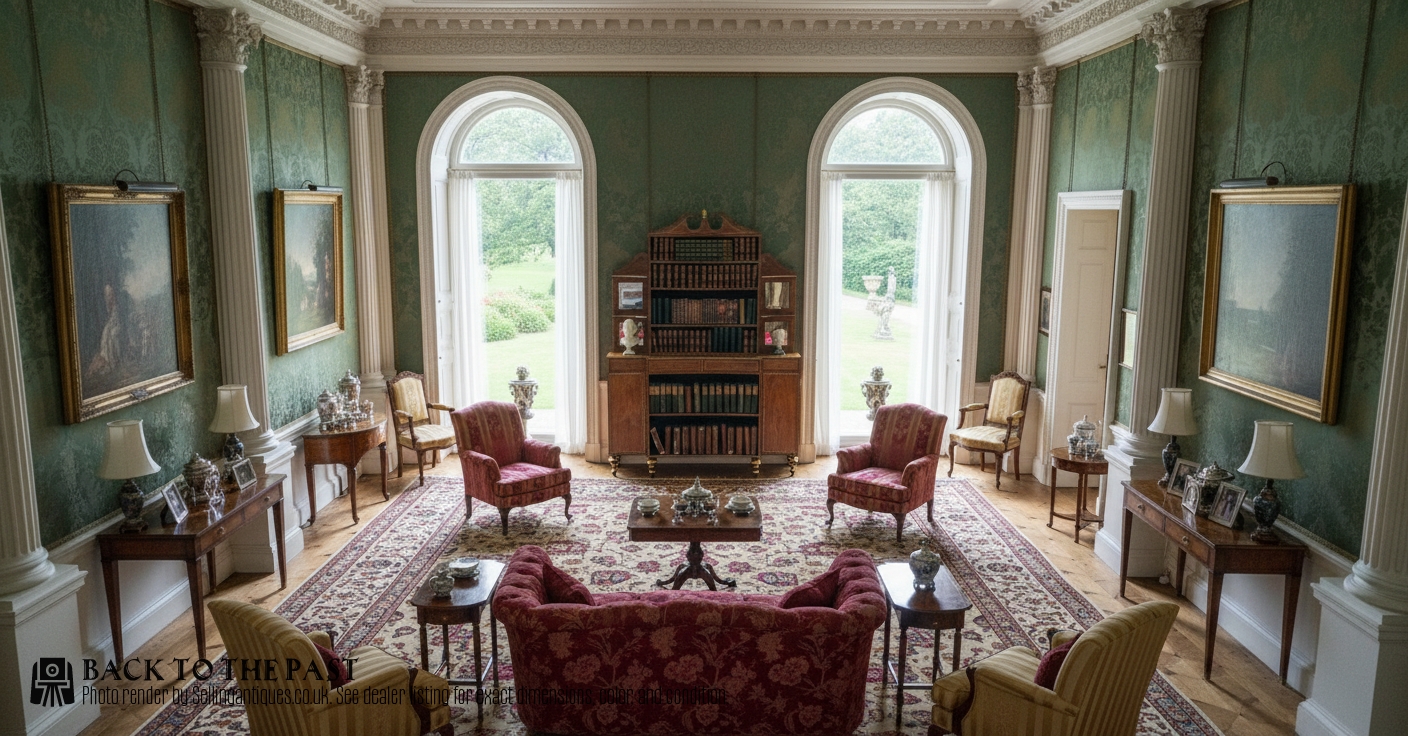
Breakfront Library Shelving
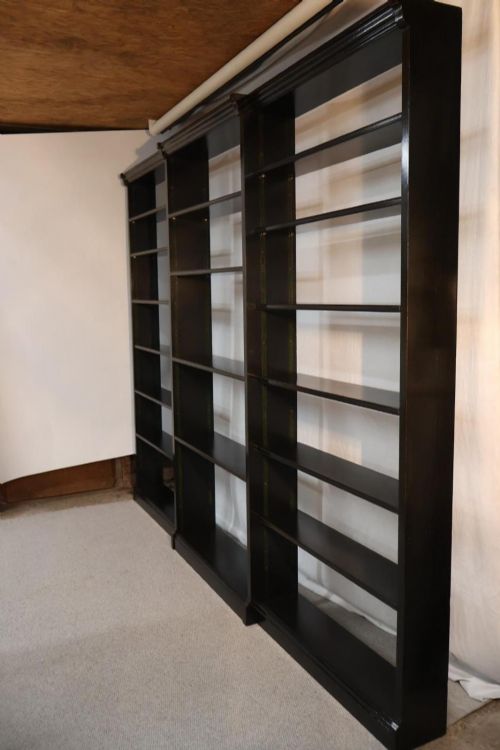
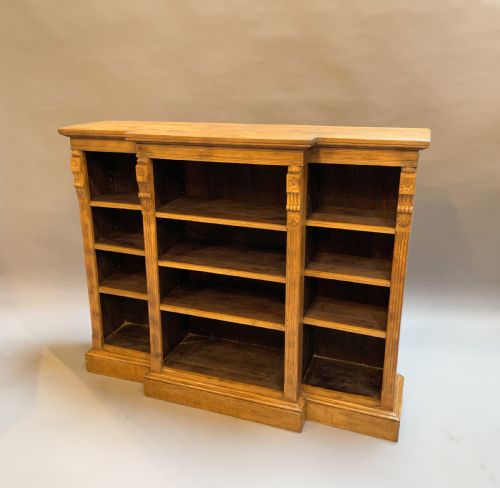
Breakfront library shelving comprises large bookcases and open bookshelves structured with a central section that projects forward from the flanking wings. You will most frequently meet Victorian and Edwardian examples across this selection, alongside pieces from the Regency and George III periods.
The form appears predominantly in rich timbers such as mahogany, walnut, burr walnut and rosewood, often configured as open shelving rather than enclosed glazed cabinets. These substantial pieces served grand domestic libraries and institutional rooms, providing extensive adjustable storage for large collections of books.
Originating as architectural furniture designed to fill expansive wall spaces, these bookcases balance visual weight through their stepped facades. The projection breaks the long horizontal line, creating distinct bays that organise volumes by subject or size.
Materials and construction
Cabinet makers utilised dense hardwoods like mahogany and walnut for structural integrity, frequently selecting highly figured veneers such as burr walnut, flame mahogany and rosewood for the primary surfaces. Crossbanding in satinwood and decorative details like brass and ormolu mounts enhance the principal facades.
Construction relies on sturdy timber carcases designed to support heavy loads of books across multiple adjustable shelves. Master workshops incorporated carved architectural elements, ebonised highlights and precise joinery to articulate the multi-section breakfront profile.
Listings feature breakfront library shelving across the nineteenth and early twentieth centuries, spanning Victorian, Regency, Edwardian and George III styles in mahogany, walnut and rosewood.
Distinctions in quality
The standard of a breakfront bookcase rests upon the selection of timber figures and the precision of the cabinet work. Superior examples display carefully matched burr walnut or flame mahogany veneers across the projecting central section and flanking wings.
Refinement shows in the quality of secondary materials, such as finely chased ormolu mounts, robust brass fittings and well-executed hand carving. The integration of adjustable shelving mechanisms and clean structural proportions separate standard production from exceptional workshop output.
Johnstone and Jeanes·Gillows·Robert Strahan
The Breakfront Library Shelving Glossary
- Breakfront
- A piece of furniture having a central section that projects forward from the flanking outer sections. This architectural arrangement creates distinct vertical bays across the facade.
- Open Bookcase
- A bookcase constructed without doors, exposing the shelves and book bindings directly to the room. These open formats facilitate easy access to large working libraries.
- Burr Walnut
- Timber taken from the warted excrescences of walnut trees, yielding intricate, swirling grain patterns. Cabinet makers prized these veneers for high-status furniture fronts.
- Orsomu
- Gilded bronze ornamentation applied to furniture for decorative contrast. Workshops mounted these cast metal elements onto timber carcases to accentuate the design.
Breakfront Library Shelving: Frequently Asked Questions
How do I style a breakfront bookcase?
Position the piece against a substantial wall in a study or principal reception room where its proportions can command the space. Allow adequate clearance around the projecting central section to preserve the architectural lines of the furniture.
Organise your volumes systematically across the adjustable shelves, balancing dense rows of books with occasional decorative objects. Keep direct sunlight away from sensitive timbers like rosewood and mahogany to preserve the finish.
What is the difference between open and closed bookcases?
Open bookcases provide direct, doorless access to the shelving, a configuration common in working libraries where books required frequent retrieval. This format places the decorative bindings on full display within the room.
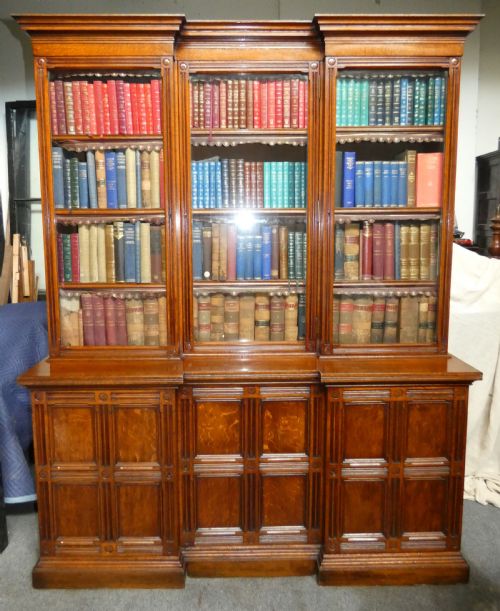
Closed bookcases feature glazed or panelled doors that protect volumes from dust and environmental changes. The choice between open and closed formats depends upon the desired formality and the need for archival preservation.
How are periods identified in these bookcases?
Dating relies on observing structural characteristics, timber choices and decorative vocabulary associated with specific design eras. Regency and George III pieces often show classical restraint and particular mahogany graining, whereas Victorian examples introduce heavier proportions and burr walnut veneers.
Later Edwardian interpretations frequently revisit earlier Georgian and Neoclassical motifs with lighter framing and refined crossbanding. Examining the interior construction and shelf adjustment systems provides further clues to the manufacturing decade.
Can the shelves be adjusted?
Many of these library bookcases feature adjustable shelving supported by traditional wooden bearers, brass pins or rackwork strips. This adaptability allowed historical owners to accommodate varying folio heights and large octavo volumes.
When inspecting or living with the piece, check the shelf mechanisms to ensure smooth repositioning without damaging the interior veneer. This flexibility makes contemporary arrangement of mixed book collections straightforward.