


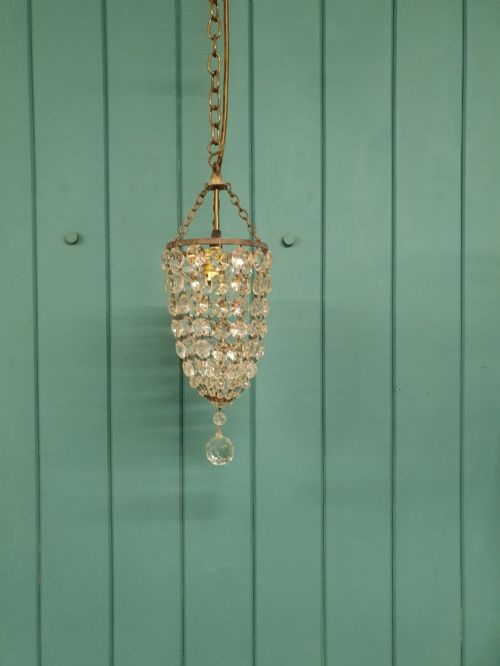
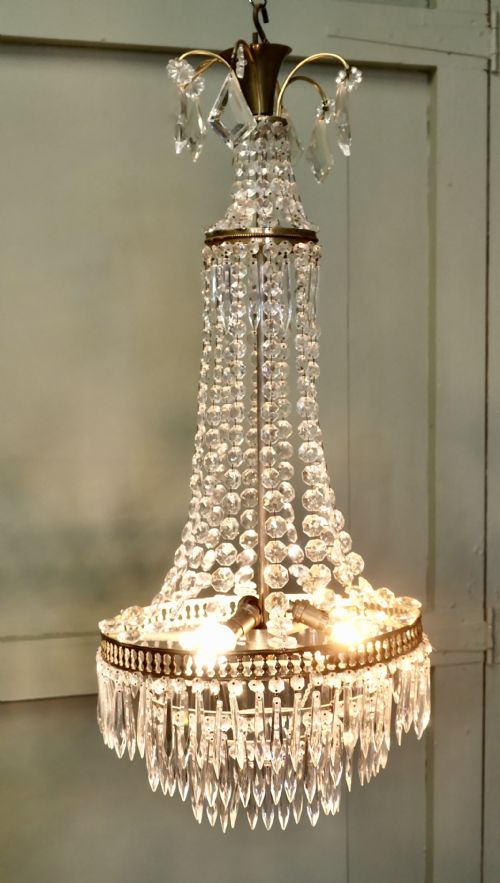
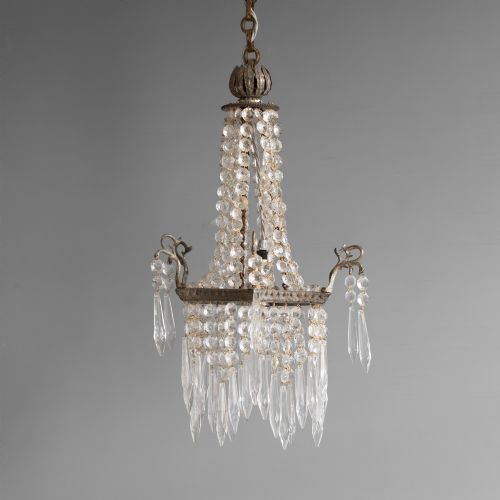
Brass Tent Waterfall Light
A brass tent waterfall light brings cascade illumination and period sparkle to a room.
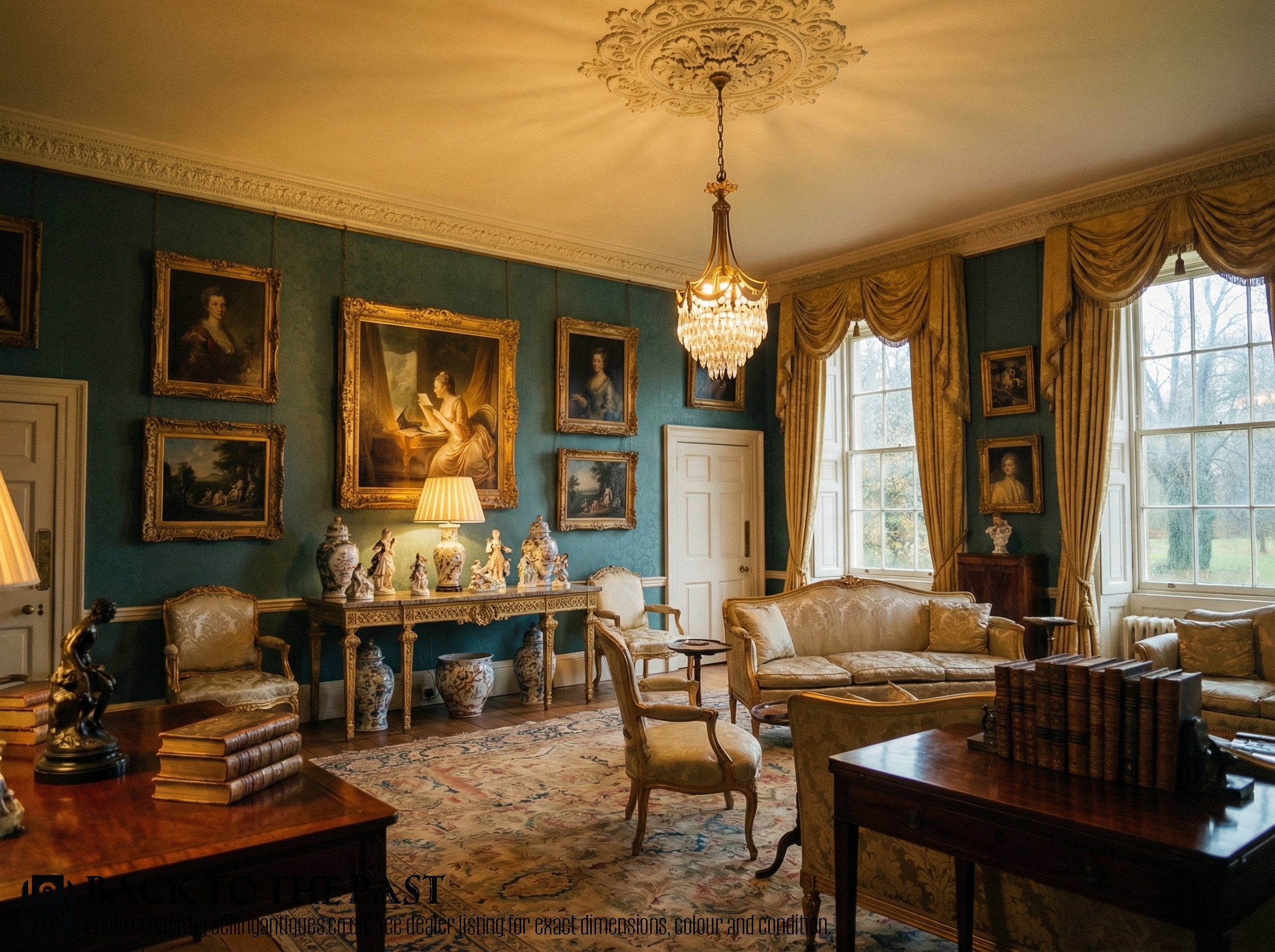
Brass Tent Waterfall Light
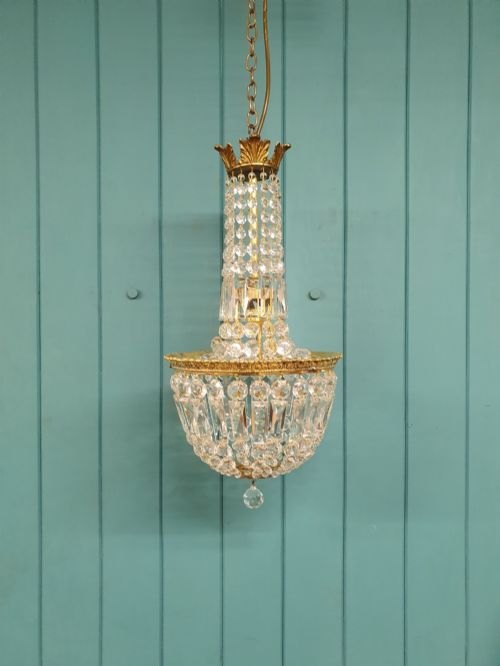
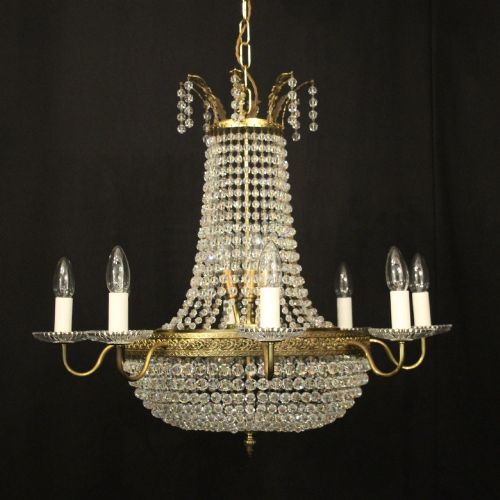
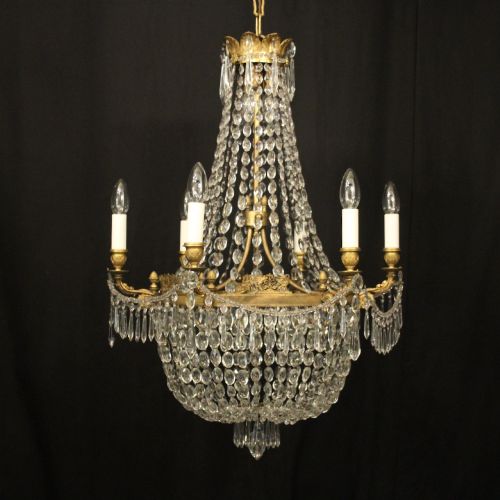
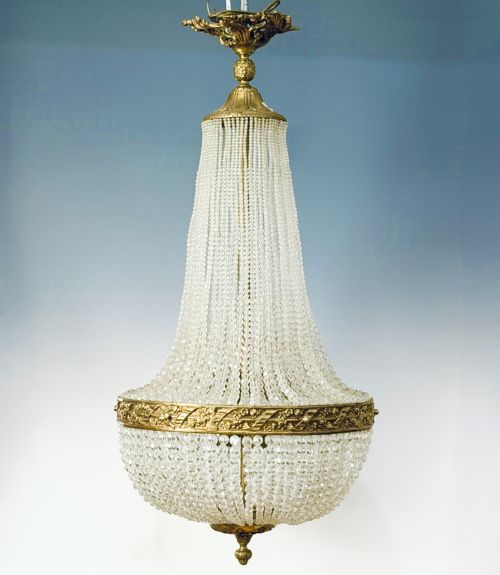
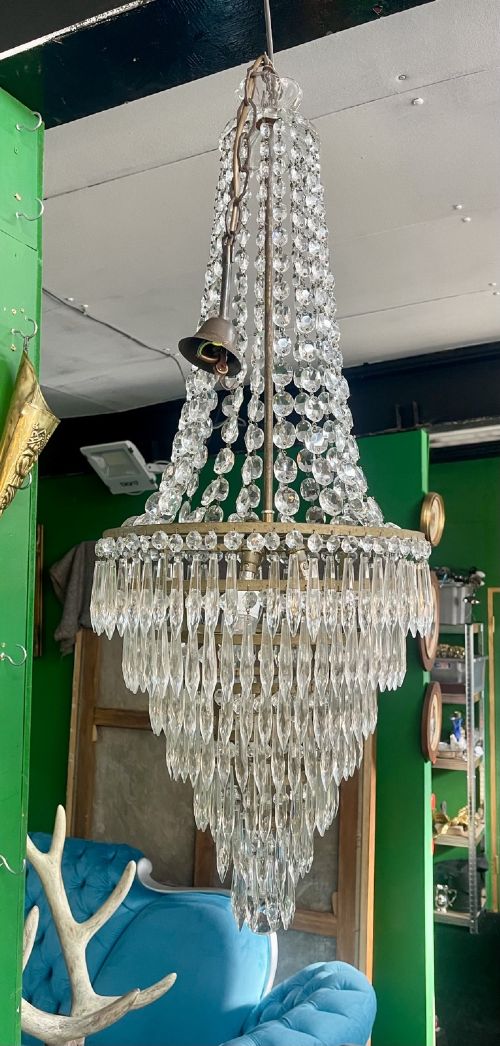
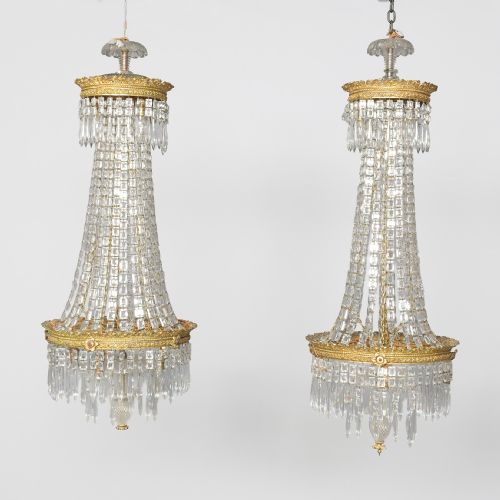
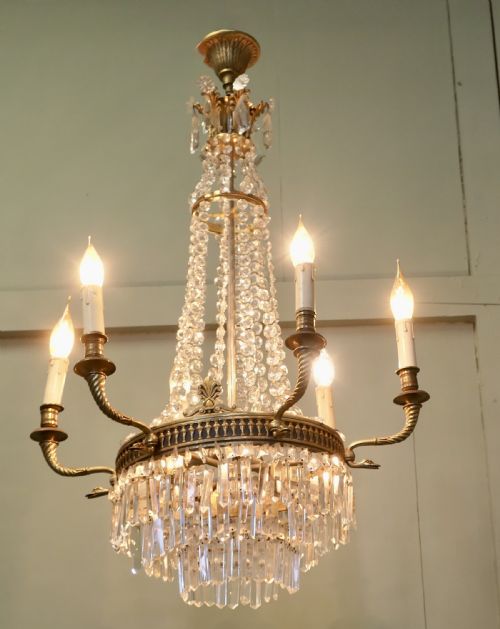
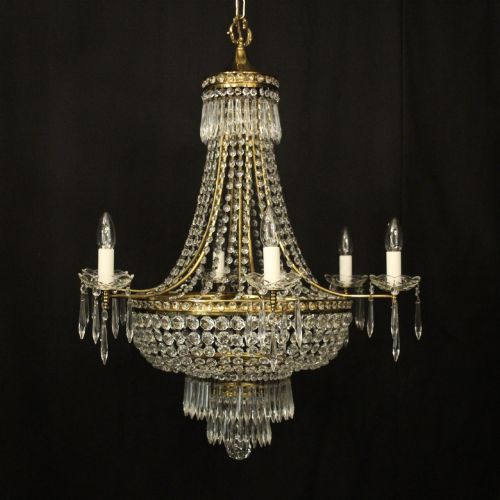
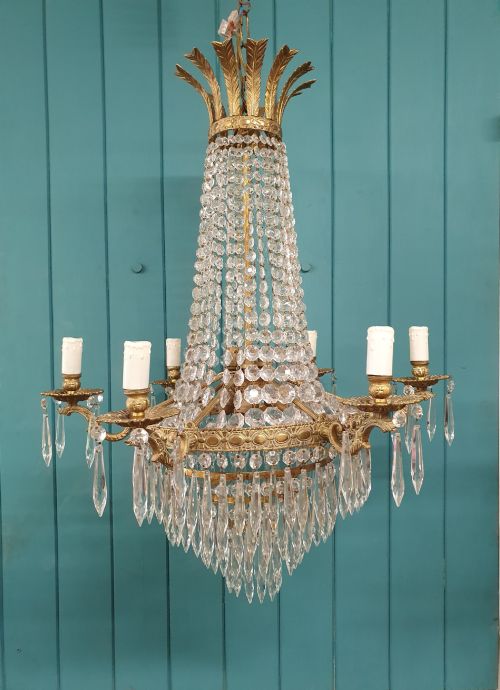
A brass tent waterfall light is typically a chandelier featuring an upper tent of strings or swags falling to a wider lower section, often styled in French Empire or Regency designs. These hanging fixtures appear across periods from the eighteenth century through to the early twentieth century, with many examples originating from France.
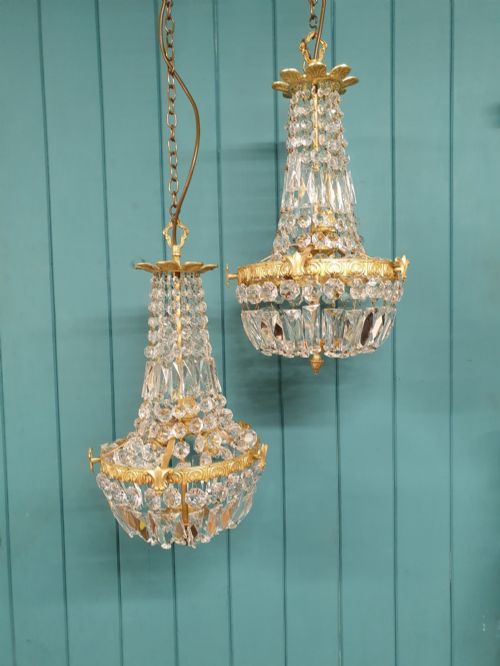
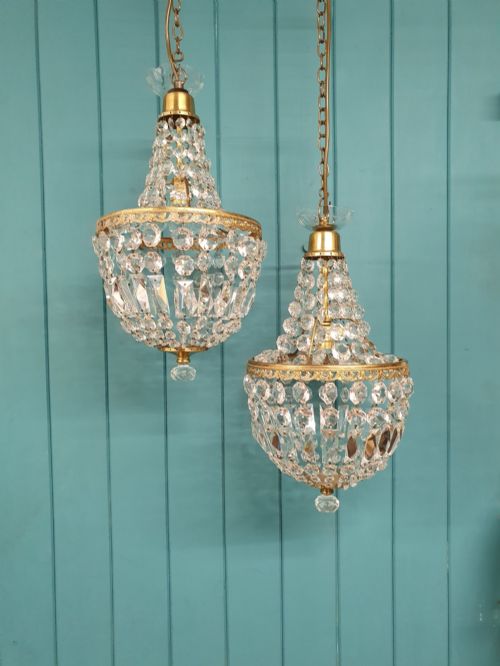
The most common formats on this page are multi-light chandeliers and smaller pendant lights incorporating glass drops, prisms, and crystal beads. Alongside these central ceiling fixtures, buyers also encounter matching wall lights designed to coordinate with the main illumination.
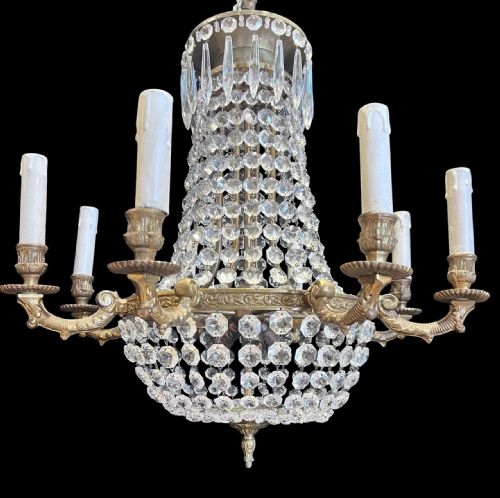
The form relies on a brass or gilt bronze framework that supports tiers of cut glass and crystal. Whether structured as a large sixteen-light focal point or a compact single-light basket, the silhouette remains defined by its cascading drops.
How brass tent waterfall lights were made
The construction of these pieces centres on a solid brass or gilded bronze frame that holds the weight of the glass elements. Artisans assembled these frames with visible cast mounts, decorative leaf motifs, and sometimes sculptural details such as cherubs.
Hanging elements consist of cut glass, crystal, and prisms wired onto the brass structure in ordered swags and lower bag sections. The integration of glass and gilt brass allows the fixtures to catch and refract light effectively.
Brass Tent Waterfall Light Retail Price Guide 2026
Typical asking prices for brass tent waterfall light among the pieces listed under this phrase on Sellingantiques today, from the lower quarter to the upper quarter. They describe what is for sale here now, not the wider market.
Materials documented across the selection include cut crystal, gilt bronze, and cast brass configured into wall lights and ceiling pendants.
What varies in quality in brass tent waterfall lights
Quality reveals itself in the crispness of the brass casting and the depth of the gilding or bronze finish. Finer examples display meticulous detailing in decorative mounts, such as leaf work on the arms or well-defined structural components.
The clarity and cut of the crystal and glass drops also dictate the standard of the piece. Better lights utilise hand-cut glass prisms that disperse light cleanly through the cascading swags and lower tiers.
The Brass Tent Waterfall Light Glossary
- Tent and waterfall
- A lighting configuration where an upper conical section of glass swags drops into a wider cascading lower tier.
- Bag chandelier
- A specific lighting style featuring a flattened or rounded lower basket packed tight with crystal drops.
- Gilt brass
- Brass that has been treated with a thin layer of gold leaf or gilt finish to enhance its decorative appearance.
- Prism
- A cut glass pendant designed to refract light, hanging from the frame in various geometric shapes.
- French Empire
- A classical style inspired by antiquity, frequently utilised in the design of these cascading chandeliers.
Brass Tent Waterfall Light: Frequently Asked Questions
How do I clean a brass tent waterfall light?
Cleaning requires patience and gentle handling of the individual glass drops and brass framework. Many owners choose to wipe components in situ using a suitable glass cleaner and a soft cloth.
For a deeper clean, delicate glass swags can be unhooked and washed individually before being reattached to the brass structure. Avoid harsh chemical polishes on the gilt or brass mounts to preserve the finish.
Are these lights suitable for low ceilings?
While many fixtures in this category are substantial multi-light chandeliers suited to high rooms, smaller variants exist. Compact pendant lights and shallow bag chandeliers work well in spaces with restricted headroom.
Checking the overall drop measurement helps determine whether a specific piece fits the intended room without hanging too low.
How do I date a brass tent waterfall light?
Dating relies on examining the casting techniques of the brass frame, the style of the mounts, and the cut of the glass. Pieces exhibiting French Empire or Regency characteristics often point to nineteenth-century manufacture.
Edwardian and early twentieth-century examples frequently incorporate specific wiring methods and distinct drop configurations that separate them from earlier periods.
Can these lights be wired for modern electricity?
Most antique fixtures of this type require rewiring to meet contemporary safety standards. Professional electricians can adapt the internal fittings to accept modern bulbs while retaining the original brass and crystal exterior.
It is standard practice to check the internal wiring status upon acquisition to ensure safe operation in a modern home.