


Brass Table Candle Holders
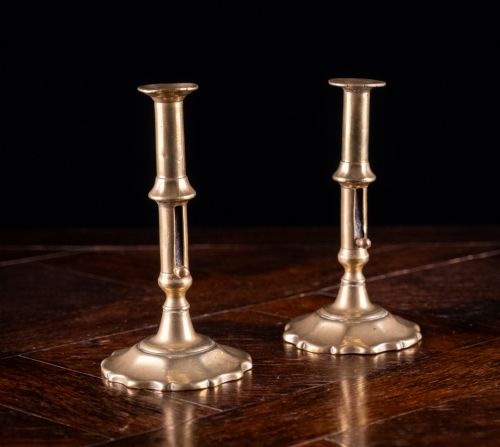
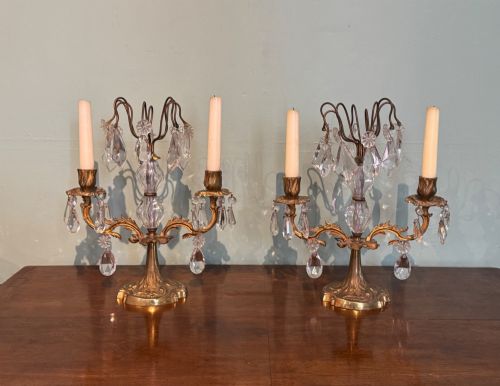
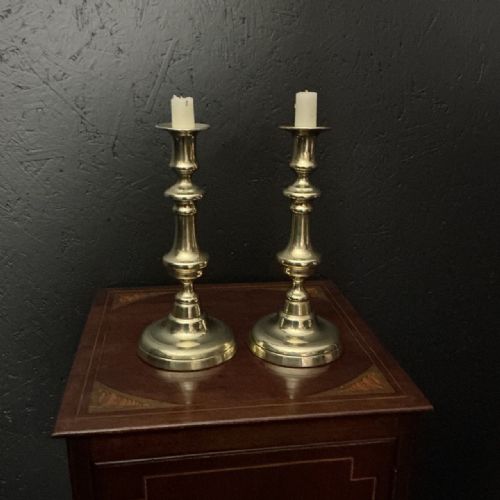
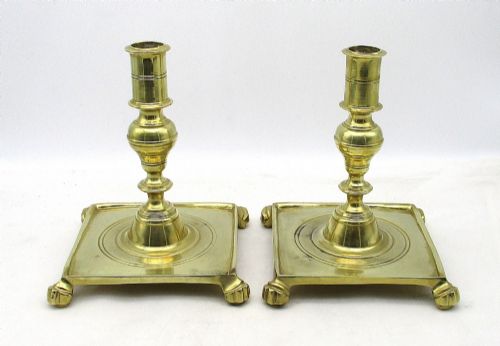
These brass table candle holders span centuries of domestic lighting, from Georgian ejector columns to Victorian gilt bronze candelabra.
Brass Table Candle Holders
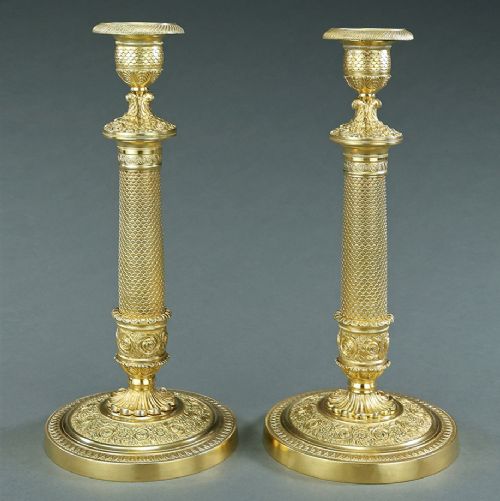
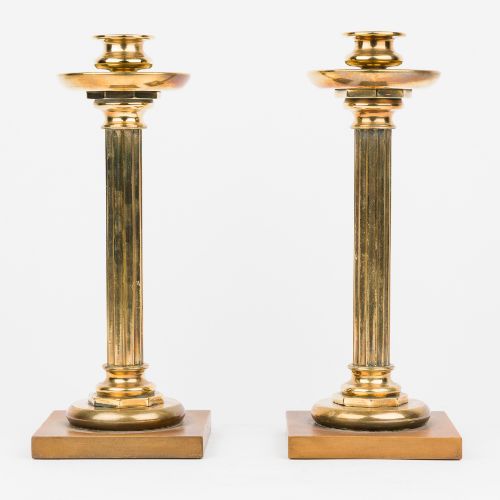
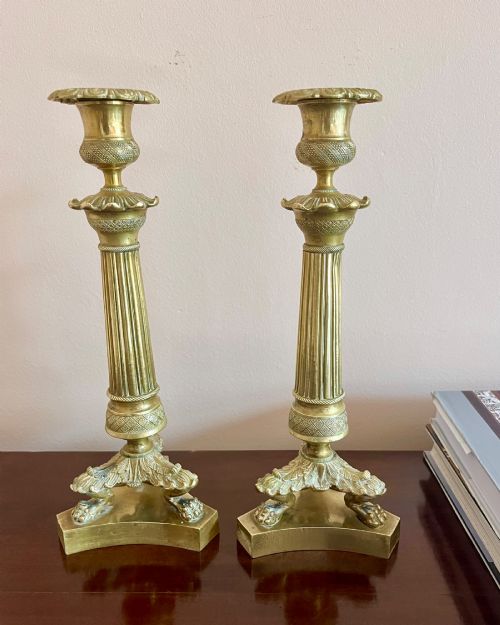
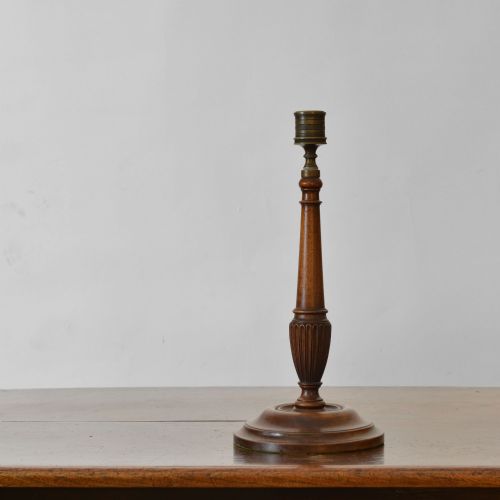
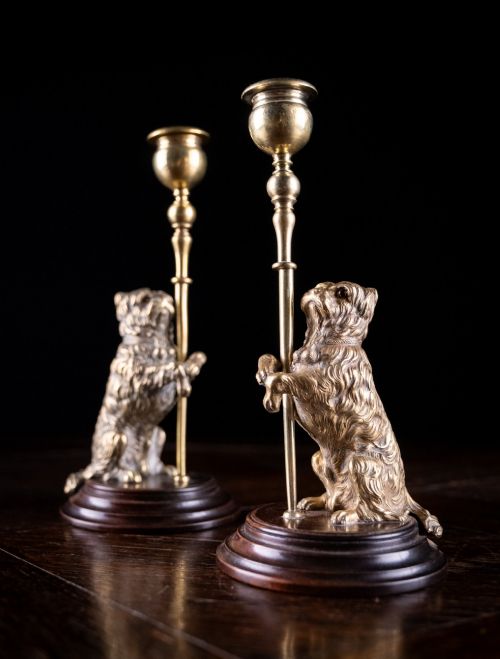
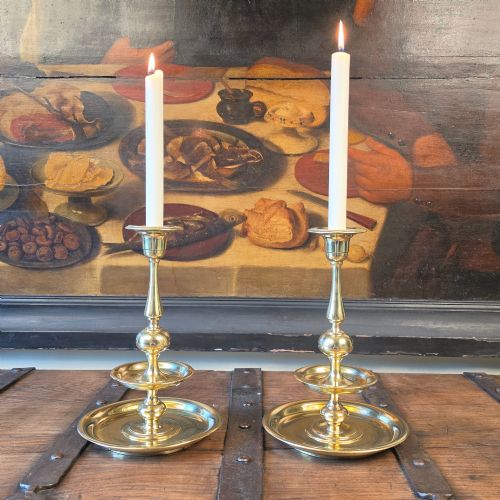
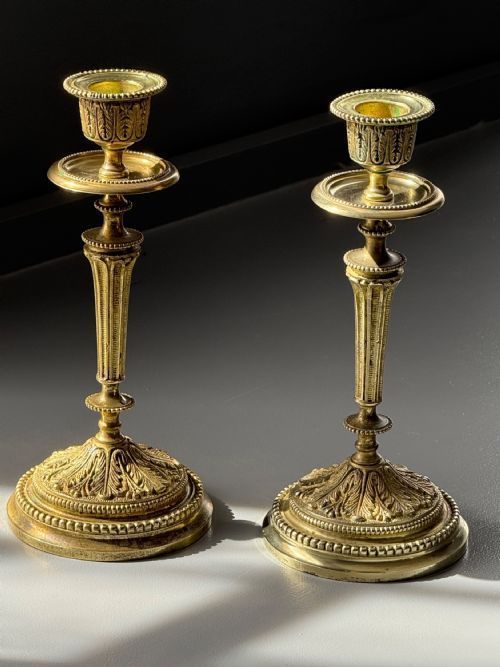
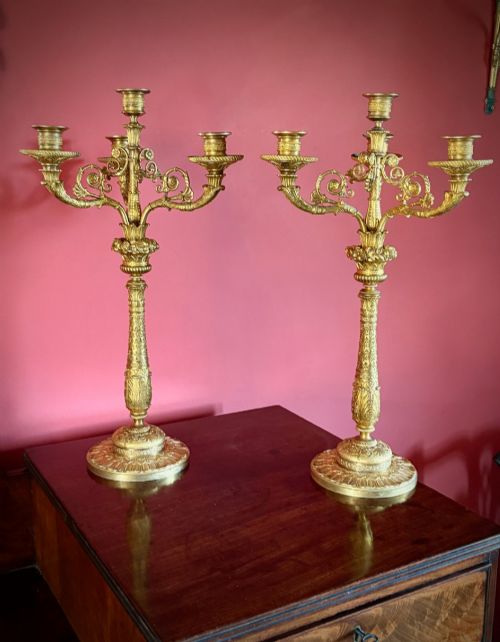
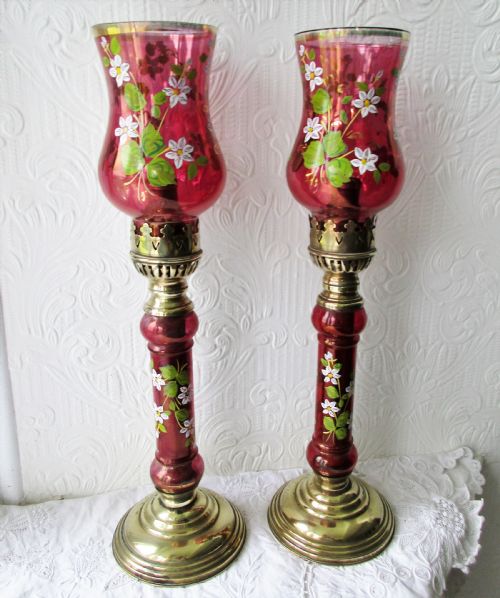
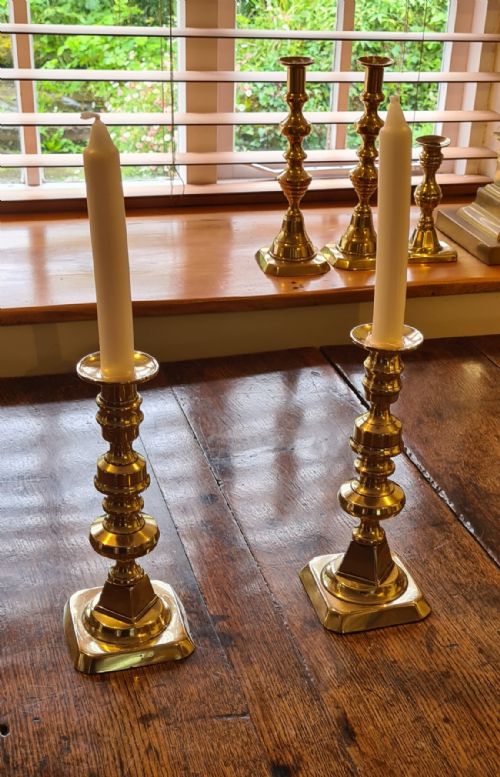
Brass table candle holders encompass candlesticks, multi-armed candelabra, and specialised candle lamps designed for domestic illumination across the Georgian, Victorian, and Edwardian eras. The selection frequently includes matched pairs alongside single examples, spanning simple turned forms to ornate revival designs.
Examples on this page draw from 18th-century production through to Art Deco pieces, utilising various copper alloys and decorative metals. Buyers encounter functional items intended for daily use alongside grander table pieces meant for formal reception rooms.
Materials and construction
Constructed primarily from brass, bronze, and ormolu, these items employ traditional foundry methods such as sand casting and seaming to join components. Many pieces incorporate turned shafts and weighted bases, while others utilise applied champleve enamel, cut glass, or marble to enhance the metalwork.
Surface treatments range from polished and gilded finishes to patinated bronze and lacquered brass. Mechanical variants incorporate threaded components, sliding ejector mechanisms, and telescopic adjustments within the brass assemblies.
Listings feature brass table candle holders spanning the 18th, 19th, and early 20th centuries, including styles from Georgian to Art Deco.
Judging quality and execution
Quality rests in the crispness of the casting and the weight of the metal used in the construction of the shaft and base. Superior pieces display precise hand-finishing, well-fitted joints, and retained original surface patination without excessive polishing.
The sophistication of the design, whether a restrained column or a complex Louis XVI style gilt bronze candelabrum, dictates the level of artisan detail. Matched pairs with uniform casting marks and intact original components consistently represent superior manufacturing standards.
Thiebaut Freres·J.T. & Co·Harrison Patent·AFC·Frederick J Smith & Co·Wm. Tonks & Sons
The Brass Table Candle Holders Glossary
- Ejector
- A mechanical candlestick featuring an internal slide or lever to push out the remaining wax stub. This clever addition prevents the candle from becoming wedged inside the socket.
- Ormolu
- Finely ground high-carat gold applied to a bronze base using a mercury amalgamation process. This historic French technique produces a rich, durable golden finish.
- Candelabra
- A branched lighting fixture designed to hold multiple candles simultaneously. These pieces often feature removable arms to allow conversion into single candlesticks.
- Champleve
- An enamelling technique where troughs or cells are hollowed out of the metal surface and filled with vitreous paste before firing. The piece is then ground smooth and polished.
Brass Table Candle Holders: Frequently Asked Questions
How do I date a brass candlestick?
Dating relies on manufacturing methods, such as seamed construction versus modern extrusion, alongside stylistic cues from periods like the Georgian or Victorian eras. Base shapes and socket designs evolved significantly from the heavy square bases of the mid-18th century to the slender columns of the Edwardian period.
Examining the underside for casting flaws, tool marks, and wear patterns provides further clues to age. Patent stamps and maker marks, where present, help narrow down the production decade.
What is an ejector candlestick?
An ejector candlestick contains an internal mechanism designed to remove spent candle stubs without damaging the brass socket. A small side button or thumbpiece connects to an internal disc that slides up the shaft.
This practical innovation became particularly popular during the 19th century for domestic use. It made clearing wax residue safer and cleaner for household staff.
How should I clean antique brass?
Antique brass requires minimal intervention to preserve its historic surface patination and value. Gentle dusting with a soft cloth is usually sufficient for routine maintenance.
Harsh chemical polishes strip away the aged layers that collectors value. If cleaning is necessary, use a mild, non-abrasive soap solution and dry thoroughly.