




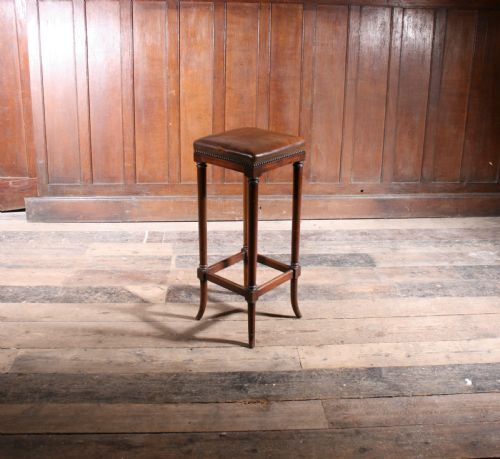


Brass Stud Stool
A brass stud stool brings low-profile seating and deep upholstery to a room, offering practical comfort with period character.
Brass Stud Stool
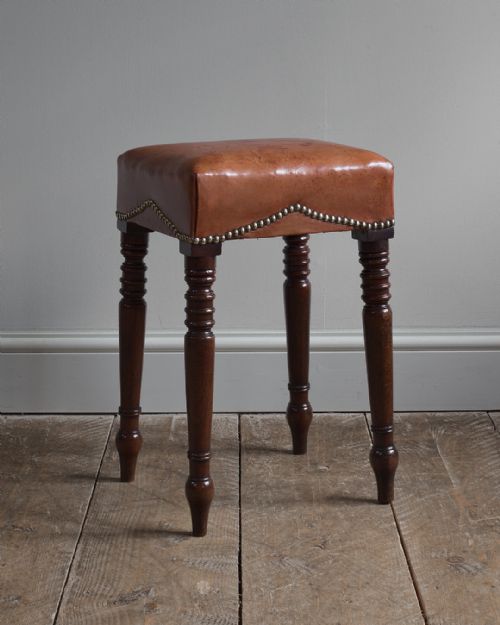
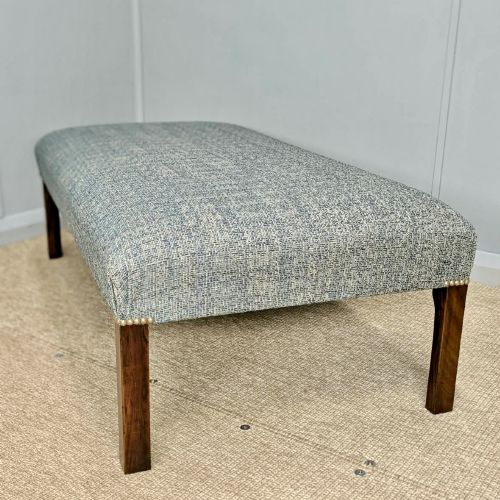
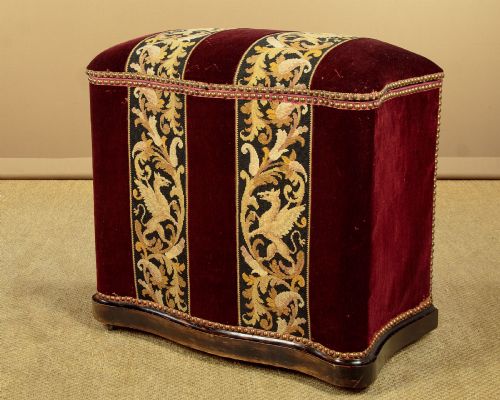
A brass stud stool combines a timber frame with an upholstered top secured by decorative metal tacks, functioning as a footrest, low seat or storage box. These pieces emerge in formats ranging from compact dressing table seats to long benches and large ottomans.
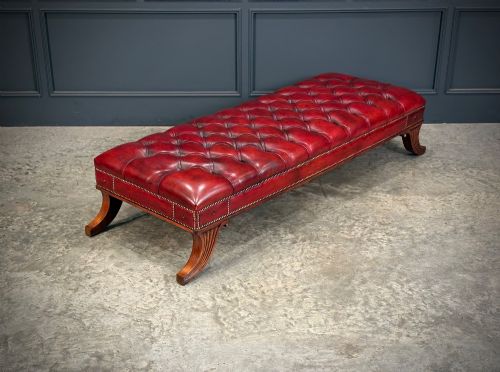
The versions met most frequently on this page date from the nineteenth century, built in mahogany, walnut or oak. Formats span simple square shapes, cabriole leg dressing stools and long Regency frames.
Originating across Georgian, Victorian and Edwardian periods, these stools display stylistic influences from Chippendale, Regency and French classical designs. The integration of leather, fabric, or silk upholstery with timber structures defines the category.
Materials and construction
Frames rely on hardwoods such as mahogany, rosewood, walnut, oak and yew wood, shaped with turned, fluted or cabriole legs. Joinery methods secure these timbers to support weight, occasionally incorporating stretchers for added stability.
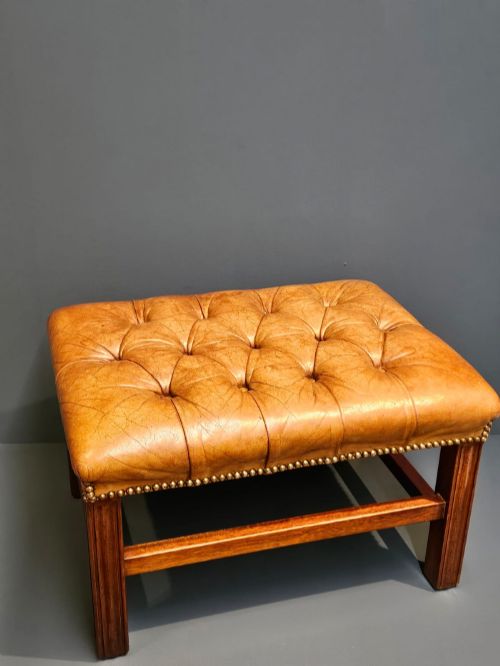
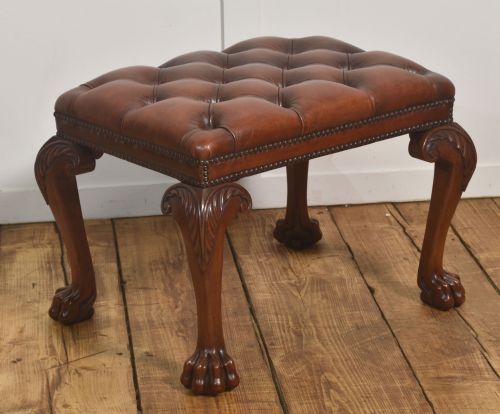
Upholstery involves materials like hand-dyed leather, chenille, silk and fabric stretched over padding, then fastened with brass studs along the perimeter. Buttoning frequently secures the cushioning to create a textured, resilient surface.
Brass Stud Stool Retail Price Guide 2026
Typical asking prices for brass stud stool among the pieces listed under this phrase on Sellingantiques today, from the lower quarter to the upper quarter. They describe what is for sale here now, not the wider market.
Listings span the eighteenth, nineteenth and early twentieth centuries, featuring woods such as mahogany, walnut, rosewood, oak and yew.
Distinctions in quality
Quality rests upon timber selection and the precision of the frame's carving, seen in the sharpness of fluted legs or cabriole curves. Dense woods like rosewood and figured mahogany indicate higher grade construction than secondary softwoods.
Upholstery execution separates standard seating from superior pieces, demonstrated by tight buttoning, robust leather selection, and evenly spaced brass stud work. Original patination on both the timber frame and the leather surface marks a higher standard of preservation.
The Brass Stud Stool Glossary
- Cabriole leg
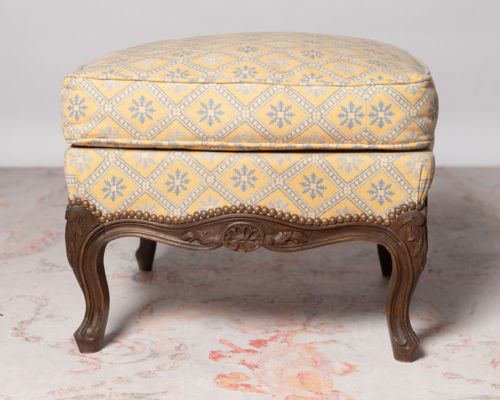
- A furniture leg that curves outward and then tapers inward, mimicking an animal's limb. This form appears frequently on Victorian and walnut frames.
- Box ottoman
- A hinged seating box designed for storage beneath the upholstered lid. These pieces utilise mahogany or rosewood structures.
- Buttoned
- An upholstery technique where depressions are pulled into the padding using buttons. This method secures the filling and creates a patterned surface on leather or fabric tops.
- Stretcher
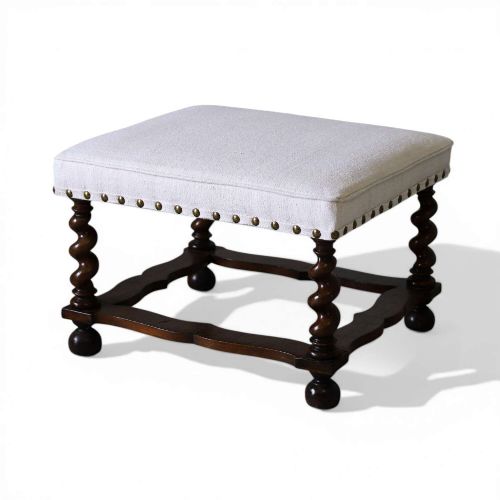
- A horizontal timber rail connecting the legs of a stool for added stability. These components occasionally feature decorative turning or veneering.
- Brass stud
- A metal tack driven into the timber frame to secure the edge of the upholstery. These items provide a decorative metallic border around the seat.
Brass Stud Stool: Frequently Asked Questions
How were these stools used?
These pieces served multiple domestic purposes, acting as footstools before armchairs, low seats at dressing tables, or long benches in hallways. Box variants also provided concealed storage for blankets and household items.
Their sturdy timber frames and padded tops made them versatile movable seating across different rooms of the house.
How do I care for leather upholstery?
Leather surfaces require protection from direct sunlight and excessive heat to prevent drying and cracking. Regular dusting and occasional conditioning maintain the suppleness of the hide.
Avoiding abrasive cleaners ensures the original hand-dyed finish and brass studs retain their appearance.
How do I identify a Victorian piece?
Victorian examples frequently utilise solid mahogany with deep buttoned leather upholstery and cabriole or turned legs. Heavy construction and the inclusion of brass castors often point toward this era.
Proportions tend to be generous, with dark timber patination and robust framing supporting the padded top.
What is a long stool?
A long stool, or bench, provides extended seating capacity beyond the standard square footstool format. These pieces often feature fluted or straight legs supporting a wide upholstered surface.
Pairs of these benches appear in formal rooms, constructed in mahogany or rosewood with leather or fabric tops.