
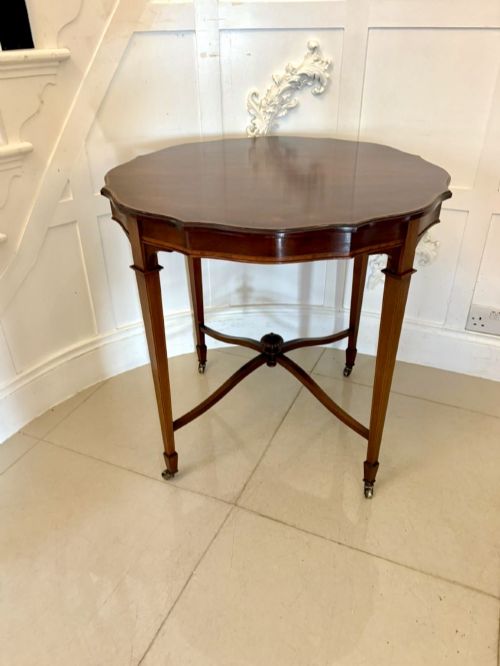
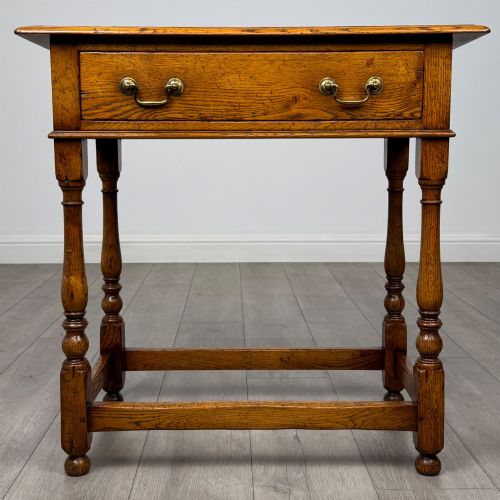


Brass Stretcher Table
These brass stretcher table pieces combine timber surfaces with metal supports, offering sturdy utility and classic design.
Brass Stretcher Table
A brass stretcher table brings together a wooden top and metal bracing, serving as a functional surface for daily use in sitting rooms and hallways. These items appear in various forms, including occasional, side, coffee, and sofa tables.
The pieces on this page span several eras, from seventeenth-century oak through Georgian and Edwardian examples up to mid-twentieth-century designs. Mahogany and satinwood frequently form the tabletops, while brass provides structural support and decorative detail.
How they were made
Cabinetmakers utilised timbers such as mahogany, oak, satinwood, and rosewood for the main surfaces, often employing inlay or figured grain to enhance the visual appeal. Tops range from simple circular boards to rectangular formats with galleries or drop leaves.
Metal components, principally brass and wrought iron, form the stretchers and frames that brace the legs together. These metal braces provide rigidity while introducing contrasting metallic tones against the warm wood.
Listings feature items spanning from the seventeenth century through the Edwardian period and up to nineteen-forty.
What varies in quality
Superior examples demonstrate refined timber selection, such as figured mahogany or intricate satinwood inlay, alongside precise metalwork in the brass stretchers. Lower tiers rely on simpler construction and plain timbers.
Proportion and execution set apart the finer pieces, where the integration of brass galleries and supports feels balanced and harmonious with the underlying woodwork.
The Brass Stretcher Table Glossary
- Stretcher
- A horizontal support connecting the legs of a table to increase stability. In these pieces, brass often forms this structural component.
- Gallery
- A low raised rail or border running along the edge of a tabletop. This feature prevents items from sliding off the surface.
- Sofa table
- A rectangular occasional table traditionally designed to stand in front of or behind a sofa. They frequently feature drop leaves and drawer units.
- Inlay
- A decorative technique where contrasting woods or materials are set into the surface of a base timber. Satinwood is frequently used for this purpose in Edwardian pieces.
Brass Stretcher Table: Frequently Asked Questions
What is a brass stretcher table used for?
These pieces function primarily as occasional, side, or coffee tables within domestic spaces. They provide a stable surface for lamps, books, and decorative objects while adding metallic and wooden textures to a room.
Their varied footprints allow them to fit beside seating arrangements or serve as centre tables in larger spaces.
Which woods appear most often?
Mahogany forms the majority of the tabletops seen here, often accompanied by satinwood, oak, and rosewood. These timbers provide durable surfaces with distinct grain patterns.
Selected pieces incorporate inlaid details to enrich the visual presentation of the wood.
Are these tables sturdy?
The inclusion of a metal stretcher provides additional bracing between the legs, enhancing the overall rigidity of the frame. This construction method keeps the table stable during daily use.
Different periods utilise varying thicknesses of brass and timber to achieve this structural strength.