

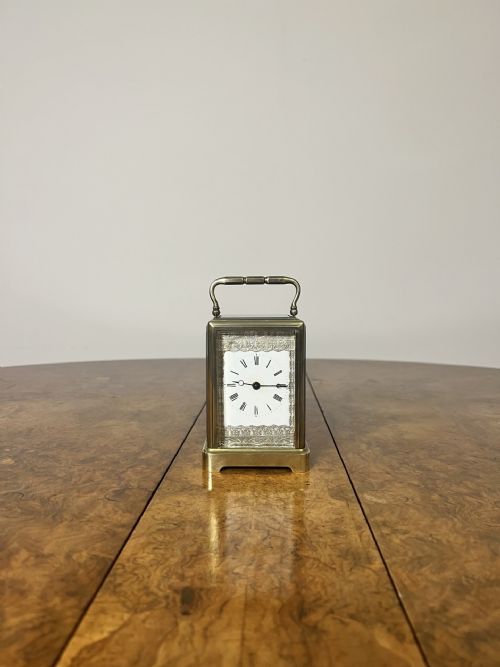


Brass Silvered Table Clock
A brass silvered table clock brings together the crisp legibility of a metal chapter ring and the warmth of polished brass for any room.
Brass Silvered Table Clock
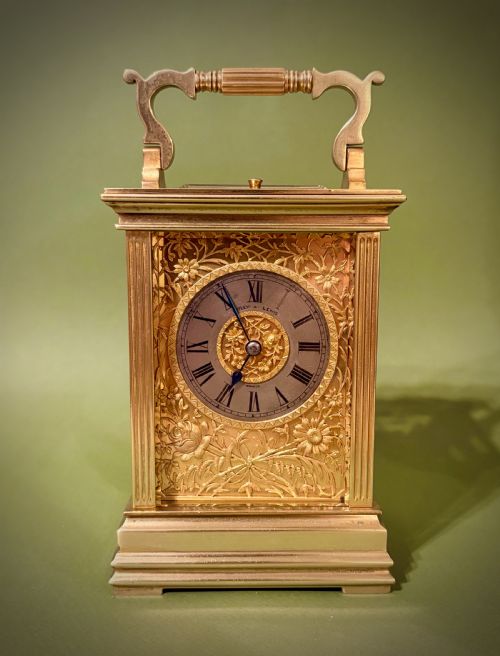
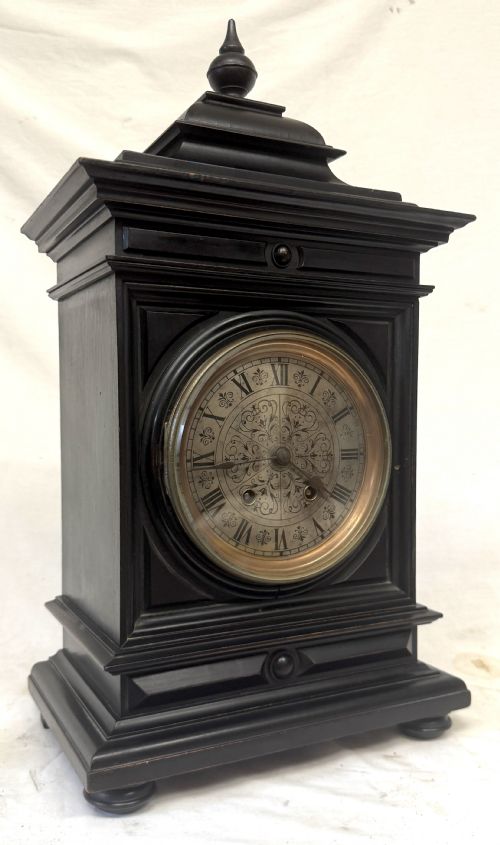
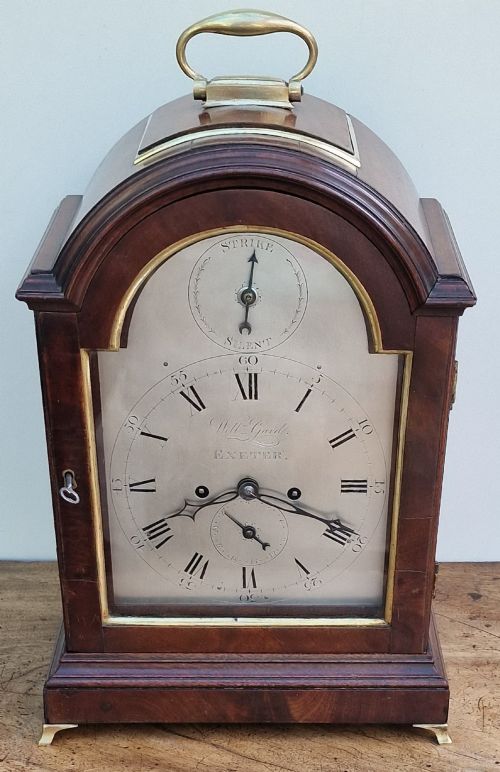
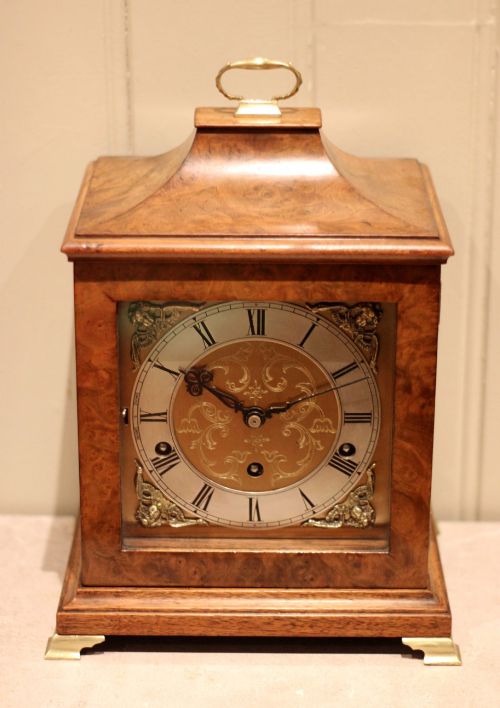
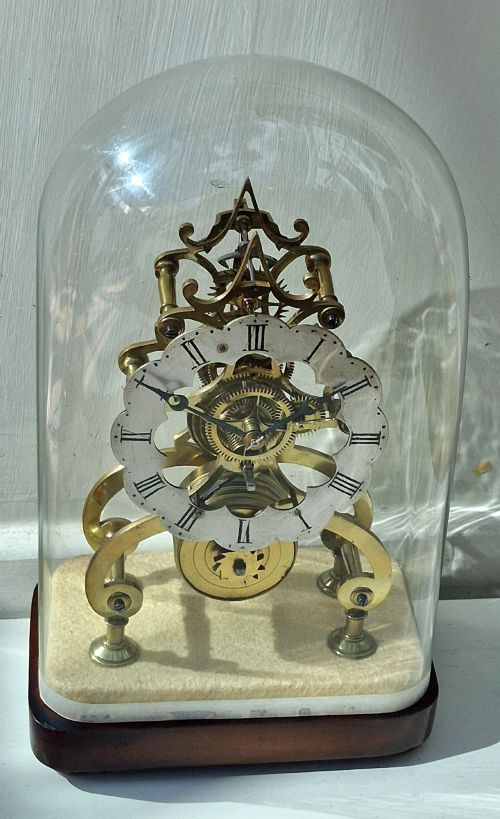
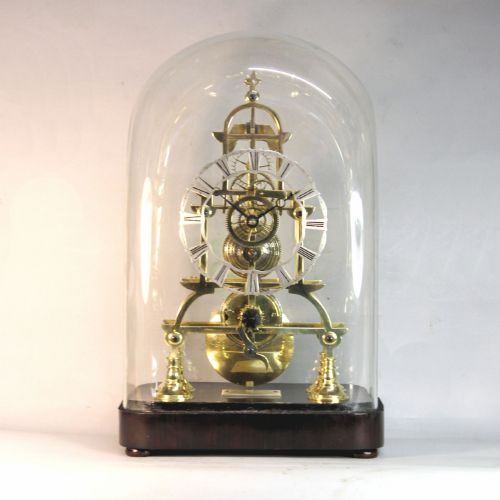
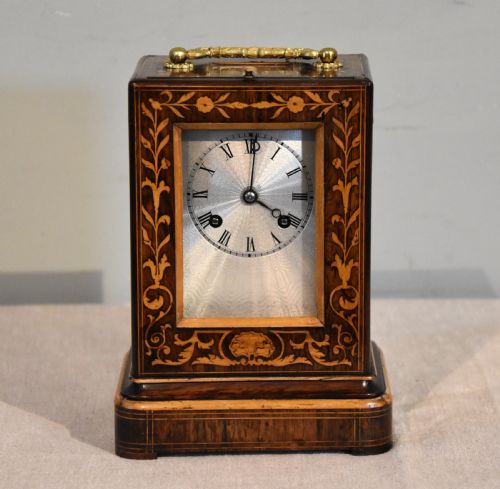
A brass silvered table clock combines a brass case or movement framework with a treated metal dial, often appearing across Georgian, Victorian, and Edwardian periods. These timepieces take many forms, from traditional mahogany bracket clocks with arched dials to exposed skeleton clocks and portable carriage clocks.
Makers and styles span domestic English workshops and French carriage clock makers, incorporating wood types like rosewood, walnut, and ebonised timber alongside the core brass and silvered elements.
Materials and Construction
Makers constructed these clocks using cast and polished brass for the plates, bezels, and movement components, paired with steel for pivots and springs. Dials typically started as brass plates before receiving a silvered finish through chemical application, onto which numbers and inscriptions were engraved and filled with black wax.
Enclosing these mechanisms required dense cabinetry materials, notably mahogany, ebony, burr walnut, and ebonised wood, sometimes accented with glass panels or silver mounts. The synergy between the polished brass framework and the bright silvered dial created high visual contrast for reading time in dimly lit rooms.
Listings feature brass and silvered metal across 18th-century Georgian designs and 19th-century Victorian skeleton and bracket clock forms.
Quality Variations
The standard of a brass silvered table clock rests largely on the crispness of the engraving upon the dial and the depth of the brass casting. Finer examples display deeply cut numerals filled cleanly with dark wax, alongside substantial brass plates and movement components finished with meticulous care.
Case construction similarly divides the range, where secondary timbers, thick veneers, and well-fitted glass panels demonstrate superior cabinetmaking. The integration of complex movements, such as fusee mechanisms or striking trains, further separates standard production pieces from master workshop output.
William Gard·Mappin & Webb·Richard Winter·Jonathon Lowndes·Thwaites of London·John Pepys·William Speakman·Bryson·Howell & James·Des Granges·Winterhalder & Hofmeier·Thomas Cole·James Cole·Hunt And Roskell·Perigal·Paul Garnier·Le Roy et Fils·Lenzkirch·Friedrich Adler·Osiris
The Brass Silvered Table Clock Glossary
- Silvered Metal
- A metal surface treated with a compound of silver to produce a bright, matte white finish. This process was standard for clock dials to ensure high contrast against dark hands.
- Fusee
- A conical pulley used in spring-driven clocks to equalise the torque of the mainspring as it unwinds. It ensures even power delivery to the movement for better timekeeping.
- Bracket Clock
- A portable mechanical clock originally designed to sit upon a wall bracket or a table. Many feature arched wooden cases with brass carrying handles and silvered dials.
- Skeleton Clock
- A timepiece designed with an open metal framework that exposes the entire gear train to view. These pieces are usually protected by a glass dome.
- Chapter Ring
- The ring on a clock face that bears the hour numerals. On these pieces, it is typically silvered brass set against a darker dial centre.
Brass Silvered Table Clock: Frequently Asked Questions
How do I wind my brass silvered table clock?
Wind the clock using the correct key on the winding arbours located on the dial face or movement backplate. Turn gently until resistance is felt, avoiding any over-winding that could strain the mainspring.
Ensure you identify whether the clock is a fusee or spring-driven movement, as winding requirements vary slightly between single and multi-train mechanisms.
Where should I place a table clock?
Position the clock on a stable, level surface away from direct sunlight, draughts, and sudden temperature changes. A sturdy mantelpiece, sideboard, or desk provides an ideal environment for consistent operation.
Check that the surface does not vibrate, which can disrupt the delicate balance or pendulum swing of older mechanical movements.
How do I clean the silvered dial?
Dust the dial gently with a soft, dry camel-hair brush to remove loose particles. Avoid using liquid polishes, silver dips, or abrasive cloths, as these will strip away the delicate silvered layer and ruin the engraved black wax fill.
Professional restoration is recommended if the metal requires deeper cleaning or conservation.
What is a single fusee movement?
A single fusee movement uses a conical drum and a chain or gut line to maintain uniform tension on the gear train as the mainspring runs down. This mechanical arrangement improves the timekeeping accuracy of the clock.
Such movements generally require winding once a week and represent a mark of traditional English clockmaking quality.
Why does my clock have a glass dome?
Glass domes protect delicate skeleton clocks and carriage timepieces from dust, moisture, and accidental damage while allowing the movement to remain fully visible. They are an original feature for many mid-19th-century decorative clocks.
Handle the dome with extreme care using both hands, lifting it straight up off its wooden base.