
Brass Rococo Wall Appliques
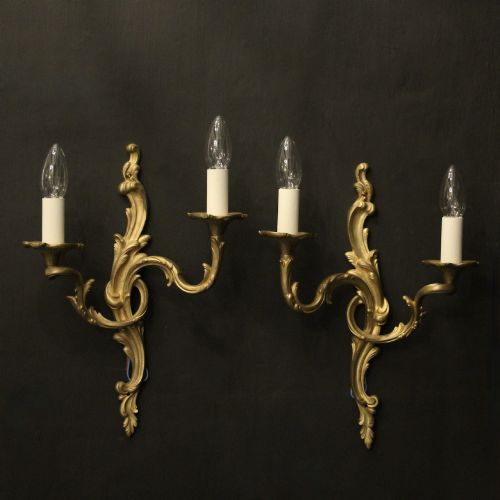
Brass rococo wall appliques bring flamboyant French 19th-century styling and warm metal tones to an interior.
Brass Rococo Wall Appliques
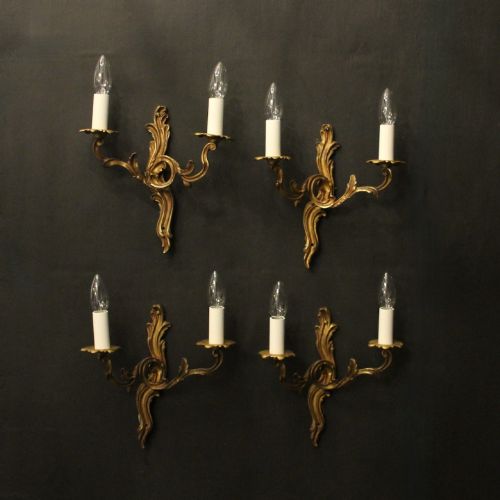
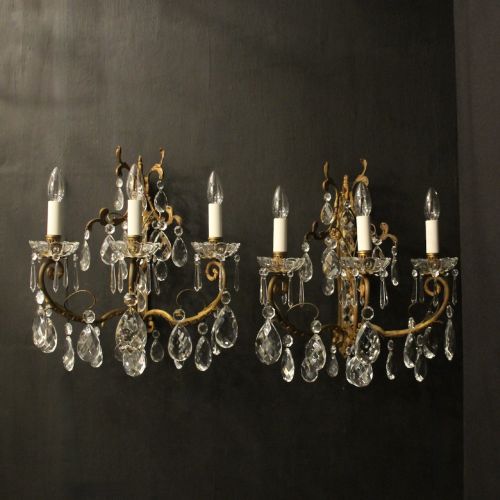
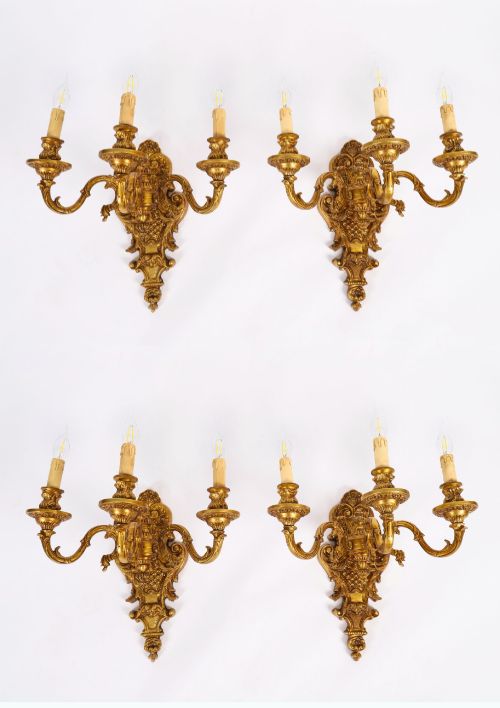
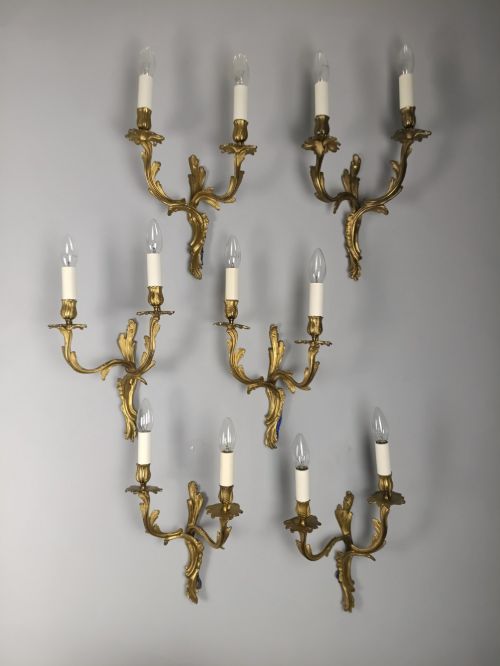
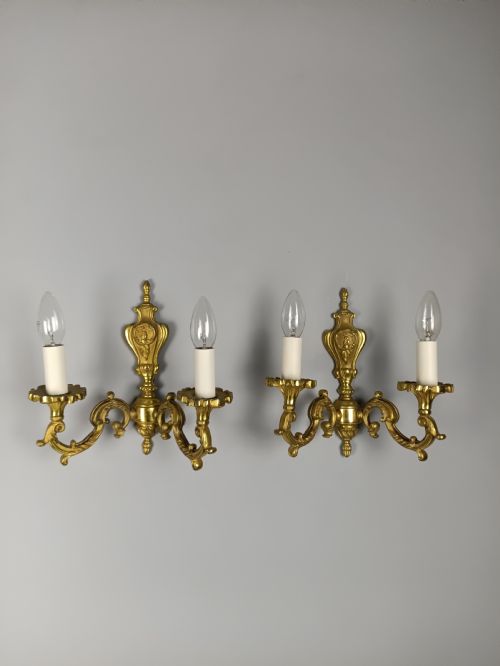
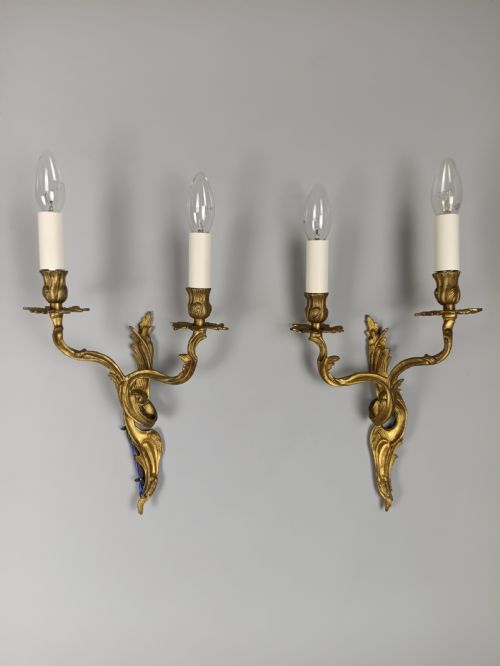
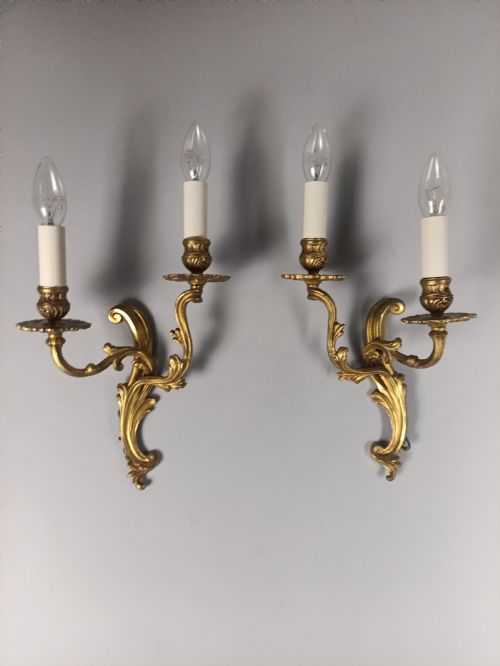
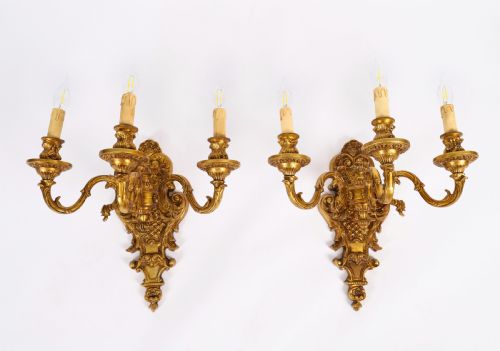
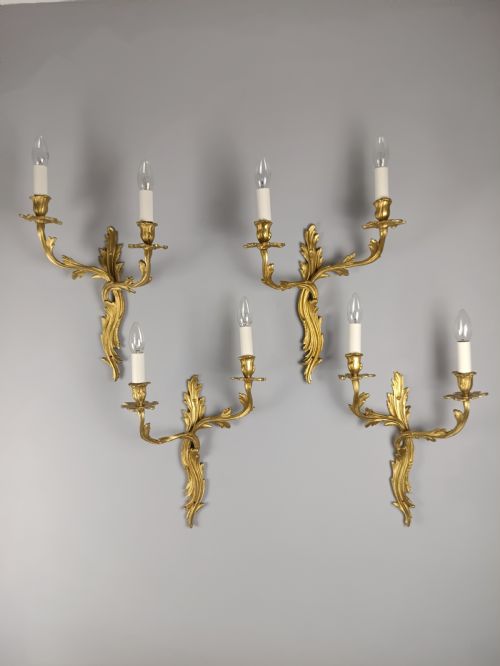
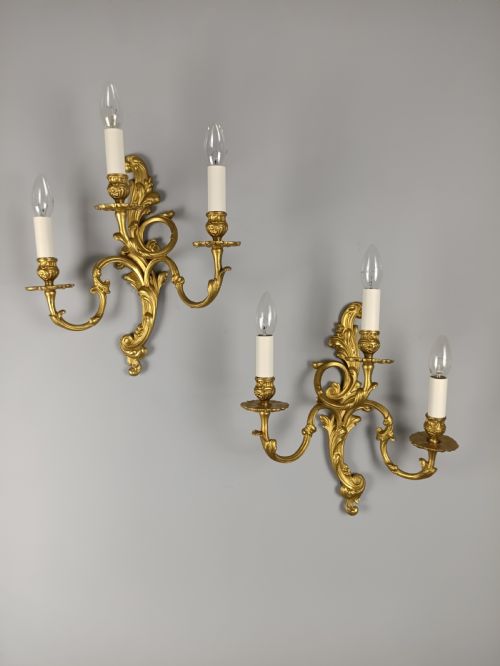
These fixtures serve primarily as wall lights and wall sconces, taking the form of twin-arm, triple-arm, or single-arm configurations designed to mount directly onto domestic walls. Brass rococo wall appliques embody the ornate asymmetry and fluid scrollwork associated with French 19th-century design.
The selections span from the 1880s through to the 1930s, capturing revivals of Louis XV taste alongside French chateau aesthetics. Buyers encounter sets of four or six alongside pairs, often wired for modern installation while retaining their historic metalwork forms.
What varies in quality
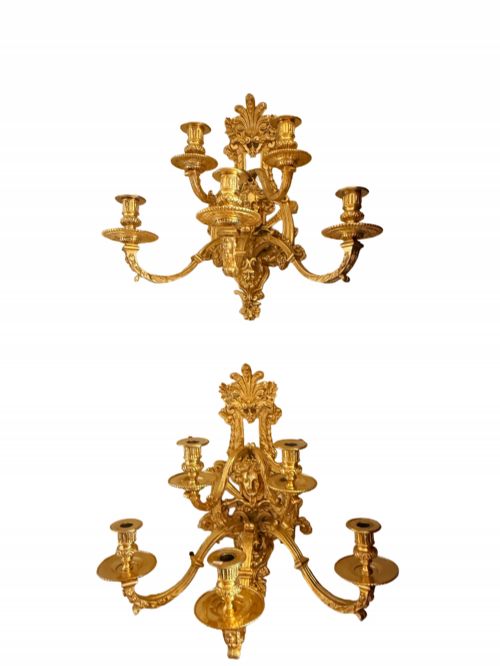
The crispness of the chasing defines the upper tier of these pieces, where artisan hands have sharpened acanthus leaves and C-scrolls after casting. Lesser examples rely solely on the raw cast without secondary hand-tooling, resulting in softer edges and blurred decorative motifs.
Weight and metal density separate standard production from superior output, with substantial gilt bronze castings offering a rigidity that thinner stamped brass lacks. The depth and integrity of the original fire gilding or surface plating further distinguish workshop outputs across different decades.
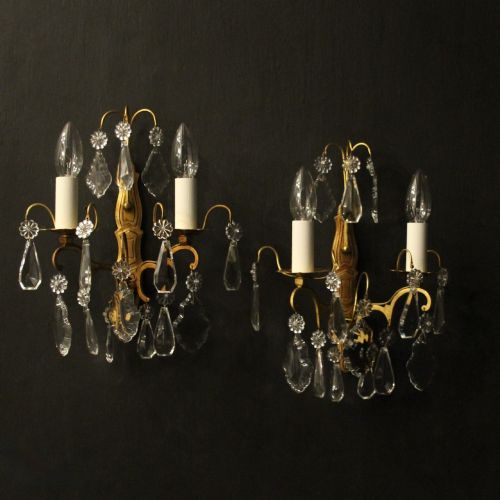
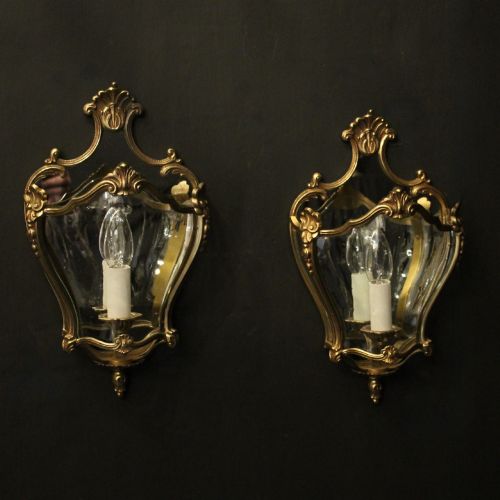
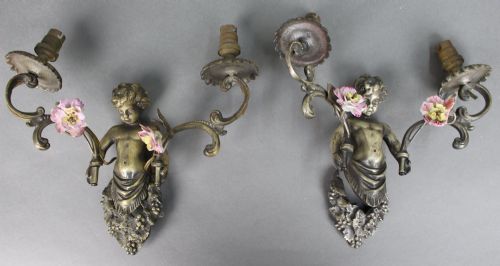
Object configurations include twin-arm wall lights, triple-arm sconces, and half-lanterns reflecting French rococo revival styles.
Poix Blin
The Brass Rococo Wall Appliques Glossary
- Ormolu
- Finely chopped high-zinc brass applied to an object via mercury gilding to produce a rich golden surface. This technique was widely practiced by French metalworkers during the 18th and 19th centuries.
- Rococo Revival
- A design movement drawing inspiration from the 18th-century Louis XV style, characterised by asymmetrical C-scrolls, shell motifs, and naturalistic plant forms. It experienced major resurgences throughout the Victorian era.
- Applique
- A decorative wall-mounted bracket designed to hold candles or electric lamps. In historical French terminology, the word specifically denotes a sconce affixed to vertical surfaces.
- Chasing
- The manual metalworking process of refining cast details using hammers and small punches. High-quality pieces show sharp, deep incisions made by skilled metalworkers.
Brass Rococo Wall Appliques: Frequently Asked Questions
How do I wire antique wall lights?
Most of these fixtures have been adapted for modern electrical standards by contemporary restorers. You should consult a qualified electrician to mount and connect the internal wiring safely to your mains supply.
Ensure the wall structure can support the weight of heavy bronze or brass bodies before installation. Proper bracket fixings protect both the plaster and the antique metalwork from strain.
Are these lights French in origin?
The vast majority of these fixtures originate from French workshops adhering to Louis XV and rococo revival tastes. French makers dominated the production of ornate gilt bronze hardware during the 19th and early 20th centuries.
Stylistic cues such as asymmetric cartouches and leaf-wrapped arms typically point directly to Parisian manufacturing traditions. Even pieces dated to the 1920s or 1930s continue these established French decorative idioms.
What is the difference between ormolu and brass?
Ormolu refers specifically to gilded bronze items finished with a mercury amalgam technique that yields a deep, warm golden lustre. Standard brass is an alloy of copper and zinc that maintains a uniform composition throughout its thickness.
While brass can be polished to a bright shine, ormolu possesses a distinct micro-texture and colour resulting from the historical amalgamation process. Many listings use gilt bronze and ormolu interchangeably to describe high-status French metalwork.
How do I clean gilded bronze appliques?
Dust these fixtures gently with a soft, dry brush to prevent accumulation in the recesses of the rococo scrollwork. Avoid abrasive commercial metal cleaners that can strip away historic gilding or surface patination.
If washing is necessary, use a damp microfibre cloth with mild soap and dry immediately. Preserving the original surface finish maintains both the visual character and the historical integrity of the piece.