


Brass Repeating Table Clock
A brass repeating table clock combines mechanical precision with portable convenience, offering audible timekeeping on demand for any room.
Brass Repeating Table Clock
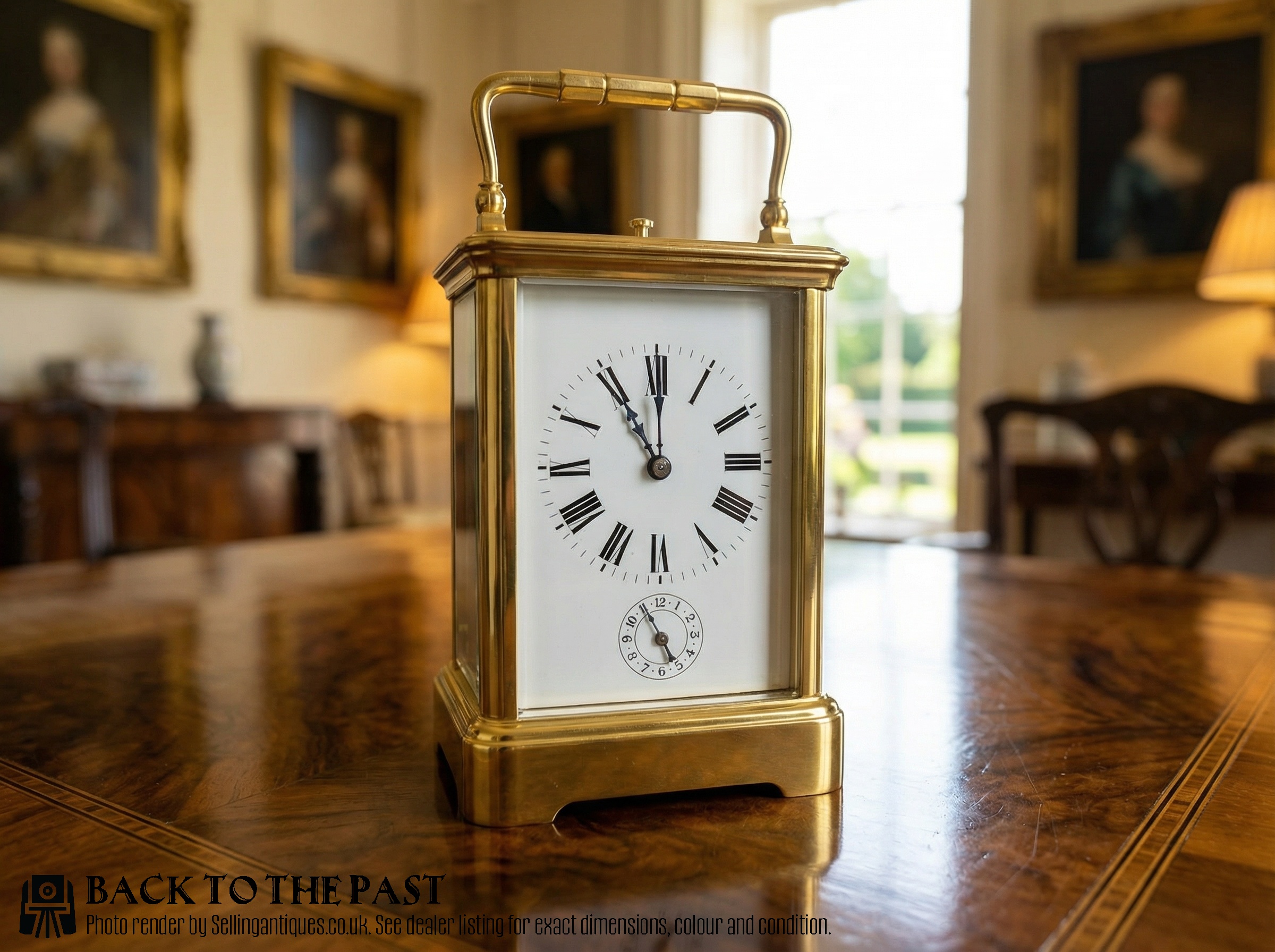
A brass repeating table clock takes many forms across the nineteenth century, most frequently appearing as a carriage clock housed in glass and brass panels.
The selection here encompasses French carriage clocks alongside English bracket and table clocks spanning the Victorian, Regency, and Georgian periods.
Makers such as Drocourt, Henri Jacot, and Richard & Co produce portable brass designs, while earlier English examples utilise ebonised wood or mahogany cases.
Materials and construction
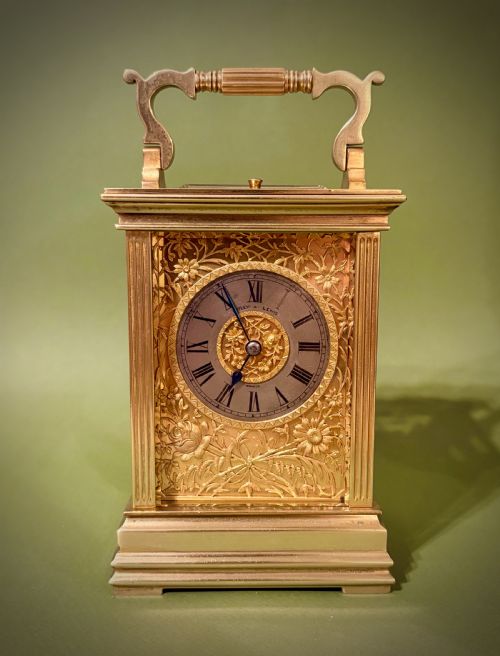
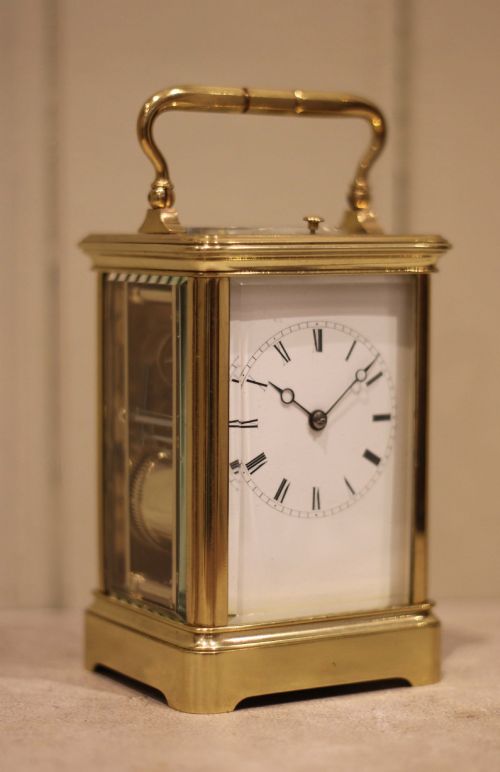
Casses rely heavily on brass, gilt brass, and gilded metal, frequently glazed with bevelled glass panels to reveal the intricate movement within.
Enamel dials provide the face for many pieces, sometimes complemented by enamel paintings or engraved brass masks.
Internal mechanisms combine steel components with fusee chain driven or platform escapement movements, occasionally featuring ebonised wood or mahogany for bracket clock housings.
One nineteenth century carriage clock explicitly links its repeating mechanism to race horse interest.
Quality and craftsmanship
The finesse of the engraving on the brass mask and gorge case distinguishes standard production from finer horological examples.
Complexity of the movement, such as grand sonnerie striking, alarm functions, or five-minute repeating, elevates the calibre of the piece.
Completeness of restoration and retention of original gilding significantly influence the structural and visual integrity of the clock.
Joseph Windmills·Andrew Marchant·Richard Peckover·Henry Jacot·Hunt and Roskell·Alfred Drocourt·L Epee·Richard and Co
The Brass Repeating Table Clock Glossary
- Repeating mechanism
- A complication that strikes the hours and quarters upon demand when a plunger or pendant is pressed. This allows the owner to check the time in the dark.
- Gorge case
- A stepped, pillared brass housing common in carriage clocks. It provides robust protection for the glass panels.
- Verge escapement
- An early type of escapement mechanism controlling the release of the gear train. It relies on a balance wheel or pendulum.
- Fusee chain
- A conical pulley device used in bracket clocks to maintain even power delivery as the mainspring unwinds. This ensures consistent timekeeping.
- Grand sonnerie
- A striking train that sounds both the hours and the passing quarters automatically. It represents a high level of mechanical ingenuity.
Brass Repeating Table Clock: Frequently Asked Questions
How do I activate the repeat function?
Most carriage clocks feature a button or plunger on the top or side of the case. Pressing this activates the strike train to sound the last elapsed hour and quarters.
Older bracket clocks often utilise a pull-repeat cord connected to a fusee chain driven movement for the same audible function.
What is the difference between a carriage clock and a bracket clock?
Carriage clocks are typically smaller, portable brass and glass pieces designed for travel during the nineteenth century. They incorporate built-in handles and platform escapements.
Bracket clocks are larger wooden table clocks originating from earlier Georgian and Regency periods, traditionally placed on dedicated wall brackets or furniture.
How should I wind and maintain these clocks?
Winding requires a dedicated key inserted into the dial squares, turning gently until resistance is met. Care must be taken not to overwind the mainspring.
Professional servicing every few years ensures the steel and brass movement remains clean and properly lubricated.
How do I identify the period of a brass clock?
Case styles, dial ornamentation, and maker signatures provide primary clues to age. Gorge cases and specific escapement types became prevalent in the nineteenth century, whereas basket top wooden cases denote earlier periods.
Inscriptions on the backplate or dial often record the maker and approximate decade of manufacture.