



Brass Repeating Clock
A brass repeating clock brings mechanical precision and heavy metalwork together, offering portable timekeeping with a mechanism that chimes the last hour on demand.
Brass Repeating Clock
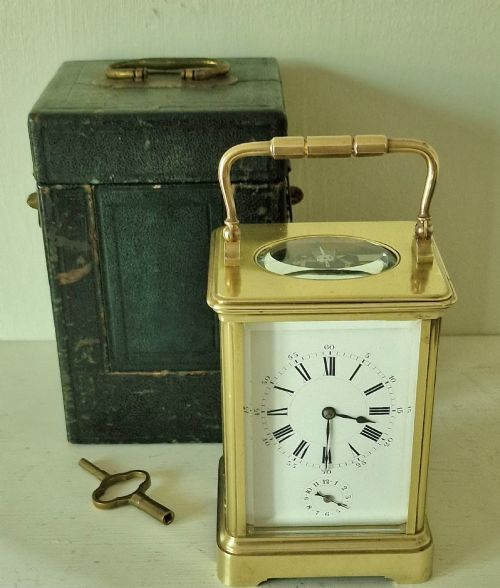
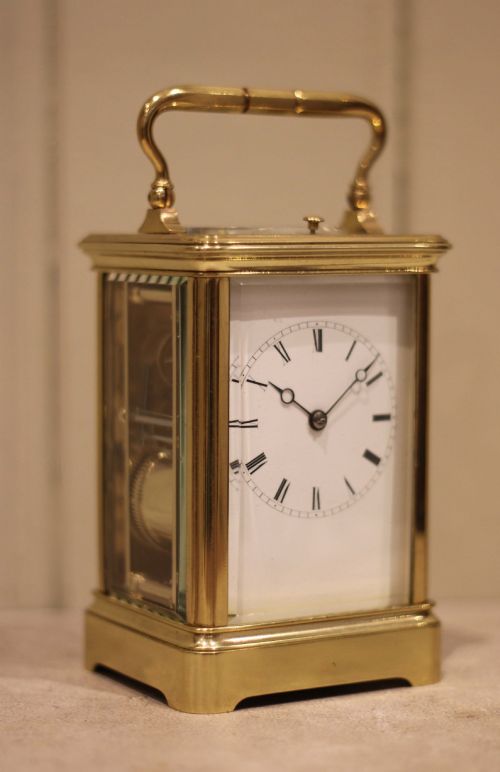
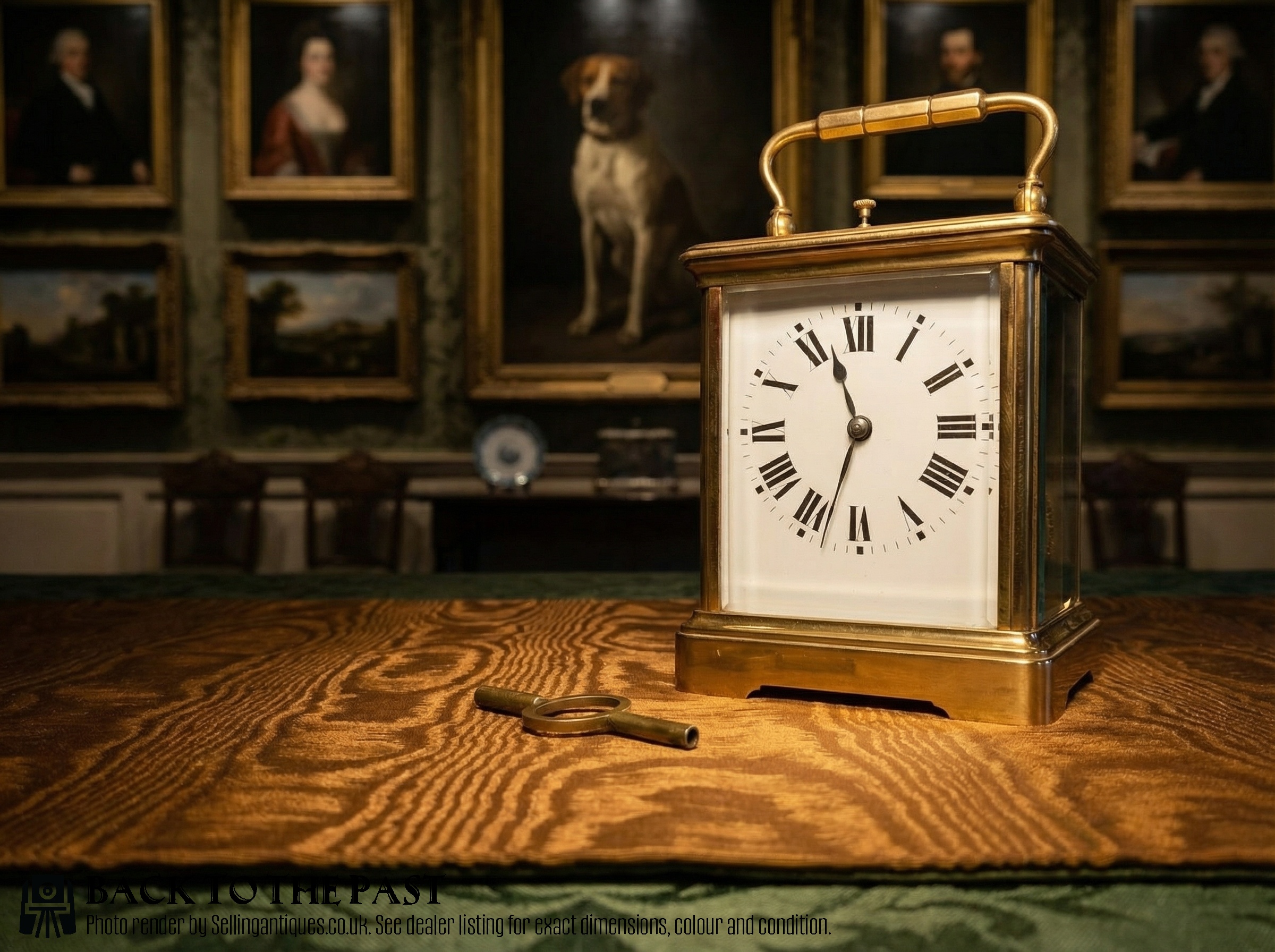
A brass repeating clock sits as a portable timepiece designed for travel or domestic placement, most frequently encountered as a carriage clock originating from nineteenth century France.
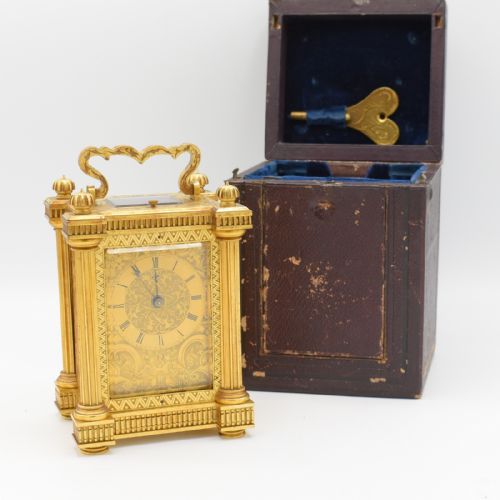
These pieces manifest in various forms including table clocks, bracket clocks, and mantel clocks, spanning periods from the eighteenth century through the Victorian era.
The objects combine heavy metal casting with glass panels and white enamel dials, housing complex gear trains capable of striking hours and quarters upon pressing a button.
Materials and Construction
Makers utilised brass and gilt brass for the robust frames and plates, often housing steel components within the movement and protecting the dial behind bevelled glass panels.
Dials feature white enamel with Roman or Arabic numerals, sometimes complemented by painted enamel flower designs or enamel bandings.
Casings incorporate specific housing styles such as the gorge case or doucine case, occasionally complemented by mahogany, leather, or ebonised wood in bracket clock formats.
Brass Repeating Clock Retail Price Guide 2026
Typical asking prices for brass repeating clock among the pieces listed under this phrase on Sellingantiques today, from the lower quarter to the upper quarter. They describe what is for sale here now, not the wider market.
Travellers once relied on these heavy brass clocks to survive bumpy carriage rides while still chimunig out the small hours.
Quality Variations
Distinction across the range rests upon the complexity of the internal movement, moving from standard hour strikers to grand sonnerie, petit sonnerie, or five minute repeating mechanisms.
The crispness of the brass casting and the presence of original gilding separate standard production pieces from higher grade examples produced by noted makers.
Detailing on the dial, such as hand painted enamel floral bands or engraved exterior brass cases, denotes higher craftsmanship.
Howell & James London·Joseph Windmills·Drocourt·Andrew Marchant·Dwerrihouse & Bell·A Dumas·A Margaine
The Brass Repeating Clock Glossary
- Repeating movement
- A mechanism that sounds the last hour or quarter hour when a plunger or button is pressed. This function was designed for checking the time in the dark.
- Carriage clock
- A small, portable spring driven timepiece with a handle, originally built for officers on the move during the nineteenth century.
- Gorge case
- A stepped rectangular brass case with distinctive moulded shoulders, commonly found on French carriage clocks.
- Grand sonnerie
- A striking train that sounds both the hours and the quarters automatically on every quarter hour, alongside the repeating function.
- Verge escapement
- An early type of escapement mechanism using a crown wheel and pallet impulses, seen in older bracket clock examples.
Brass Repeating Clock: Frequently Asked Questions
How do I wind a brass repeating clock?
Wind the mainspring using the matching key through the back plate apertures, turning carefully until resistance meets the stop. Avoid over winding to protect the vintage springs.
Ensure you handle the movement gently and keep the clock on a level surface to maintain steady operation of the escapement.
Why does the clock strike when I press the button?
The repeating mechanism activates a train of gears connected to gongs or bells, releasing hammers that count out the correct hours or quarters. This allows time checks in the dark.
Internal levers read the position of the time train to determine the correct number of strikes before locking back into place.
How do I tell an 1860 carriage clock from a 1900 one?
Earlier pieces from the mid nineteenth century often feature heavier mercury or bimetallic compensation pendulums and distinct hand engraved case details. Later examples shift towards standardised mass production.
Examine the escapement type and dial typography, as cylinder platforms gave way to lever platforms towards the end of the Victorian period.
Where should I place a carriage clock at home?
Position the clock on a stable, vibration free mantelpiece or table away from direct sunlight and damp environments. Stability keeps the balance wheel beating evenly.
Allow clearance around the case so the bell sound projects clearly into the room during hourly or repeating strikes.