

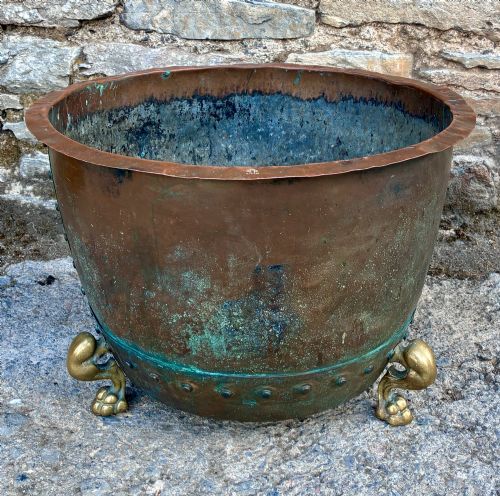
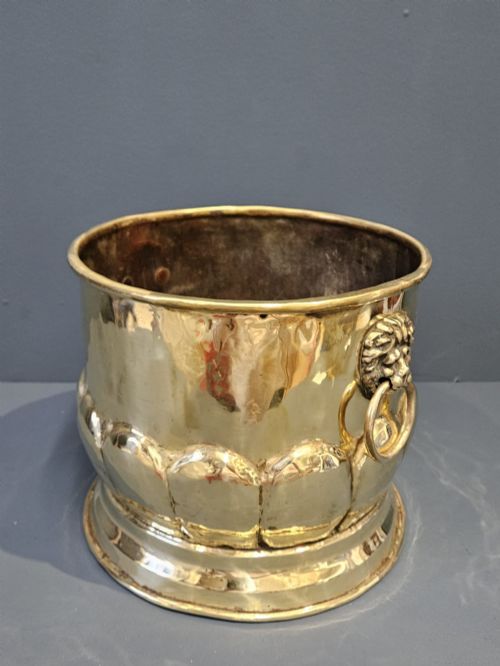
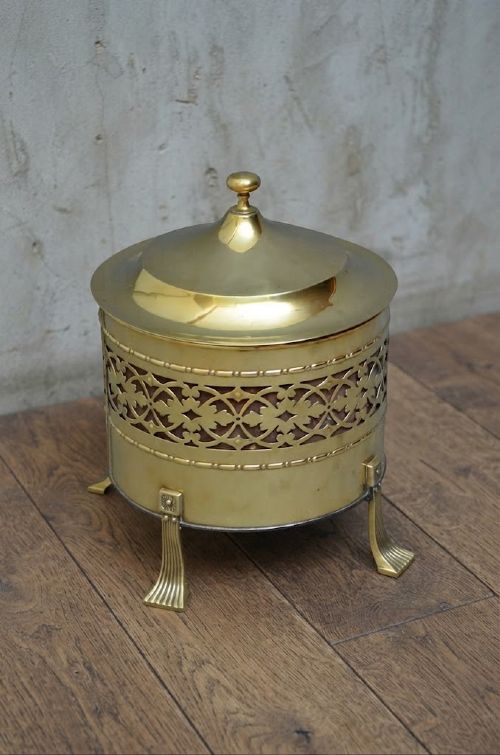
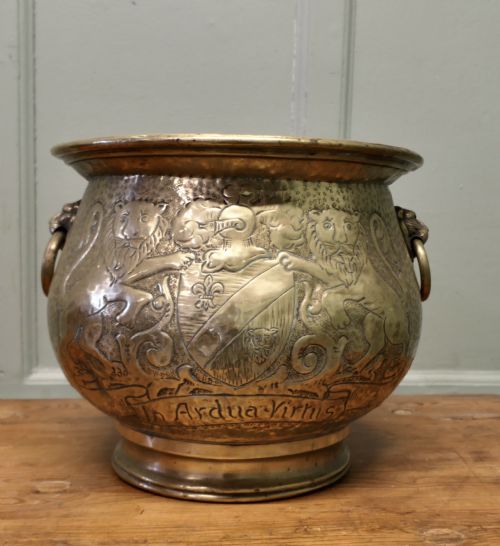


Brass Pot Holder
These brass pot holder pieces are heavy plant vessels and indoor containers designed to hold greenery, sitting chiefly in Victorian and Edwardian interiors.
Brass Pot Holder
When you search for a brass pot holder, you encounter vessels designed to contain indoor plants, logs, and coal across the nineteenth and twentieth centuries. The pieces on this page appear predominantly as Victorian and Edwardian planters, jardinieres, and cachepots made for domestic display.
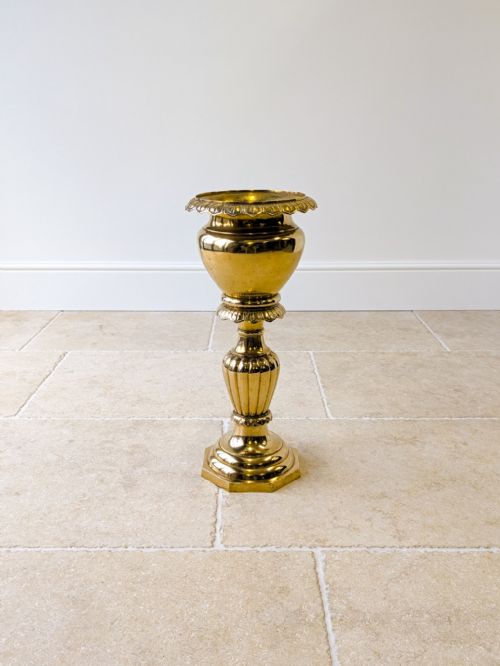
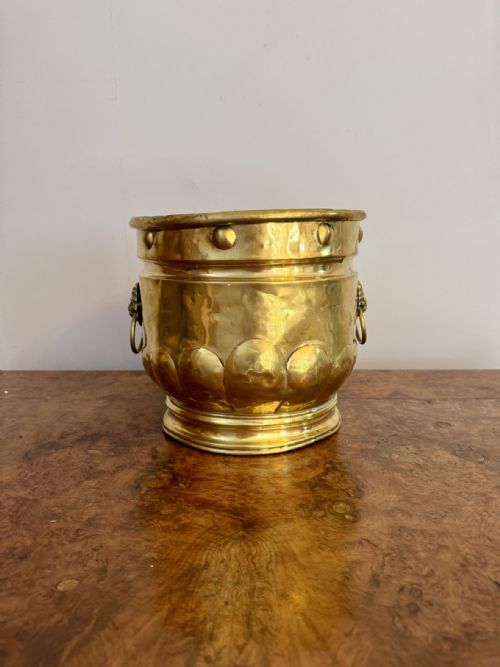
The forms span simple cylindrical shapes to vessels raised on original stands, alongside related desk accessories and log bins. Origins stretch from English workshops to continental Europe, India, and China, incorporating hardwood, oak, and copper alongside the principal brass metalwork.
How they were made
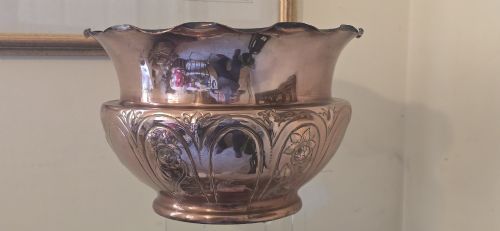
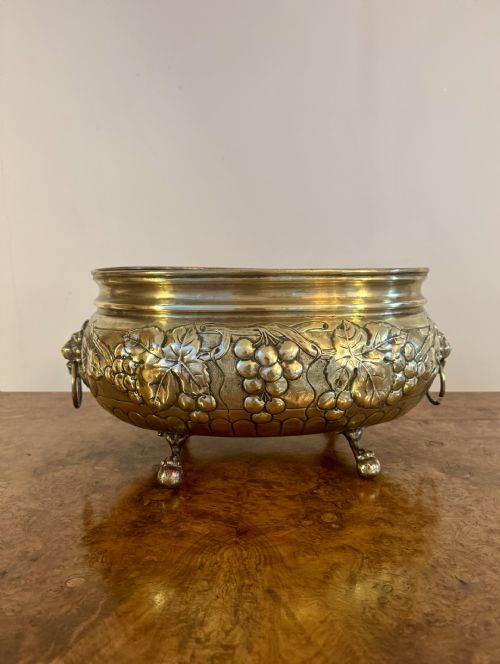
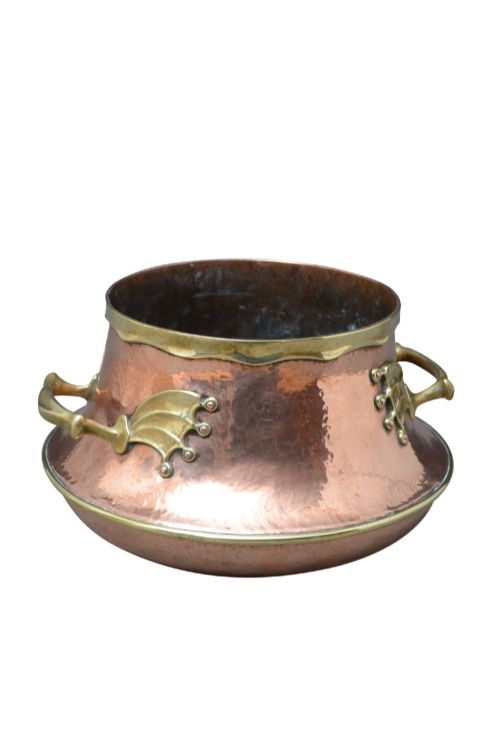
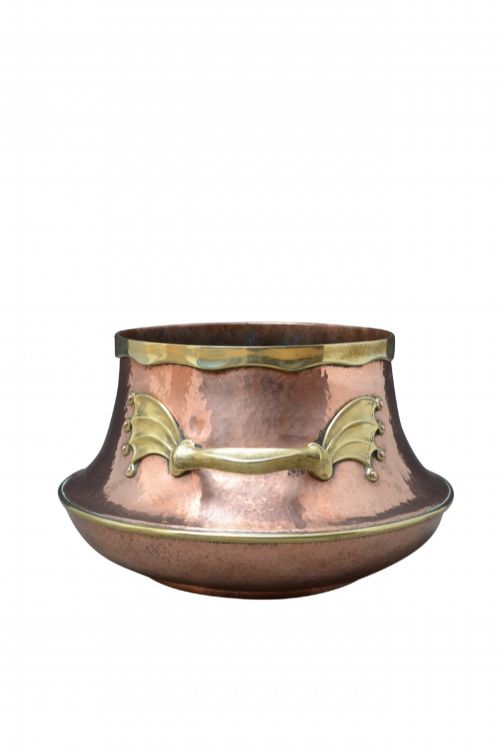
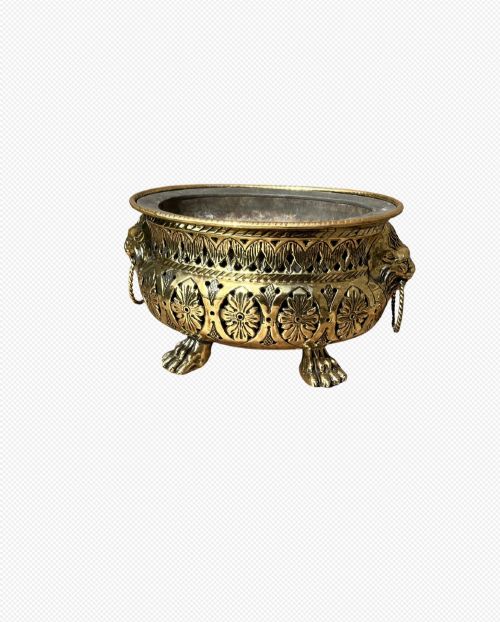
Makers shaped these containers using sheet brass and copper, often employing hammering, repoussé techniques, and piercing to create decorative surface patterns. Rivets secure the seams of heavy vessels, while cast elements form lion mask handles and decorative shields.
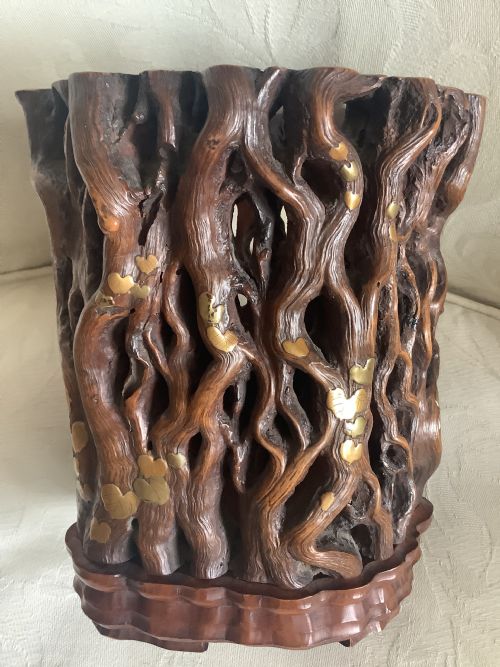
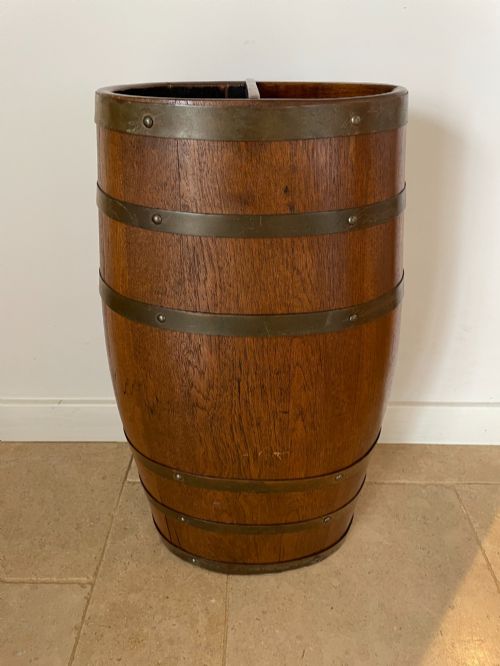
Wooden components like oak and walnut appear in coopered barrels, umbrella stands, and supportive frames. Wirework and applied crests provide additional detailing on specific Victorian and Edwardian examples.
Brass Pot Holder Retail Price Guide 2026
Typical asking prices for brass pot holder among the pieces listed under this phrase on Sellingantiques today, from the lower quarter to the upper quarter. They describe what is for sale here now, not the wider market.
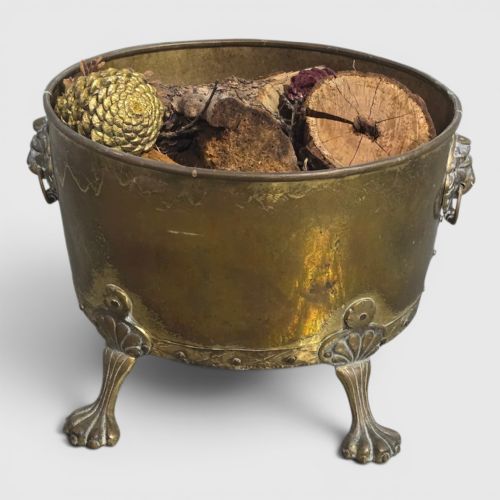
Some nineteenth-century vessels stare back at you with cast lion masks and animal heads.
What varies in quality
The distinction between standard utility items and finer pieces lies in the crispness of the hand-worked repoussé decoration and the weight of the metal used. Heavy gauge brass and solid copper retain their structural integrity better than thin, pressed sheet alternatives.
Original stands, matching liners, and distinct stylistic details such as animal heads or pierced fretwork elevate certain items. The integration of secondary materials like hardwood and bronze adds complexity to superior examples.
J Sankey and Sons
The Brass Pot Holder Glossary
- Jardiniere
- An ornamental pot or stand for holding flowers or plants. These vessels often sit directly on the floor or upon dedicated stands.
- Cachepot
- An ornamental flowerpot outer case designed to hide an ordinary unadorned plant pot. They lack drainage holes at the base.
- Repoussé
- A method of ornamentation in which metal is hammered into relief from the reverse side. This technique creates raised patterns of animals, foliage, or abstract motifs.
- Dinanderie
- Objects made of brass, copper, or bronze produced in European workshops. The term covers vessels and decorative metalware from various historical periods.
- Coopered
- Formed of staves fitted together and bound with hoops, similar to barrel construction. Oak is frequently utilised for this method in log bins and planter stands.
Brass Pot Holder: Frequently Asked Questions
What is a brass pot holder used for?
These vessels serve primarily as indoor planters, jardinieres, and cachepots to hold potted plants and floral arrangements within domestic rooms. They also function as log bins, coal buckets, and desk accessories depending on their size and depth.
Larger versions accommodate heavy floor plants or firewood near hearths, while smaller cylindrical containers rest on tables or desks. Their waterproof metal construction protects interior surfaces from moisture.
How do I date a brass pot holder?
Dating relies on stylistic markers, manufacturing techniques, and the associated periods recorded in the design. Victorian pieces often feature heavy cast handles and Gothic or heraldic motifs.
Edwardian and Art Nouveau examples display flowing organic lines, piercing, or specific maker attributions. Later pieces incorporate twentieth-century styles such as Art Deco dinanderie treatments.
Are these pieces made entirely of brass?
While brass forms the primary material, many pieces incorporate other metals and natural woods. Copper, bronze, and silver plate appear frequently alongside the brass body.
Some examples include oak, walnut, or hardwood through coopered staves, internal frames, or separate stands. Wirework and cast metal handles are also standard components.
How do I care for antique brass?
Maintenance involves dusting with a soft cloth to prevent surface dirt buildup. Avoid harsh abrasive cleaners that strip the historic patina accumulated over the decades.
When used as actual planters, placing a separate waterproof liner inside protects the antique metal from standing water and soil acidity. Gentle cleaning preserves the original hammered or repoussé surface details.