



Brass Painted Desk Lamp
A brass painted desk lamp brings focused light and distinct period colour to a workspace, drawing on centuries of metalwork and painted finish traditions.
Brass Painted Desk Lamp
When buyers search for a brass painted desk lamp, they encounter functional illumination fused with decorative arts across multiple decades. The pieces span the nineteenth century through the early twentieth century, showing periods such as Victorian, Edwardian, and the 1920s.
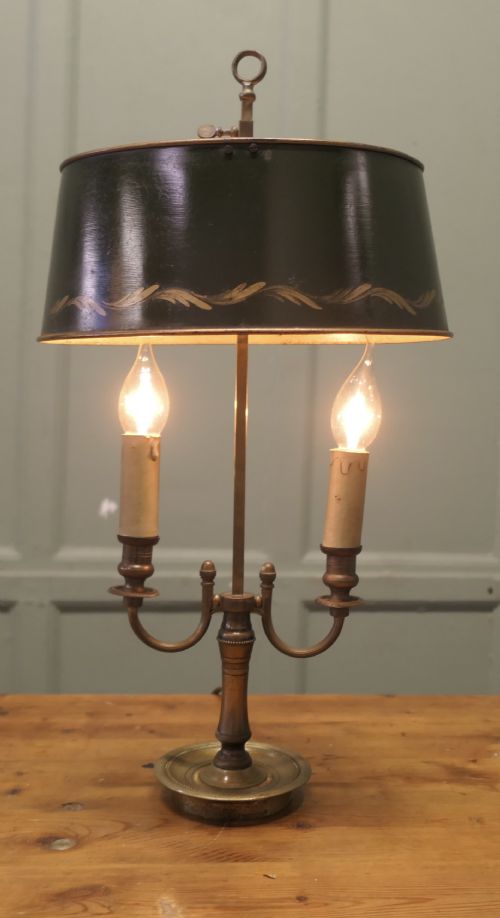
The form most frequently met on this page is the bouillotte lamp, often originating from France and combining brass frames with painted metal toleware shades. These lighting pieces adapt traditional oil and candle formats into electrified desk companions.
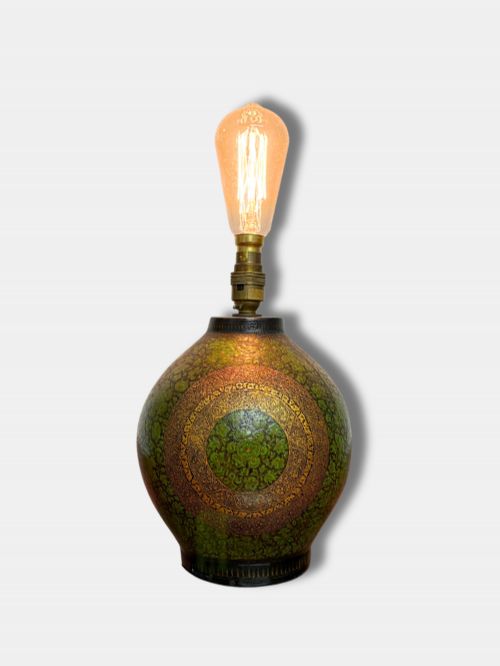
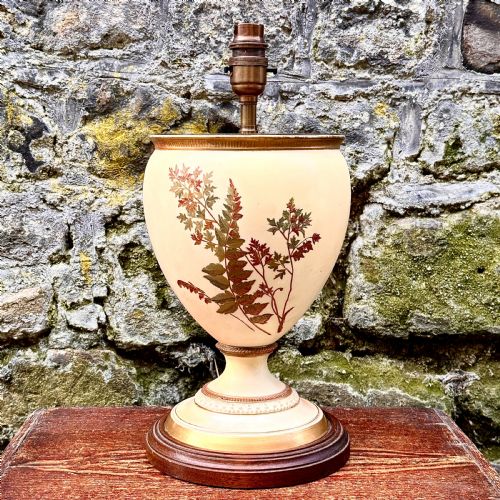
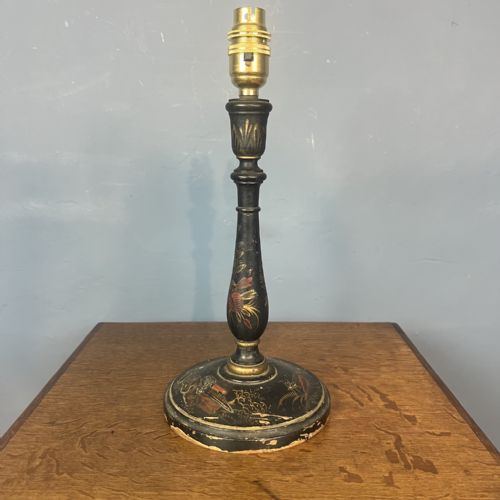
Alongside toleware and metal designs, varieties include converted vases, porcelain bodies, and lacquer finishes. Geographical origins range widely from British and French workshops to Kashmiri and Chinese export styles.
Materials and construction
Makers utilised cast and sheet brass to form the structural bodies, columns, and adjustable arms of these lamps. This metalwork is frequently paired with toleware, which is painted tinplate or metal sheet shaped into shades and reservoirs.
Surface decoration relies heavily on hand painting and lacquer work, showing gilt motifs, floral patterns, and monochromatic backgrounds in green, black, or blue. Ceramic and porcelain components, including Paris ware and Sevres style bodies, provide alternative bases painted with intricate designs.
Many historical examples began life as oil, paraffin, or candle lamps before conversion to electricity. This adaptation involves routing wiring through original burners and font assemblies while retaining the patinated metalwork.
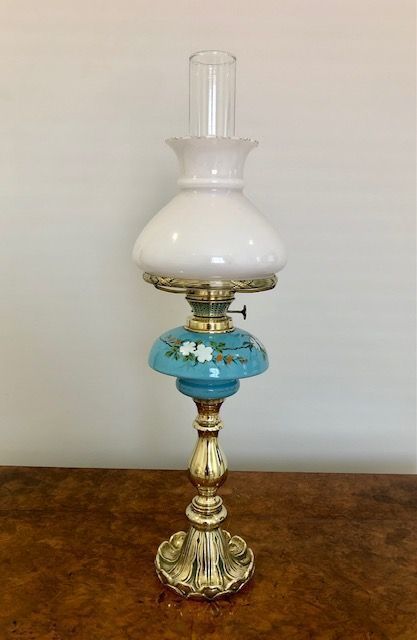
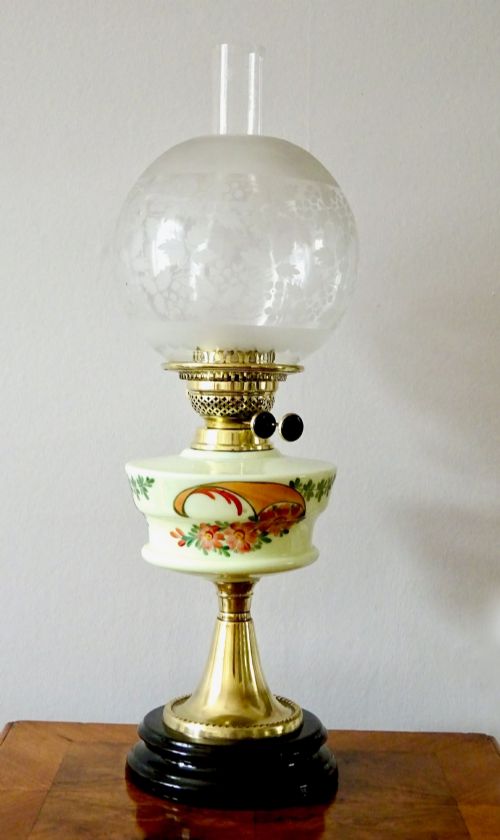
Converted nineteenth century oil lamps and eighteenth century Delft vases appear alongside traditional French bouillotte desk lamps.
Assessing quality
The distinction between standard and exceptional pieces lies in the precision of the brass casting and the execution of the hand-painted decoration. Finer examples display crisp detail in chased mounts, balanced proportions, and thick gauge metal that resists bending.
The quality of the painted surface determines visual appeal, with superior items showing layered brushwork, retained gilding, and minimal surface loss on toleware shades or porcelain bodies. Original matching components, such as correct burner assemblies and adjustable shade mechanisms, elevate the integrity of the piece.
L and F Moreau·Royal Worcester·Samuel Alcock
The Brass Painted Desk Lamp Glossary
- Toleware
- Painted or lacquered metalware, typically tinplate, used extensively for lamp shades and bodies in French and English designs. The technique creates durable surfaces with rich colour variations.
- Bouillotte lamp
- A traditional adjustable desk or table lamp featuring a central shaft, a saucer base, and a painted metal shade that moves up and down. It derives its name from an eighteenth century card game.
- Ormolu
- Gilt bronze mounts applied to decorative objects and lamp bases, providing ornate metallic contrast to porcelain or ceramic bodies. This technique involves mercury gilding on historical pieces.
- Famille Verte
- A Chinese porcelain palette dominated by green enamel colours, often seen on vase bodies converted into lamp bases during the nineteenth century. These pieces reflect European demand for Asian export ceramics.
- Sevres style
- Ceramic ornamentation mimicking the French royal porcelain factory output, characterised by rich coloured grounds like bleu celeste and gilt detailing. Pieces often take urn or vase forms adapted for illumination.
Brass Painted Desk Lamp: Frequently Asked Questions
How do I operate an adjustable bouillotte lamp?
The painted metal shade moves vertically along a central brass rod and is secured by a thumbscrew or key at the collar. Loosening this fixture allows you to set the shade at the desired height for reading or writing.
Once positioned, tightening the screw holds the shade in place against the glare of the bulb. This mechanism originally allowed users to lower the shade as candles burned down.
Are these lamps safe to use today?
Most antique lamps originate from the nineteenth or early twentieth century and require rewiring to meet modern electrical standards. Qualified professionals should inspect the internal components before regular daily use.
Retaining original brass fittings and switches is standard practice during rewiring to preserve historical authenticity. Modern safety plugs and insulated cord sets integrate cleanly into vintage columns.
How do I clean painted toleware shades?
Dust painted metal surfaces gently with a soft, dry microfibre cloth to prevent scratching the delicate finish. Avoid liquid cleaners, alcohol, or abrasive pads which can strip the aged lacquer and hand-painted details.
Persistent marks require a damp cloth with mild soap, followed immediately by thorough drying. Toleware is prone to rust if moisture remains on exposed iron beneath the paint layer.
What is the difference between an oil lamp conversion and an original desk lamp?
Original desk lamps were designed from inception with weighted bases and switch placements suited for tables, whereas oil and paraffin lamps featured fonts and burners meant to hold liquid fuel. Converted oil lamps often retain larger porcelain or brass reservoirs that give them a more substantial profile.
Both forms function effectively as desk lighting today, but converted pieces carry visible evidence of their previous fuel-burning history within the collar assembly.