
Brass Ormolu Mantel Clock
A brass ormolu mantel clock brings grand nineteenth-century French and English design into a room, offering both sculptural presence and mechanical precision.
Brass Ormolu Mantel Clock
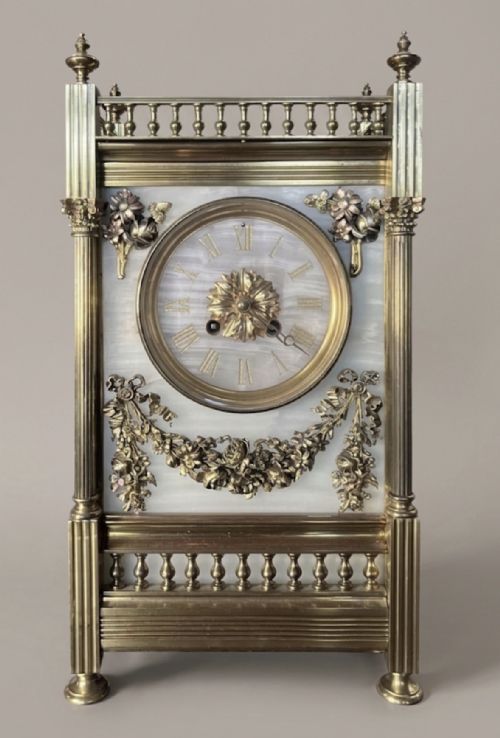
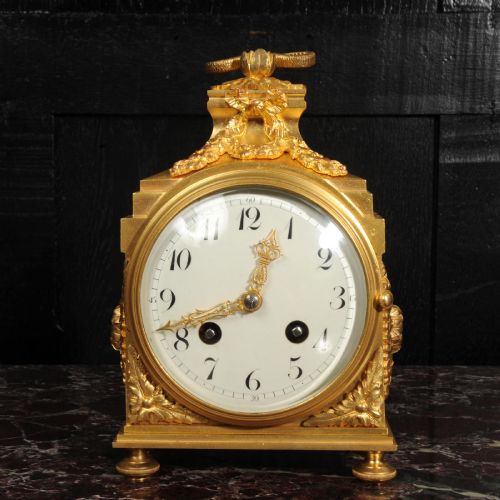
A brass ormolu mantel clock is a decorative timepiece designed for display on a fireplace shelf or side table, originating predominantly from nineteenth-century French and English workshops. These pieces span the Regency, Victorian, and later periods, capturing historicist movements such as French Rococo Revival, Louis XVI Style, and French Empire.
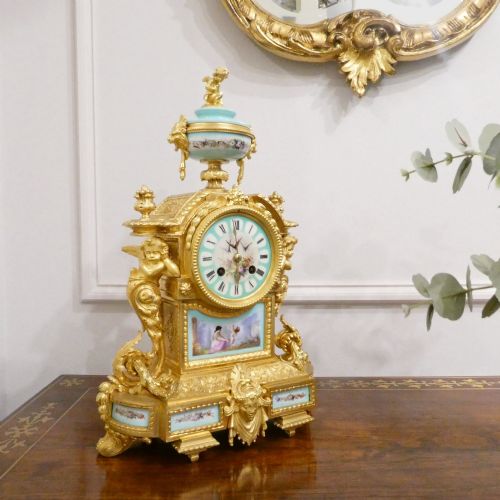
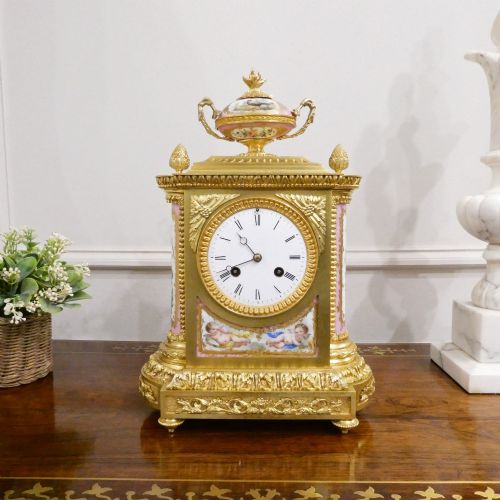
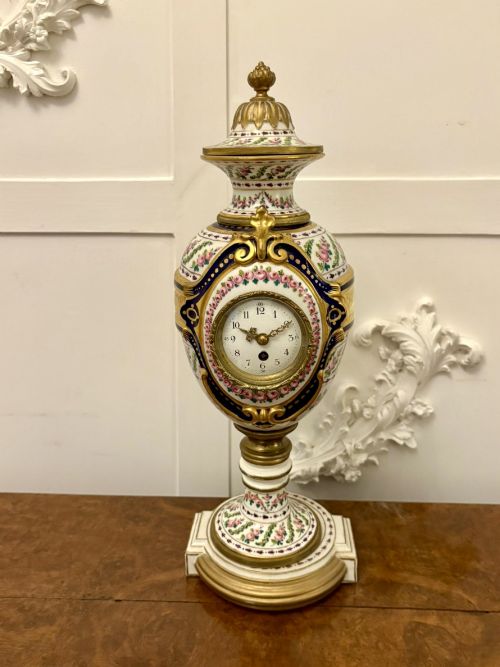
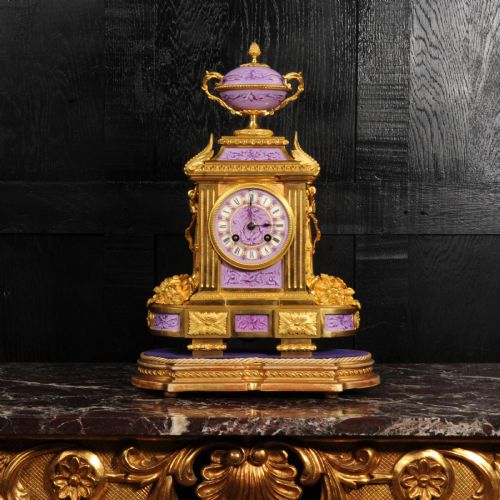
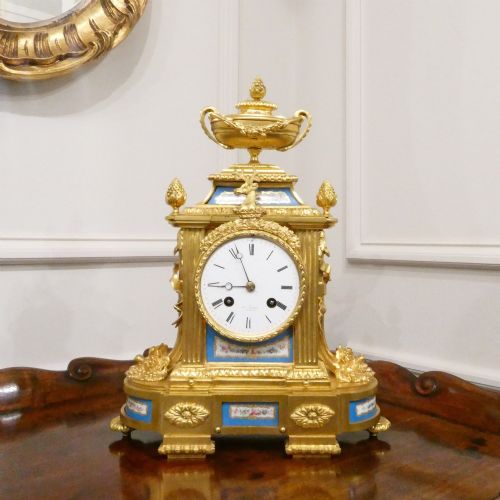
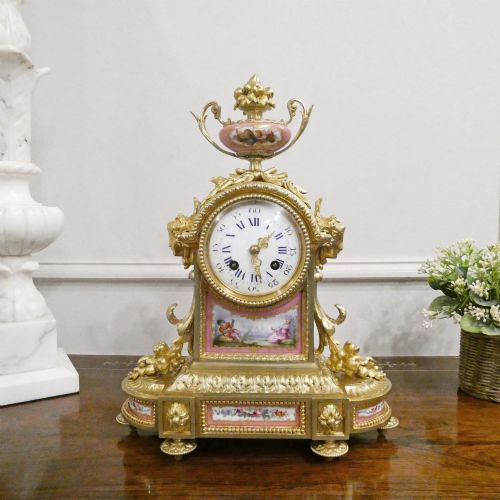
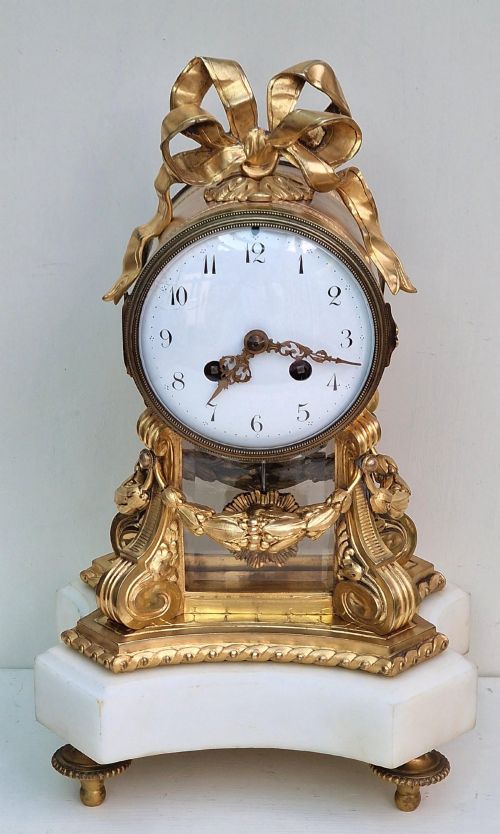
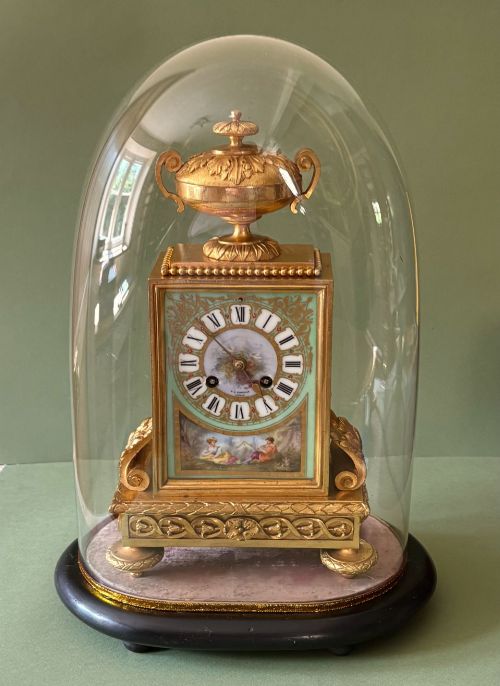
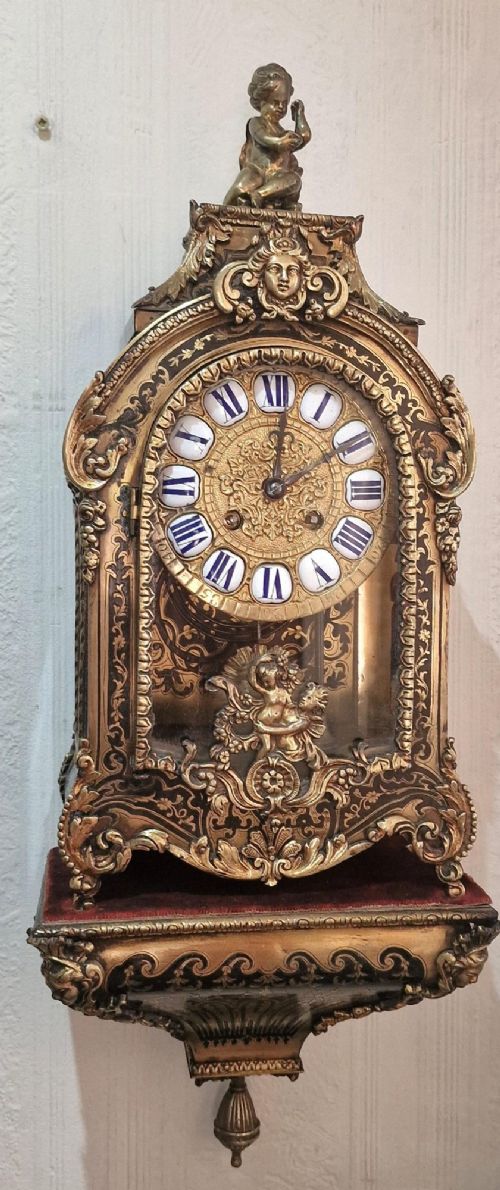
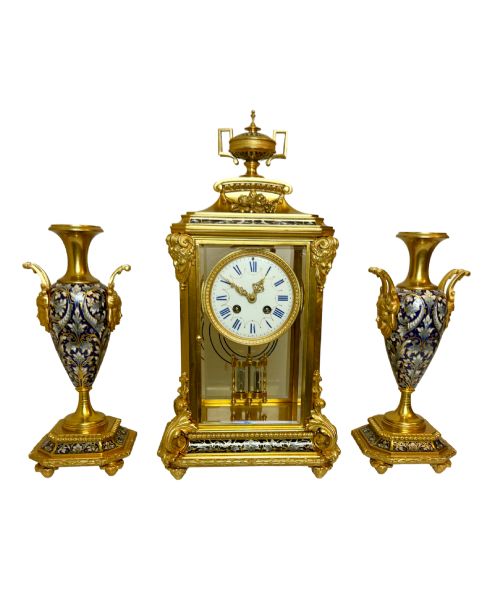
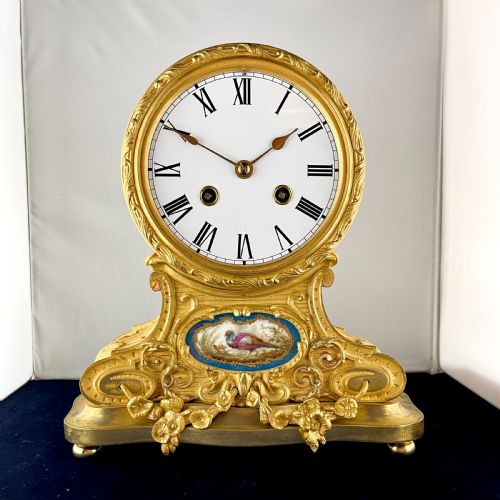
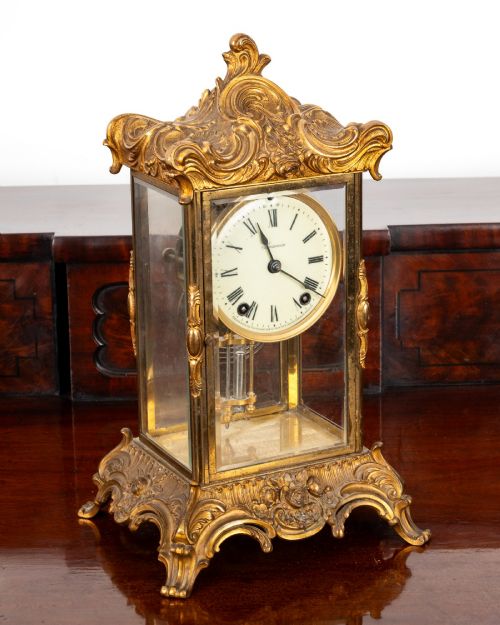
Buyers will most frequently encounter nineteenth-century French mantel clocks and clock garnitures fashioned from gilt bronze, ormolu, and brass, often paired with painted porcelain, marble, or enamel dials. Forms range from traditional drumhead and portico designs to elaborate figural compositions and four-glass panels.
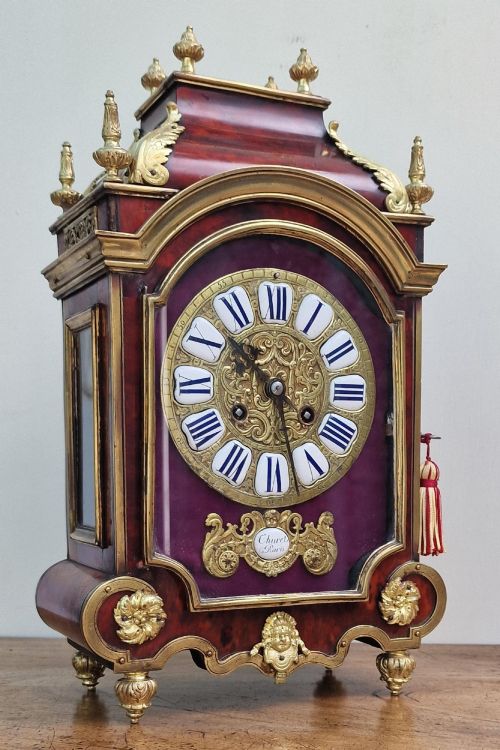
The materials and aesthetic reflect an era of ornate craftsmanship, where timekeeping met high interior decoration. Whether signed by renowned makers or housed in architectural tortoiseshell and Boulle cases, these clocks serve as both functional instruments and sculptural centrepieces.
Materials and Construction Techniques
These clocks rely on heavy brass and bronze foundations that were cast, chased, and gilded to create the bright, shimmering surface known as ormolu. Artisans combined these metallic elements with contrasting materials such as white marble, hand-painted porcelain panels, and intricate tortoiseshell veneer inlaid with brass in the Boulle technique.
Clockmakers housed complex mechanical movements, including pendulum regulators and striking mechanisms, behind enamel chapter rings and protective glass bezels. Many cases feature applied champlevé enamel work, gilt bronze mounts, and intricately carved figures cast in sections before being hand-assembled.
Materials recorded across the archive include hand-painted porcelain, Sèvres plaques, tortoiseshell, champlevé enamel, and white marble.
Distinctions in Quality and Execution
Movement provenance and signatures also elevate an object, with recognised makers and Parisian firms producing mechanical work that runs smoother and lasts longer. The harmony between the architectural case, the decorative garniture pieces, and the original signed dial dictates the overall integrity of the piece.
Achille Brocot·Henry Marc·Japy Freres·Thuret Paris·Ansonia New York·Baetens London·Canaillor of Paris·Etienne Lenoir·Le Roy Paris·Schneckenburger·Delettrez·Viner London
The Brass Ormolu Mantel Clock Glossary
- Ormolu
- A technique of applying finely ground high-carat gold to a bronze or brass object using a mercury amalgam, producing a rich golden finish. This surface treatment defines the opulent look of nineteenth-century French mantel clocks.
- Boulle
- A form of marquetry consisting of tortoiseshell and brass inlaid together, named after the famous cabinetmaker to Louis XIV. It adds striking pattern and dark, reflective depth to clock cases.
- Garniture
- A set consisting of a central clock flanked by matching decorative objects such as candelabra or urns. These matched sets were designed to create a symmetrical display on a mantelpiece.
- Champlevé
- An enamelling technique where troughs or cells are hollowed out of a metal surface and filled with vitreous enamel powder before firing. It creates vibrant, colourful geometric or floral patterns on the clock bezel or case.
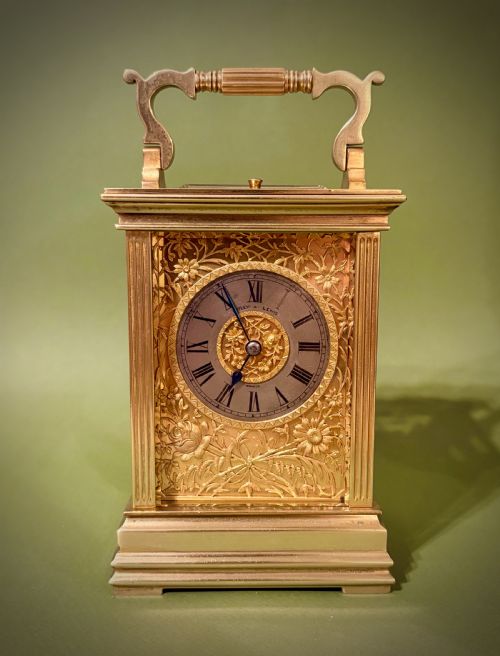
- Pendule d'Officier
- A portable military-style officer's clock featuring a striking mechanism and a carrying handle. These compact French clocks combined travel practicality with luxury materials.
Brass Ormolu Mantel Clock: Frequently Asked Questions
How do I wind my mantel clock?
Most mechanical mantel clocks use a key inserted into winding holes on the enamel dial to tension the spring barrels. Care must be taken not to over-wind the mechanism.
Consult the specific movement type to determine whether it is an eight-day clock or a timepiece requiring more frequent attention.
What is a clock garniture set?
A clock garniture is a matching ensemble comprising a central mantel clock paired with side pieces like candelabra or decorative urns. They were created to dress a fireplace mantel symmetrically.
Materials usually match the central clock exactly, incorporating ormolu, porcelain, or marble.
How do I identify a French Rococo clock?
French Rococo clocks feature asymmetrical scrollwork, naturalistic shell motifs, and flowing botanical forms cast in gilt bronze or ormolu. They often lack strict geometric symmetry in favour of organic movement.
These pieces date predominantly from the nineteenth-century revivals of earlier eighteenth-century styles.
Are these clocks suitable for daily use?
Many restored nineteenth-century mantel clocks function reliably for daily timekeeping and striking. Regular servicing by a professional horologist keeps the mechanical gear trains running smoothly.
Placing the clock on a stable, level mantelpiece ensures the pendulum beats evenly.