


Brass Occasional Tables Pair
These brass occasional tables pair matching forms with polished metal, offering versatile surface space that suits both traditional rooms and modern interiors.
Brass Occasional Tables Pair
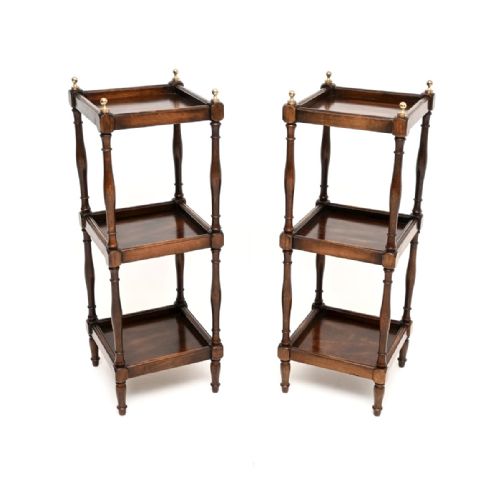
A brass occasional tables pair brings matching metalwork and compact surfaces into a room, serving as side tables, bedside stands or small display pieces. These pieces span several centuries, reaching from late eighteenth century Sheraton designs through Victorian iterations to the lighter lines of the 1920s and 1930s. The examples you encounter most frequently on this page lean towards French taste, incorporating marquetry and circular tops.
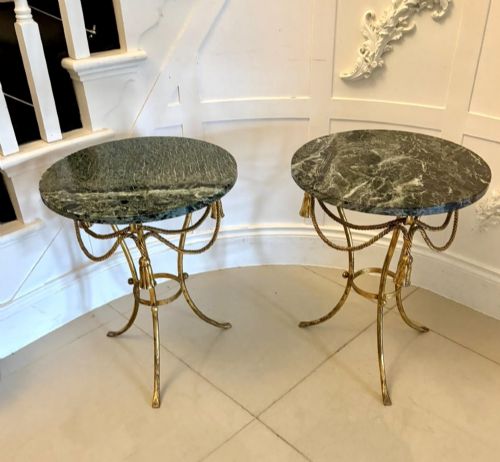
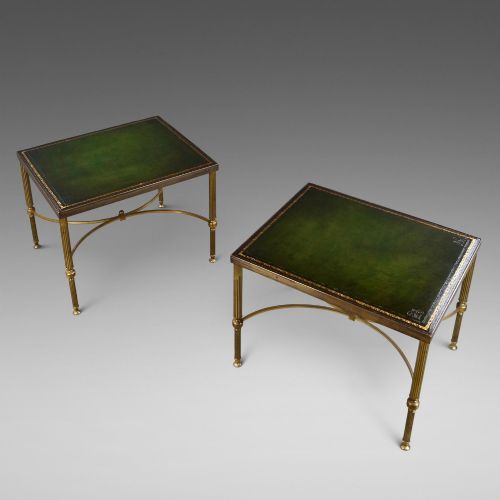
Makers often paired the bright metal frames of a brass occasional tables pair with contrasting timber bodies like mahogany, walnut, satinwood, kingwood or rosewood. Some designs incorporate inset marble slabs, gilt metal mounts or ormolu details to elevate the overall presence of the furniture. Their dual nature means they function equally well holding a lamp beside a sofa or standing alone as decorative accents.
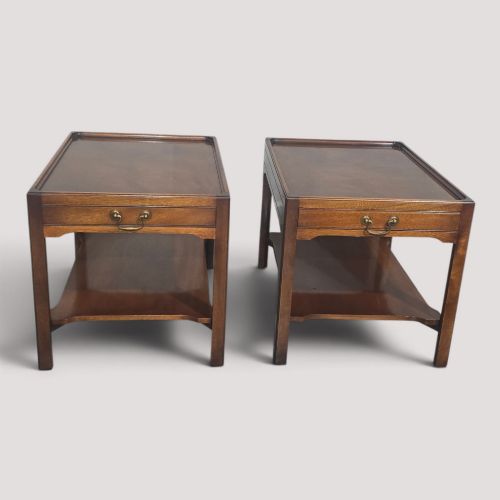
The styles represented across these pairs draw heavily on classical idioms, featuring Neoclassical lines, Louis XV and Louis XVI aesthetics, and Hollywood Regency glamour. Configuration varies from simple circular tops with drawers to tiered etageres designed for display. Whichever period or style you choose, buying them in pairs ensures symmetrical placement within a room scheme.
Construction and materials
Makers built the structural frames of these pieces using solid hardwoods like mahogany and walnut, or applied delicate veneers of satinwood, kingwood and rosewood over secondary timbers. Marquetry inlays formed intricate patterns across table tops, while cast brass, gilt metal or ormolu provided structural mounts, gallery rails and sabots.
Marble tops, particularly verde marble, added substantial weight and a cool, smooth surface resistant to daily wear. Joinery methods matched the period, utilising traditional cabinetmaking techniques to secure timber panels and metal fittings firmly in place.
Listings span the eighteenth, nineteenth, and twentieth centuries, incorporating materials such as brass, mahogany, marble, and satinwood.
Assessing craftsmanship and condition
Quality reveals itself in the crispness of the cast brass mounts and the precision of the marquetry inlay across the timber surfaces. Finer pieces display seamless veneer matching, tight joinery and heavy gauge metal components that resist bending under weight.
The integration of materials also dictates standing, where the harmony between the brass elements and the underlying wood or marble appears deliberate rather than assembled later. Original surfaces, patinated brass and intact marble slabs elevate the stature of a pair above examples with heavy restoration or replacement components.
Charles Topino
The Brass Occasional Tables Pair Glossary
- Etagere
- A set of open shelves for displaying small objects or books. These tiered tables provide multiple levels of surface area.
- Ormolu
- Gilded bronze or brass applied as mounts and decorative trim on furniture. This technique adds bright metallic highlights to dark timber bodies.
- Marquetry
- Inlaid wood veneers forming pictorial or geometric patterns on furniture surfaces. Craftsmen used contrasting timbers like satinwood and rosewood to create these designs.
- Sheraton period
- A neoclassical furniture style dating to the late eighteenth century characterised by straight lines and classical motifs. Pieces from this era often feature light mahogany and delicate proportions.
- Verde marble
- A dark green ornamental stone with pale veining often used for table tops. It provides a durable and cooling surface.
Brass Occasional Tables Pair: Frequently Asked Questions
What rooms suit a brass occasional tables pair?
These compact tables fit comfortably beside sofas as lamp stands or serve as matching bedside tables in a bedroom. Their reflective metal frames and small footprints allow them to sit in tighter corners without overwhelming the space.
They also work effectively in hallways or reception rooms where paired symmetry creates a balanced focal point.
How do I date an older pair?
Dating relies on examining the timber species, construction methods, and stylistic cues present in the design. Eighteenth century pieces typically show hand-cut joinery and Sheraton proportions, while later nineteenth century examples often incorporate heavier ormolu mounts and rich marquetry.
Twentieth century pieces from the 1920s and 1930s tend towards sleeker lines and lighter timber selections.
Are marble tops original to these tables?
Many French and Italian tables incorporate inset marble slabs designed to handle the weight of lamps and decorative objects. Examining the rebate beneath the top helps confirm whether the stone fits the original construction.
While some marble tops are replaced during restoration, period examples usually display matching edge profiles and appropriate ageing.
How do I care for brass and timber?
Maintain the timber surfaces by dusting with a soft cloth and applying appropriate wax polish sparingly. Avoid harsh chemical cleaners on the brass and gilt metal components to preserve their natural patina.
Keep the tables away from direct heat sources and strong sunlight to prevent the timber veneers from drying out or fading.