

Brass Nightstands
These brass nightstands bring functional elegance to a bedroom, combining metal accents with rich timbers and marble tops.
Brass Nightstands
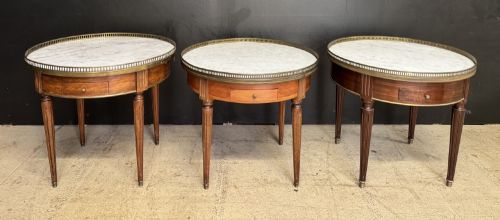
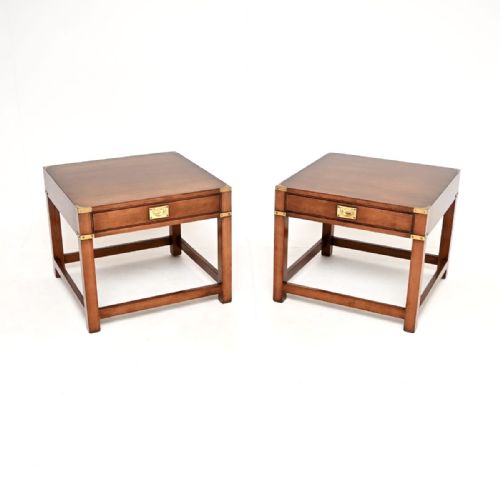
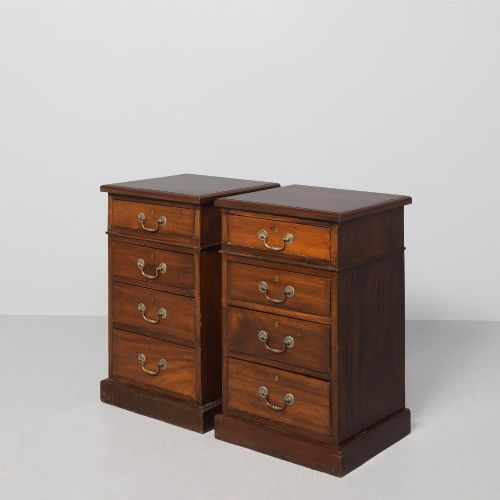
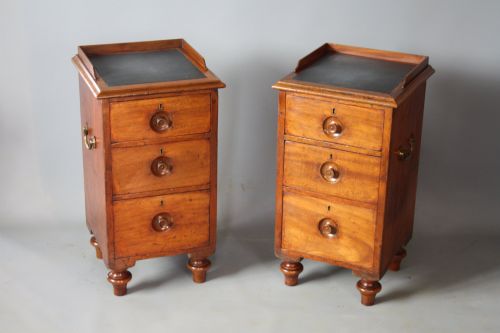
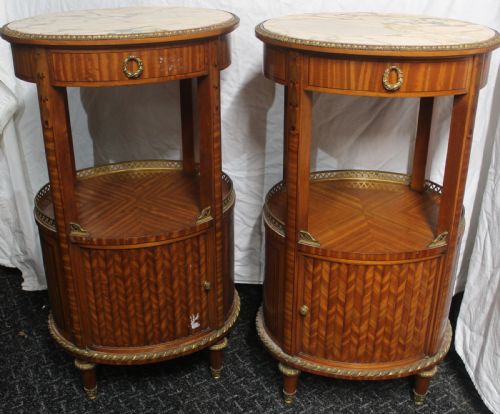
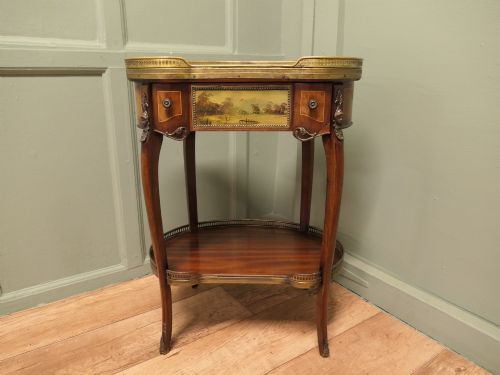
Brass nightstands encompass a variety of small bedside tables, cabinets, and etageres designed to sit beside a bed. When searching for brass nightstands, buyers encounter pieces incorporating brass galleries, handles, or mounts alongside primary timbers like mahogany, walnut, and rosewood. The selection leans heavily towards French styles such as Louis XV and Louis XVI, alongside Edwardian and Victorian pieces.
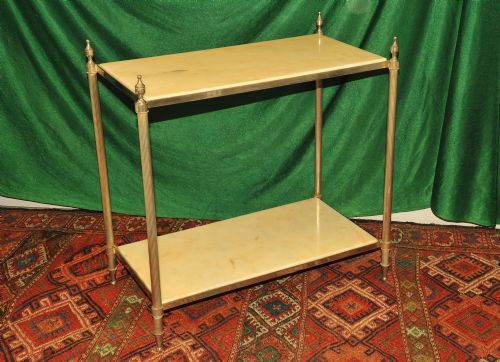
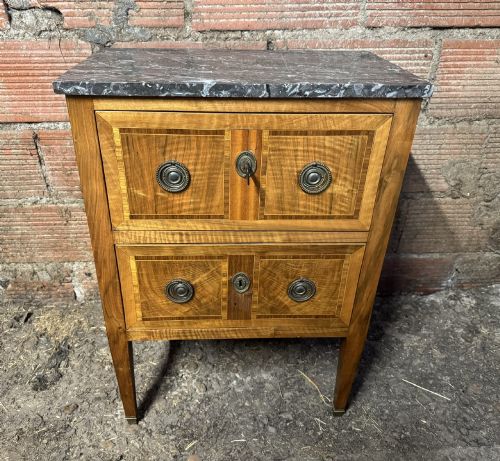
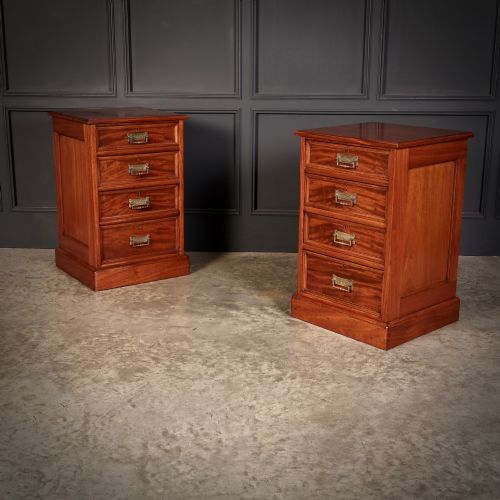
The form varies from simple bedside cabinets with single drawers to sophisticated two-tier etageres and marble-topped chevets. Many examples date from the late nineteenth century through to the 1930s, reflecting diverse craftsmanship from different European workshops. Buyers select these tables to introduce metallic highlights and practical surface space into traditional or eclectic interiors.
How they were made
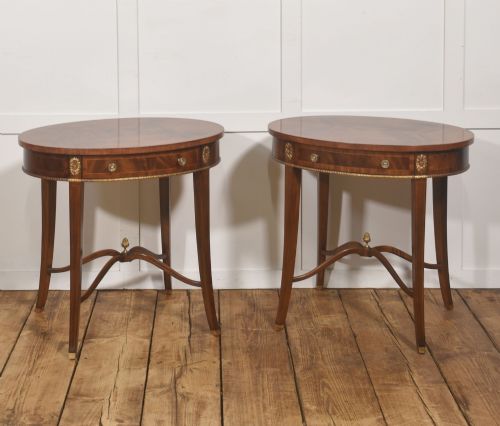
Construction relies heavily on traditional cabinet-making timbers including mahogany, walnut, kingwood, and rosewood, frequently enhanced by marquetry, parquetry, or complex wood grain patterns. Brass is utilised for structural framing, delicate galleries surrounding table tops, drawer handles, and decorative mounts. Ormolu, which is gilt bronze or brass, appears on French Empire and Victorian pieces to provide ornate, classical detailing.
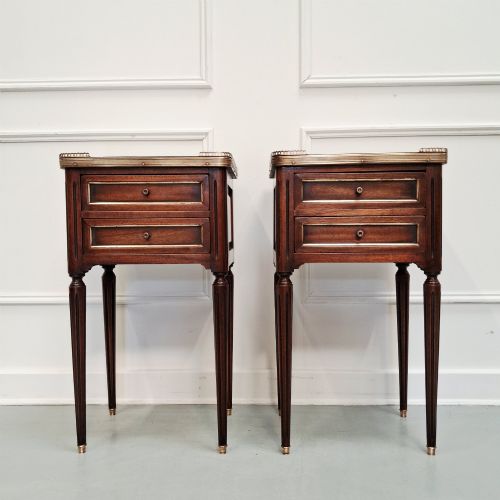
Many items incorporate inset marble tops, mirrored tiers, or glass inserts supported by brass frames or wooden structures. Inlaid details using exotic woods and contrasting metals demonstrate high levels of joinery skill, particularly in pieces originating from French and English workshops of the nineteenth and early twentieth centuries.
Brass Nightstands Retail Price Guide 2026
Typical asking prices for brass nightstands among the pieces listed under this phrase on Sellingantiques today, from the lower quarter to the upper quarter. They describe what is for sale here now, not the wider market.
Listings feature brass components paired with diverse timbers including mahogany, walnut, rosewood, and kingwood across the Victorian, Edwardian, and 1930s periods.
What varies in quality
Quality rests upon the crispness of the brass casting and ormolu mounts, where finer pieces exhibit sharp, hand-chased detail rather than soft, mass-produced edges. The selection of timber veneers, such as flame mahogany or figured walnut, dictates the visual depth of the surface, alongside the precision of inlaid parquetry and marquetry.
Structural integrity depends on the joinery of the carcass and the stability of fitted marble tops or mirrored shelves. Pieces attributed to notable makers or featuring integrated brass galleries and heavy gauge metalwork represent a higher standard of period production.
Mallett·François Linke
The Brass Nightstands Glossary
- Ormolu
- Gilded bronze or brass mounts applied to furniture for decorative effect. This technique was widely utilised during the eighteenth and nineteenth centuries on French and English pieces.
- Etagere
- A set of open shelves for displaying small objects or lamps. These are typically supported by slender columns or metal frames.
- Chevet
- A French term for a small bedside table or cabinet. They frequently feature marble tops and enclosed storage compartments.
- Marquetry
- Decorative veneer patterns formed by fitting together small pieces of various coloured woods. It creates elaborate pictorial or geometric designs on tabletops and cabinet doors.
- Parquetry
- Geometric wood inlay patterns resembling mosaic work. This technique is commonly found on the surfaces of nineteenth-century French side tables.
- Gallery
- A raised pierced metal or wooden rail surrounding the edge of a tabletop. It prevents items from sliding off the surface.
Brass Nightstands: Frequently Asked Questions
What periods do these tables date from?
The pieces span from the eighteenth century through the Victorian and Edwardian eras up to the 1930s. French styles from the Louis periods frequently appear alongside British cabinet-making from the nineteenth century.
Design characteristics shift from heavy mahogany proportions in the Victorian era to lighter inlaid satinwood and rosewood pieces in the Edwardian period.
How were these cabinets used originally?
They served as bedside storage for personal items, nightwear, and reading material while holding a bedside lamp or candle. Marble-topped versions were particularly practical for holding water jugs and washing accessories.
Smaller etageres and lamp tables provided accessible surfaces in drawing rooms and bedrooms alike for illumination and decorative display.
Are marble tops original to the tables?
Many French bedside cabinets and chevets retain their original fitted marble tops, which were selected for durability and ease of cleaning. White and variegated marble varieties are common on pieces from the nineteenth and early twentieth centuries.
Matching the stone to the period of the wooden carcass is essential for determining originality.
How do I distinguish French styles from English ones?
French pieces often feature serpentine or bow-front carcasses, intricate ormolu mounts, and exotic veneer work like kingwood or marquetry. English equivalents tend to rely on solid mahogany, walnut, or oak with simpler brass handles and structural honesty.
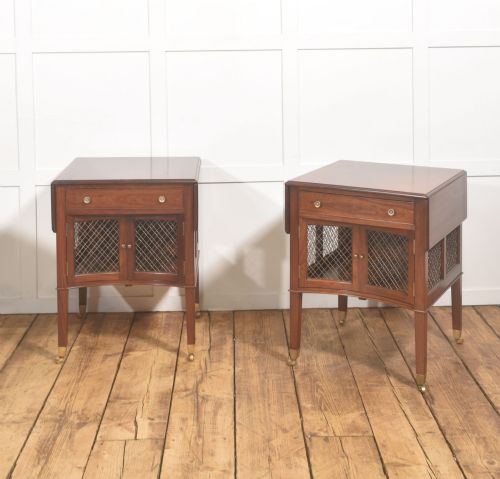
French bedside cabinets frequently incorporate marble tops and open compartments, whereas British versions lean towards enclosed cupboards and drop-leaf Pembroke designs.