
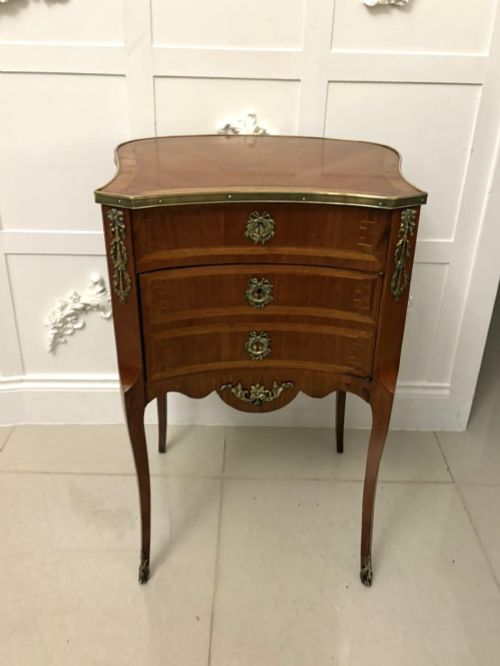
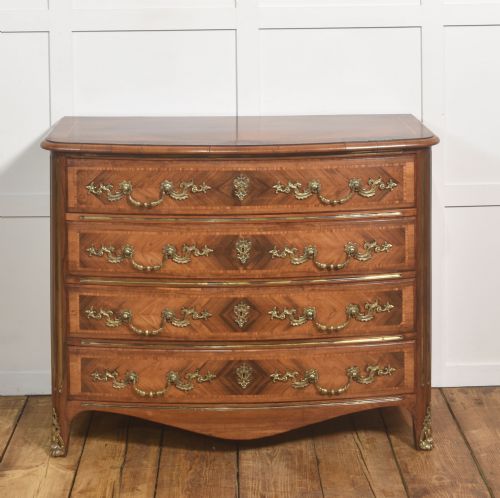
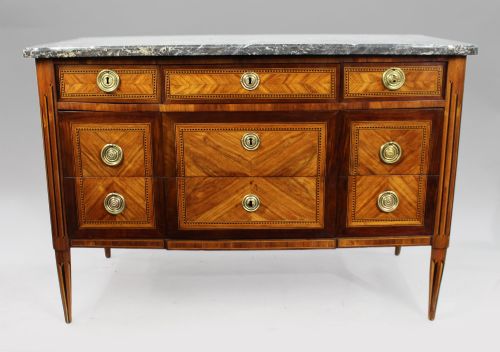
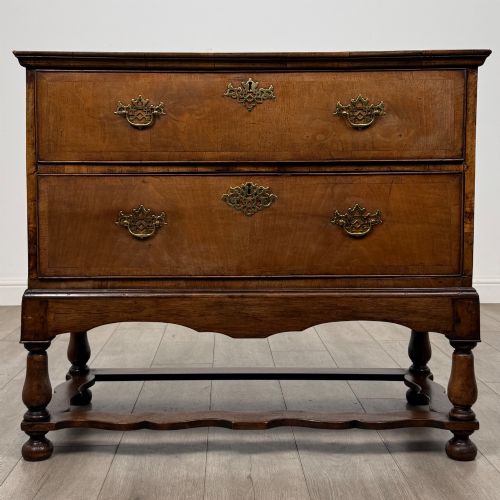
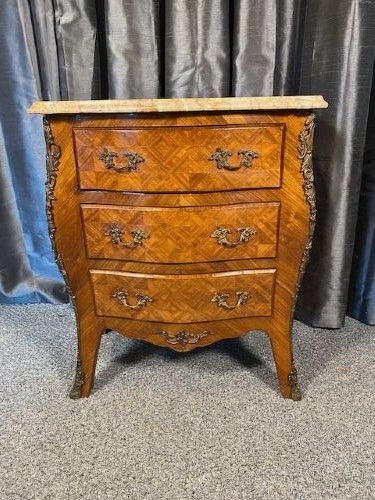
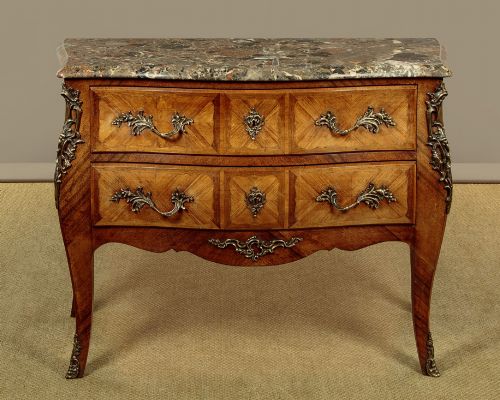
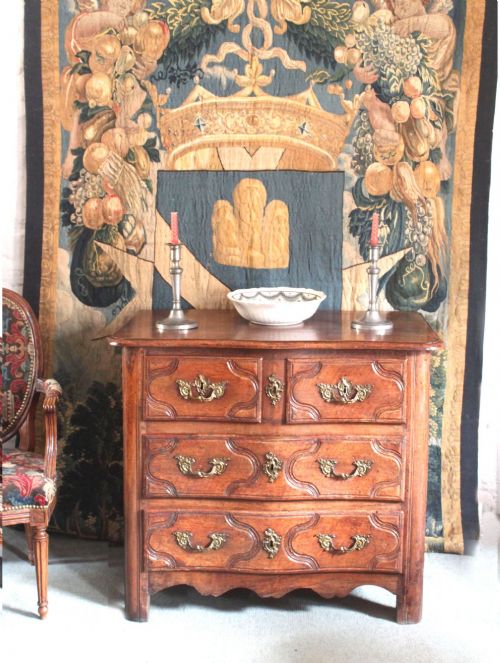
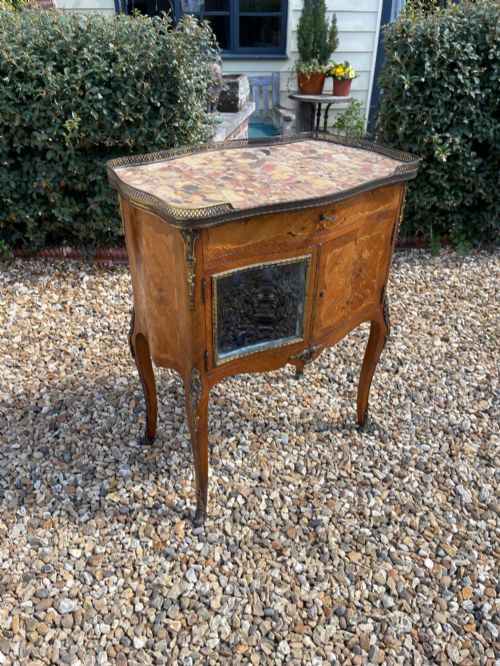


Brass Mounted Walnut Commode
A brass mounted walnut commode brings substantial French cabinet-making and heavy stone tops into a room.
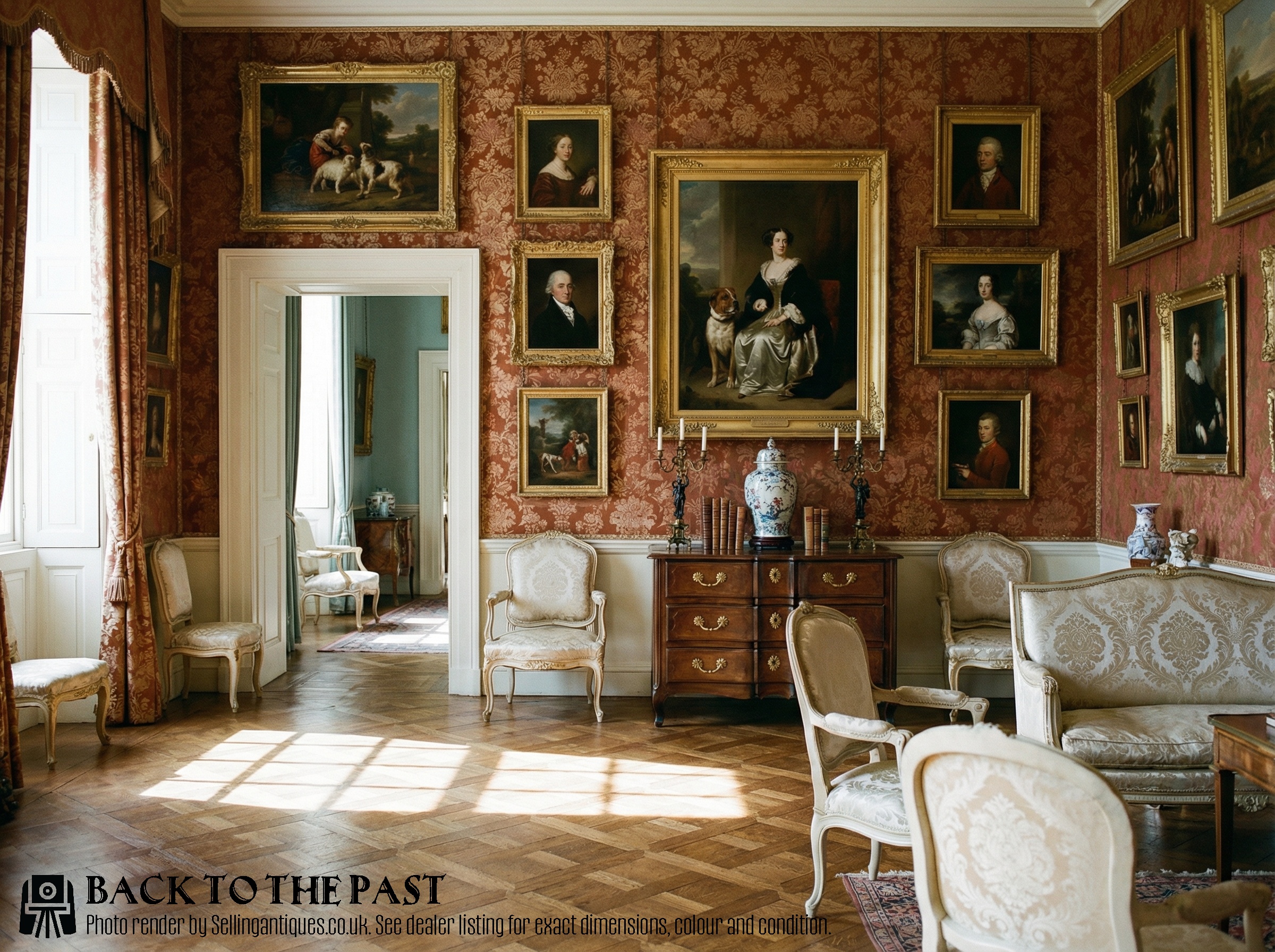
Brass Mounted Walnut Commode
A brass mounted walnut commode is a low storage chest designed with multiple drawers or doors, often finished with a shaped front and a heavy stone top. When you search this phrase, you find items ranging from mid-eighteenth-century French provincial examples to later revival pieces made in the nineteenth and twentieth centuries.
The form appears most frequently as a serpentine or bombe chest of drawers, alongside side cabinets, bedside tables, and console tables. Walnut serves as the primary timber, often enhanced by burr walnut figures, marquetry, or parquetry patterns.
Originating largely from French workshops, these pieces bring robust storage and decorative grain patterns to domestic interiors. They combine utilitarian drawer space with ornate mounts and shaped wooden facades.
How they were made
Cabinet-makers constructed these items using solid walnut and fruitwood carcases overlaid with walnut veneers, burr walnut, and various decorative stringings. The timber is frequently shaped into serpentine or bombe contours that require precise joinery and curved drawer fronts.
Mounts and handles cast in brass or ormolu provide structural reinforcement and decorative contrast against the dark timber. Heavy marble tops, cut to follow the specific contour of the commode, sit directly upon the wooden carcase.
Listings feature walnut alongside marble, brass, and ormolu, spanning eighteenth-century origins to twentieth-century revivals.
What varies in quality
The sophistication of the timber veneer work and the crispness of the brass mounts dictate the standing of an individual commode. Pieces featuring matched burr walnut figures and detailed marquetry inlay represent higher levels of cabinet-making skill.
The weight and finish of the marble top, along with the integration of ormolu mounts that follow the curves of the carcase, separate standard production from finer examples. Heavier gauge brass and precise hand-chasing indicate superior workshop origins.
The Brass Mounted Walnut Commode Glossary
- Commode
- A low chest of drawers or cabinet designed for domestic storage. The form developed in France during the seventeenth century.
- Serpentine
- A front contour curving inward at the centre and outward at the ends. This shape requires skilled woodworking to fit drawers accurately.
- Bombe
- A swollen or bulging outward profile found on the sides and front of specific cabinet pieces. It demands advanced veneering techniques.
- Marquetry
- Decorative patterns formed by inserting pieces of veneer into a wood background. Various timbers create pictorial or geometric designs.
- Ormolu
- Gilded bronze used for furniture mounts and decorative hardware. It provides a bright metallic contrast against dark walnut surfaces.
Brass Mounted Walnut Commode: Frequently Asked Questions
Where did these commodes originate?
Most pieces originate from French workshops, ranging from provincial centres to Parisian cabinet-makers.
They reflect stylistic shifts through the eighteenth century and subsequent revival periods.
What are marble top commodes used for?
These cabinets provide low-level drawer storage while offering a durable stone surface for display.
They function effectively in hallways, living rooms, and bedrooms.
How do I identify a Louis XV style commode?
Louis XV pieces typically display asymmetrical curves, cabriole legs, and prominent serpentine fronts.
Ormolu mounts usually emphasise the natural lines of the woodwork.
What is burr walnut?
Burr walnut is timber taken from a tree growth that produces complex, swirling grain patterns.
Cabinet-makers slice this wood into thin veneers for decorative drawer fronts and table tops.