



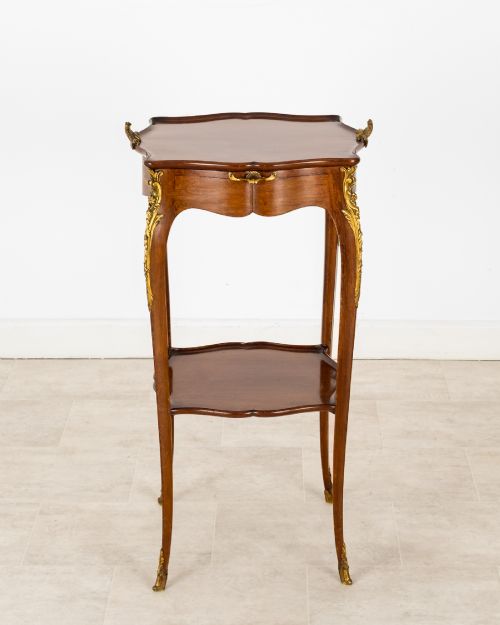

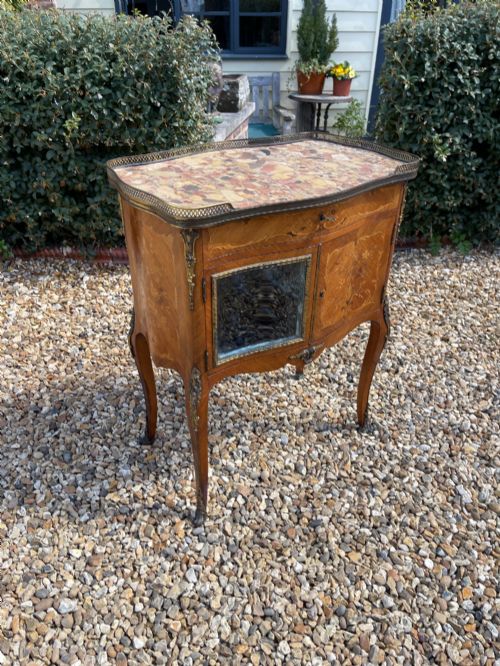


Brass Mounted Nightstands
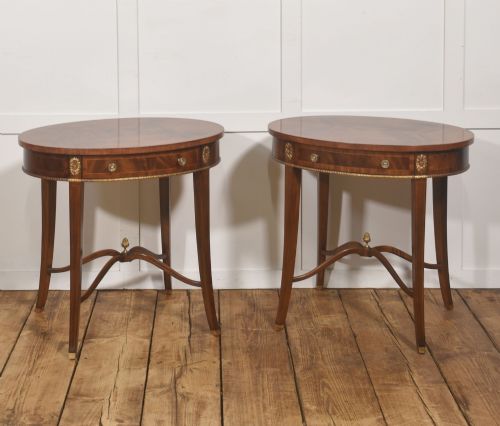
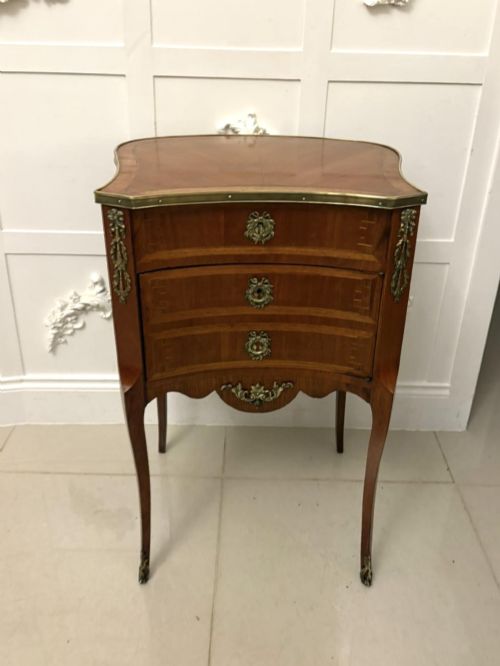
These brass mounted nightstands bring French style and practical bedside storage together in walnut, mahogany, and fine veneers.
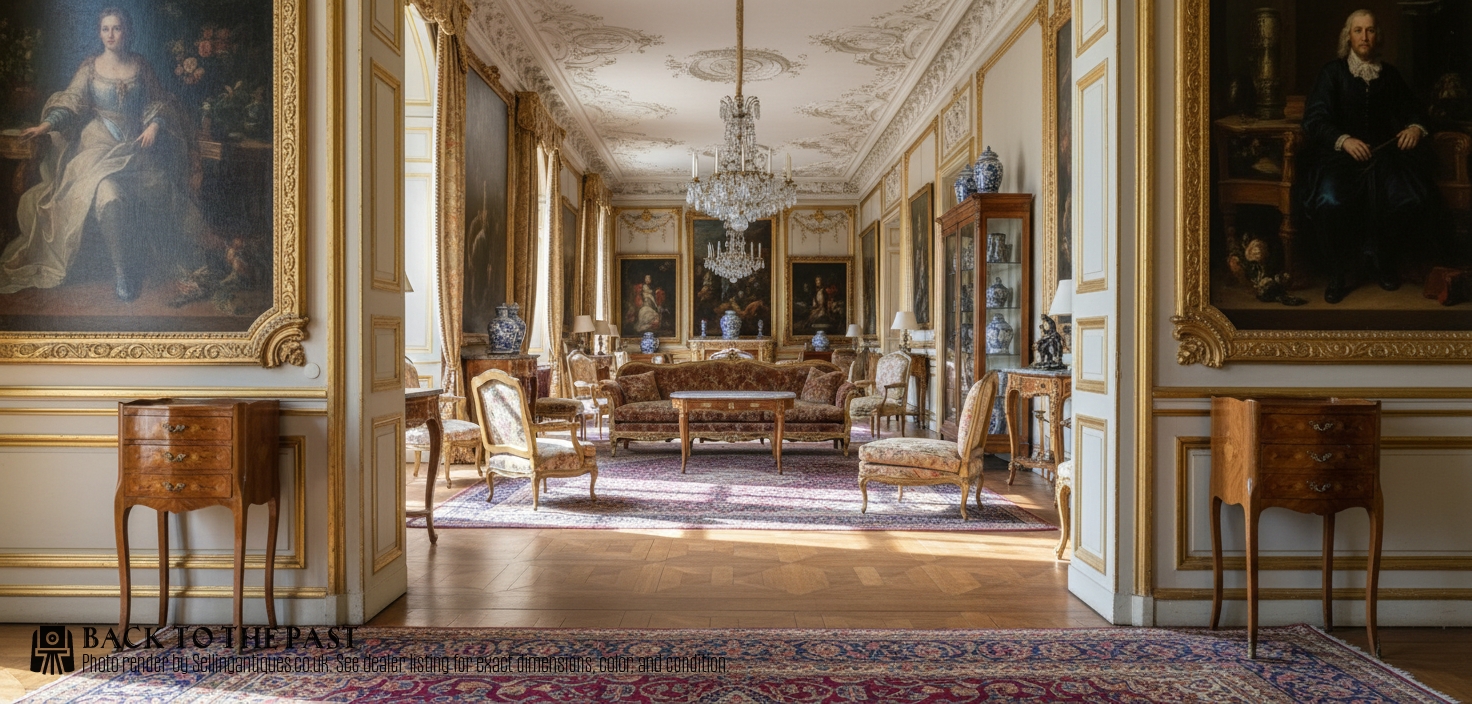
Brass Mounted Nightstands
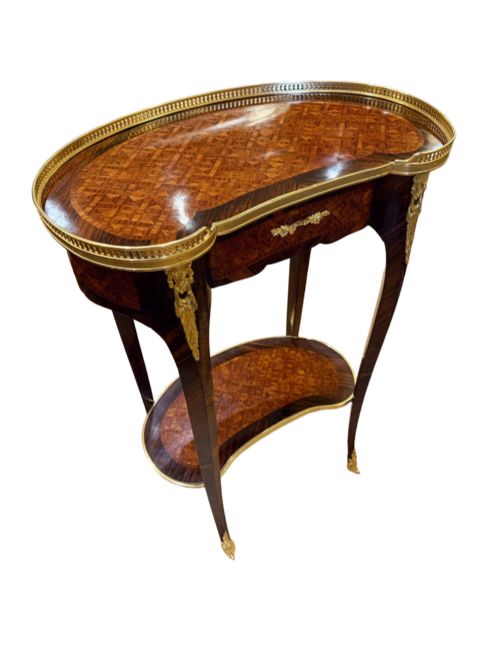
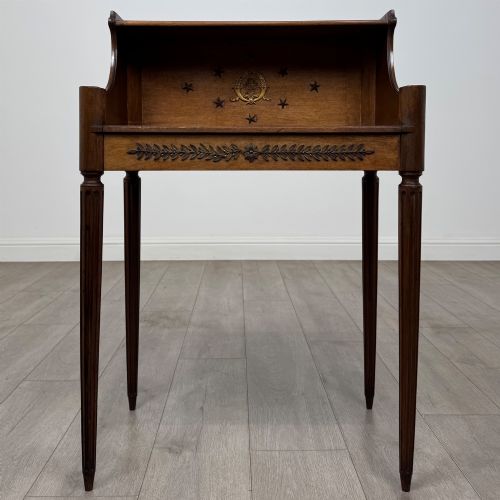
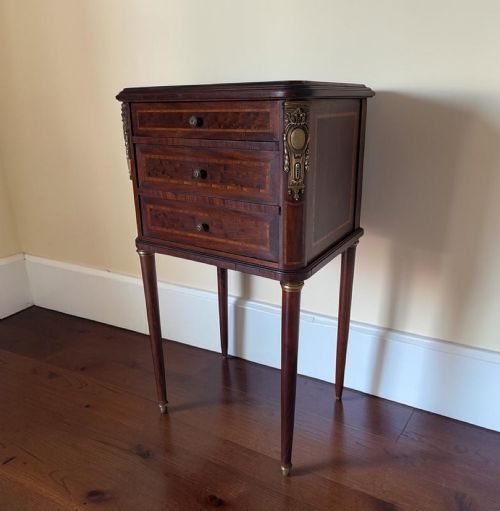
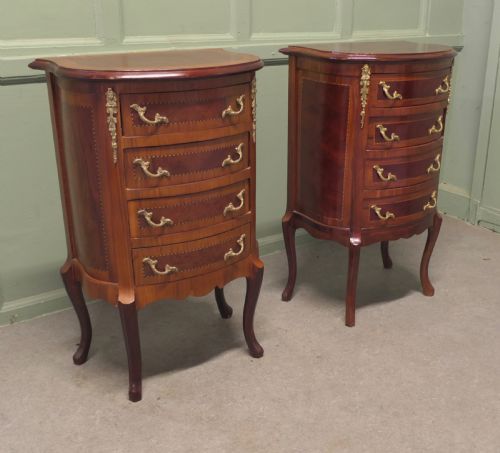
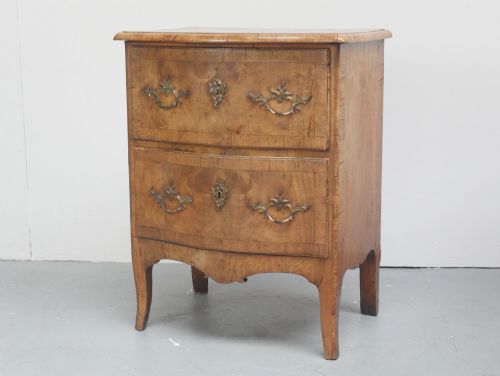
Brass mounted nightstands appear in forms such as bedside cabinets, side tables, and small chests of drawers dating from the nineteenth and early twentieth centuries. The selection leans heavily toward French regional and revival tastes, notably Louis XV and Louis XVI styles alongside Empire designs.
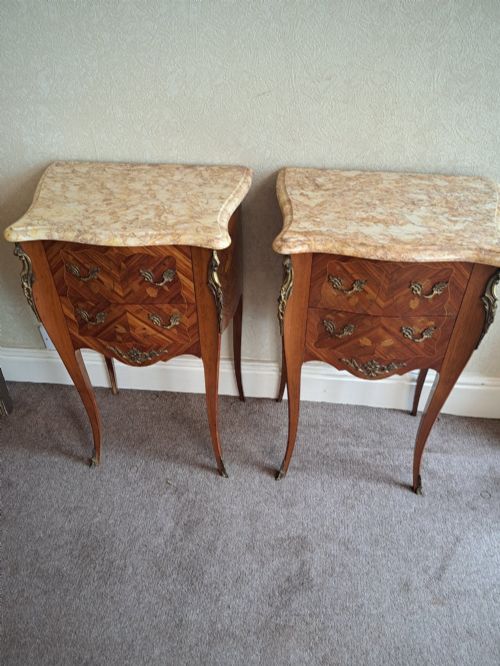
Buyers encounter variations including kidney-shaped tables, bow-front chests, and tiered étagères designed for bedside use. Many examples arrive as matched pairs, combining enclosed cupboard space or drawers with decorative tabletops.
Origins stretch across the decades from the eighteen-eighties through to nineteen-thirty, capturing periods of revival craftsmanship that imitate eighteenth-century aesthetics. These pieces serve as functional bedside surfaces while introducing traditional continental cabinet-making into a room.
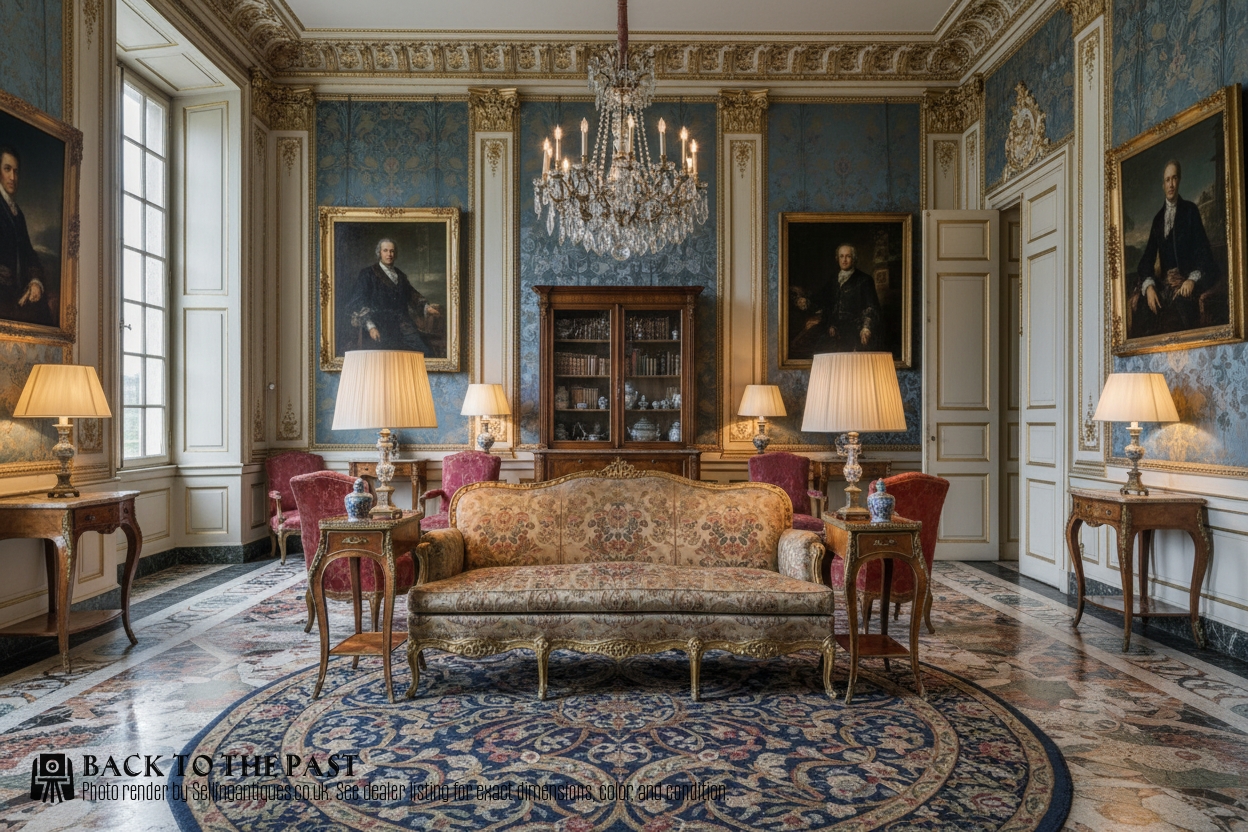
Construction and Materials
Cabinet-makers build these structures using solid hardwoods like mahogany and walnut as a foundation for decorative wood veneers including kingwood, rosewood, and satinwood. Marquetry and parquetry patterns add geometric or floral imagery across the surfaces through precise timber placement.
Brass and ormolu mounts provide structural edging, corner reinforcement, and decorative handles that punctuate the dark or polished timber grain. Marble tops, particularly breèche d'alep varieties, appear fitted to the upper surfaces of cabinets and commodes for a durable finish.
Brass Mounted Nightstands Retail Price Guide 2026
Typical asking prices for brass mounted nightstands among the pieces listed under this phrase on Sellingantiques today, from the lower quarter to the upper quarter. They describe what is for sale here now, not the wider market.
Standards of Manufacture
Quality separates ordinary production from exceptional work through the crispness of the brass or ormolu mounts and the precision of the veneer inlay. Finer cabinets display hand-chiselled detailing on metal components and tightly fitted parquetry that remains flush with the surrounding wood.
The selection of timber grain and the integrity of the underlying carcase define the upper tier of these pieces. Heavier marble slabs with active veining and well-balanced proportions indicate superior workshop origin.
François Linke
The Brass Mounted Nightstands Glossary
- Marquetry
- Decorative veneer work arranged in pictorial or floral patterns across a furniture surface. This technique uses contrasting timbers to create detailed images on table tops and cabinet doors.
- Ormolu
- Gilt bronze mounts applied to furniture for decorative and protective purposes. French cabinet-makers utilise these cast metal elements to accentuate the corners and feet of tables.
- Parquetry
- Geometric wood inlay forming repeating patterns such as cubes or chequers. It provides a structured decorative surface on the top of side tables and chests.
- Chevets
- French term for small bedside tables or cabinets. These pieces often feature small drawers or cupboards intended for nocturnal storage.
- Breche d'alep
- A specific type of variegated marble quarried in France. It provides a colourful, brecciated stone top for nineteenth-century commodes and bedside cabinets.
Brass Mounted Nightstands: Frequently Asked Questions
What periods do these nightstands date from?
The pieces span the nineteenth and early twentieth centuries, with a strong representation from eighteen-eighties revival periods up to nineteen-thirty.
Craftsmen during these eras frequently drew inspiration from earlier French court furniture styles.
Are most of these cabinets sold in pairs?
Many listings feature matched pairs designed to sit symmetrically on either side of a bed. Single side tables and cabinets also appear among the selection.
Pairs often command greater interest for balanced bedroom layouts.
What surface materials sit atop the wood?
Polished timber, marquetry veneers, and fitted marble slabs form the primary surfaces. Breche d'alep marble tops offer a smooth and resilient finish on select cabinets.
Inlaid wood surfaces display geometric parquetry or floral marquetry patterns.
How do I identify French revival styles?
Louis XV style pieces display curved cabriole legs and organic rococo mounts, while Louis XVI variants feature straighter lines and neoclassical symmetry.
Empire pieces incorporate heavier classical motifs and prominent brass mounts.