

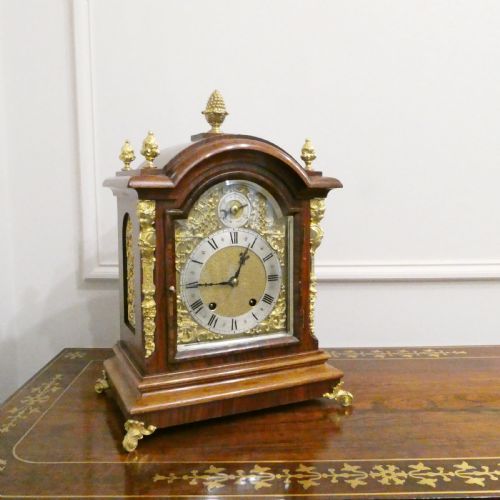


Brass Mounted Mantle Clock
A brass mounted mantle clock brings heavy architectural presence and precise mechanical work to a room, drawing the eye with polished metalwork against timber or stone.
Brass Mounted Mantle Clock
When you search for a brass mounted mantle clock, you encounter timepieces spanning the Georgian, Regency, and Victorian periods, alongside continental examples from French and German workshops. These objects take the form of bracket clocks, architectural marble cases, and wooden desk clocks designed to sit firmly on a shelf or sideboard.
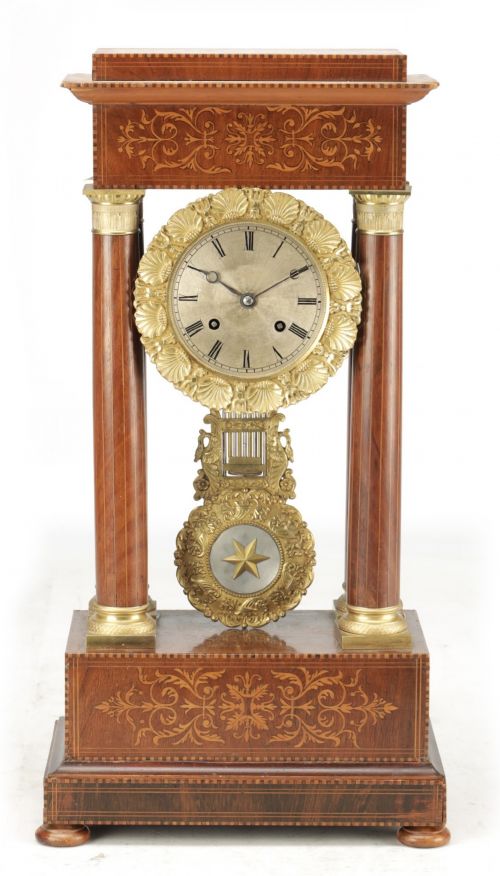
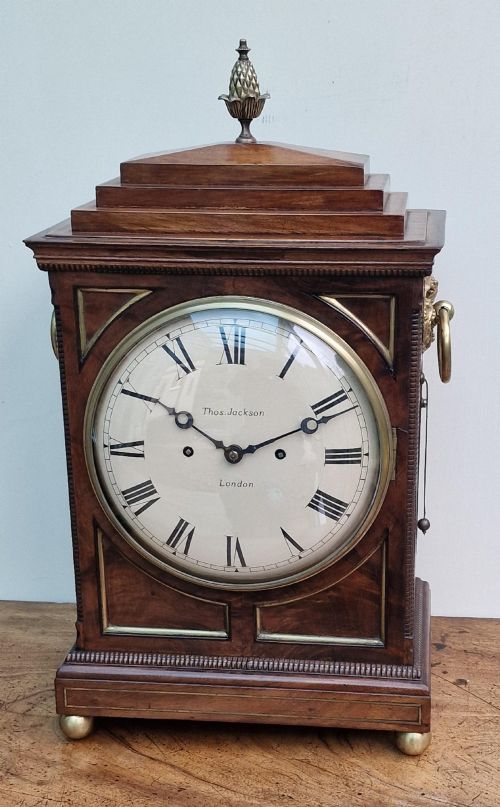
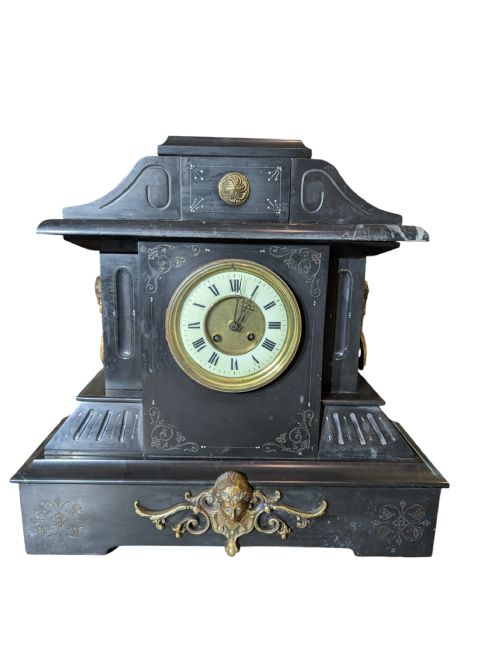
The most common examples on this page are Victorian marble or slate mantel clocks and Regency mahogany bracket clocks. These pieces rely on metal mounts, bezels, and feet to frame dials of enamel or porcelain, combining domestic utility with decorative gravitas.
Materials and construction
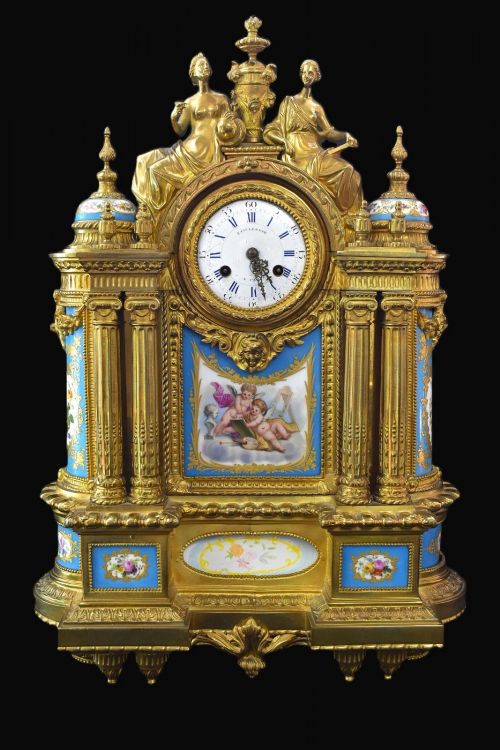
Cases combine dense hardwoods like mahogany and rosewood with contrasting black slate, marble, and onyx, while others utilise ebonised timber or tortoiseshell inlay in the Boulle manner. Heavy cast brass, ormolu, and silver mounts anchor the corners, bezels, and carrying handles.
Internal movements employ brass gears, escapements, and spring or fusee drives to power striking mechanisms and eight-day gear trains. Dials feature white enamel or porcelain plates with painted numerals protected beneath bevelled glass faceplates.
Measures of quality
Quality rests in the crispness of the brass casting and the weight of the stone or timber case. Superior examples feature finely chased ormolu mounts, signed movement backplates, and robust double fusee or ting tang striking trains that maintain reliable timekeeping.
Lesser pieces present simpler timber boxes with pressed brass bezels and unmarked movements. The harmony between the architectural case and the quality of the mounted metalwork dictates the standing of each clock.
Thomas Jackson·Etienne Lenoir·Schneckenburger·Perigal and Duterrau·Ganthony of London·Adams of Lombard Street·Lenzkirch
The Brass Mounted Mantle Clock Glossary
- Bracket clock
- A portable spring-driven clock originally designed to sit on a wall bracket to aid acoustics and visibility. They frequently feature arched wooden cases with brass carrying handles.
- Fusee
- A conical pulley used inside better mechanical clocks to equalise the declining power of a driving spring as it unwinds. This mechanism ensures steady force reaches the escapement throughout the eight-day run.
- Ormolu
- Gilded bronze used extensively for decorative mounts, feet, and bezels on French mantel clocks. The technique involves applying a mercury and gold amalgam to cast bronze before heating.
- Boulle clock
- A timepiece encased in tortoiseshell and brass marquetry developed in France. The technique reverses dark shell and polished brass to create intricate decorative patterns across the curved body.
Brass Mounted Mantle Clock: Frequently Asked Questions
Where should I place a heavy marble clock?
Position your clock on a sturdy, level mantelpiece or sideboard that can support substantial weight without flexing. Uneven surfaces cause the pendulum to beat unevenly and eventually stop the movement.
Ensure the piece sits away from direct heat sources and damp exterior walls. A stable surface protects both delicate brass mounts and internal mechanical components.
How do I tell a French clock from an English one?
English bracket clocks typically feature sturdy mahogany or rosewood cases with brass carrying handles and robust fusee movements. French mantel clocks often utilise marble, slate, or ornate ormolu cases housing striking or mystery mechanisms.
Examining the backplate and dial style usually reveals workshop signatures and country of origin. French makers frequently incorporated porcelain plaques and elaborate cast brass feet into their designs.
What is a clock garniture set?
A clock garniture pairs a central mantel clock with matching decorative side pieces, such as candelabras or urns. These matched groupings were designed to create a balanced display across a fireplace mantle.
Materials match across the entire set, combining marble, bronze, or porcelain elements. They offer a complete decorative scheme dating primarily from the nineteenth century.