

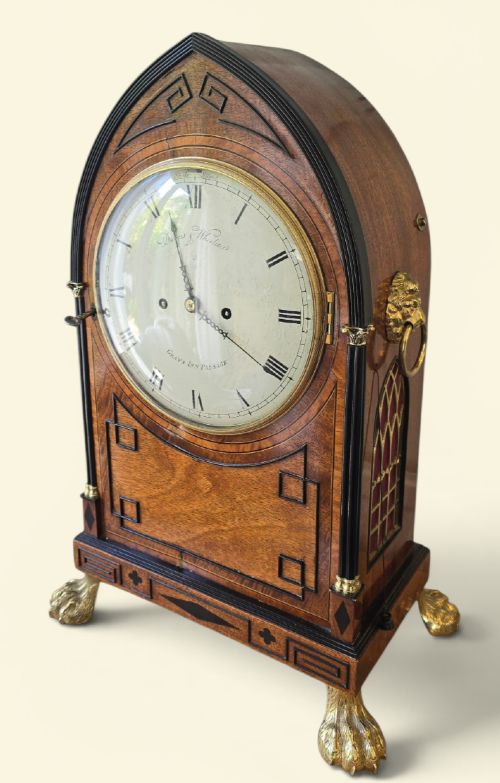


Brass Mount Brackets
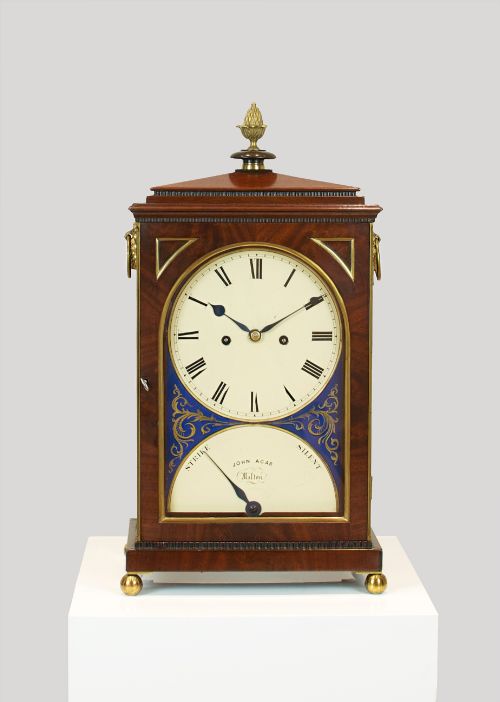
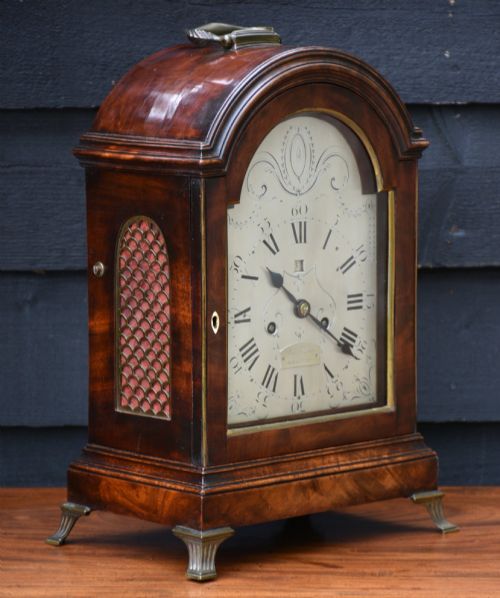
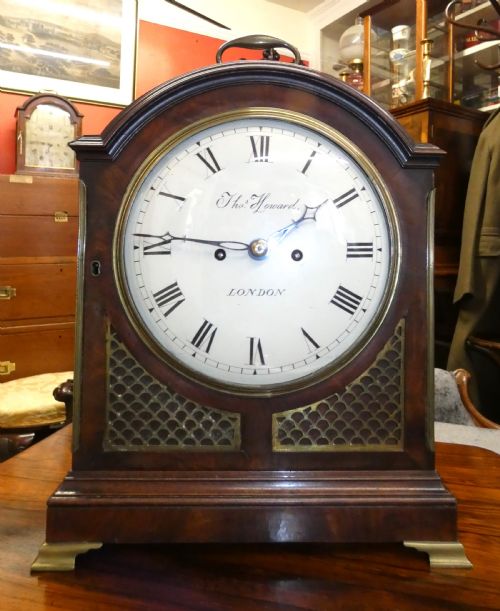
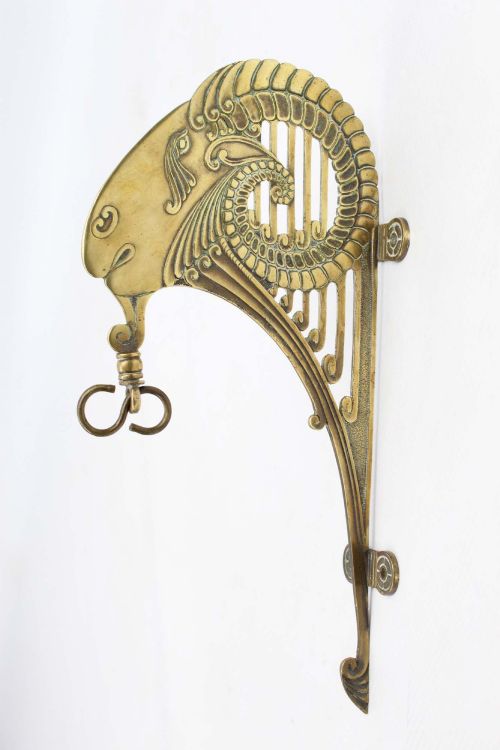
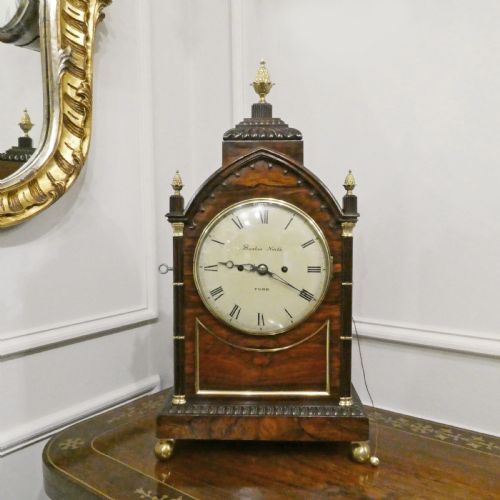
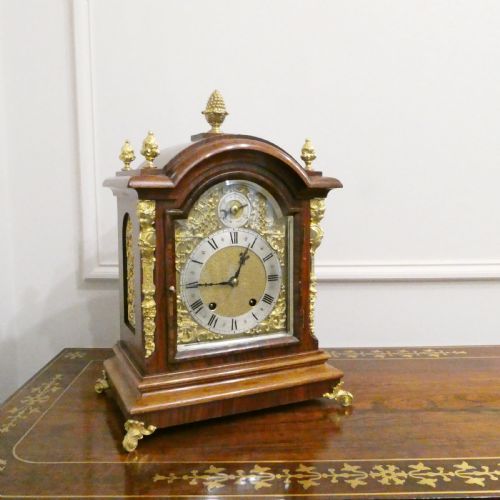
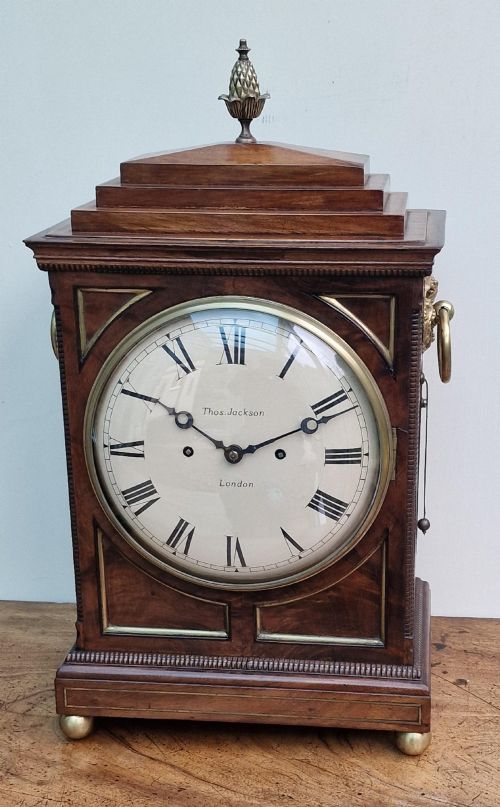
These brass mount brackets and associated clock cases combine fine timber and cast metalwork for domestic utility.
Brass Mount Brackets
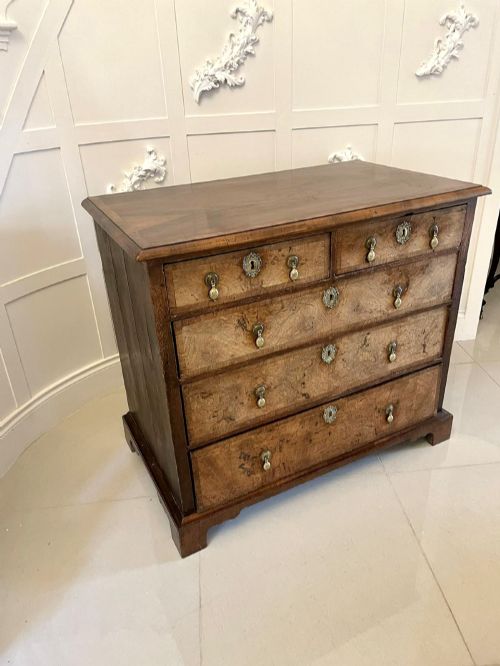
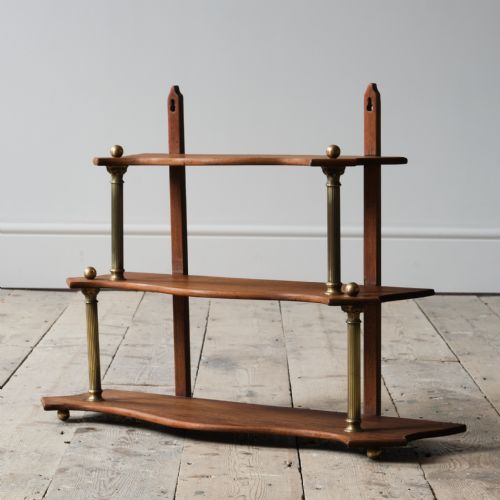
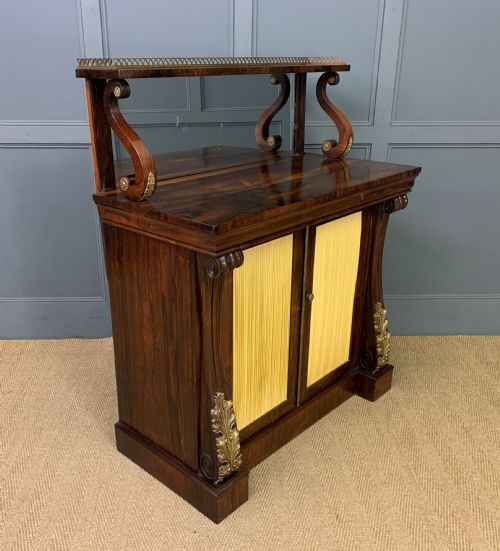
When you search for brass mount brackets, you encounter items closely linked to clock cases, wall shelves, and storage furniture from the seventeenth century through to the early twentieth century. The selection leans heavily toward bracket clocks housed in mahogany, rosewood, walnut, or ebonised wood, alongside wall hanging shelves and mounted cabinets.
The objects stem from English and continental workshops, spanning Georgian, Regency, Victorian, and revival periods such as French Rococo and Louis XIV style. Many pieces function as table clocks or mantel clocks incorporating decorative metal mounts, while others comprise architectural wall brackets supporting display surfaces.
Makers and horologists from London, provincial towns, and Paris dominate the record, supplying domestic interiors with precision timekeepers and fitted furniture. Buyers generally find that the term encompasses both the structural metal fittings and the complete clock or shelf assemblies sharing these mounts.
How they were made
Construction relies on solid and veneered hardwoods like mahogany, walnut, rosewood, and ebony, shaped into architectural cases, wall shelves, and bureau bodies. Selected timbers undergo polishing or ebonising to provide a dark, uniform ground for metal ornamentation.
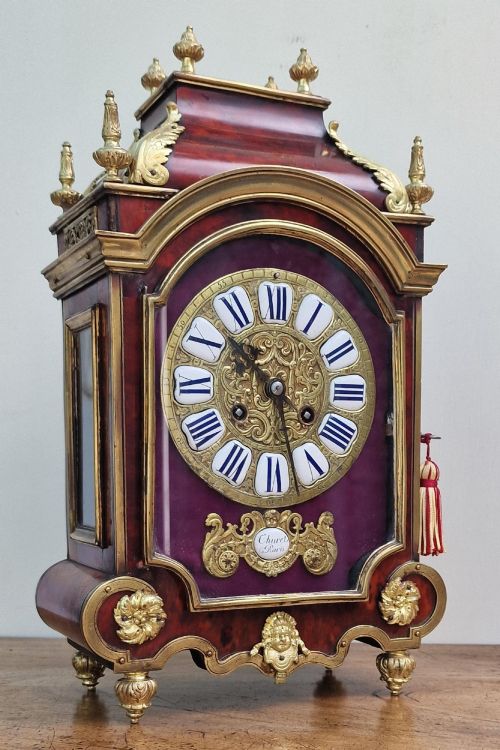
Cast brass, ormolu, and gilded bronze supply the mounts, bezels, and feet, fixed directly to wooden carcases with small pins or screws. Tortoiseshell, enamel dials, and glass panels integrate into the designs, particularly within French Boullework and mantel clock production.
Brass Mount Brackets Retail Price Guide 2026
Typical asking prices for brass mount brackets among the pieces listed under this phrase on Sellingantiques today, from the lower quarter to the upper quarter. They describe what is for sale here now, not the wider market.
Listings feature walnut, mahogany, rosewood, and ebonised wood across Georgian, Regency, and Victorian periods.
What varies in quality
The refinement of the cast brass or ormolu mounts dictates much of the visual standard, separating crisp, chased detailing from softer, mass-produced casting. Cabinetwork joins also differ, distinguishing hand-cut dovetails and precise veneer matching from simpler construction.
Horological and structural integrity separates standard items from exceptional survivals, particularly regarding signed movements by noted makers and the preservation of original dial enamel and timber finishes.
Agar of Malton·Thomas Howard·Thuret Paris·Barber and North·Thomas Jackson·Desbois and Wheeler·Schneckenburger·Francis Perigal·Turner of London·John Witherston·Henry Jones·Des Granges·Paul Philip Barraud·John Bull·Payne and Co·Lenzkirch
The Brass Mount Brackets Glossary
- Bracket clock
- A portable clock originally designed to sit on a wall bracket to aid acoustics and visibility, later placed on tables or mantelpieces. These pieces often feature fusee movements and carrying handles.
- Ormolu
- Finely ground high-zinc brass applied to bronze objects to achieve a gold-coloured finish through a mercury amalgamation process. This material appears frequently on French revival mantel clocks.
- Boulle work
- A form of marquetry employing brass and tortoiseshell inlaid in counterchange patterns, popularised in seventeenth-century France and revived during the nineteenth century. It frequently decorates large mantel clock cases.
- Fusee
- A conical pulley used in clock movements to maintain even tension on the gear train as the mainspring unwinds. This mechanism improves timekeeping accuracy across the duration of the wind.
- Pad top
- A raised, domed upper section characteristic of certain Georgian and Regency mahogany bracket clock cases. This form often incorporates a brass carrying handle at the apex.
Brass Mount Brackets: Frequently Asked Questions
What is a bracket clock?
A bracket clock is a portable spring-driven timepiece built with a flat base so it can stand on a table, chest, or dedicated wall shelf. Many include arched wooden cases and brass carrying handles for movement between rooms.
Early versions required wall brackets to allow the weights or pendulum to clear the furniture below, though spring-driven fusee movements later made them free-standing.
How do I date a mahogany clock case?
Dating relies on timber choice, case proportions, and the style of the brass mounts and dial spandrels. Georgian examples often display flame mahogany veneers with distinct architectural pediments.
Later Victorian and revival pieces adopt heavier proportions, incorporation of ebonised details, or French-influenced ormolu mounts reflecting Louis XIV or Rococo tastes.
Where were these clocks made?
Production centred in London and provincial English towns like York, Hereford, and Malton, alongside significant continental workshops in Paris and Germany. English makers focused on mahogany and walnut cases housing precise fusee movements.
French ateliers specialised in tortoiseshell, ormolu mounts, and Boulle marquetry applied to elaborate mantel clocks and companion pedestals.
How should I care for wooden clock cases?
Keep wooden cases and mounted shelves away from direct sunlight, central heating sources, and damp environments to protect the polished timber and delicate veneers. Dust them gently with a dry, soft cloth.
Avoid applying modern silicone polishes or commercial sprays, as these can build up on the surface and damage historic French polish or wax finishes.