




Brass Military Handles
Brass military handles fasten travel chests, desks and cabinets built for officers on the move during the nineteenth century and beyond.
Brass Military Handles
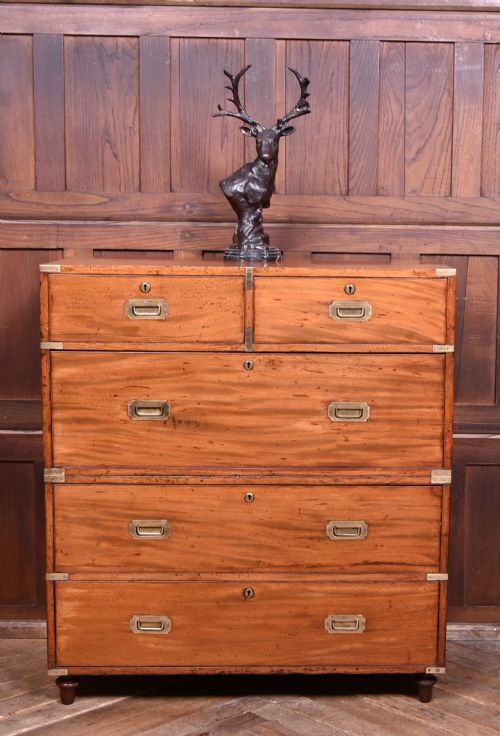
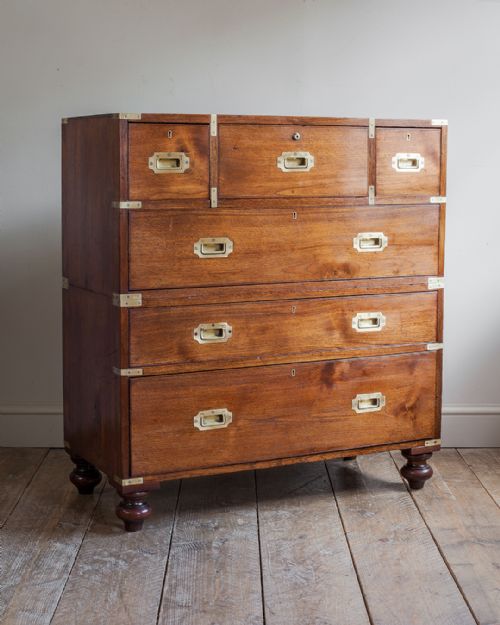
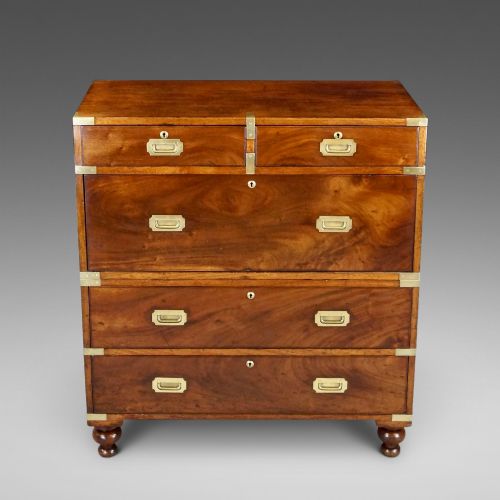
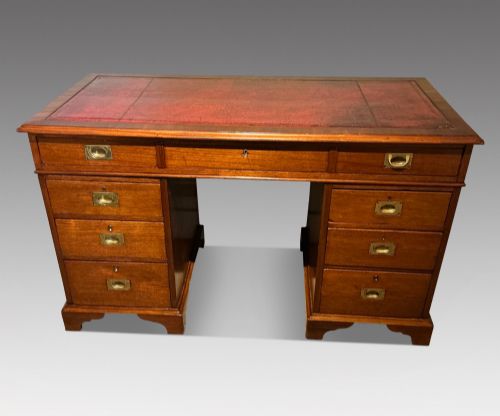
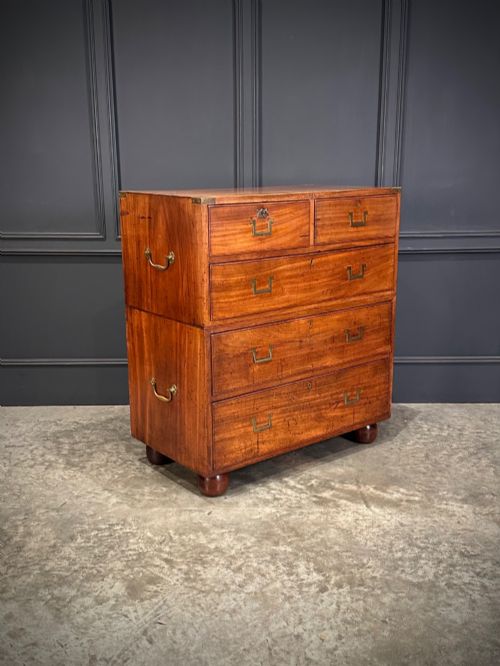
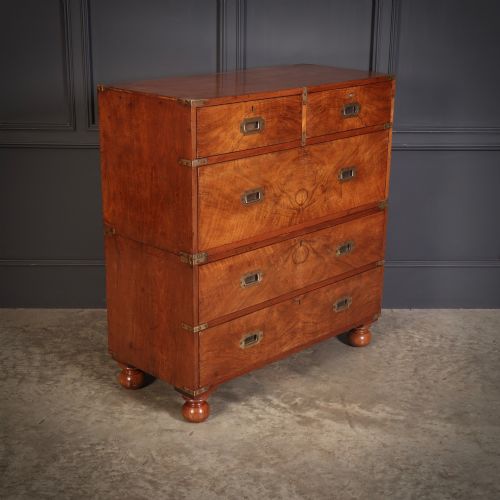
Brass military handles belong to campaign furniture designed to dismantle and travel easily across the British Empire during the eighteenth and nineteenth centuries. You will most frequently encounter these flush-fitting fixtures on mahogany, teak, and camphor wood chests of drawers and secretaires.
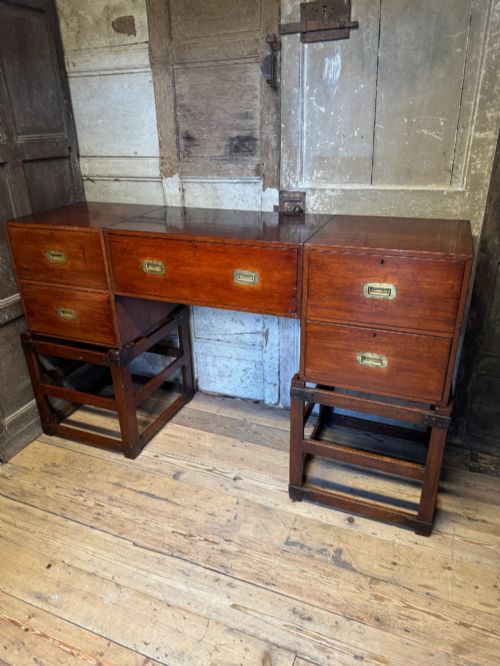
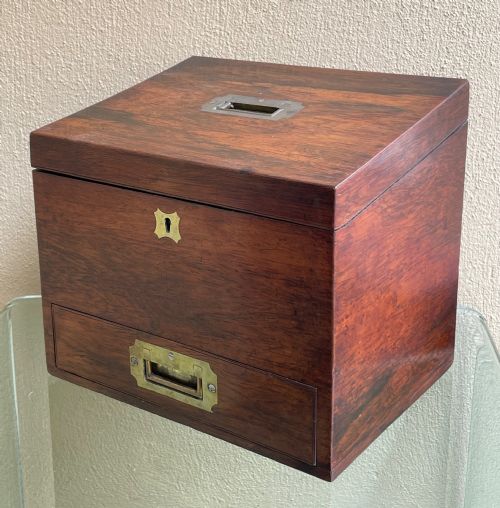
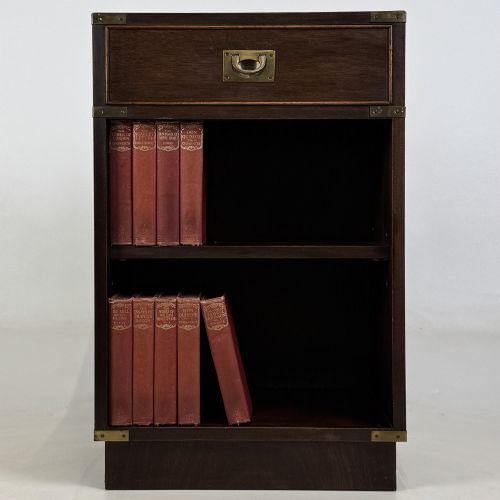
These fixtures were engineered to sit level with the wooden surface so that trunks and desks could pack tightly inside transport crates without snagging. The evidence shows them fitted to two-part chests, writing slopes, and low storage units spanning the Georgian, Regency, and Victorian eras.
Beyond standard drawer pulls, the phrase encompasses drop handles and inset corners cast in brass to reinforce portable furniture against rough handling on ships and trains. Makers integrated these metal mounts directly into the timber frame for maximum stability during transit.
How they were made
Foundries cast the brass components in solid form, often incorporating recessed backplates that allowed the handle loop to fold completely flat when not in use. Cabinet makers then recessed these heavy brasses into dense tropical hardwoods like mahogany, teak, and camphor wood.
Craftsmen secured the hardware using countersunk brass screws to ensure no metal protruded past the wooden plane of the cabinet. Alongside the brasswork, these campaign pieces routinely incorporated secondary woods and occasionally inset leather writing surfaces.
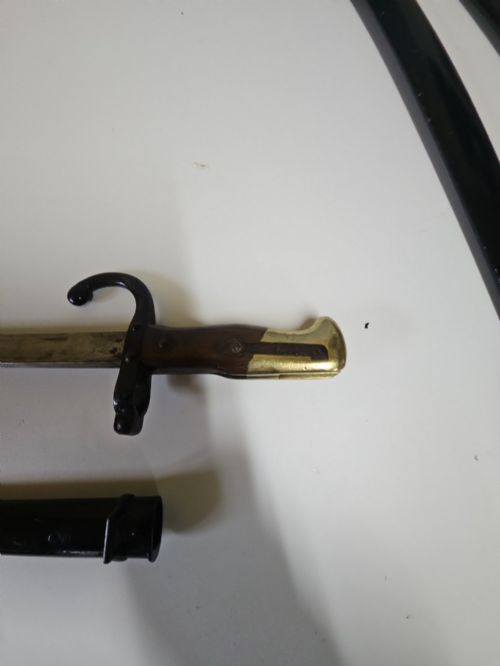
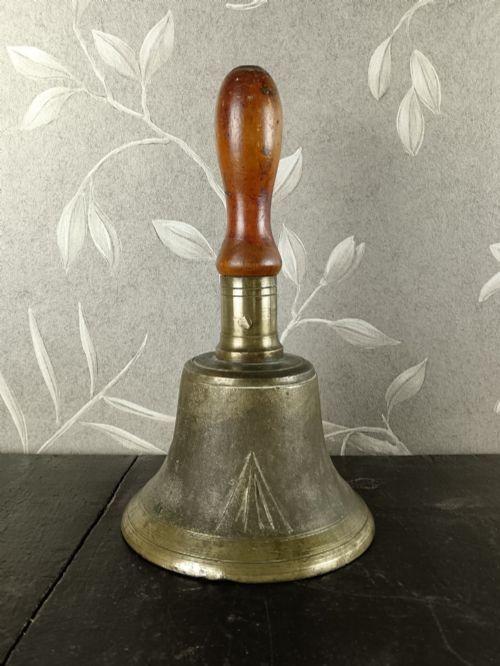
A solitary cast brass warning bell sits among the campaign chests and swords, ready to sound muster in the quietest study.
What varies in quality
Quality rests in the weight and precision of the brass casting, alongside the crispness of the surrounding timber recess. Superior examples feature thick, heavy brass plates that sit perfectly flush with the wood, whereas simpler pieces utilise lighter stamped metal.
The choice of primary timber also dictates the tier of the piece, with richly figured mahogany, dense teak, and fragrant camphor wood representing the finer end of campaign production. Furthermore, the complexity of internal fittings, such as secretaire drawers and fitted writing compartments, elevates the overall standard.
S. W. Silver & Co.·Ross & Co.·Army & Navy
The Brass Military Handles Glossary
- Campaign chest
- A portable storage unit built in two or more sections to facilitate transport during military deployments. These chests feature recessed brass handles and corner brackets to protect the edges.
- Secretaire chest
- A cabinet containing a fitted writing drawer with a drop-front desk surface. This form often incorporates internal pigeonholes and small drawers behind the main writing flap.
- Camphor wood
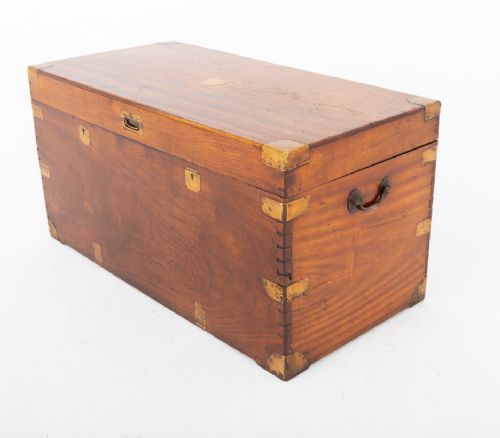
- An aromatic timber utilised for campaign trunks and chests to deter insects during tropical travel. The wood displays a distinctive natural scent and varied grain patterns.
- Recessed handle
- A hardware mount set into a shallow cavity in the wood so the pull lies flat against the surface. This design prevents damage and catching during transit.
Brass Military Handles: Frequently Asked Questions
What are brass military handles?
Brass military handles are flush-fitting metal pulls designed for campaign furniture used by officers travelling during the eighteenth and nineteenth centuries. Their folding loops allowed trunks and desks to pack tightly without catching on transport crates.
These fixtures are typically found on modular chests of drawers, secretaires, and writing boxes made from durable timbers like mahogany, teak, and camphor wood.
How do you identify campaign furniture?
Campaign furniture is identified by its portable, modular construction, often separating into two distinct stacking sections for travel. Key indicators include recessed brass handles, reinforced brass corner brackets, and removable screw-in feet.
Most surviving pieces date from the Georgian, Regency, and Victorian periods, constructed in dense woods capable of enduring long journeys.
Why are these handles flush?
Handles were made flush so they would not project beyond the flat plane of a chest or desk during transport. Protruding hardware would have snagged on ropes, canvas covers, or packing crates.
The hinged loop drops neatly into a recessed backplate, keeping the entire assembly completely level with the surrounding timber.
What woods were used?
Cabinet makers utilised dense, durable timbers that could withstand varying climates during military service. Mahogany and teak appear frequently in the surviving record, prized for their structural stability.
Camphor wood was also widely selected for trunks and chests, valued for its natural resistance to insects as well as its distinctive fragrance.