


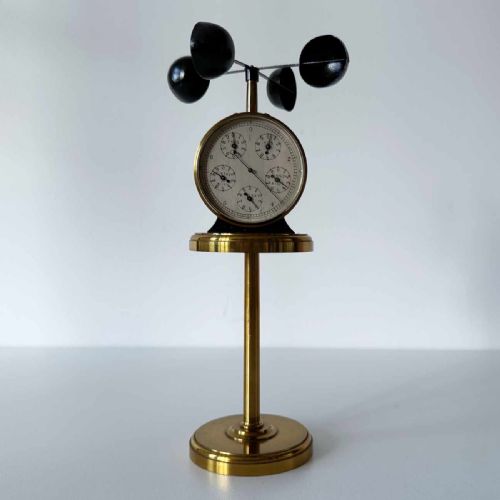


Brass Meteorological Instrument
A brass meteorological instrument records the shifts of the atmosphere, offering both mechanical precision and nineteenth-century desk presence for your home.
Brass Meteorological Instrument
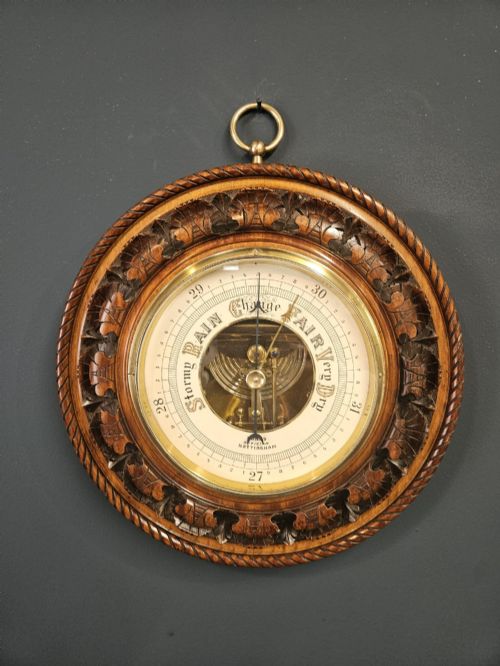
When you search for brass meteorological instrument, you encounter scientific apparatus designed to measure weather and atmospheric conditions, spanning the nineteenth century through the mid twentieth century. The selection on this page centres primarily on barographs, barometers, anemometers, weather stations, thermometers, and sunshine recorders housed in wooden and glass enclosures.
The objects originate from various periods including the Victorian era, the Edwardian period, and the interwar years of the 1930s. Most examples combine brass movements and dials with fitted cases made from oak, mahogany, walnut, or standard wood, often featuring bevelled glass panels to display the internal mechanics.
How they were made
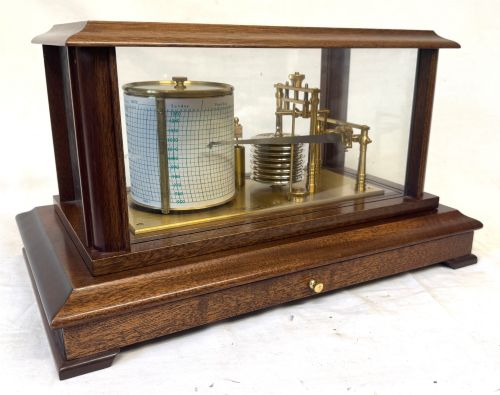
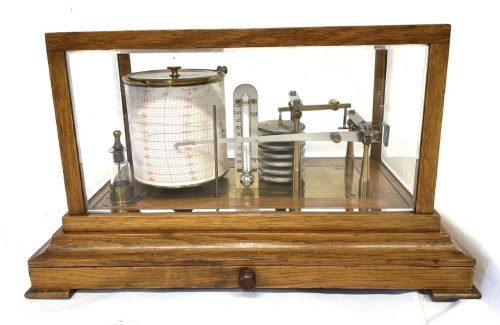
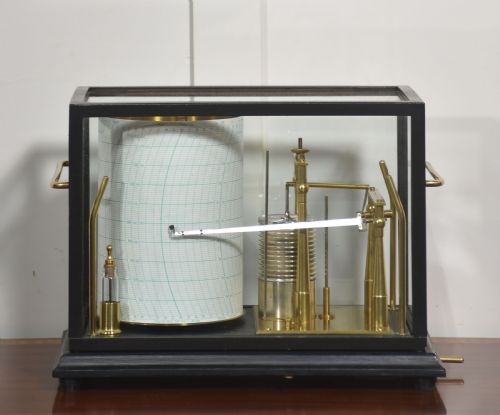
Maker workshops constructed these instruments using cast and polished brass for the operational mechanisms, dials, levers, and bezels. Glass was cut and bevelled to fit protective cases, which frequently incorporated five-glass configurations.
Cabinet makers enclosed the scientific movements in seasoned hardwoods such as oak, mahogany, and walnut, often adding fitted drawers for charts or mounting the apparatus on solid wooden pedestals.
Many barographs still retain their original paper chart drawers beneath the mechanism, ready for weeks of recording weather that passed a century ago.
What varies in quality
Quality rests in the precision of the maker's mechanical execution and the crispness of the engraved markings on brass dials and scales. Well-known makers supply robust aneroid movements and reliable clockwork drums that maintain steady operation over prolonged periods.
The cabinetry dictates the visual stature of the piece, with heavier carved walnut, thick bevelled glass panes, and well-fitted chart drawers separating standard utility items from distinguished salon instruments.
Short and Mason·Negretti and Zambra·J Hicks·Depree and Young Ltd·F Robson Newcastle·Jules Richard of Paris
The Brass Meteorological Instrument Glossary
- Barograph
- A self-recording barometer that plots atmospheric pressure onto a rotating paper chart over the course of a week. The mechanical drum is driven by a clockwork movement inside the brass casing.
- Anemometer
- An instrument used to measure wind speed and pressure. These devices often employ rotating cups or high-speed vanes connected to calibrated dials.
- Aneroid barometer
- A barometer that measures air pressure without liquid, using a flexible metal box called an aneroid cell that expands or contracts as pressure changes.
- Sunshine recorder
- A meteorological device that uses a glass sphere to focus sunlight onto a calibrated card, burning a trace to record the duration of sunshine.
- Bevelled glass
- Glass with edges cut at an angle to create a decorative frame. This feature is commonly found on higher quality instrument cases.
Brass Meteorological Instrument: Frequently Asked Questions
How do barographs record the weather?
A barograph uses stacked metal vacuum chambers that expand and contract with atmospheric pressure changes. Connected levers translate this movement into an inked arm that traces a line onto a rotating paper chart.
Paper charts are wrapped around a clockwork drum that turns once every week. This creates a continuous visual record of weather trends over several days.
Where were these instruments used?
These scientific instruments were placed in country houses, shipping offices, and observatory desks where tracking local weather patterns mattered for daily business or estate management.
Gentlemen scientists and maritime operators relied on them to anticipate storms and record barometric pressure shifts indoors.
How do I care for an antique barograph?
Keep the instrument away from direct sunlight, central heating vents, and damp environments to protect the wooden case and brass components. The clockwork drum requires occasional winding just like a mechanical clock.
Avoid moving the sensitive linkage arms by hand when changing the paper chart. Gentle dusting with a dry microfibre cloth keeps the glass and brass clean.
How do I identify the period of a weather instrument?
Examine the style of the wooden case, the typography on the brass dial, and any maker signatures or patent marks. Victorian and Edwardian examples often display ornate woodwork and engraved maker plaques.
Interwar pieces from the 1930s tend to feature cleaner oak cases with simpler lines. Maker names like Short and Mason or Negretti and Zambra help narrow down the production era.