





Brass Mesh Guard
A brass mesh guard keeps stray embers in the hearth while showing off the fire behind it.
Brass Mesh Guard
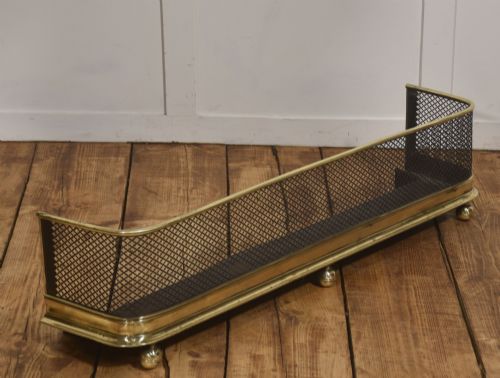
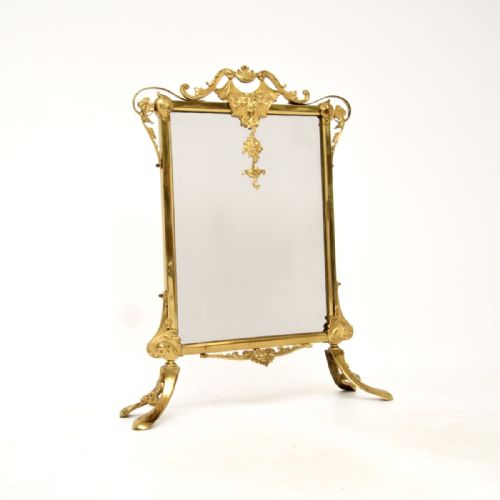
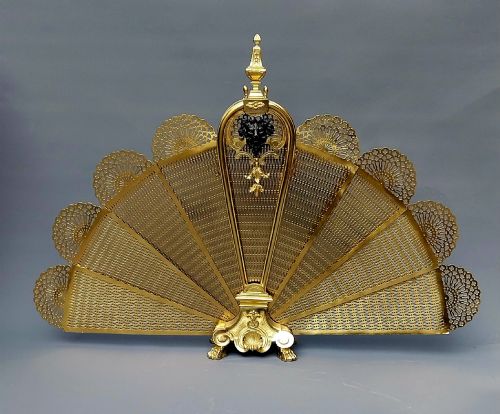
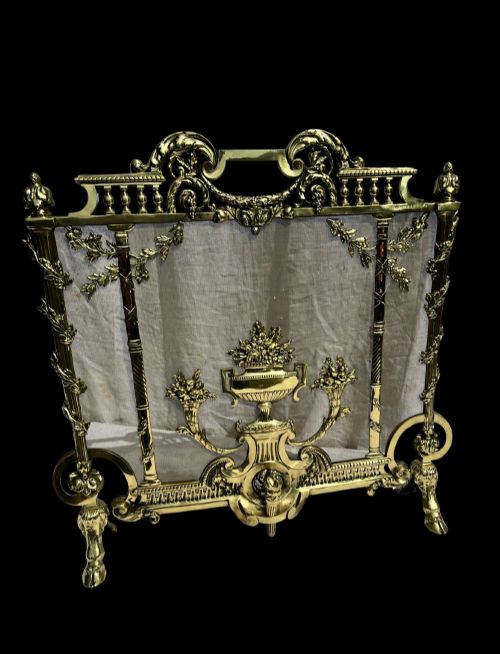
When you search for a brass mesh guard, you are looking at functional fireplace accessories designed to protect the room from sparks. These pieces span the nineteenth century into the twentieth century, taking the form of fire screens, nursery guards, and spark guards.
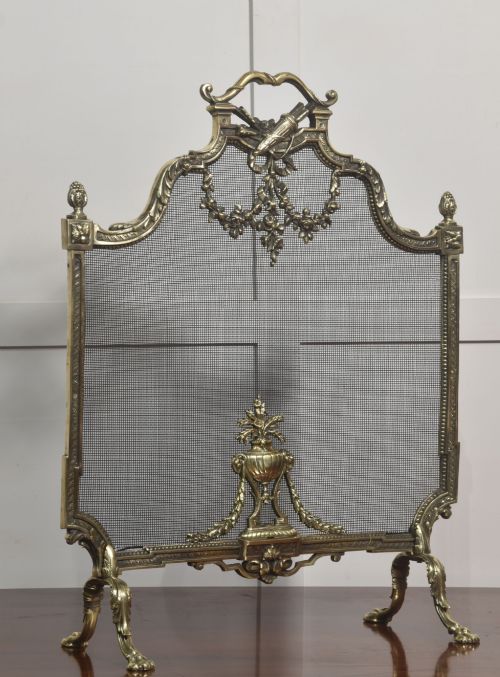
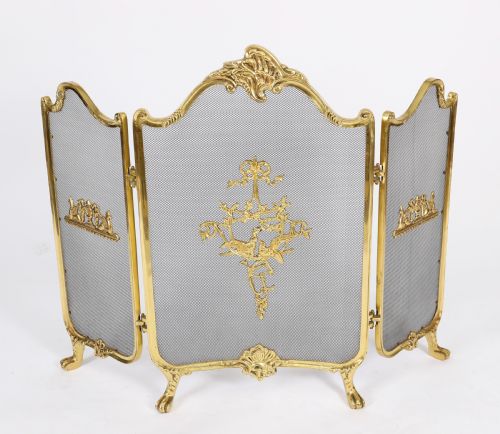
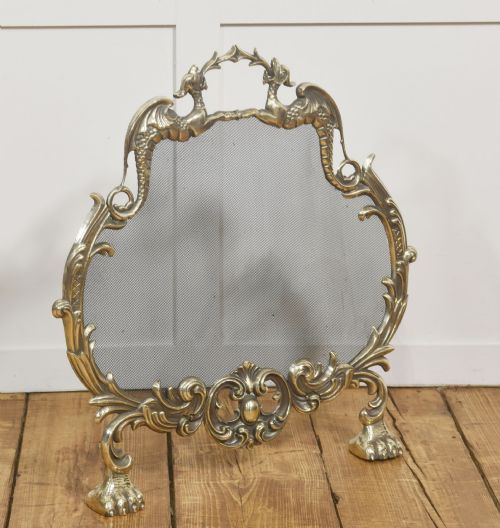
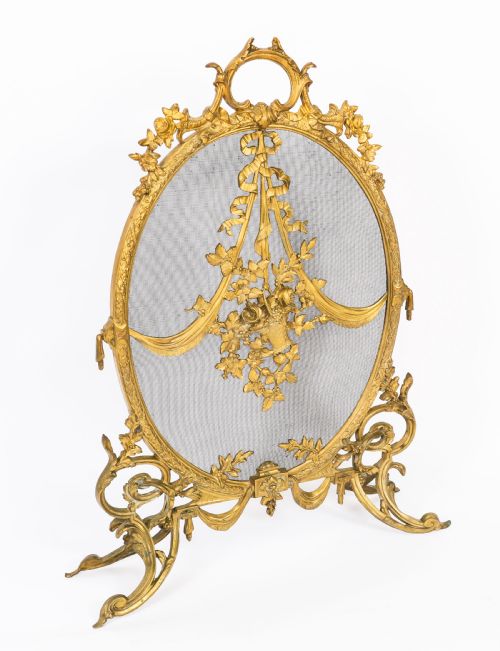
The most common version met on this page is the nineteenth-century folding or free-standing brass screen, often incorporating fine wire mesh and decorative frames. French Rococo and Regency styles appear frequently alongside simpler utilitarian forms.
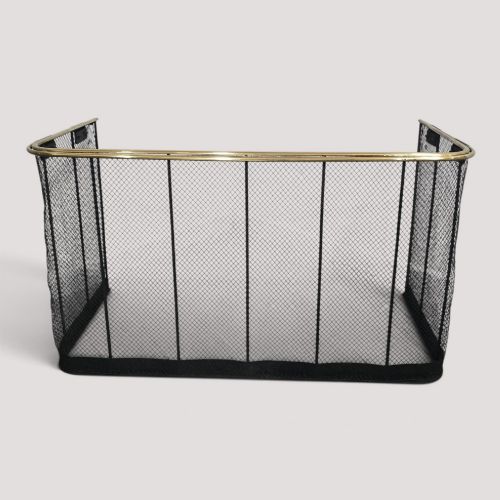
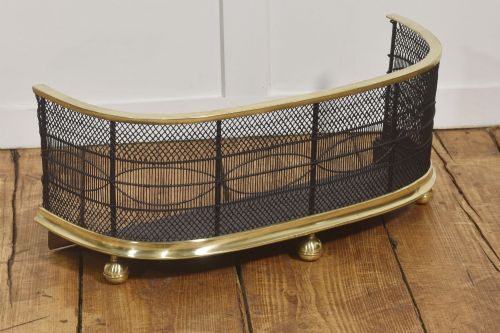
Makers and manufacturers produced these guards in various configurations, including tripartite folding sections, bowed nursery fenders, and demi-lune spark guards. Each design balances domestic safety with the prevailing decorative taste of its period.
Materials and construction
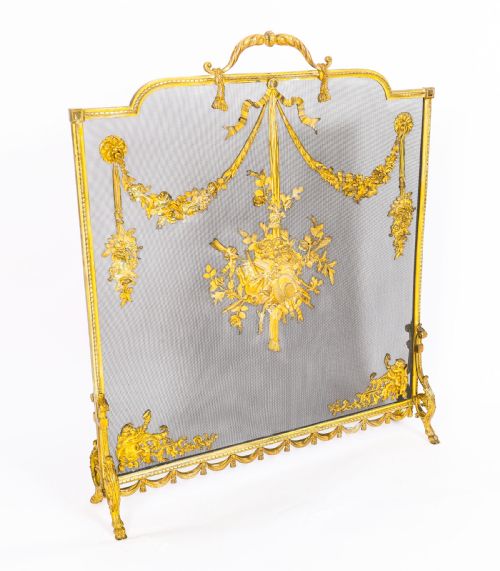
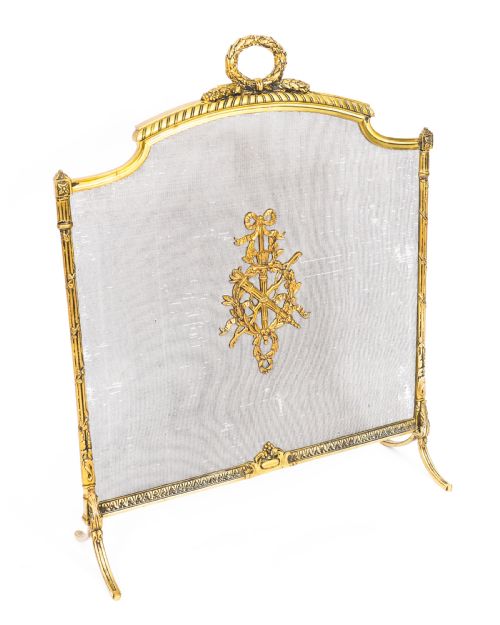
Construction relies primarily on brass frames combined with wire mesh, iron, steel, or copper. Metalworkers secured the fine mesh within rigid brass or gilt bronze borders to withstand daily heat.
Gilding, black finishes, and cast ornamentation such as flaming torches or musical trophies added decorative distinction to French Rococo and Louis XVI style examples. Simpler wirework guards utilised robust iron or steel frames for added durability.
Brass Mesh Guard Retail Price Guide 2026
Typical asking prices for brass mesh guard among the pieces listed under this phrase on Sellingantiques today, from the lower quarter to the upper quarter. They describe what is for sale here now, not the wider market.
Some nursery fenders included integrated clothes rails, turning the Victorian hearth into an indoor laundry dryer.
Judging quality
Quality rests upon the weight and gauge of the brass framework and the tightness of the woven mesh. Finer examples display crisp casting in the Rococo or Empire revival mounts and robust hinges on multi-fold panels.
Simpler wirework guards depend upon the neatness of the soldered joints and the stability of the free-standing frame. Substantial metal thickness separates everyday utilitarian items from grander country house salon pieces.
The Brass Mesh Guard Glossary
- Fire screen
- A decorative barrier placed in front of an unlit fireplace to hide the grate. Many incorporate mesh panels to double as spark guards.
- Nursery fender
- A tall protective enclosure placed around a hearth to keep children and pets away from open flames. These often feature an integrated top rail or clothes drying bar.
- Spark guard
- A fine mesh screen designed to catch flying embers from an active fire. They are frequently constructed with folding sections for easy adjustment.
- Gilt bronze
- Copper alloy treated with a gold coating, commonly used in French revival decorative mounts. It provides a rich finish that resists tarnishing.
- Tripartite
- Composed of three sections. Such guards use hinges to fold neatly around the hearth opening.
Brass Mesh Guard: Frequently Asked Questions
What is a brass mesh guard used for?
These guards serve primarily to contain sparks and glowing embers thrown from an open fire, protecting both the floor and the room.
They also act as a physical barrier to keep children and pets at a safe distance from the heat of the hearth.
How do I clean a brass mesh guard?
Dust the wire mesh gently with a soft brush and wipe the solid brass frame with a dry cloth.
Avoid harsh chemical polishes that might strip antique patination or damage delicate wirework.
Are these guards suitable for daily use?
Many sturdy nineteenth-century and early twentieth-century examples remain robust enough for regular fireside duties.
Folding designs and nursery guards offer practical flexibility for different hearth sizes and burning habits.
How do I identify a French revival guard?
French revival pieces often display ornate cast mounts featuring Rococo scrolls, musical trophies, or flaming torches in gilt bronze.
They frequently employ heavier frames and sophisticated folding mechanisms compared to standard utility guards.