





Brass Marquetry Vitrine
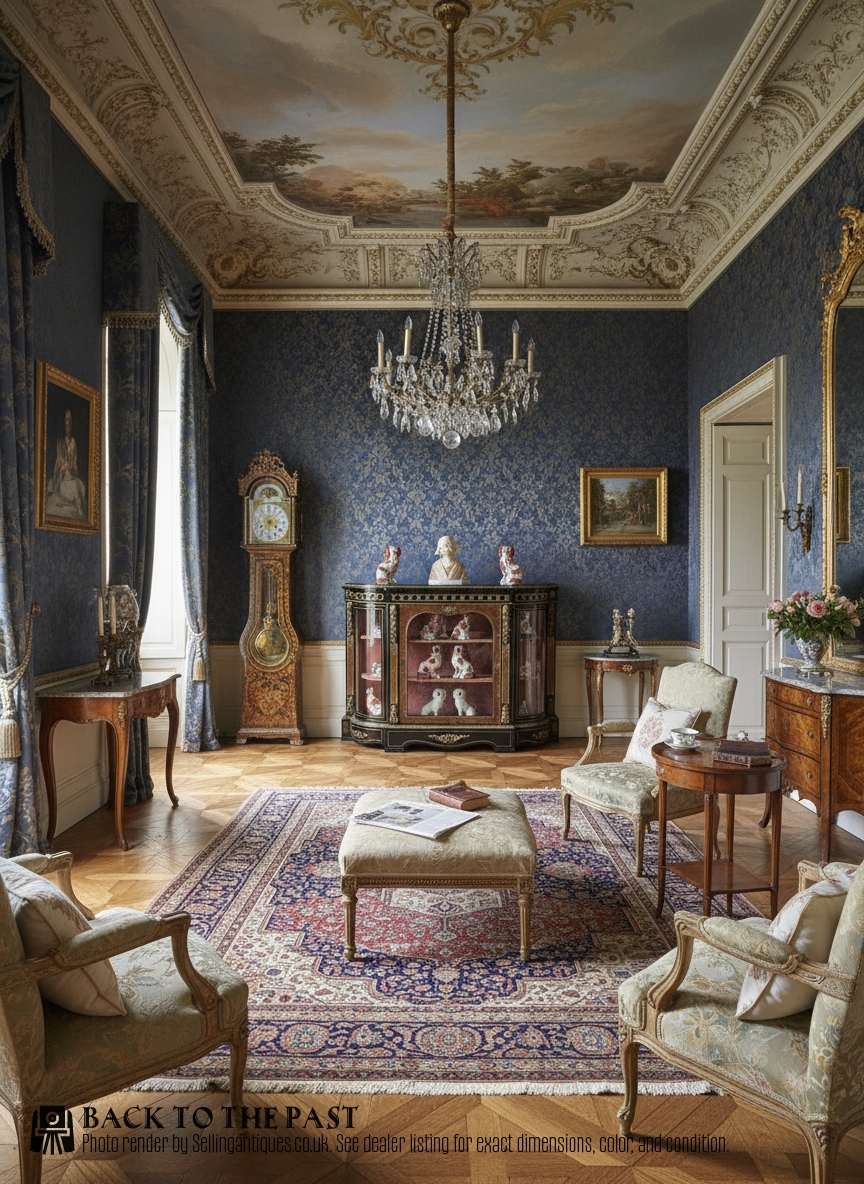
A brass marquetry vitrine brings French nineteenth-century elegance into a room, offering glazed display space for treasured objects alongside intricate metalwork.
Brass Marquetry Vitrine
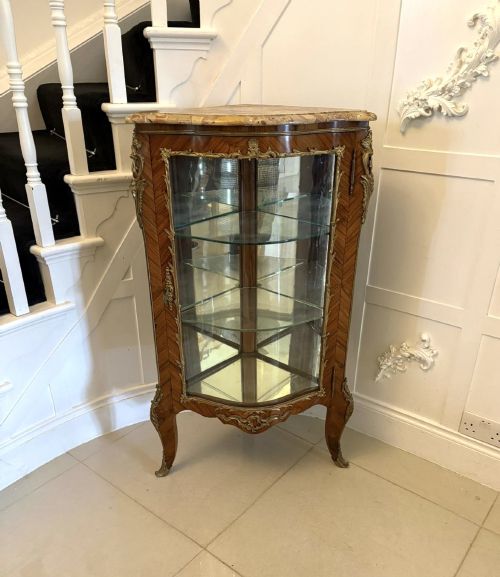
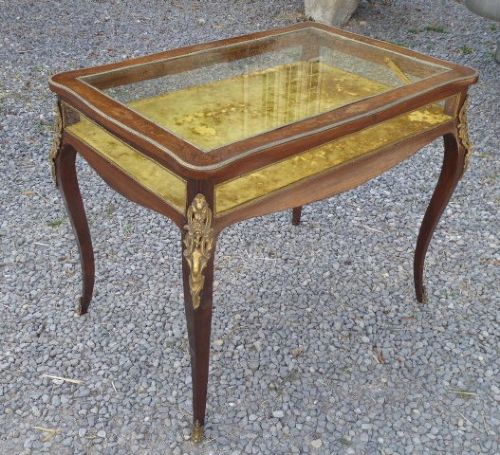
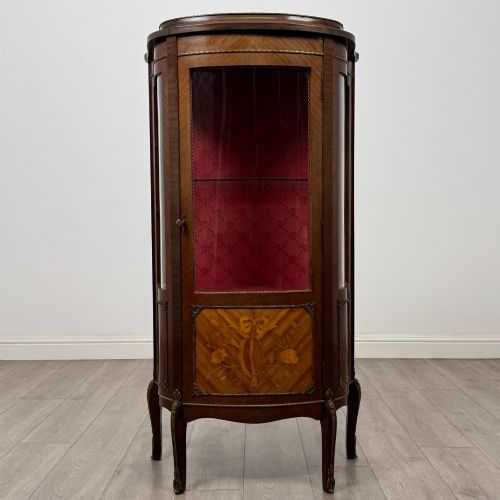
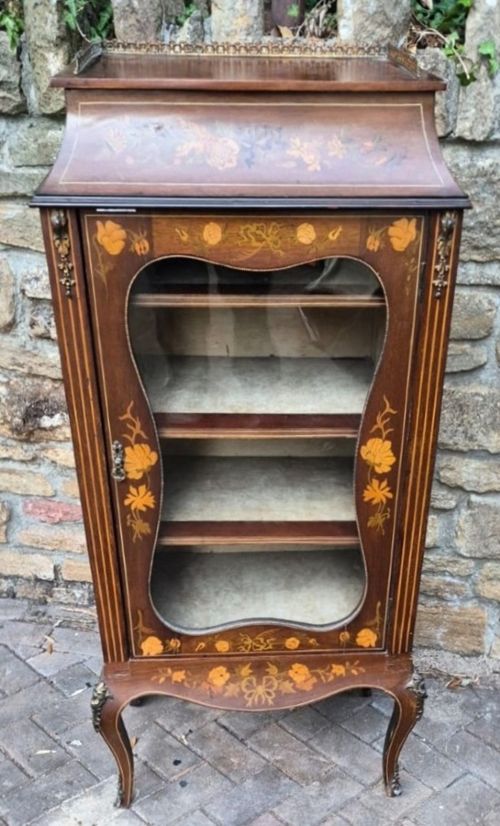
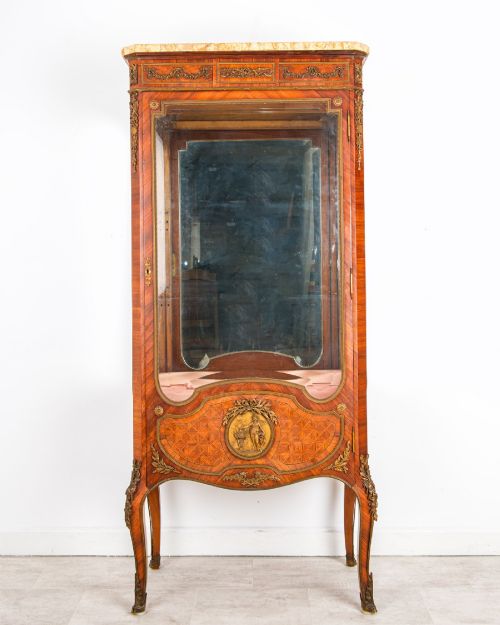
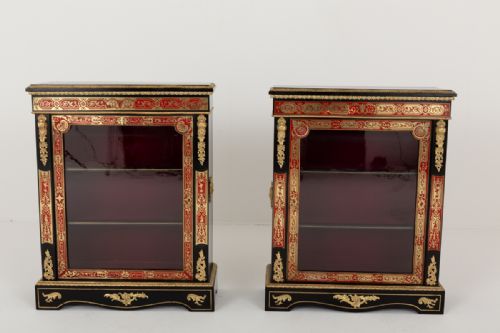
A brass marquetry vitrine combines glazed display cabinets with elaborate metal inlay, most frequently encountered in nineteenth-century French pieces associated with the Napoleon III period and Louis XV revival styles. These items appear across various forms such as pier cabinets, side tables, and bijouterie tables, each designed to showcase collections behind glass.
The materials span ebonised wood, kingwood, mahogany, and tortoiseshell, providing a dark or richly grained backdrop that allows the brass and ormolu mounts to stand out clearly. Cabinets often feature serpentine fronts, marble tops, and detailed marquetry patterns that reflect Parisian craftsmanship from the eighteen-fifties onwards.
Materials and construction methods
Cabinet makers built these pieces using hardwood carcasses veneered in exotic timbers like kingwood and mahogany, or blackened wood prepared for metal inlay. Boulle work techniques involved cutting brass and tortoiseshell simultaneously to create matching positive and negative patterns across the surface.
Gilded bronze mounts, known as ormolu, were cast and chased separately before being fixed around the edges, corners, and feet to frame the glass doors and highlight the structural lines.
Brass Marquetry Vitrine Retail Price Guide 2026
Typical asking prices for brass marquetry vitrine among the pieces listed under this phrase on Sellingantiques today, from the lower quarter to the upper quarter. They describe what is for sale here now, not the wider market.
The listed pieces include nineteenth-century French cabinets, Edwardian display furniture, and Victorian bijouterie tables using brass, tortoiseshell, and kingwood.
Distinguishing quality in craftsmanship
The precision of the brass inlay work dictates the level of refinement, where tighter joints between the metal and the surrounding wood indicate superior workshop standards. Finer pieces demonstrate careful hand-chasing on the ormolu mounts rather than plain, mass-produced casting.
The choice of underlying timbers and the depth of the marquetry design separate standard production items from exceptional commissions, particularly in nineteenth-century French cabinet making.
Edwards and Roberts
The Brass Marquetry Vitrine Glossary
- Boulle work
- A form of marquetry using brass and tortoiseshell developed during the reign of Louis XIV and revived in the nineteenth century. The technique creates intricate contrasting patterns across cabinet doors and panels.
- Ormolu
- Gilded bronze used for decorative mounts and feet on furniture. It provides bright metallic highlights against dark woods and tortoiseshell.
- Vitrine
- A glass-fronted cabinet designed for displaying porcelain, silver, or small curiosities. The sides and doors incorporate glass panels to maximise light inside.
- Marquetry
- Decorative patterns formed by inserting pieces of wood, metal, or shell into a veneered surface. Craftsmen shape each element to fit flush within the background.
- Pier cabinet
- A low cabinet designed to fit against the wall between windows. Nineteenth-century examples often feature single glazed doors and elaborate top mounts.
Brass Marquetry Vitrine: Frequently Asked Questions
What is a boulle vitrine?
A boulle vitrine is a display cabinet decorated with brass and tortoiseshell marquetry, named after the famous French cabinet maker André-Charles Boulle.
These pieces typically date from the nineteenth century and feature glazed doors designed to show off collections of small objects.
How do I clean brass marquetry?
Clean brass marquetry gently with a dry, soft cloth to remove dust without disturbing the delicate metal and wood joints.
Avoid liquid polishes or abrasive cleaners that can seep between the brass inlay and the surrounding veneer.
Where should I place a vitrine?
Place your cabinet away from direct sunlight and heat sources to protect the delicate veneers, tortoiseshell, and polished wood surfaces.
A stable interior environment prevents the wood and brass from expanding or contracting at different rates.
How do I tell nineteenth century pieces apart?
Nineteenth-century pieces often display revival styles such as Louis XV curves alongside specific wood choices like ebonised finishes and kingwood veneers.
Examine the construction methods and the quality of the ormolu mounts to understand the manufacturing period.