


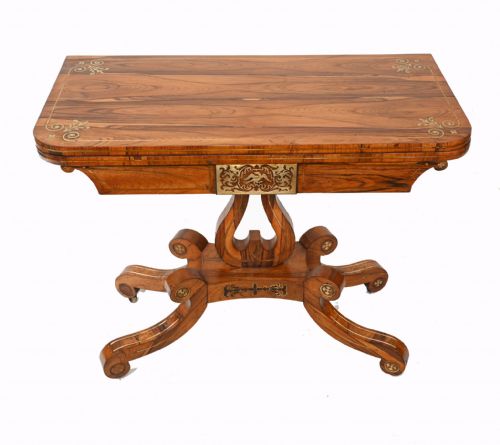


Brass Marquetry Console Table
A brass marquetry console table brings together rich woods and precise metal inlay, offering a striking centrepiece for any room.
Brass Marquetry Console Table
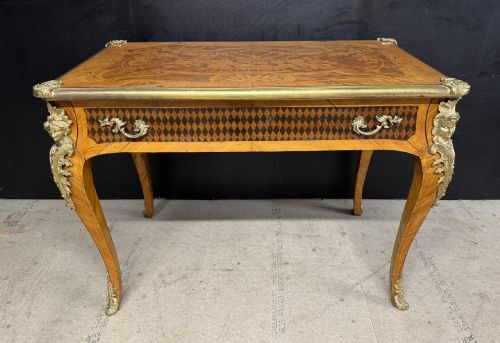
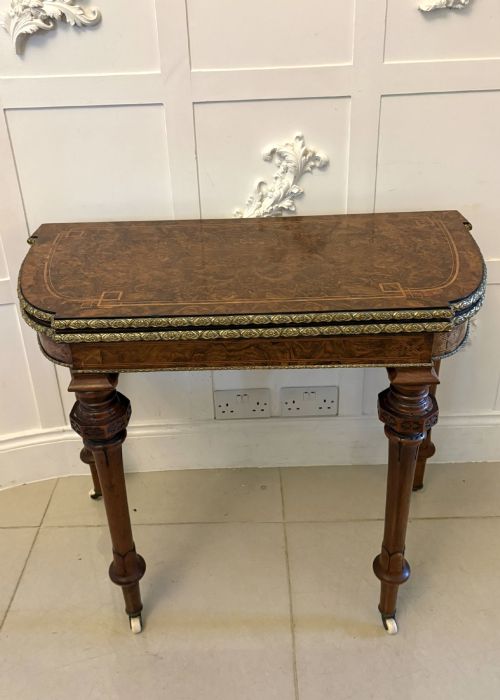
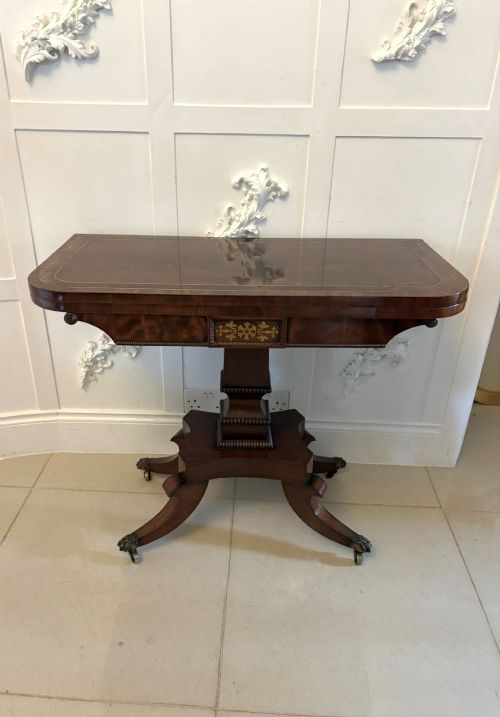
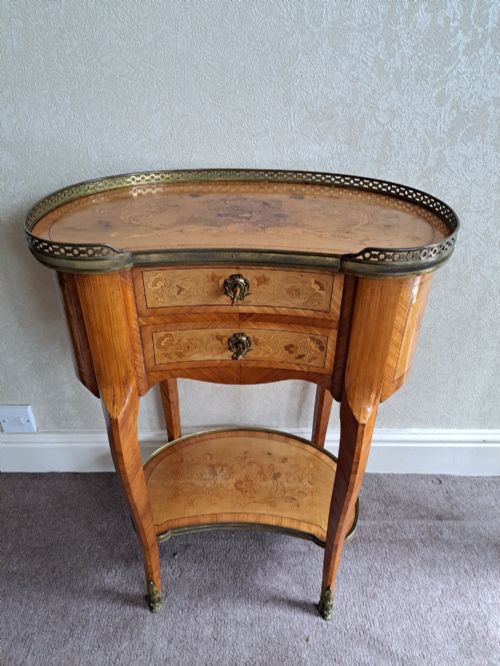
When you search for a brass marquetry console table, you encounter a selection of English and French tables spanning the Regency and Victorian periods up to nineteen hundred. These pieces frequently appear in forms such as card tables, games tables, centre tables, and sofa tables alongside standard console designs.
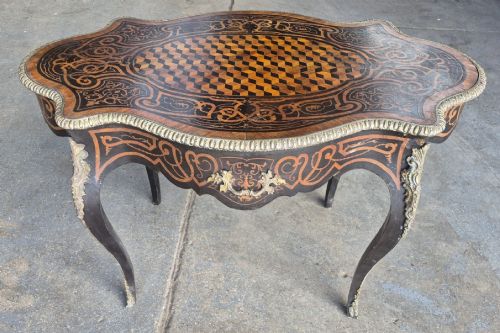
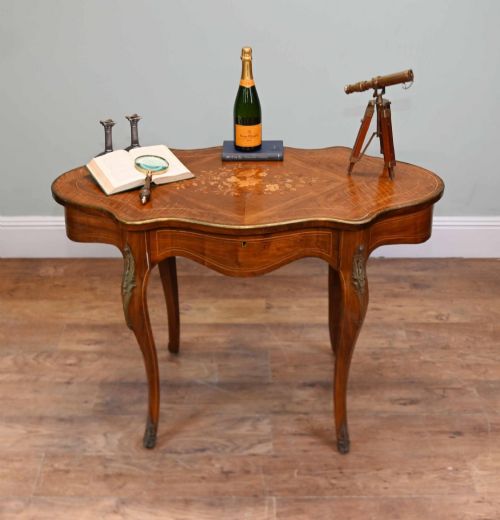
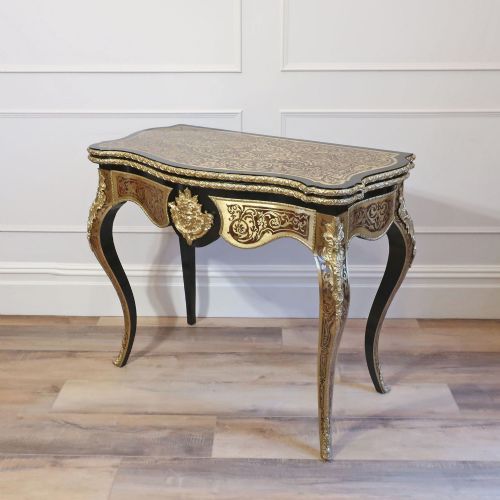
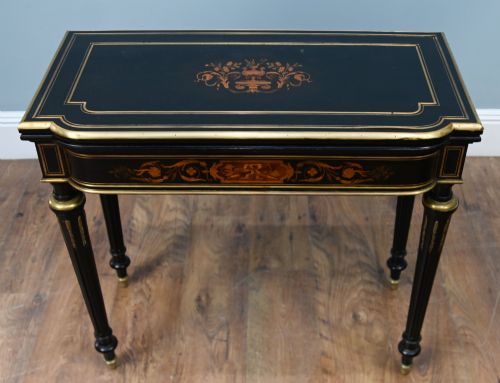
The English examples lean towards Regency rosewood and mahogany fitted with brass inlay, while the French pieces often display Boulle work, tortoiseshell, and elaborate marquetry across walnut, ebonised wood, and kingwood. Many of these items feature fold-over tops or drop leaves, serving dual purposes as occasional furniture.
Originating from workshops in both Britain and France, these tables utilise diverse timbers and rich mounts, reflecting the stylistic shifts from Grand Regency through to Napoleon III and Louis style revivals.
How they were made
Cabinet makers constructed the carcasses using dense timbers such as rosewood, mahogany, walnut, and kingwood, frequently applying ebonised finishes or exotic wood veneers to the primary surfaces.
Brass wire and sheet metal were cut into intricate patterns for marquetry and inlay, often combined with tortoiseshell and mother-of-pearl details.
Ormolu mounts cast in bronze were chased and applied to corners, edges, and legs, providing structural accent and decorative relief.
Brass Marquetry Console Table Retail Price Guide 2026
Typical asking prices for brass marquetry console table among the pieces listed under this phrase on Sellingantiques today, from the lower quarter to the upper quarter. They describe what is for sale here now, not the wider market.
Mother-of-pearl details hide among the brass and tortoiseshell on Napoleon III tables, catching the candlelight.
What varies in quality
The precision of the brass inlay work dictates much of the visual standard, with superior pieces showing tight, seamless joints where the metal meets the surrounding timber or tortoiseshell.
The choice of underlying timber and veneer selection separates standard production from exceptional examples, particularly where figured rosewood, burr walnut, or exotic woods display rich grain patterns.
The execution and finish of the cast ormolu mounts and the smoothness of folding mechanisms on card and games tables indicate the original maker's skill.
George Bullock·Maison Millet·Edwards & Roberts
The Brass Marquetry Console Table Glossary
- Boulle
- A form of marquetry using brass and tortoiseshell inlaid in contrasting patterns. This technique is named after André-Charles Boulle, cabinet maker to Louis XIV.
- Ormolu
- Gilded bronze applied to furniture as decorative mounts and trims. The term derives from the French for milled or ground gold.
- Marquetry
- Decorative patterns formed by fitting veneer pieces onto a structured wooden surface. Makers utilise various exotic woods, metals, and shells to create pictorial or geometric designs.
- Console table
- A table designed to stand against a wall, frequently secured with brackets. These forms often feature marble tops or elaborate friezes.
- Sofa table
- A small rectangular table traditionally placed in front of a sofa, fitted with drop leaves on either side. They often incorporate double pedestal bases or trestle supports.
Brass Marquetry Console Table: Frequently Asked Questions
How do I identify a Regency table?
Regency tables typically employ rosewood or mahogany with precise brass stringing and inlay, reflecting classical English design influences from the early nineteenth century.
They frequently appear as card tables, sofa tables, and occasional tables with pillar and claw feet.
Where should I place a console table?
Console tables sit flush against a wall in hallways, drawing rooms, or dining spaces, often positioned beneath a mirror or painting.
Their shallow depth allows them to occupy narrow areas while offering a surface for display.
How do fold over tables work?
Fold-over tables feature a hinged top that opens out to double the surface area, supported by a swinging leg or rotating frieze.
This mechanism allowed nineteenth-century households to convert small console tables into card or games tables as needed.