

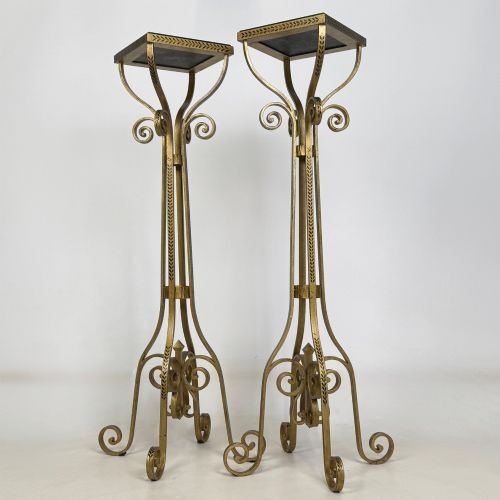
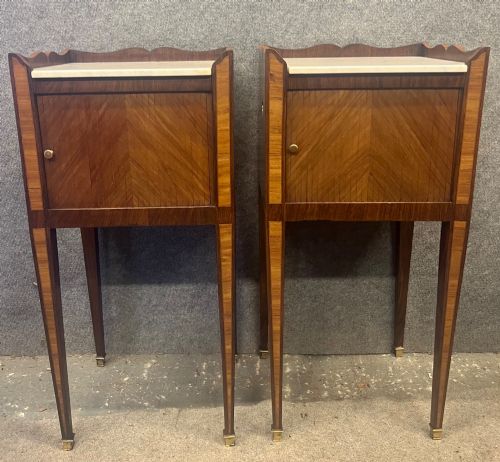
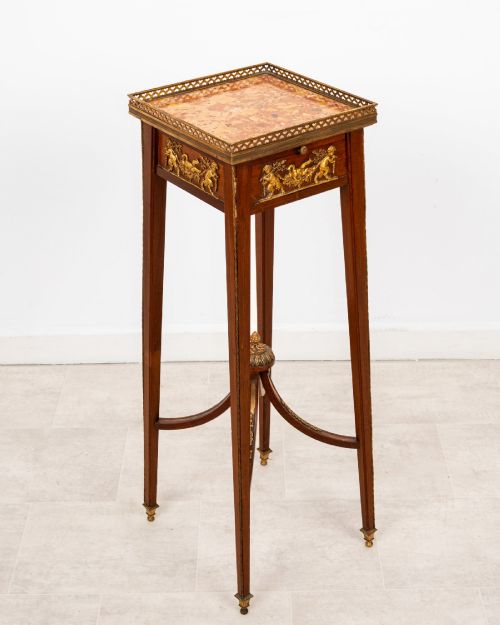

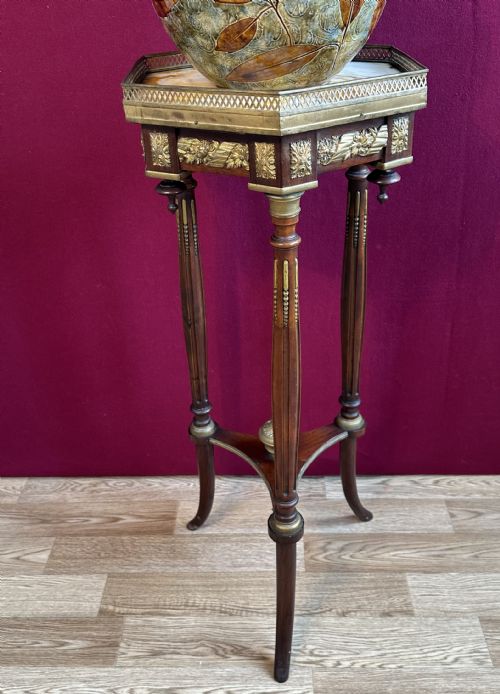


Brass Marble Pedestal
A brass marble pedestal brings substantial weight and refined material contrast to a room, functioning as a sturdy support for display.
Brass Marble Pedestal
A brass marble pedestal combines cold stone with cast or gilded metal, appearing primarily in plant stands, occasional tables, and column supports. These pieces emerge across the nineteenth and twentieth centuries, drawing heavily on French Empire, Regency, and Louis XVI design idioms.
You frequently encounter Victorian and Edwardian examples alongside French iterations, spanning forms like gueridons, bedside cabinets, and plant stands. Mahogany, walnut, and rosewood often accompany the primary brass and stone materials in these functional display items.
The selection ranges from tall singular columns to low occasional tables featuring inset stone surfaces and metal mounts. Many pieces reflect continental influence, particularly through French styling and classical revival motifs.
Materials and construction techniques
Makers combine heavy stone tops in white, green, rouge, or specimen marble and onyx with structural frames of mahogany, walnut, rosewood, and cast iron. Gilded brass, ormolu mounts, and chiseled brass components provide structural enrichment and decorative borders.
Cabinetmakers and metalworkers utilise joining techniques suited to dense timbers and heavy stone slabs, integrating brass galleries, mounts, and inlay. Turning, carving, and metal casting define the production of these stands, tables, and cabinets.
Some plant stands double as chess tables, proving that Victorian botany enthusiasts took their tactical games very seriously indeed.
Distinctions in construction and material grade
Quality rests on the selection and depth of the materials, separating dense exotic timbers and finely figured marble from simpler secondary woods and painted surfaces. Heavy, crisp metal casting and precise ormolu mounting elevate an execution above standard production.
The integration between the stone top and the wooden or metal frame dictates the structural integrity of the piece. Finer examples display meticulous attention to joinery, substantial brass galleries, and superior stone selection without relying on surface artifice.
François Linke
The Brass Marble Pedestal Glossary
- Ormolu
- Gilt bronze or brass mounts applied to furniture. This technique adds decorative classical detail to the angles and feet of cabinets and tables.
- Gueridon
- A small circular table on a central pillar or multiple supports. Originating in France, these pieces frequently carry marble or onyx tops.
- Specimen marble
- A top composed of various coloured marbles arranged in geometric or pictorial patterns. Such surfaces appear on Regency and nineteenth-century tables.
- Galleried
- Featuring a raised metal or wooden rim around the edge of a table or shelf. This edge prevents items from sliding off the stone surface.
- Onyx
- A banded variety of chalcedony used for tabletops and plant stands. It offers translucent layering distinct from standard opaque marble.
Brass Marble Pedestal: Frequently Asked Questions
How do I clean the marble top?
Wipe the surface with a damp cloth and mild soap, avoiding acidic cleaners that etch stone.
Dry thoroughly with a soft cloth to maintain the polish.
Can these stands hold heavy items?
Most plant stands and occasional tables safely bear standard decorative objects, lamps, or large plants.
Solid construction with marble and brass provides inherent stability for daily display.
Where should I place a pedestal?
Position freestanding columns in corners or hallways to display sculpture, urns, or table lamps.
Smaller tables function effectively beside seating or as bedside surfaces.
How do I identify a French influence?
Look for characteristic ormolu mounts, mahogany or walnut veneers, and classical revival styles such as Louis XVI or Empire.
Details like brass galleries and shaped marble tops often indicate continental workshops.