
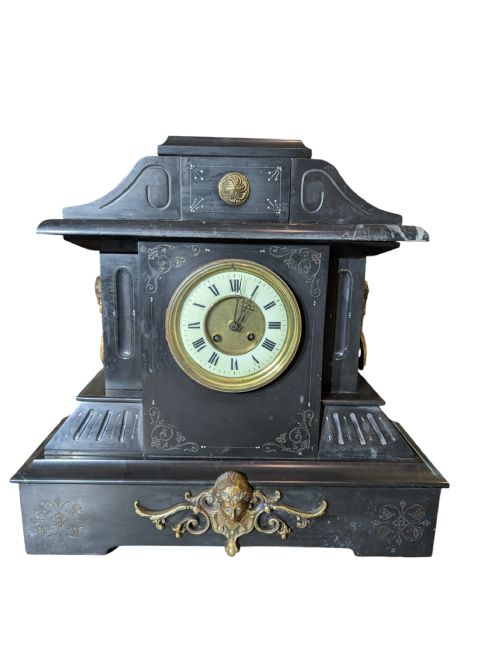
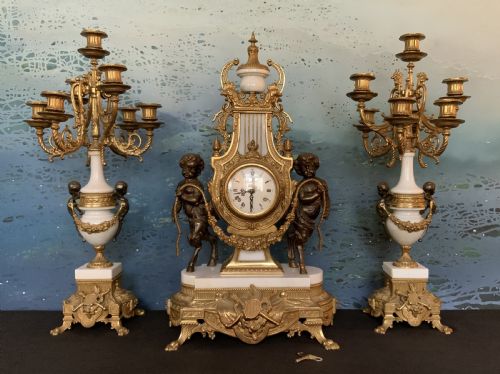


Brass Marble Mantel Clock
A brass marble mantel clock combines heavy stone architecture with bright metallic mounts to anchor a room.
Brass Marble Mantel Clock
A brass marble mantel clock is a striking timekeeper that sets a heavy stone body against polished metal trim. When you search for this phrase, you find dense pieces spanning the Victorian era through the twentieth century.
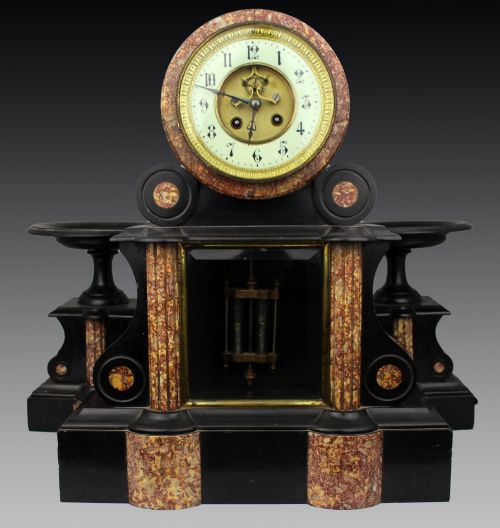
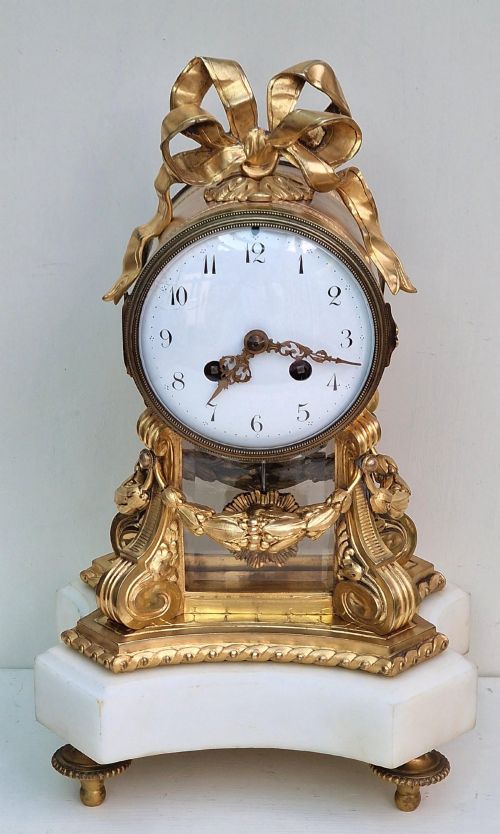
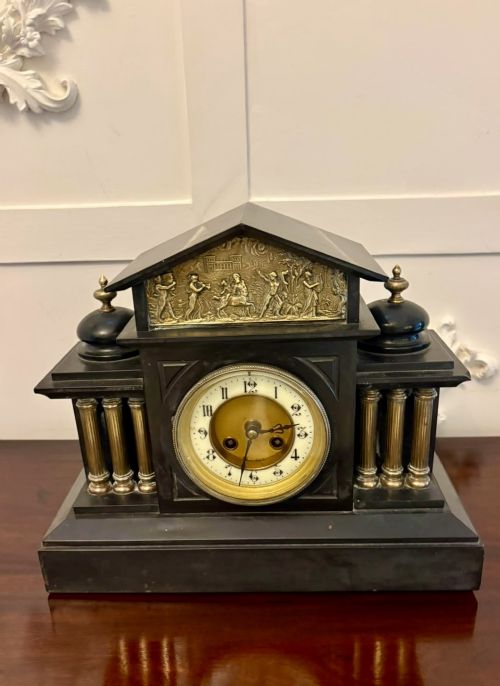
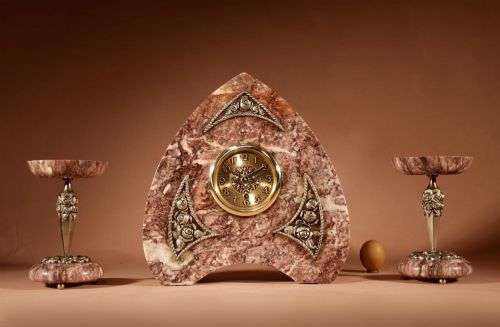
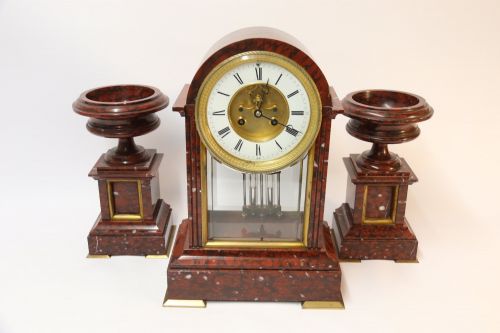
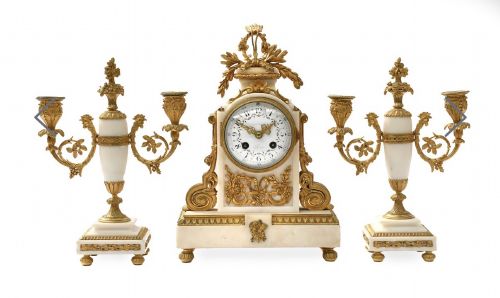
The versions most likely to appear on this page are French and English garnitures, architectural cases, and drumhead designs. They range from simple slate cylinders to elaborate Louis XVI revival models complete with matching candelabras.
Makers often paired black, red, or white stone with gilt bronze, brass, and ormolu mounts to create symmetrical centrepieces for the hearth. These objects served both practical timekeeping and grand decorative display in nineteenth-century rooms.
Materials and construction
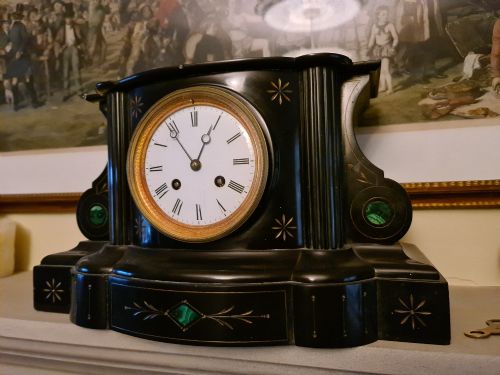
Workshops cut and polished dense materials like black slate, onyx, and coloured marble to build sturdy architectural housings. Founders cast brass, gilt bronze, and ormolu into decorative bezels, feet, and figural mounts.
Clockmakers fitted eight-day mechanical movements behind enamelled dials protected by bevelled glass. Cases frequently combined structural stone slabs with pinned metal ornaments and cast garniture sets.
Some nineteenth-century industrial models disguised ticking movements inside bronze lighthouse and steam engine housings.
Judging quality
Quality rests on the crispness of the bronze casting and the depth of the marble polish. Better examples show finely chased ormolu details and balanced proportions rather than flat, machine-stamped brass bezels.
The integration of the movement with the stone body dictates the grade of the piece. Superior makers signed their brass plates and matched every element of a garniture set from the same workshop.
Japy Freres·Samuel Marti·Philippes Paris·Thwaites of London·Baby and Jannings·D Munsey of Cambridge
The Brass Marble Mantel Clock Glossary
- Garniture
- A set of matching decorative objects designed to sit together on a mantelpiece, usually comprising a central clock flanked by two candelabras or urns.
- Ormolu
- Gilt bronze created by applying a mercury and gold amalgam to cast bronze, giving a rich golden surface finish.
- Drumhead clock
- A timepiece featuring a circular dial housing shaped like a drum, mounted centrally on a rectangular stone or marble base.
- Bezel
- The metal ring that holds the glass protecting the clock face in place.
- Skeleton clock
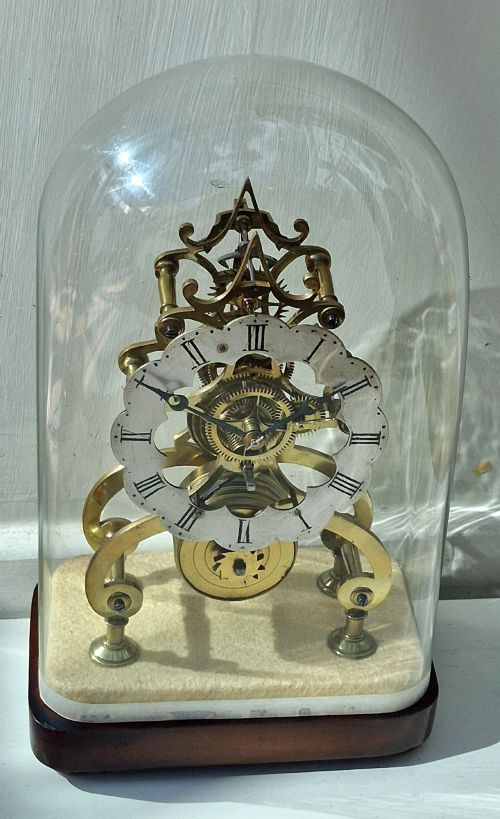
- A timepiece with an open frame that exposes the gear train and escapement mechanism to view from the sides.
Brass Marble Mantel Clock: Frequently Asked Questions
How do I wind the clock?
Most mechanical models use a specific winding key inserted into holes on the enamel dial. Turn the key gently until you feel resistance.
Take care not to overwind the mainspring, as this can damage the internal gear train.
How should I clean the marble?
Dust the stone regularly with a soft, dry cloth. Avoid using household chemical cleaners, which can dull the polished surface.
Stubborn marks on marble require only a damp cloth followed by immediate drying.
Why does the clock run fast?
Temperature changes and age can cause pendulum clocks to gain or lose time. Adjusting the small regulating nut on the pendulum bob corrects the speed.
Lowering the bob slows the beat, while raising it makes the clock run faster.
Where should I place the clock?
Position the piece on a stable, level surface away from direct sunlight and damp environments. A sturdy mantelpiece or heavy sideboard provides adequate support.
Ensure the surface does not vibrate, as this disrupts the delicate balance of the pendulum.