





Brass Library Lamp
These brass library lamp examples offer steady illumination through functional design, combining metalwork and glass to anchor a desk or reading table.
Brass Library Lamp
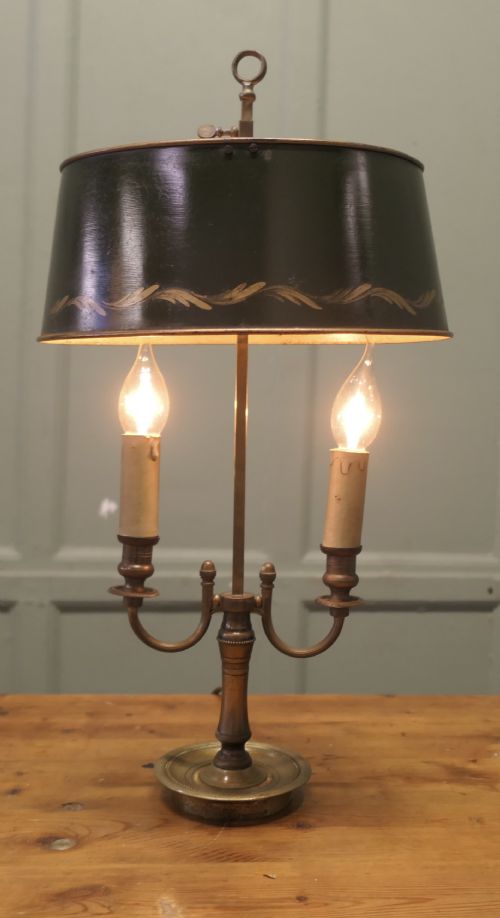
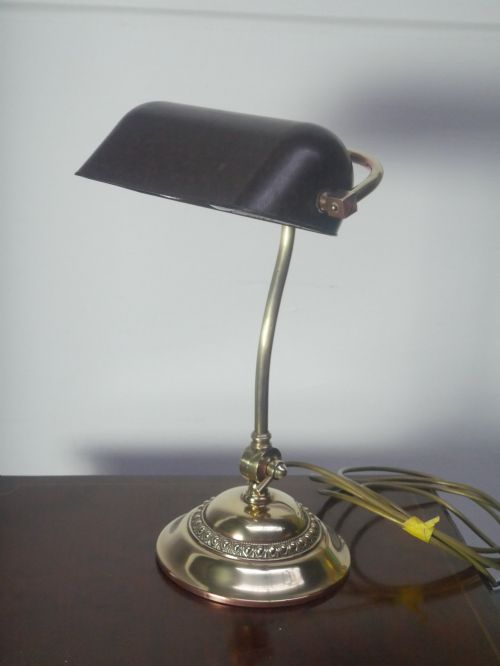
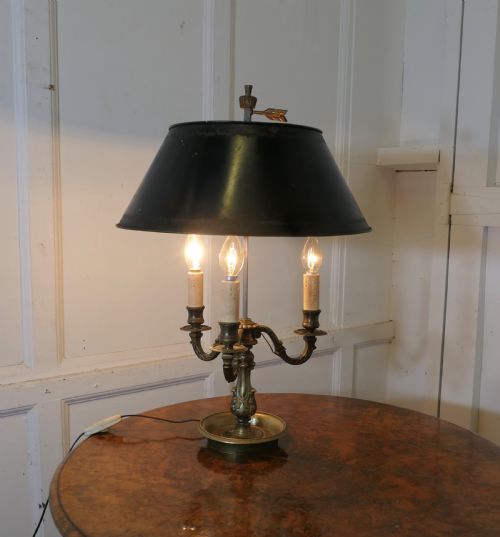
A brass library lamp provides focused task lighting for reading and writing, taking forms such as bankers lamps, bouillotte lamps, and student lamps. You will frequently encounter adjustable desk lamps and standard reading lamps on this page, originating from periods spanning the nineteenth century through the Edwardian era and the 1920s and 1930s.
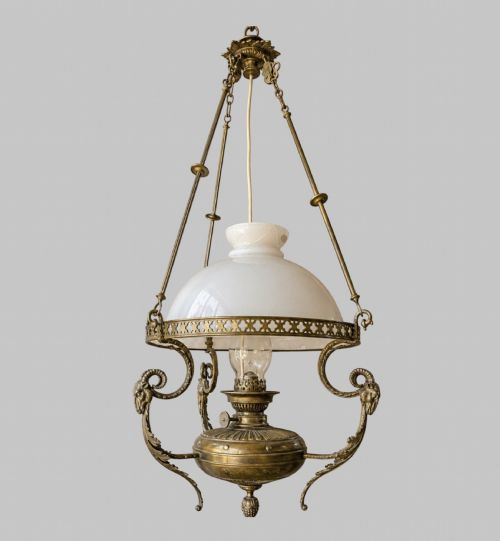
The materials paired with the brass body vary across the selection, incorporating green toleware, opaline glass, cranberry glass, and patinated metal. Pieces range from French empire styles to Jugendstil and Art Deco designs, reflecting both domestic British production and continental workshops.
How they were made
Construction relies primarily on cast and spun brass, often paired with bronze, copper, or patinated metal for structural weight and durability. Shades are formed from blown glass, including opaline and cranberry varieties, or shaped from painted toleware and metal.
Articulated joints, swan neck arms, and extending mechanisms allow for adjustable illumination. Burners and electrical components, including Hinks burners, are integrated into the metal frames depending on whether the piece was originally configured for oil or electricity.
Listings feature brass, toleware, and opaline glass forms spanning the nineteenth century through the 1930s.
What varies in quality
Quality rests in the precision of the metal casting, the weight of the brass components, and the integrity of any adjustable joints or extending arms. Superior examples demonstrate crisp detailing in the base and shade mounts, as well as balanced proportions across multi-branch bouillotte designs.
The execution of secondary materials further distinguishes the pieces. Fine glass shades possess even colour and smooth rims, while better toleware shades retain clean painted interiors and exteriors paired with substantial brass hardware.
Hinks·Faraday and Sons·Wild and Wessel·Messenger
The Brass Library Lamp Glossary
- Bouillotte lamp
- A traditional desk lamp featuring a central shaft, one or more candle arms, and an adjustable toleware shade. The shade moves up and down the central column to direct the light.
- Opaline glass
- A milky, translucent glass often tinted in shades of green or white, utilised for lamp shades to soften and diffuse light. It is commonly found on Edwardian and Victorian desk lamps.
- Student lamp
- A nineteenth-century oil or kerosene lamp with an offset font designed to cast light across a workspace without blocking the user's view. These often include auxiliary implements and multi-jointed arms.
- Toleware
- Painted and lacquered sheet metal, frequently green or dark in tone, shaped into shades for desk lamps. This material offers a durable, non-reflective surface for task lighting.
- Argand lamp
- An early form of oil lamp featuring a tubular wick and glass chimney that greatly increased the brightness of the flame. It forms the technical basis for many nineteenth-century study lamps.
Brass Library Lamp: Frequently Asked Questions
How do I date a brass library lamp?
Dating relies on examining the construction methods of the brass base, the style of the shade, and the mechanical fittings. Victorian and nineteenth-century examples often feature heavy cast components and oil-burning mechanisms, while Edwardian and 1920s pieces frequently incorporate adjustable swan neck arms and early electrical fittings.
Secondary materials such as cranberry or opaline glass also provide chronological clues, aligning with the manufacturing preferences of specific decades. Comparing the overall silhouette against known regional styles helps narrow down the period of origin.
Were these lamps originally electric?
Many nineteenth-century and early twentieth-century examples were originally configured for oil, paraffin, or candle power before being adapted for electricity. Burners such as the Hinks mechanism indicate an oil-burning heritage that was later converted for modern use.
When evaluating a piece, look for evidence of old wiring channels or burner conversions. Standard lamps and desk models from the Edwardian period onward frequently combined original metalwork with updated electrical components.
How should I clean a brass library lamp?
Cleaning requires a soft cloth to remove dust and debris without disturbing the patinated surface of the metal. Avoid abrasive polishes that strip away age and character, particularly on pieces with aged brass or bronze finishes.
Glass shades can be washed separately in warm soapy water to restore clarity to opaline or cranberry surfaces. Ensure all electrical components remain completely dry during any maintenance.