




French Empire Bouillotte Light
These French empire bouillotte light pieces bring adjustable task lighting and classic style to a desk or table.
French Empire Bouillotte Light
When you search for a french empire bouillotte light, you are looking at sophisticated lamps designed for card games and writing desks. The pieces listed on this page encompass desk lamps, table lamps, and wall lights originating from France.
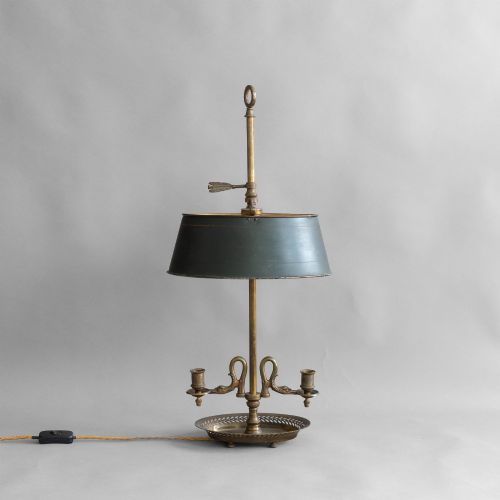
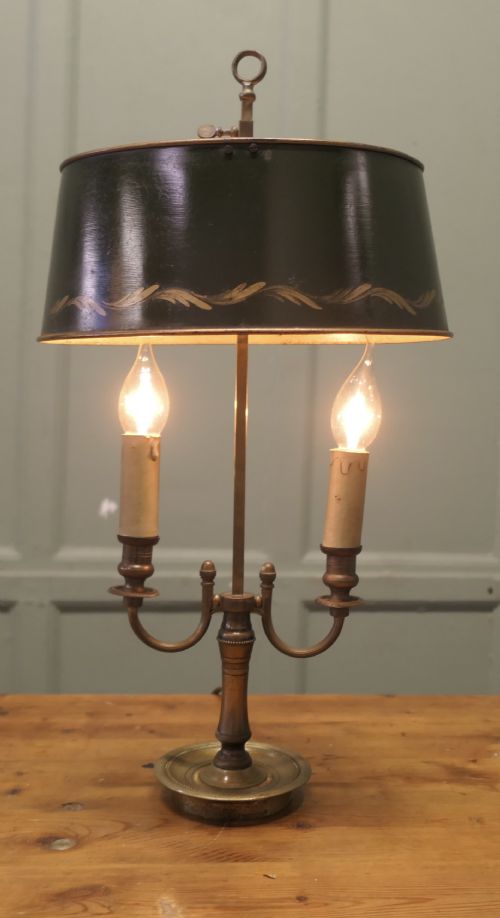
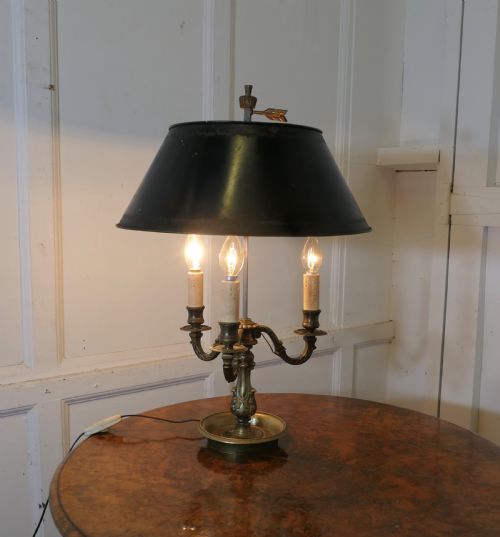
The most common version you are likely to meet is a twin or triple light featuring a metal shade paired with a central upright shaft. These objects draw directly upon French Empire, French Neoclassical, and traditional French aesthetics.
Dating across the nineteenth century and into the twentieth century, these fixtures reflect enduring design principles. They combine a weighty base with functional shades that direct illumination downward.
How they were made
Maker construction relies on heavy metals such as brass, bronze, gilt brass, and gilt metal, alongside silver plate and general metalwork. These durable structural materials provide the necessary counterweight for adjustable arms and shades.
Toleware and painted tole form the characteristic adjustable shades, often rendered in green with gold accents to manage the glare of candles or early electric bulbs. Artisans combined metal casting with painted sheet metal to achieve both utility and elegance.
Materials across this selection rely entirely on brass, bronze, gilt metal, silver plate, and painted toleware.
What varies in quality
Quality in these lighting pieces rests on the crispness of metal casting and the depth of the original gilding or patination. Heavier gauge brass and finely chased bronze details separate superior examples from standard production.
The integrity of the painted toleware shade also defines the tier of the piece, particularly where hand-applied gold leaf or traditional painting remains intact. Mechanism smoothness in the adjustable collar adds further distinction.
The French Empire Bouillotte Light Glossary
- Bouillotte
- A traditional French table lamp featuring a central column, multiple candle arms or bulb holders, and an adjustable shade. It takes its name from a French card game popular during the eighteenth and nineteenth centuries.
- Toleware
- Painted or lacquered sheet metal items, particularly popular in France for lamp shades and canisters. The surface is often finished in dark green with hand-painted gilt decoration.
- Gilt metal
- Base metal treated with a thin layer of gold or gold-coloured wash to simulate solid or fire-gilt bronze. This finish provides a bright decorative surface at a lower weight and cost.
- Neoclassical
- A style spanning the eighteenth and nineteenth centuries that draws inspiration from classical antiquity, featuring restrained ornamentation and symmetrical proportions.
French Empire Bouillotte Light: Frequently Asked Questions
What is a bouillotte lamp?
A bouillotte lamp is a traditional desk or table light featuring an adjustable shade that moves up and down a central metal rod. It was originally designed to illuminate card games by keeping the light low and out of the players' eyes.
These fixtures typically hold two, three, or four candle arms or bulb sockets above a circular base. The combination of metal columns and painted shades creates a distinct silhouette used in studies and libraries.
How do you adjust the shade?
The shade is held on the central shaft by a collar or screw mechanism that can be loosened to slide the shade to the desired height. Tightening the collar secures the shade in place against the upright rod.
This adjustability allowed users to control the intensity and spread of the light as candles burned down or tasks changed. Maintaining the mechanism requires gentle handling of the original metal components.
What materials are used?
These lamps are constructed primarily from brass, bronze, gilt metal, and silver plate, providing a sturdy and substantial foundation. Painted toleware or tole forms the characteristic adjustable shades attached to the central stem.
Different pieces utilise combinations of green painted metal with gold accents or polished brass finishes. The variety reflects the materials available across the nineteenth and twentieth centuries in France.
How do you date these lamps?
Dating relies on examining manufacturing techniques, metal patination, wiring methods, and stylistic cues from periods such as the nineteenth century or the 1920s. Heavier cast bronze and hand-finished details generally point towards earlier nineteenth-century origins.
Later twentieth-century examples often show standardised construction and modern electrical fittings adapted to older forms. Comparing the specific shade paint and metal alloy provides further clues to the age of the piece.