



Brass Kettle Burner
These brass kettle burner pieces are essential tea service accessories from the Victorian and Edwardian periods, designed to keep water hot at the table.
Brass Kettle Burner
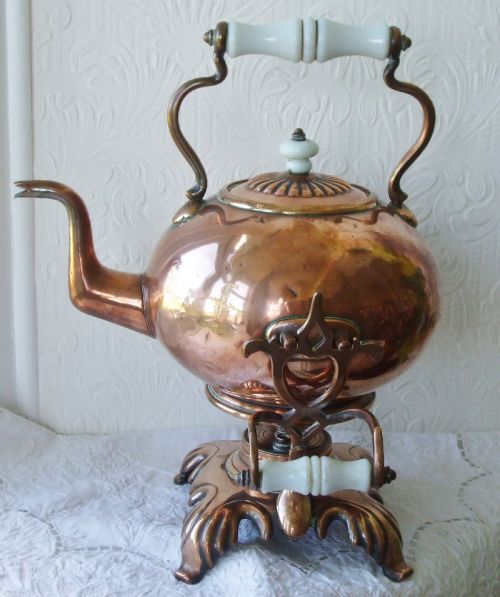
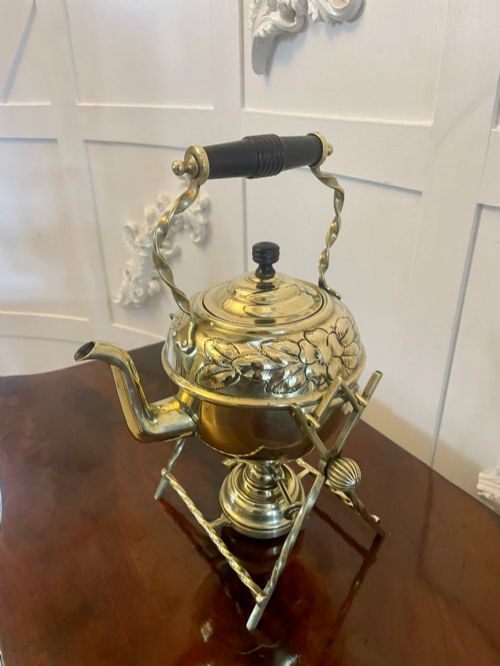
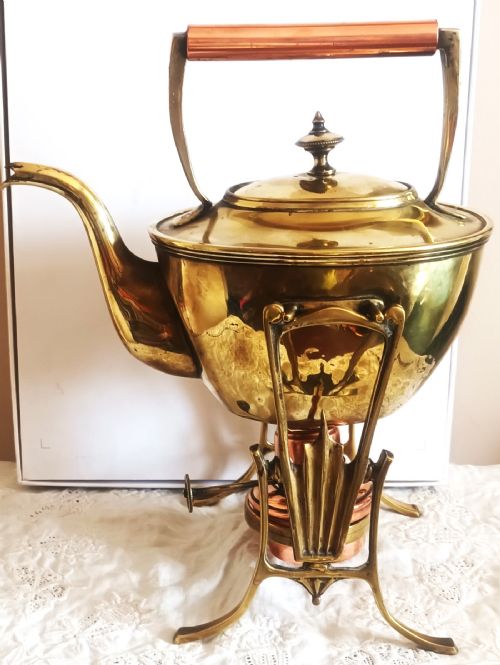
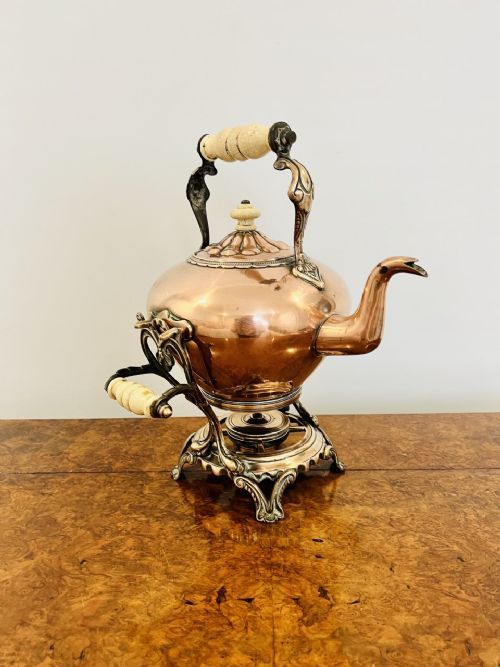
When you search for brass kettle burner, you encounter spirit kettles and tea kettles mounted on stands from the nineteenth and early twentieth centuries. These setups include the kettle itself, a supporting stand, and an under-burner designed to hold a small flame.
You are most likely to meet Victorian and Edwardian examples on this page, spanning periods from eighteen fifty through to nineteen twenty. They appear in mixed metals like brass and copper, often complete with their original stands.
The forms range from traditional English spirit kettles to Dresser style pieces and Aesthetic Movement designs. Each item serves the practical purpose of boiling or maintaining the temperature of water during tea service.
How they were made
Makers utilised brass and copper as the primary metals for these kettles and stands, sometimes combining both materials on a single piece. Surfaces were polished or left with a warm metallic finish appropriate to the Victorian and Edwardian eras.
Additional components incorporated wood, ceramic, cane, bone, and ebonised wood, typically found on the insulating handles or lid finials. These materials provided a comfortable grip and protected the user's hand from hot metal during tea preparation.
Brass Kettle Burner Retail Price Guide 2026
Typical asking prices for brass kettle burner among the pieces listed under this phrase on Sellingantiques today, from the lower quarter to the upper quarter. They describe what is for sale here now, not the wider market.
Materials recorded across these items include brass, copper, wood, ceramic, cane, bone, and ebonised wood.
What varies in quality
The distinction between ordinary and superior pieces rests on the weight of the metal and the integrity of the stand construction. Heavier gauge brass and copper indicate a more robust vessel designed for frequent use rather than display alone.
Finer examples demonstrate careful attention to the insulating handle materials, such as well-turned wood, bone, or cane, alongside robust hinge and burner fittings. Completeness also matters, as finding the kettle together with its matching stand and burner elevates the piece.
Mappin & Co.·William Soutter & Sons
The Brass Kettle Burner Glossary
- Spirit kettle
- A water vessel mounted on a metal stand above a small spirit burner. It allowed tea water to remain hot at the dining or drawing room table.
- Spirit burner
- The small fuel container housed beneath the kettle stand. It typically burned methylated spirit to maintain the heat of the water.
- Aesthetic Movement
- A late nineteenth century design style emphasising visual beauty over narrative subject matter. Pieces from this period often display refined lines and artistic metalwork.
- Ebonised wood
- Timber treated to resemble ebony, a dense dark wood. It was frequently used for kettle handles and knobs to provide a contrasting black finish against polished brass.
Brass Kettle Burner: Frequently Asked Questions
What is a brass kettle burner used for?
These pieces were designed to keep water hot during tea service in Victorian and Edwardian drawing rooms. The burner beneath the kettle held a small flame fueled by spirit.
They allowed hosts to serve multiple rounds of tea without returning to the kitchen for freshly boiled water.
How do I identify a Victorian spirit kettle?
Victorian examples typically display distinct period characteristics such as heavy gauge brass, copper bodies, and turned wood or bone handle insulators. They often bear maker marks or stamps from nineteenth century English metalworkers.
Designs range from standard Victorian shapes to Aesthetic Movement interpretations from the late nineteenth century.
Are these kettles safe to use today?
Most antique spirit kettles function primarily as decorative display items or collectible pieces of social history. Using the original burner requires caution regarding fuel and flame safety.
Collectors generally preserve them as historical artefacts of the tea table rather than functional kitchen appliances.
What materials are used in these kettles?
Makers constructed the main bodies primarily from brass and copper, frequently combining both metals on a single piece. Handles and lid finials often feature secondary materials like wood, cane, bone, or ebonised wood.
These mixed materials provided both structural durability and insulation against heat.