


Brass Kerosene Burner
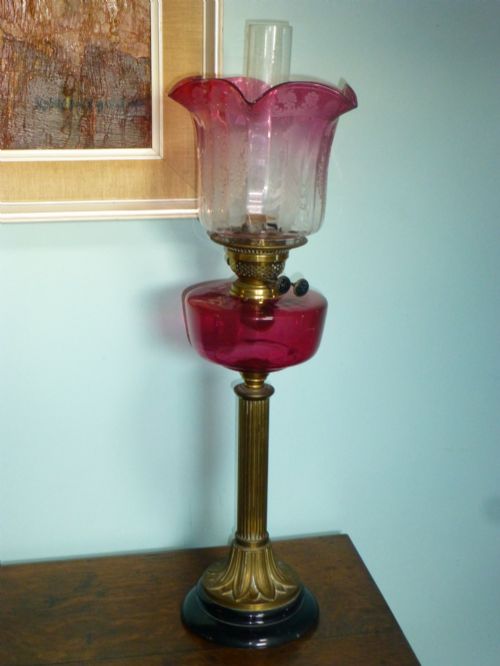
A brass kerosene burner brings steady period illumination and warmth, combining heavy metal casting with coloured glass.
Brass Kerosene Burner
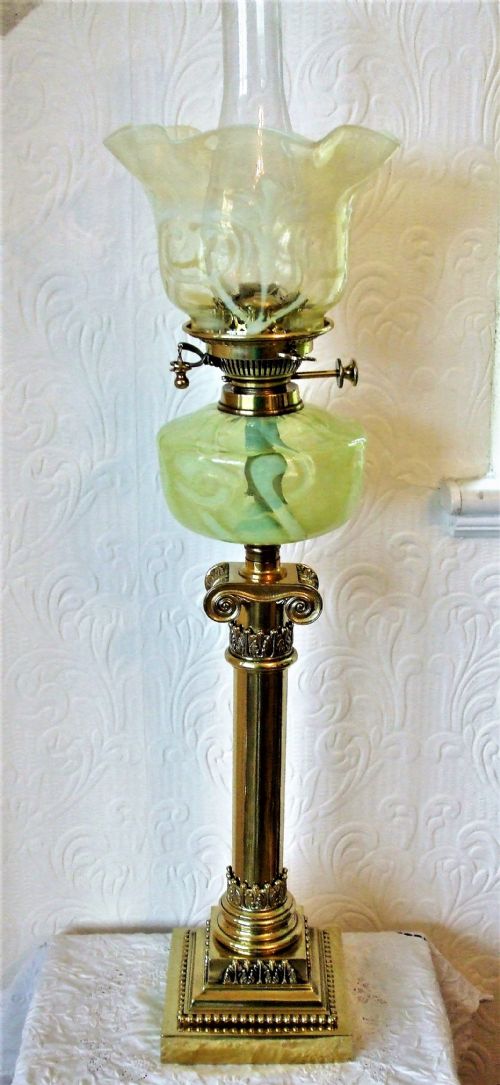
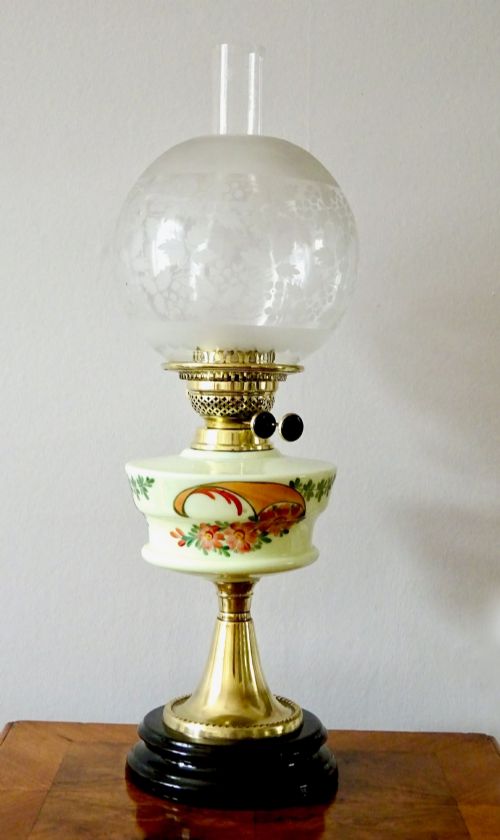
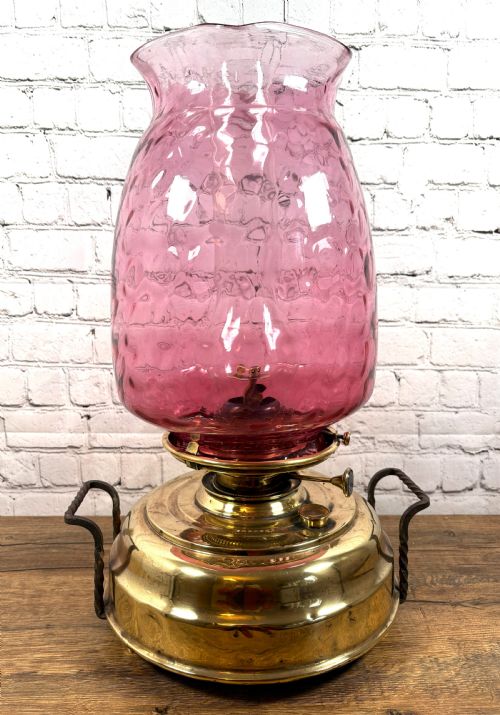
A brass kerosene burner serves as a domestic lighting fixture designed to burn paraffin or oil for interior illumination during the nineteenth and early twentieth centuries. These pieces combine a heavy metal reservoir and column with a specialised burner mechanism at the summit, often supporting a decorative glass shade.
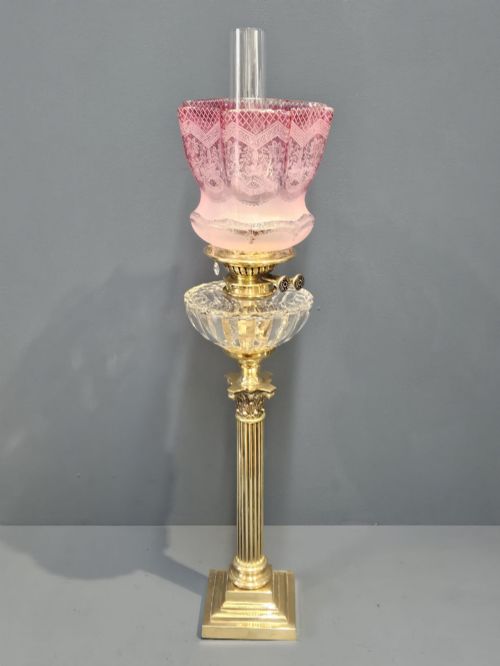
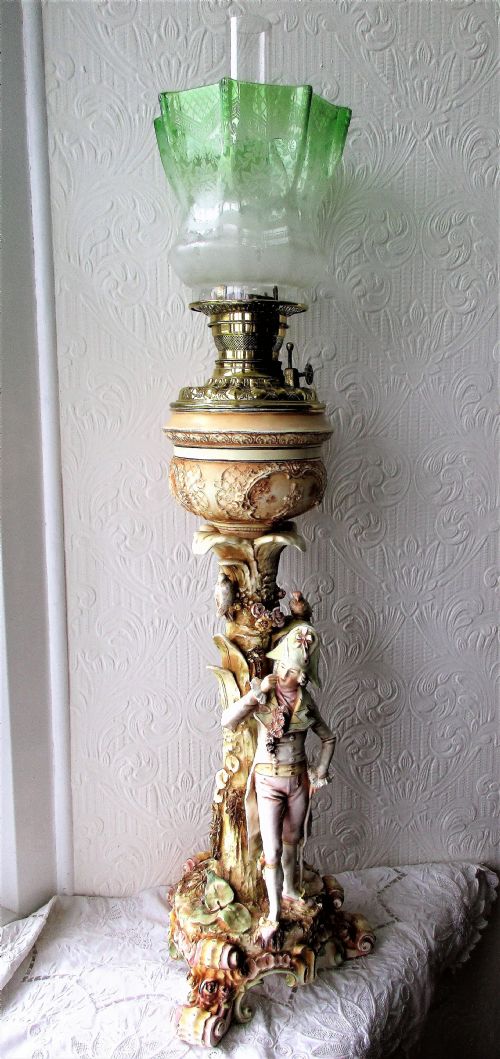
The selections available on this page date principally from the Victorian and Edwardian eras, spanning the mid-nineteenth century through to the early decades of the twentieth century. Corinthian columns, figural ceramics, and double-burner duplex configurations represent the prominent forms encountered within these listings.
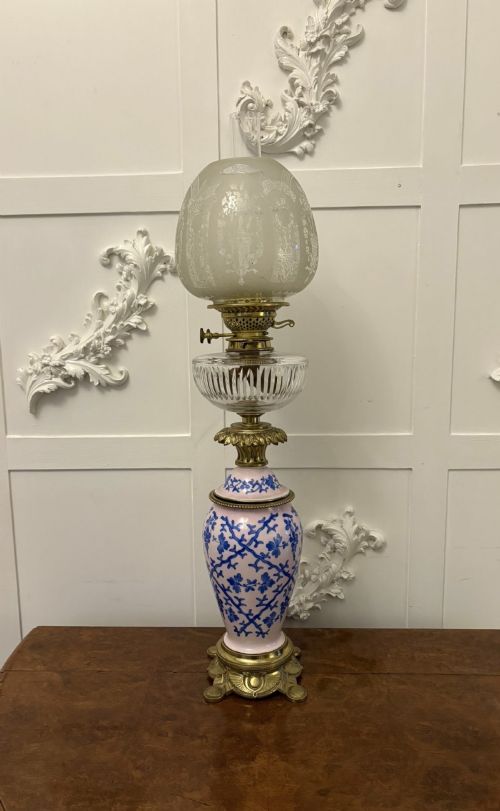
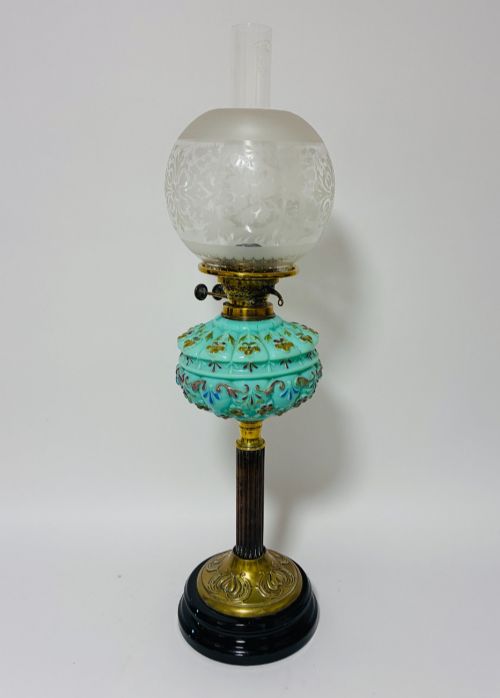
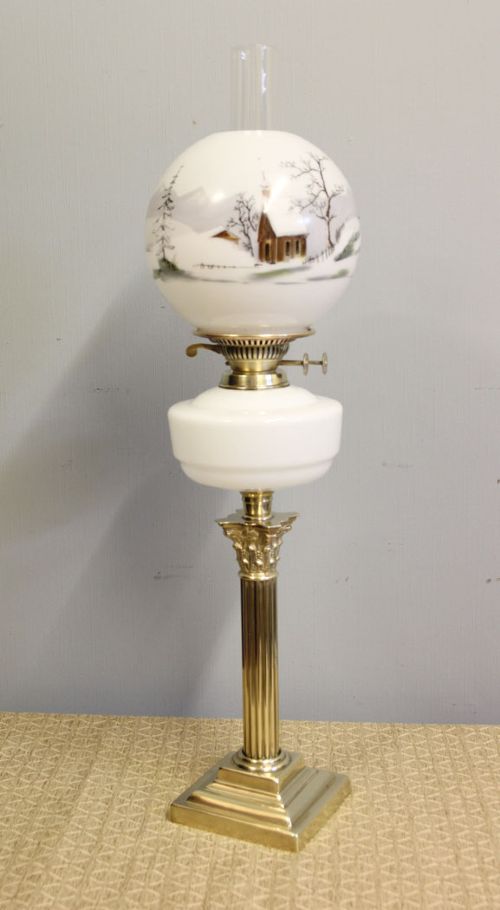
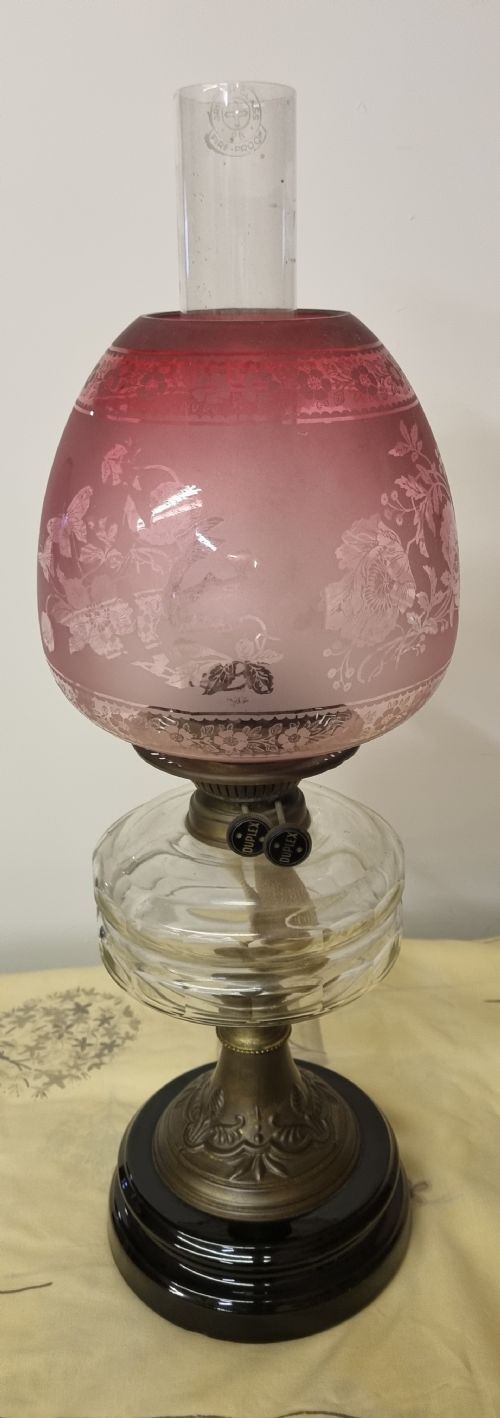
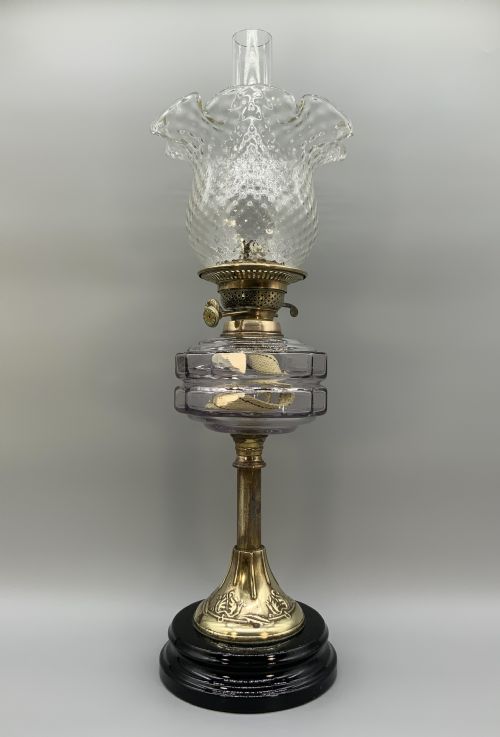
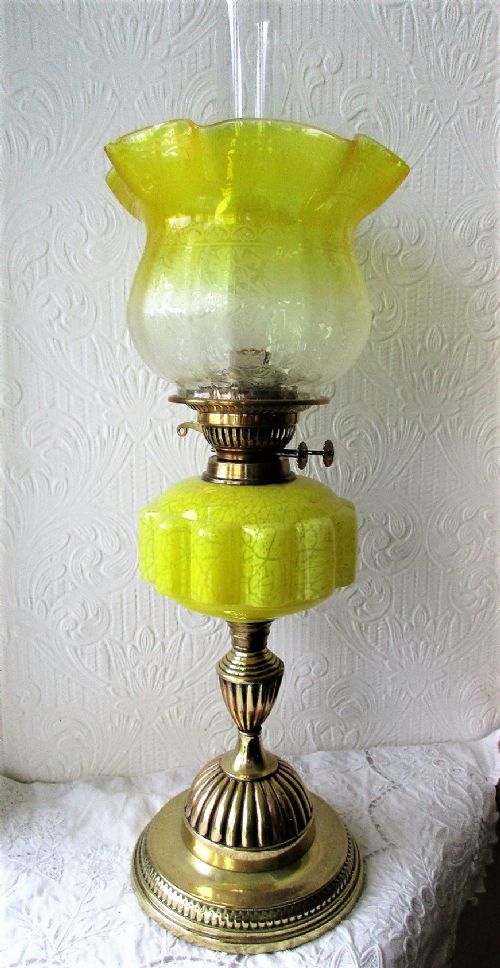
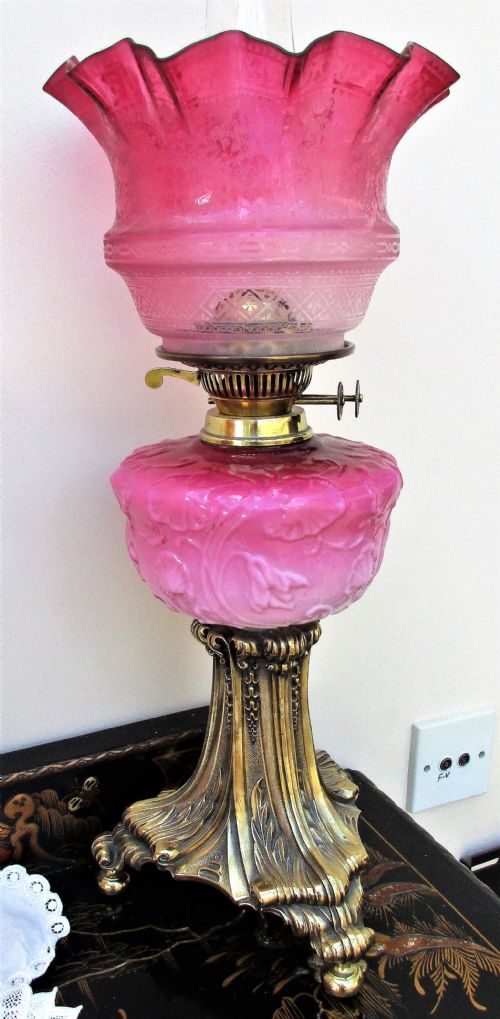
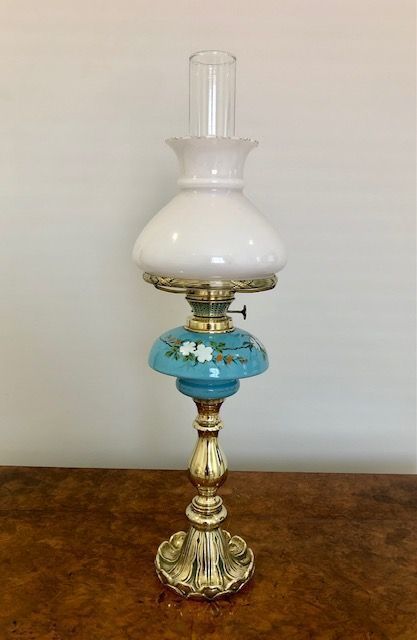
Makers paired the structural strength of brass with contrasting materials such as cranberry glass, clear glass, opaline glass, and porcelain. Table lamps dominate the inventory, accompanied by specialised variants like pulpit heaters and column lamps.
Construction and Materials
Foundries cast brass into structural columns, fonts, and bases, often employing classical architectural motifs such as Corinthian capitals or fluted shafts. Artisans shaped these metal components by turning, chasing, and joining individual cast sections to support the weight of the fuel reservoir.
Glassmakers produced removable fonts, chimneys, and globular shades in clear, cut, opaline, or cranberry hues, sometimes incorporating etched motifs or hand-blown profiles. Ceramic and porcelain elements added contrasting colour and painted detail, integrating with the brass fittings through threaded collars and mounts.
One remarkably pious survival serves double duty as both an ecclesiastical pulpit lamp and a space heater.
Quality Variations
The standard of a brass kerosene burner depends upon the crispness of the metal casting and the complexity of its architectural or figural details. Superior examples exhibit deeply chased acanthus leaves on Corinthian capitals, heavier gauge brass components, and substantial proportions that anchor the piece firmly.
The inclusion of hand-blown or flashed cranberry glass shades, cut crystal fonts, and specialised twin-burner mechanisms elevates a piece beyond standard domestic utility. The harmony between the metal column, the coloured font, and the matching shade determines the overall visual coherence of the lamp.
Wild and Wessel
The Brass Kerosene Burner Glossary
- Duplex burner
- A double-wick mechanism designed to produce a brighter flame than standard single-wick lamps. This system requires two parallel flat wicks adjusted simultaneously.
- Corinthian column
- An architectural column style featuring an ornate capital decorated with acanthus leaves. This classical motif frequently forms the main stem of nineteenth-century table lamps.
- Font
- The oil reservoir that holds the liquid fuel beneath the burner mechanism. These vessels appear in brass, ceramic, and coloured glass.
- Opaline glass
- An opaque, milky-white glass type used for shades and bodies to soften and diffuse the light. It frequently appears in Edwardian lighting fixtures.
- Peg lamp
- A small oil lamp fitted with a tapered lower metal peg designed to drop directly into a candlesticka holder or wall bracket.
Brass Kerosene Burner: Frequently Asked Questions
How do I operate a vintage brass oil lamp?
Fill the reservoir with appropriate lamp oil, allow the wick to saturate thoroughly, and ignite the exposed wick before replacing the glass chimney to stabilise the flame.
Adjust the wick height using the thumbwheel to control the brightness and prevent smoking from an overly high flame.
Can these antique lamps still be used safely?
While many historical lamps remain mechanically complete, modern safety standards suggest treating them primarily as decorative objects rather than active household illumination.
Ensure any burner mechanism is thoroughly cleaned of old residue and check that glass components are free from structural stress fractures before use.
How do I identify a Victorian period lamp?
Examine the casting quality, heavier brass gauge, and typical design motifs such as Corinthian columns or etched cranberry glass shades characteristic of the mid to late nineteenth century.
Patent markings on the brass burner thumbscrews often provide clues regarding the manufacturing date and origin.
What is the difference between table and column lamps?
Column lamps incorporate classical architectural orders like the Corinthian or Ionic style into the central shaft, whereas standard table lamps utilise diverse figural, ceramic, or simpler turned brass supports.
Column variants tend to offer greater height and visual formality compared to domestic table models.