


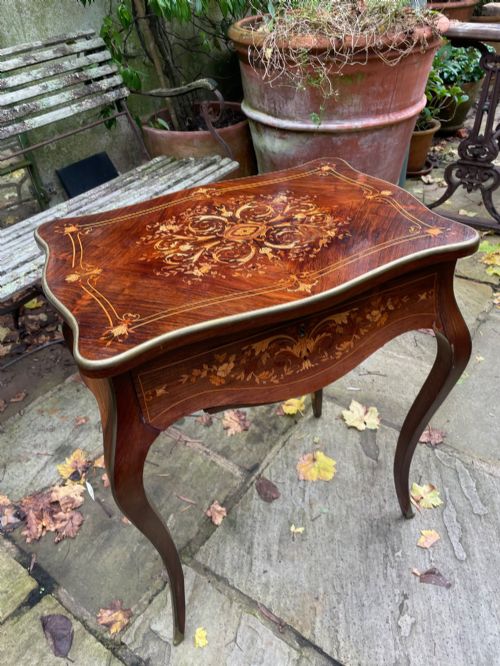
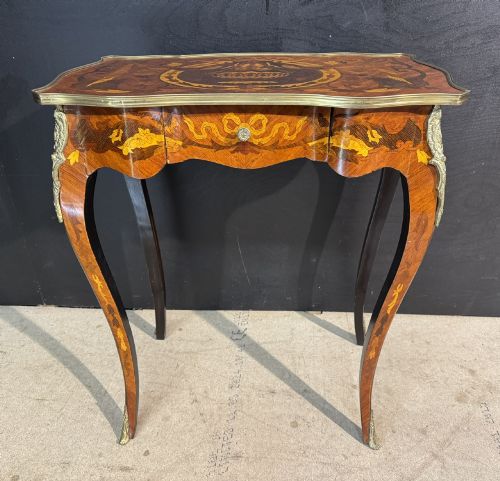
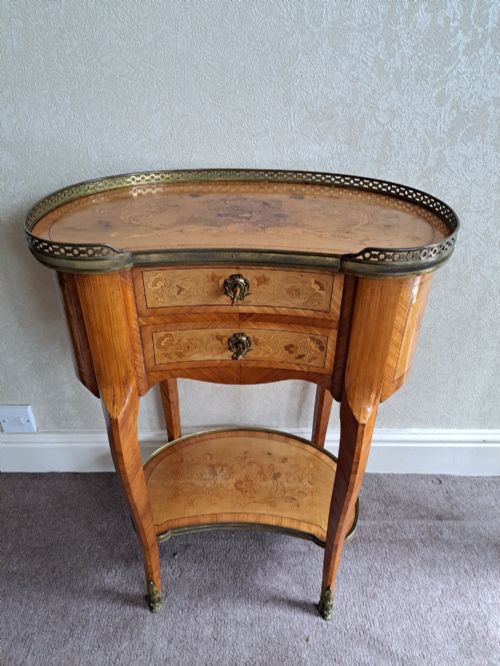
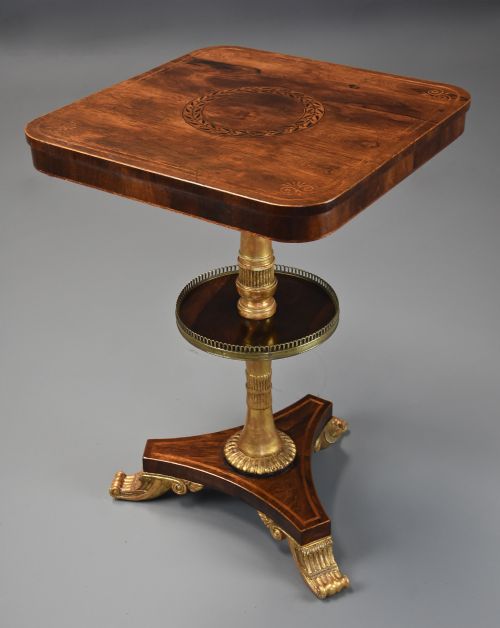


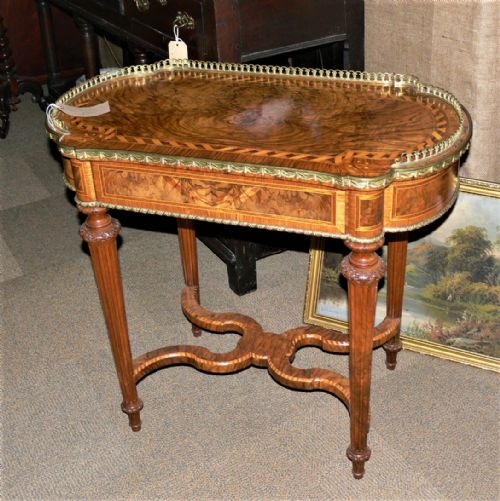

Brass Inlay Work Table
A brass inlay work table brings ingenious compartmented storage and precise metalwork together in a graceful piece designed for needlework and writing.
Brass Inlay Work Table
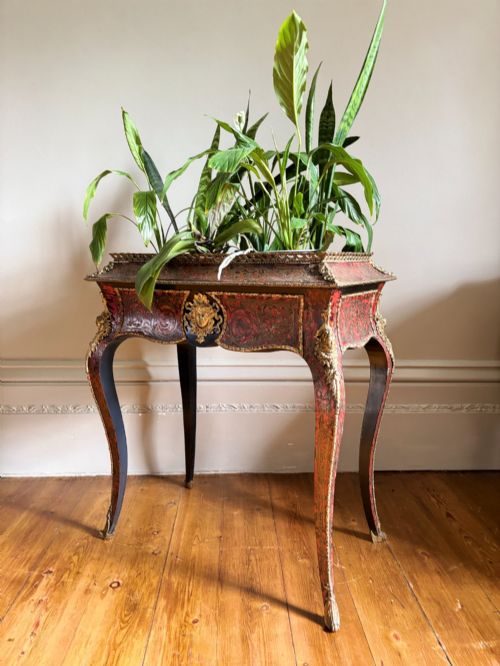
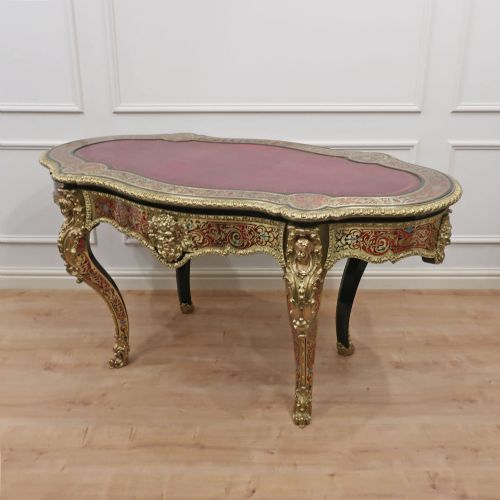
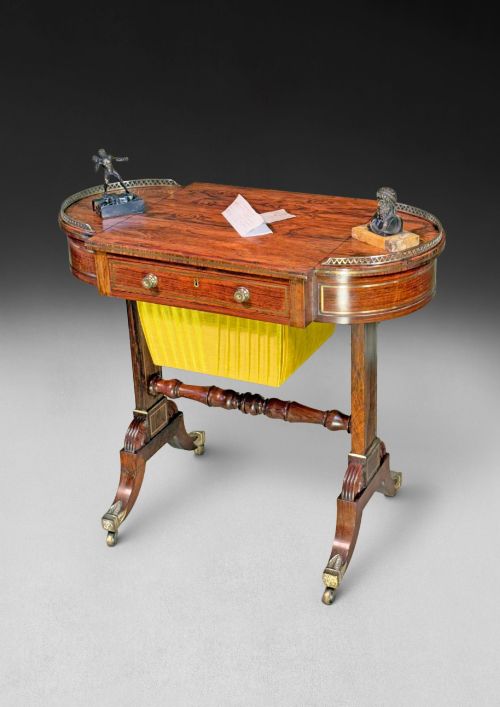
A brass inlay work table combines decorative metal detailing with functional interiors designed for sewing, games, and writing. Buyers seeking this phrase encounter sophisticated Regency rosewood examples alongside French nineteenth-century pieces featuring intricate marquetry and Boulle work.
The selection ranges from compact sewing and lamp tables with fitted drawers to multi-purpose combination pieces incorporating chess boards and fold-over writing surfaces. Many feature subordinate tiers, pedestals, or tripod bases suited to formal drawing rooms.
Materials and construction
Cabinet makers utilised dense hardwoods such as rosewood and flame mahogany as dark grounds for precision brass inlay and stringing. Secondary materials like satinwood, kingwood, and tortoiseshell appear alongside gilt or ormolu mounts to heighten contrast.
Makers set thin brass ribbons and brass engraving directly into channels carved into the timber surface, securing them flush with the polish. Work tables often conceal sliding fabric bags, compartments, and fitted writing slopes beneath hinged lids.
Brass Inlay Work Table Retail Price Guide 2026
Typical asking prices for brass inlay work table among the pieces listed under this phrase on Sellingantiques today, from the lower quarter to the upper quarter. They describe what is for sale here now, not the wider market.
Judging the execution
Quality rests upon the crispness of the brass cutting and the precision with which the metal sits into the surrounding timber without lifting or shrinking gaps. Superior examples maintain tight joints and fluid lines across intricate figurative or geometric ornament.
Interior execution distinguishes standard production from master craftsmanship, seen in the neatness of compartment pigeonholes, functioning original locks, and well-balanced pedestal bases that bear weight evenly.
Maison Millet·Wilkinson Leicester·Barrett London·Payne London·George Bullock·John MaClean·Charles Topino
The Brass Inlay Work Table Glossary
- Boulle work
- A decorative technique employing tortoiseshell and brass inlaid in a counter-change pattern, developed in France and widely imitated in nineteenth-century revival furniture. It creates a shimmering, highly textured surface.
- Marquetry
- The art of applying small pieces of veneer to a structure to form decorative patterns or pictures. Craftsmen use varied wood species and metals to achieve pictorial depth.
- Work table
- A small functional table equipped with drawers, compartments, or hanging fabric bags intended for sewing and needlework. These versatile pieces frequently double as lamp or side tables.
- Stringing
- Thin inlay lines of contrasting wood or metal set into the edges or surfaces of furniture. This linear detail defines panels and frames borders.
Brass Inlay Work Table: Frequently Asked Questions
What is a brass inlay work table?
A brass inlay work table is a nineteenth-century compact furniture piece designed primarily for needlework, featuring fitted interior compartments, fabric work bags, and decorative metalwork.
Craftsmen built these tables in woods like rosewood and mahogany, setting precise brass lines into the top to serve as ornamental sewing and writing surfaces.
How were work tables used historically?
These tables served ladies in the drawing room for holding sewing supplies, threads, embroidery tools, and writing materials.
Many examples included pull-out fabric bags or integrated games boards with chess and backgammon markers for evening entertainment.
How do I care for a rosewood work table?
Keep wooden furniture away from direct sunlight and steady heat sources to prevent the rosewood from drying and the brass inlay from lifting.
Apply a traditional wax polish occasionally and buff gently with a soft cloth to maintain the timber lustre without harming the metal.
How to tell Regency work tables apart from later pieces?
Regency work tables typically display restrained geometric brass stringing and classical proportions in rosewood or mahogany.
Later nineteenth-century examples often incorporate elaborate French styles, heavier Boulle work, or exotic woods like kingwood and tortoiseshell.