

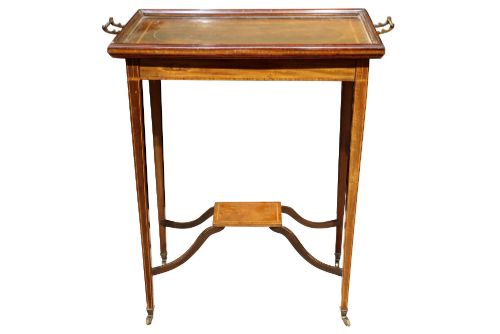
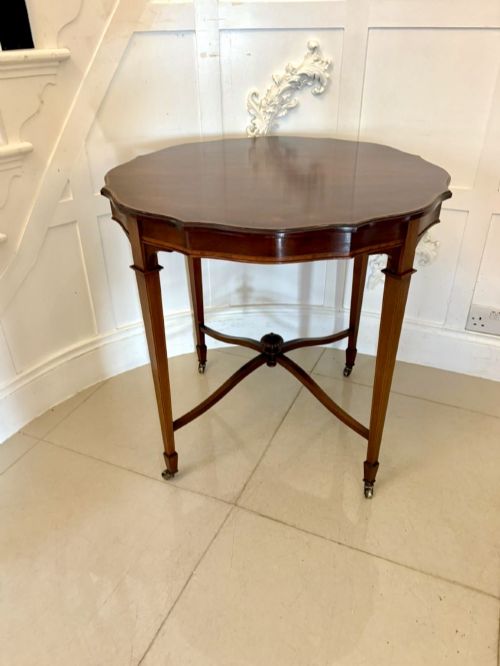
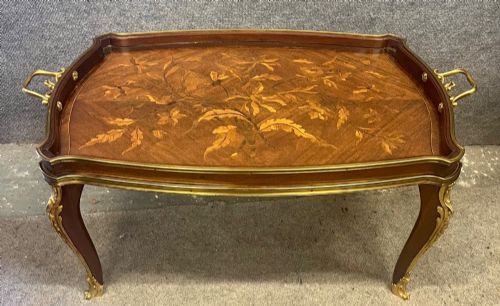
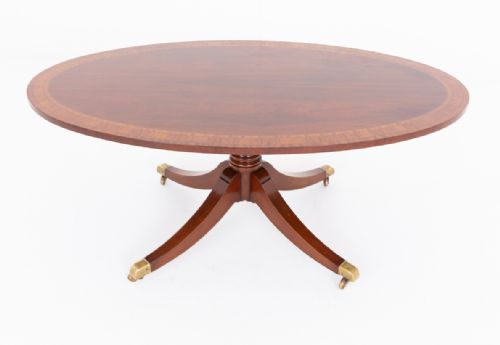
Brass Inlay Tea Table
A brass inlay tea table brings crisp metallic lines and rich timber into a room, offering a surface that handles both quiet evenings and large gatherings.
Brass Inlay Tea Table
When you search for a brass inlay tea table, you enter a field populated largely by Regency and nineteenth-century examples alongside later Edwardian and Anglo-Indian variants. These pieces serve primarily as fold-over card tables, games tables, and occasional furniture, shaped from dense tropical hardwoods.
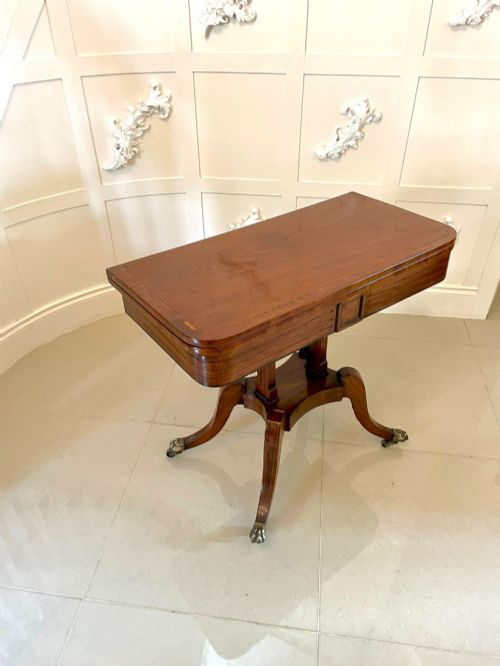
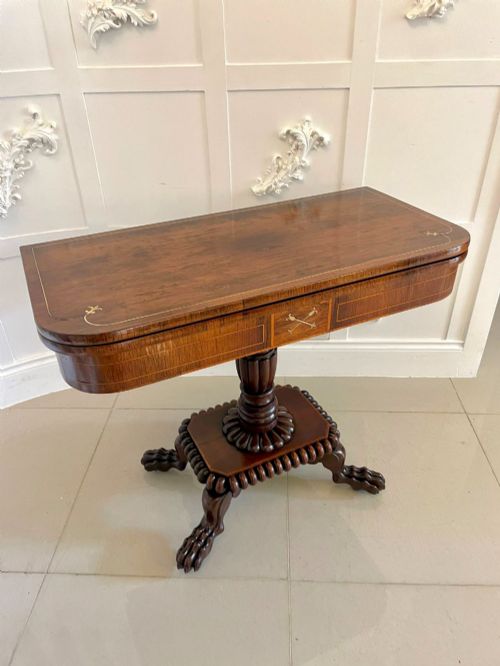
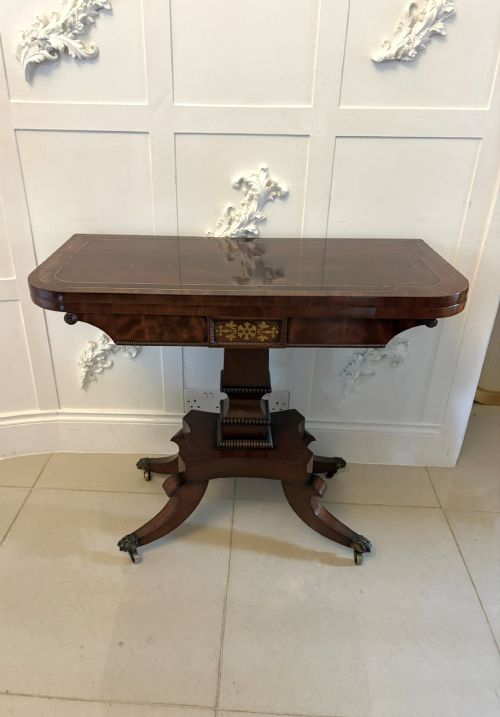
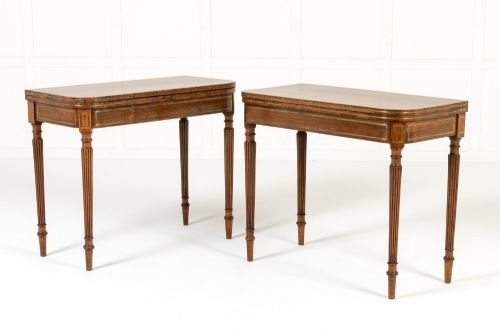
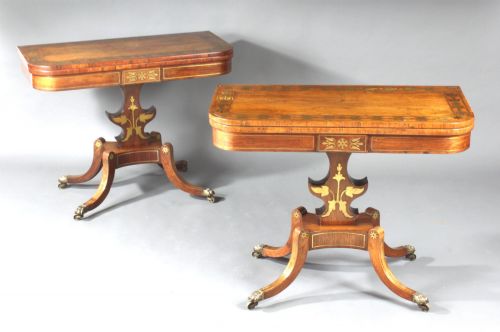
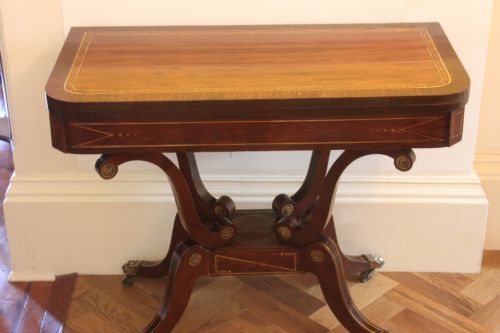
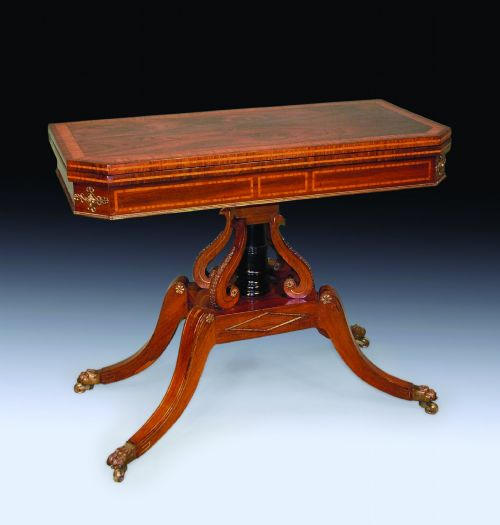
The version you are most likely to meet on this page is the Regency rosewood or mahogany folding card table, where brass lines trace the edges of the top and border the frieze. These tables often feature pedestal bases with scroll supports, brass sabots, and castors, reflecting the formal entertaining habits of their period.
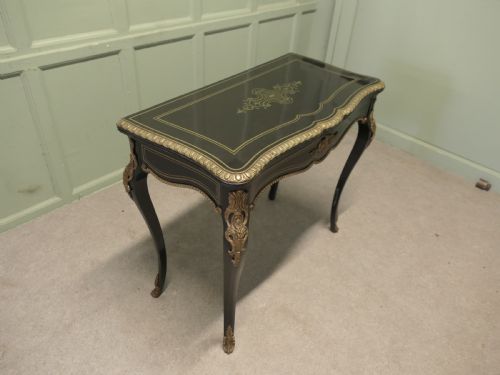
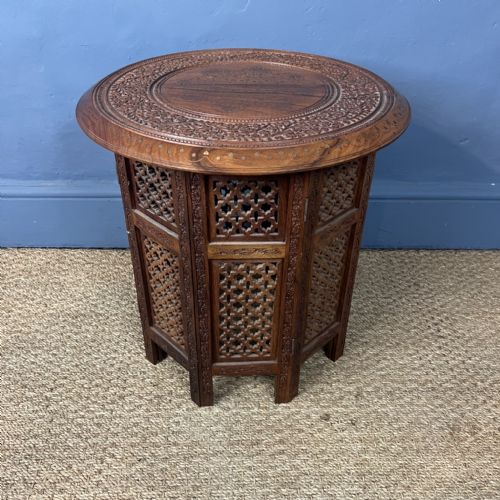
Beyond the standard English Regency models, the selection includes Georgian prototypes, French revival pieces with ebonised finishes, and circular Indian tables with intricate brass wire work. Each style brings a distinct regional interpretation to the combination of dark wood and bright metal.
Materials and construction
Cabinet makers built these tables using stable foundational timbers like mahogany and oak, applying expensive veneers such as rosewood, satinwood, and amboyna to the visible surfaces. Crossbanding and stringing in contrasting woods frequently frame the primary panels before the metalwork is added.
Brass inlay relies on precise hand-cutting, where channels are chiselled into the solid wood or veneer to receive thin strips or stamped brass motifs. Ormolu mounts, castors, and brass sabots provide structural reinforcement and decorative punctuation at vulnerable points like feet and pedestals.
Some tables hide secret wells beneath their fold-over tops designed specifically for storing counters.
What separates the grades
The distinction between ordinary and exceptional examples rests on the precision of the brass work and the choice of timber figure. Tighter grain patterns, richly variegated rosewood veneers, and complex geometric or foliate brass scrolls indicate a higher tier of workshop production.
Structural integrity and the retention of original brass elements dictate lasting worth. Tables that retain their original castors, functional fold-over hinges, and flush, undisturbed metal inlay without shrinkage gaps demonstrate superior original craftsmanship.
George Bullock
The Brass Inlay Tea Table Glossary
- Crossbanding
- A border strip of veneer laid around the edges of a tabletop with the grain running perpendicular to the central panel. This technique creates a neat framing effect that contrasts with the main timber.
- Ormolu
- Gilded bronze applied to furniture mounts and feet during the eighteenth and nineteenth centuries. It adds a heavy metallic accent that complements brass inlay.
- Sabot
- A metal shoe or sleeve fitted to the base of a table leg to protect the wood from wear and scuffing. On these tables, brass sabots frequently house concealed castors.
- Hoshiarpur
- A North Indian style of woodworking characterised by dense brass wire inlay set into dark timber bases. These pieces often feature geometric or floral motifs covering the entire surface.
- Tilt top
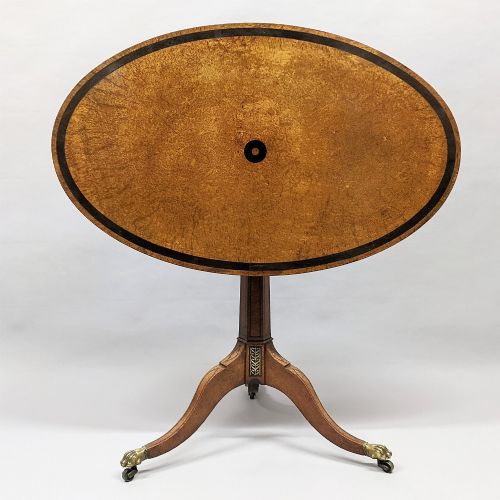
- A tabletop mounted on a pivot mechanism that allows the surface to be rotated vertically when not in use. This clever space-saving design appears frequently on tables from the Georgian and Regency periods.
Brass Inlay Tea Table: Frequently Asked Questions
How do I use a fold-over tea table?
The hinged top rotates and unfolds to double the surface area, supported by a swing leg or a pivoting frieze. This design allowed rooms to transition easily from tea service to card games.
In a modern home, these tables function well against a wall as a console or pulled into the centre of a room when extra surface space is required.
How can I tell a Regency table from an Edwardian copy?
Original Regency pieces utilise heavy native and colonial timbers with hand-cut joinery, patinated surfaces, and period-appropriate secondary woods like oak or pine. The brass inlay tends to be thicker and secured directly into the solid wood or deep veneer.
Edwardian revival pieces often show machine precision, lighter weight construction, and interior components that reflect early twentieth-century manufacturing standards.
How do I care for brass inlay on wood?
Keep the timber nourished with microcrystalline wax and avoid harsh liquid cleaners that can seep beneath the brass strips and loosen the glue. Gentle dusting with a dry cloth keeps the surface stable.
Direct sunlight and sudden humidity changes should be avoided to prevent the wood from shrinking and pushing the metal inlay out of alignment.
What is Anglo-Indian brass inlay?
Anglo-Indian furniture combines British furniture forms with traditional Indian craftsmanship, often executed in teak or sheesham. The surfaces feature intricate brass wire and sheet inlay depicting complex floral or geometric patterns.
These pieces were produced for export during the nineteenth and early twentieth centuries, bringing a distinct decorative richness to domestic interiors.