
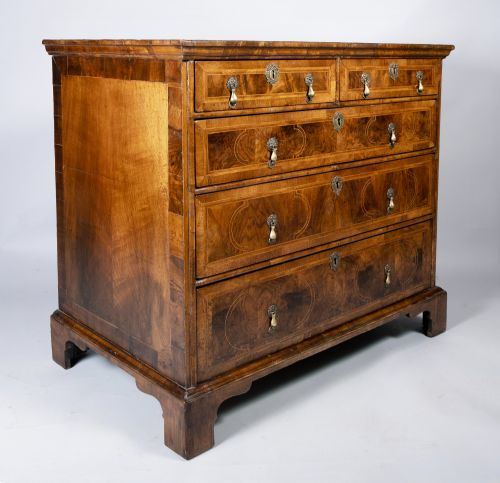
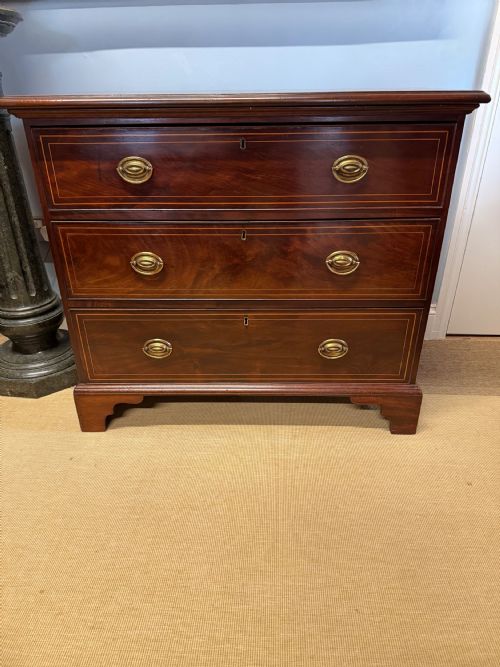
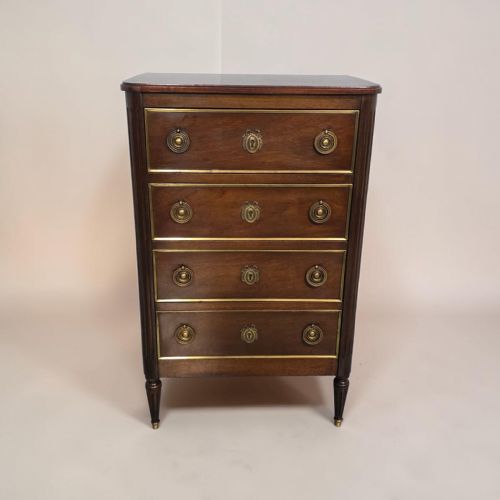

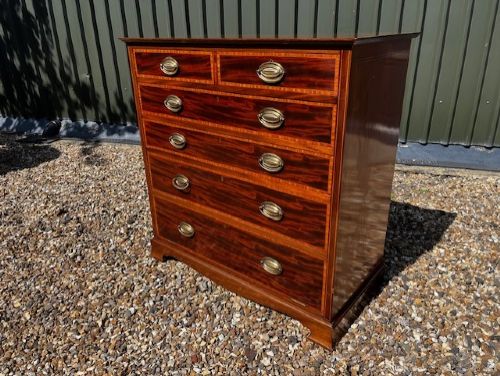


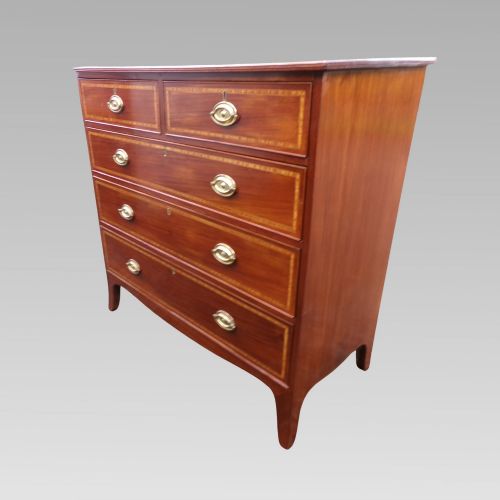
Brass Inlay Chest Drawers
Brass inlay chest drawers offer a refined intersection of timber grain and metalwork, bringing structured storage and period detail into domestic spaces.
Brass Inlay Chest Drawers
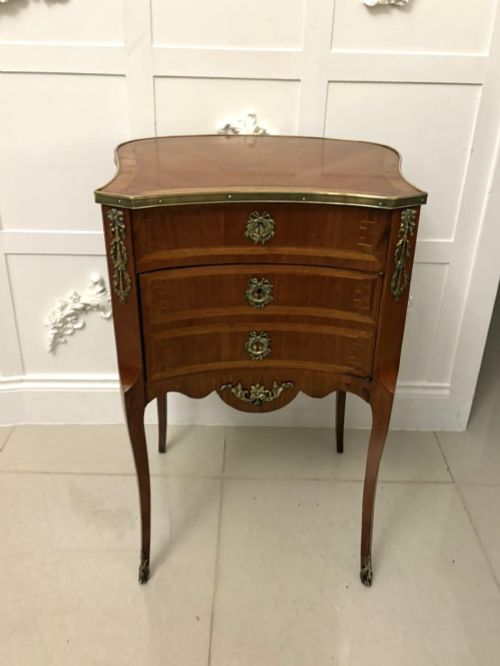
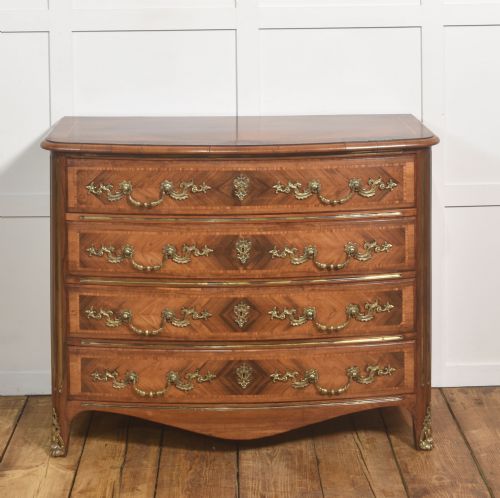
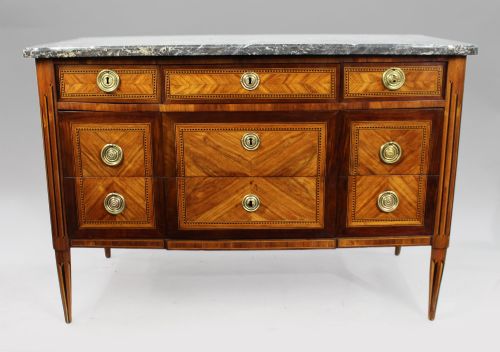
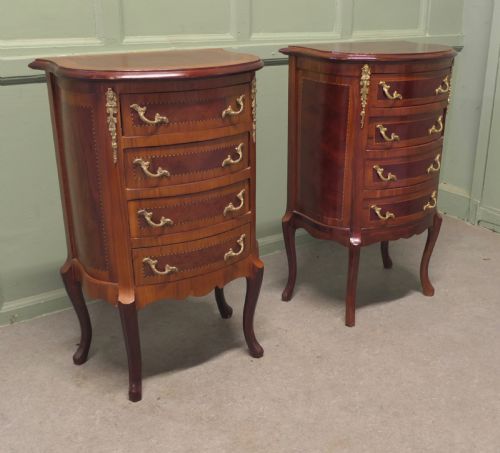
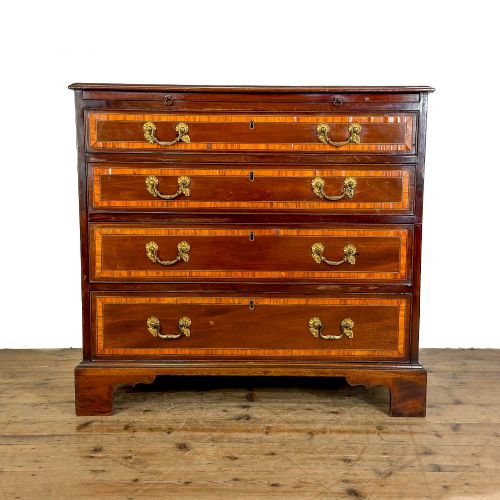
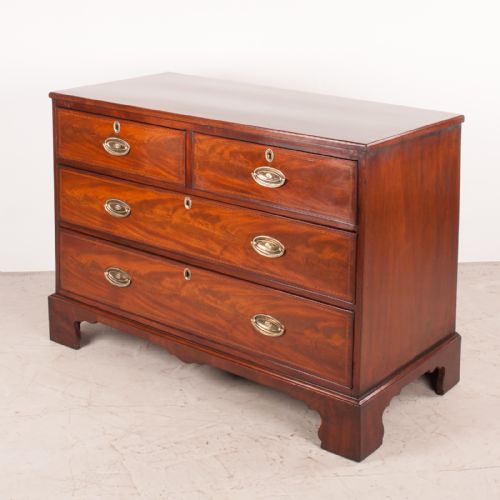
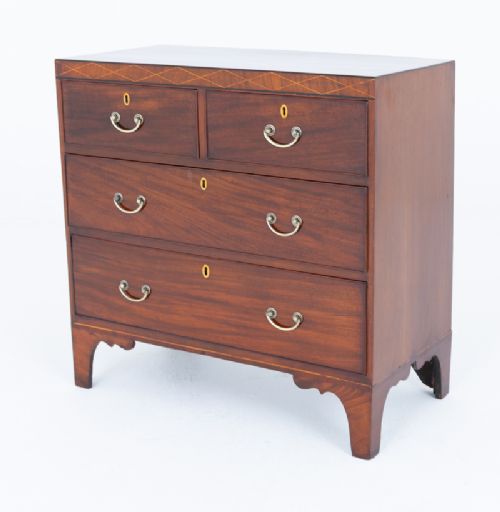
A brass inlay chest drawers groups practical storage with decorative metalwork set into timber surfaces. Buyers encounter forms ranging from Georgian and Regency mahogany pieces to French commodes and Edwardian variations.
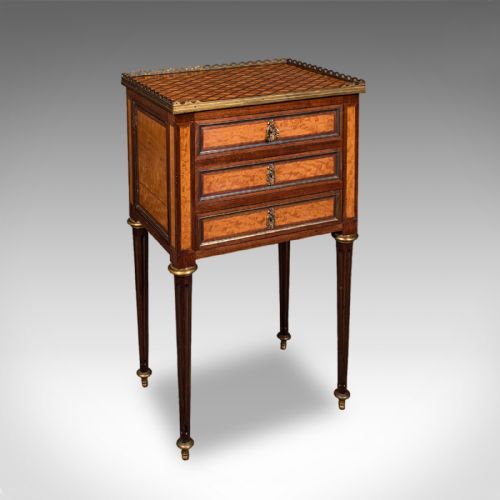
The selection includes standard chests, bedside cabinets, and serpentine commodes spanning the eighteenth, nineteenth, and early twentieth centuries. Walnut, oak, and mahogany provide the carcases for these metal-adorned storage pieces.
Origin points stretch across Britain, France, Italy, Austria, and Germany, demonstrating diverse regional interpretations of inlay techniques on functional domestic furniture.
Materials and Construction Methods
Cabinetmakers utilised dense hardwoods such as mahogany, walnut, rosewood, and oak to build the primary carcase and drawer structures. Satinwood, boxwood, and maple often appeared alongside brass lines to create contrasting linear borders or figurative marquetry motifs.
Makers channelled the timber surface to receive thin strips of brass, securing the metal flush with the surrounding wood grain. Original brass handles, escutcheons, and bracket feet completed the construction of these refined storage items.
Listings feature eighteenth-century walnut and oak alongside nineteenth-century mahogany chests of drawers incorporating brass inlay and original handles.
Distinguishing Quality in Brass Inlay Work
The precision of the metal inlay channel work separates superior examples from simpler ones, requiring exact fitting into the timber without gaps or lifting edges. The integration of secondary timbers and the retention of original brass handles and mounts influence the integrity of each piece.
The choice of primary wood veneers, such as figured mahogany or highly grained walnut, dictates the visual depth of the surface. Surviving original polish and crispness in boxwood or satinwood stringing alongside the brass further distinguish the standard of the cabinetmaking.
Mawer & Stephenson
The Brass Inlay Chest Drawers Glossary
- Inlay
- The technique of embedding pieces of contrasting material, such as brass, wood, or ivory, into a prepared surface to form a decorative design. This method defines the primary visual character of these storage pieces.
- Commode
- A low chest of drawers or cabinet, often of French origin, featuring decorative veneers and metal mounts. These pieces frequently incorporate marble tops.
- Marquetry
- Elaborate veneer work forming pictorial or geometric patterns using various coloured woods. It often accompanies brass detailing on continental furniture.
- Serpentine
- A curved furniture front characterised by a convex centre flanked by concave ends. This undulating shape requires advanced woodworking skill.
- Crossbanding
- A border strip of veneer laid around the edges of a panel with the grain running perpendicular to the central area. It frames the primary wood grain.
Brass Inlay Chest Drawers: Frequently Asked Questions
What periods do these chests date from?
The available pieces span from the late seventeenth century through the Georgian, Regency, and Victorian eras into the early twentieth century. Examples include eighteenth-century walnut and oak pieces alongside nineteenth-century French commodes.
Later Edwardian and revival interpretations also appear, demonstrating continuous production of brass-adorned storage furniture across multiple centuries.
How do I identify different wood types used?
Mahogany provides a deep reddish-brown tone, while walnut often displays rich, swirling grain patterns. Lighter woods like satinwood, boxwood, and maple serve as contrasting borders.
Rosewood and oak appear in specific regional or period pieces, each offering distinct weight, colour, and texture beneath the brass details.
Were these pieces used primarily as bedrooms storage?
While many served in bedrooms for clothing and personal items, smaller variations functioned as bedside cabinets or nightstands. Larger commodes and side cabinets often stood in formal reception rooms and hallways.
Their decorative surfaces allowed them to serve dual purposes for both utility and display within domestic interiors.
What distinguishes French commodes from British chests?
French commodes frequently feature serpentine or breakfront shapes, elaborate marquetry, and marble tops supported by walnut or exotic timber carcases. British counterparts more commonly utilise mahogany or oak with linear stringing and bracket feet.
Both traditions incorporate brass handles and inlay, but regional cabinetmaking techniques create distinct stylistic silhouettes.