

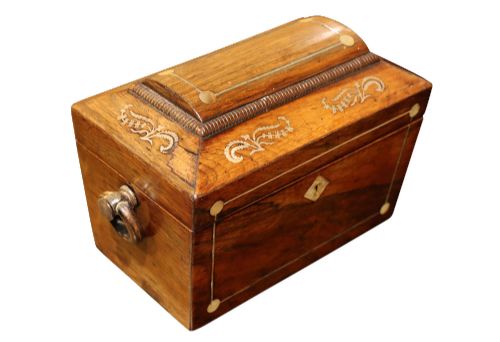


Brass Inlaid Rosewood Tea Caddy
A brass inlaid rosewood tea caddy is a handsome tabletop box built for storing precious tea leaves, prized for rich dark timber and bright metalwork.
Brass Inlaid Rosewood Tea Caddy
A brass inlaid rosewood tea caddy is a timber container made to hold leaf tea securely under lock and key. The examples seen here belong chiefly to the nineteenth century, spanning the Regency and Victorian periods.
Forms vary from compact rectangular boxes to substantial sarcophagus shapes and standing teapoys fitted for the parlour. Alongside tea caddies, related decorative boxes and sewing boxes appear in similar materials.
How they were made
Construction relies on dark rosewood veneers applied to solid timber carcases, providing a deep, polished surface for decoration. Artisans set fine brass inlay into the grain, often combining it with boxwood, bone, or mother of pearl.
Many items feature marquetry details alongside metal stringing and escutcheons, requiring careful hand-fitting of internal compartments and lids.
Brass Inlaid Rosewood Tea Caddy Retail Price Guide 2026
Typical asking prices for brass inlaid rosewood tea caddy among the pieces listed under this phrase on Sellingantiques today, from the lower quarter to the upper quarter. They describe what is for sale here now, not the wider market.
Some tea caddies feature hidden secret compartments that slide open only when you press a concealed wooden spring.
What varies in quality
Quality rests upon the precision of the brass inlay and the richness of the rosewood grain selected by the maker. Crispness in the carving of sarcophagus forms or lion mask handles distinguishes superior examples from plainer boxes.
The survival of internal mixing bowls, fitted lids, and functioning locks significantly alters the integrity and character of a piece.
The Brass Inlaid Rosewood Tea Caddy Glossary
- Rosewood
- A dense, dark timber with distinct figuring, widely favoured for high-status nineteenth-century cabinet work. Its deep colour provides a strong contrast for metal inlay.
- Sarcophagus
- A box shape featuring sloping sides and a flat top, mimicking ancient stone tombs. This classical form became highly fashionable during the Regency period.
- Teapoy
- A large tea caddy mounted on a central pillar with tripod or platform feet. These taller pieces stood beside chairs to serve tea in the drawing room.
- Escutcheon
- A protective metal plate surrounding a keyhole. On these boxes, brass escutcheons often match the geometric stringing across the lid.
Brass Inlaid Rosewood Tea Caddy: Frequently Asked Questions
What is a brass inlaid rosewood tea caddy?
It is a wooden storage box created in the nineteenth century to keep expensive tea dry and secure. Cabinet makers used dense rosewood and bright brass stringing to ornament the exterior for display in wealthy homes.
Inside, these pieces typically feature lidded compartments to separate different tea leaves. Many also retain glass or crystal mixing bowls.
How do I tell Regency from Victorian pieces?
Regency items generally display sharp classical proportions, bold brass inlay, and forms like the sarcophagus. They date from the early decades of the nineteenth century.
Victorian examples often introduce more complex marquetry and varied floral motifs. The timber tones and overall decorative emphasis shifted as the century progressed.
How were these boxes used?
Households kept precious tea under lock and key because the leaves were a costly commodity. The mistress of the house would portion out the tea herself using the internal compartments.
They sat upon side tables orPembroke tables in the reception rooms. Guests would observe the fine materials while tea was prepared.
How do I care for rosewood and brass?
Keep these boxes away from direct sunlight and sudden changes in humidity to protect the wood veneer. Gentle dusting with a dry cloth maintains the polished surface without harming the metal.
Avoid using modern liquid polishes that can seep under the brass inlay. Natural wax applied sparingly preserves the historical finish.