







Brass Inkwell Tray
A brass inkwell tray is a desk accessory designed to hold ink vessels and pens, combining practical utility with period craftsmanship.
Brass Inkwell Tray
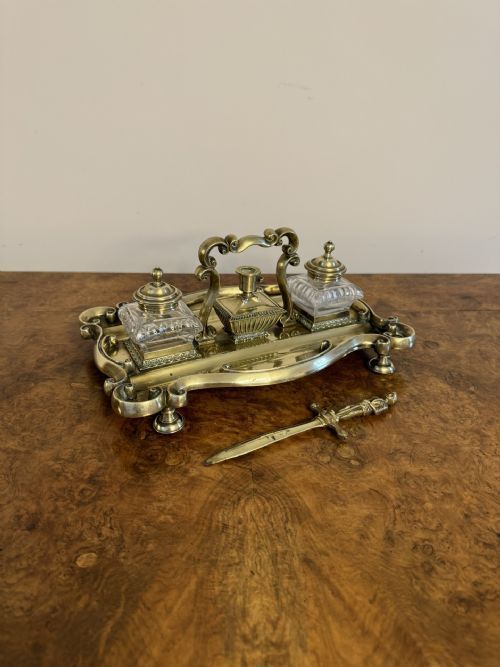
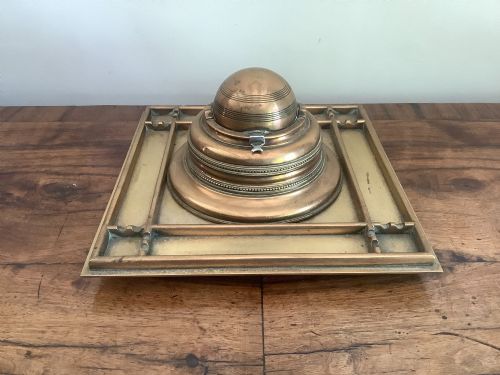
A brass inkwell tray brings together metalwork and writing equipment, serving as a desktop station for correspondence during the eighteenth and nineteenth centuries. These pieces range from simple utilitarian brass trays to elaborate desk sets featuring fitted glass or ceramic inkwells.
Victorian examples dominate the selection, often incorporating materials like coromandel wood, walnut, oak, tortoiseshell, or marble alongside cast brass bases. Buyers encounter various formats, including double inkstands, letter holders, and novelty designs such as owls or playing cats.
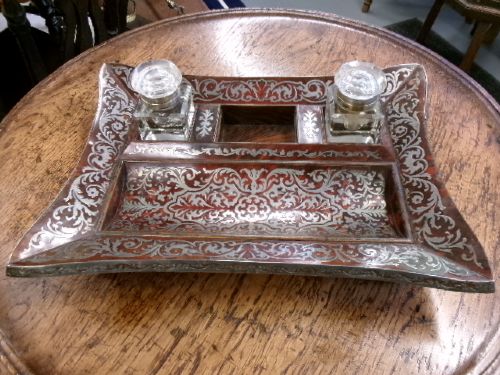
Earlier Georgian and Regency pieces show refined brass inlay on rosewood, while later nineteenth-century styles lean towards ornate French Empire, Napoleon III, and Art Nouveau aesthetics.
How they were made
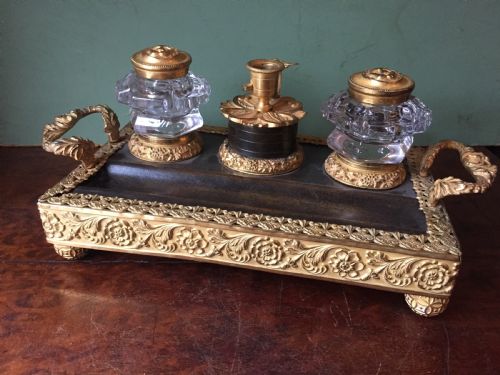
Makers utilised casting techniques for brass, ormolu, and gilt bronze components, producing detailed frames, pen rests, and hinged inkwell lids. Metalwork was frequently combined with turned timber bases such as oak, walnut, coromandel, and mahogany.
Inlaid pieces demonstrate cabinet-making skills, employing brass stringing, tortoiseshell, and mother-of-pearl set into polished wooden surfaces. Glassblowers supplied the heavy cut-glass or plain glass ink inserts that fitted securely into the metal or wooden apertures.
Brass Inkwell Tray Retail Price Guide 2026
Typical asking prices for brass inkwell tray among the pieces listed under this phrase on Sellingantiques today, from the lower quarter to the upper quarter. They describe what is for sale here now, not the wider market.
French Empire, Art Nouveau, and Victorian design influences appear frequently among the desk stands.
What varies in quality
Quality reveals itself in the crispness of the brass casting and the depth of the chasing on ormolu or bronze mounts. Heavier gauge metals and substantial timber bases indicate superior manufacturing standards.
The integrity of the combination materials marks the distinction between standard and high-end items, particularly where veneers, inlay, and ceramic or glass inserts remain original and undamaged.
James Cartland and Sons·Elkington
The Brass Inkwell Tray Glossary
- Standish
- A portable desk stand incorporating inkwells, sanders, and pen compartments. This term is frequently used interchangeably with inkstand in Georgian and Victorian inventories.
- Ormolu
- Gilt bronze mounted on decorative metalwork, popular in French and English Regency or Victorian desk sets. The technique involves applying a fine layer of gold amalgam to a bronze base.
- Champlevé
- An enamelling technique where troughs are dug into a metal surface and filled with vitreous enamel. Pieces featuring this method often originate from Parisian workshops.
- Boulle work
- A style of marquetry using tortoiseshell and brass inlay developed in France. It appears on luxury nineteenth-century desk stands and stationary boxes.
Brass Inkwell Tray: Frequently Asked Questions
What is a brass inkwell tray?
A brass inkwell tray is a desktop accessory designed to hold one or more ink pots alongside pens and nibs.
These pieces served as functional stationery items in studies and offices throughout the Georgian and Victorian eras.
How were these trays used?
They kept writing fluids and dipping pens organised on a desk while protecting surfaces from ink spills.
Many included integrated pen rests, bell components, or compartments for blotting paper and sealing wax.
How do I date a brass desk stand?
Dating relies on identifying the prevailing style, such as Georgian inlay, Victorian walnut, or Art Nouveau organic bronze forms.
Construction methods, material combinations, and maker marks also help narrow the period of manufacture.
Are the glass inserts usually original?
Many pieces retain their original cut-glass or pressed-glass inkwell inserts, though replacements are common due to breakage.
Matching the collar dimensions and glass tint helps determine whether an insert belongs to the stand.
How do I care for antique brass?
Gentle dusting with a soft cloth preserves the aged patina without stripping the historical surface finish.
Harsh chemical polishes should be avoided to protect any surrounding wood, tortoiseshell, or gilt elements.