
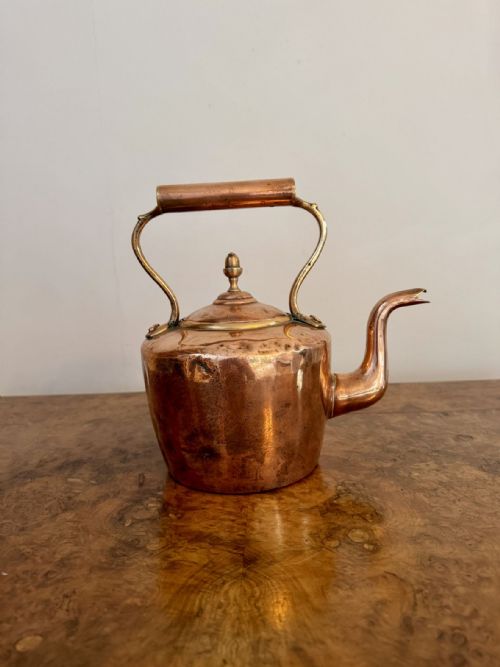
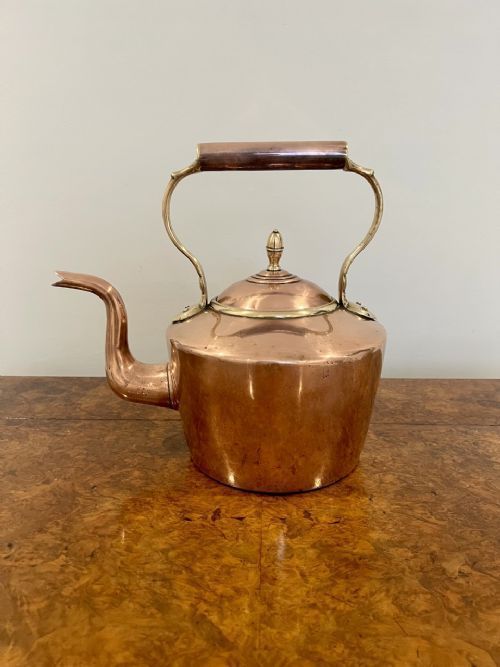
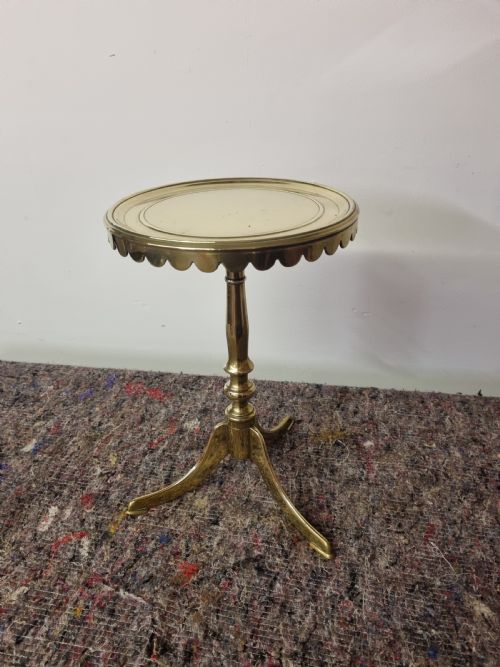
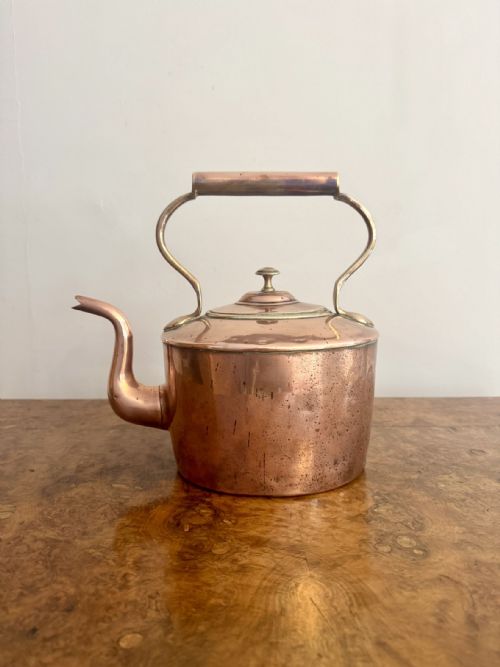
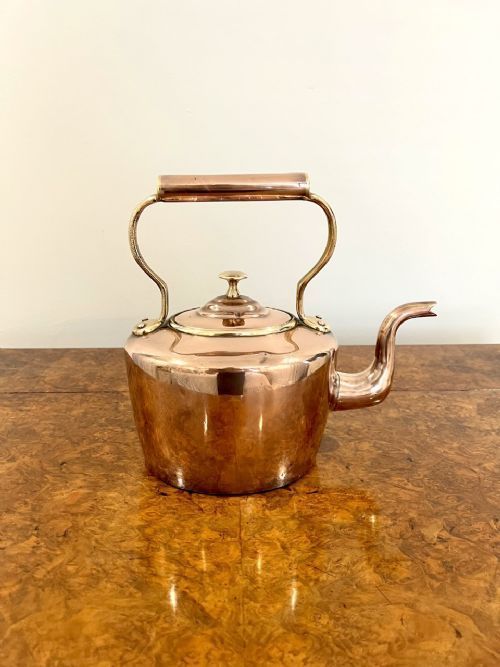
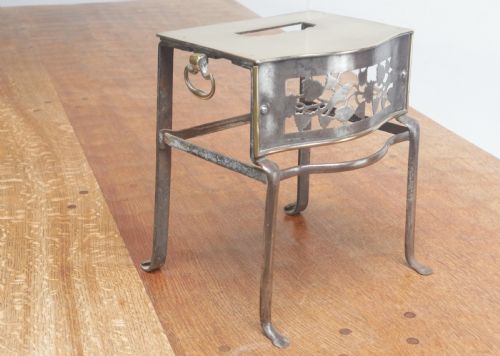


Brass Hearth Kettle
These brass hearth kettles and stands warm the room with functional metalwork designed to sit by the fire.
Brass Hearth Kettle
A brass hearth kettle represents a traditional fireside accessory used for heating water, often accompanied by stands and footmen designed to sit directly near the hearth. When you search for a brass hearth kettle, you encounter pieces dating from the eighteenth century through to the Edwardian period, spanning Georgian, Regency and Victorian styles.
The most common form on this page is the copper kettle paired with brass fittings, alongside cast brass trivets and steel-framed footmen. These items originated as functional kitchen and parlour equipment for the English and Welsh hearth, reflecting domestic routines of earlier centuries.
Materials and construction
The construction relies heavily on hammered copper bodies combined with cast brass components, iron, steel and occasionally ebonised wood handles. Metalworkers shaped sheets of copper and brass, securing seams and adding handles for practical fireside use.
Stands and footmen incorporate cast brass tops supported by wrought iron or steel legs, creating sturdy frames capable of holding heavy vessels near open flames.
Listings span the Georgian, Victorian, and Edwardian periods, utilising copper, brass, iron, steel, and ebonised wood.
Differences in quality
Quality rests in the weight of the metal, the crispness of the casting on trivets and footmen, and the integrity of the original joins. Heavier gauge copper and substantial brass indicate higher grade domestic output.
Proportion and surface finish distinguish finer examples, where hand-beaten textures and balanced forms survive without heavy modern intervention.
The Brass Hearth Kettle Glossary
- Footman
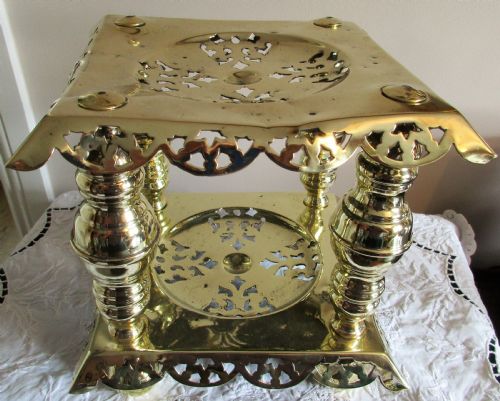
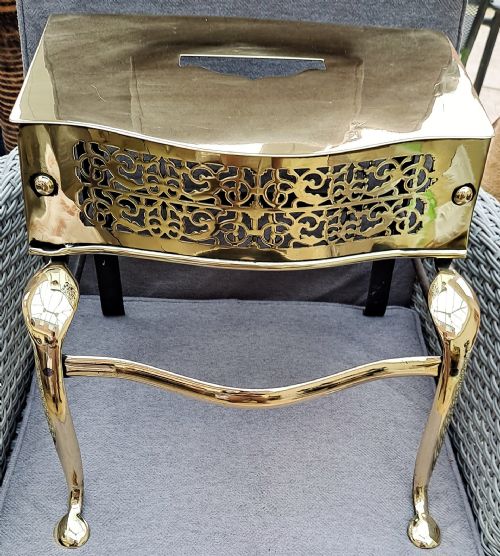
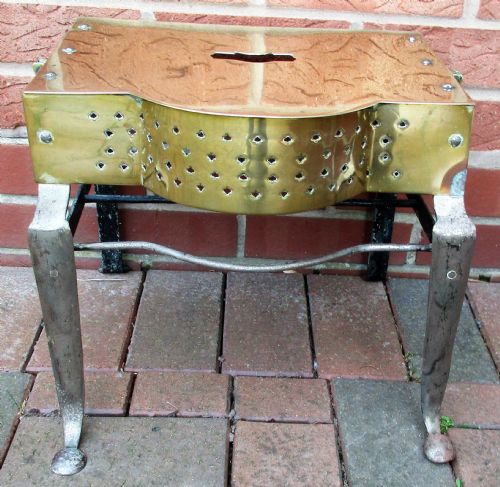
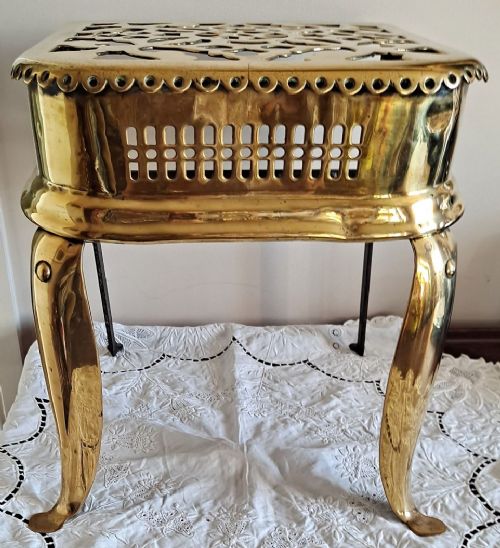
- A metal stand placed by the fire to keep plates warm or support a kettle. These pieces combine brass tops with iron or steel legs.
- Trivet
- A small three-legged or four-legged stand used to elevate a kettle or pan above the hearth. They appear in cast brass.
- Hearth accessory
- Equipment designed for use around the fireplace, including kettles, stands, and warmers.
- Georgian
- A design period spanning the eighteenth and early nineteenth centuries, known for classic proportions.
Brass Hearth Kettle: Frequently Asked Questions
What was a brass hearth kettle used for?
These kettles heated water directly by the open fire in period domestic settings. They sat upon the hearth or on specialised stands.
Their substantial metal construction allowed them to withstand intense fireplace heat during daily use.
How do I tell a Georgian kettle from a Victorian one?
Georgian pieces often display simpler, hand-finished lines and earlier copper fabrication methods. Victorian examples frequently incorporate heavier cast elements and rounder body shapes.
Stylistic cues in the handles and feet help separate the eighteenth-century pieces from later nineteenth-century production.
What is a footman used for?
A footman served as a fireside plate warmer or a sturdy base for a heavy kettle. It sat close to the coals.
The combination of brass tops and steel frames provided a stable surface for hot kitchenware.
How should I display a hearth kettle?
These pieces look best placed near a fireplace or hearth to reflect their original domestic context. They pair naturally with period trivets and stands.
Polished copper and brass surfaces catch ambient light, adding warmth to a room.