

Brass Hearth Fender Guard
A brass hearth fender guard protects the room from stray embers whilst framing the fireplace with nineteenth-century metalwork.
Brass Hearth Fender Guard
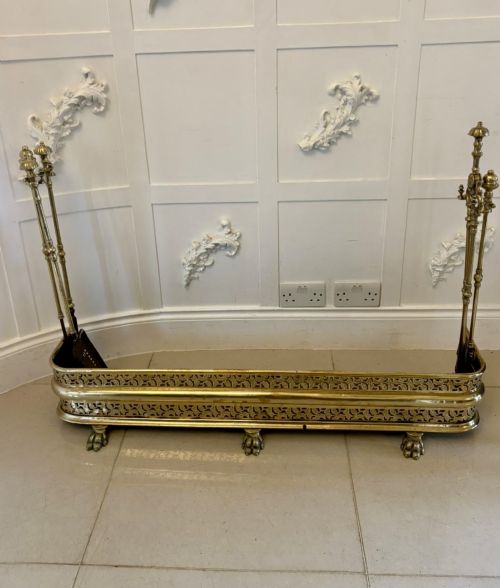
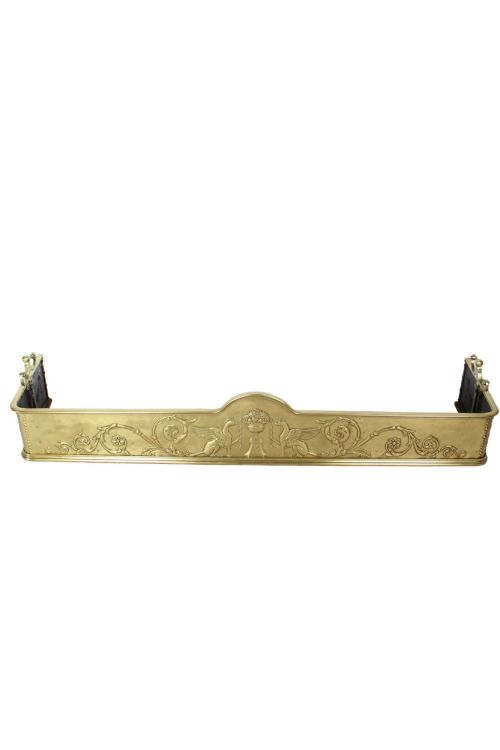
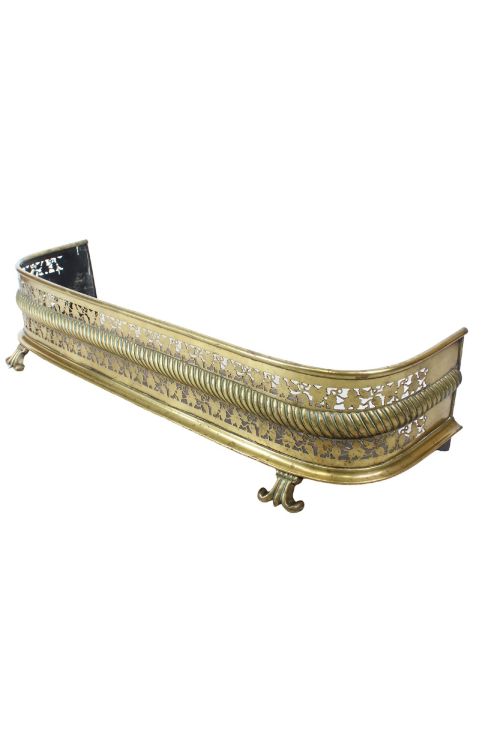
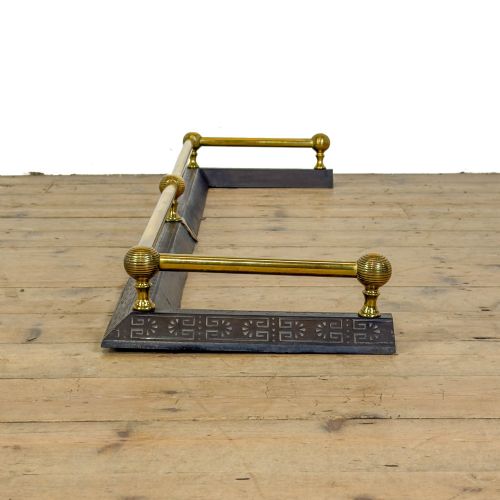
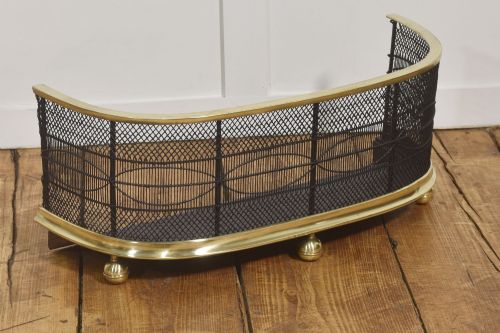
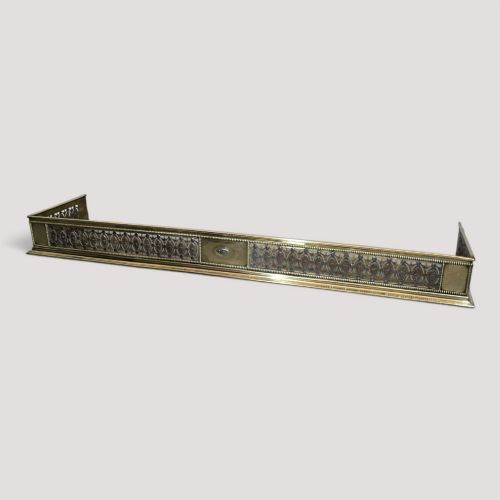
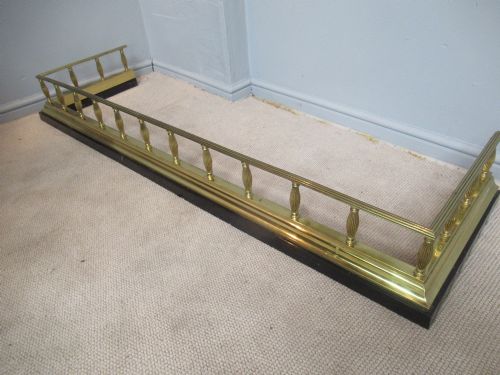
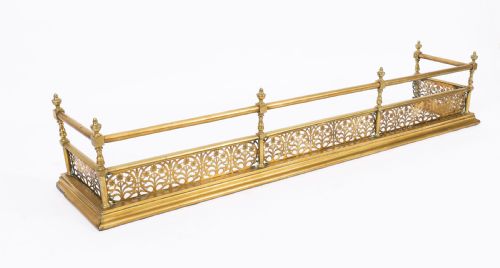
A brass hearth fender guard sits directly on the floor around the fireplace hearth to contain logs, coal, and sparks. When searching for a brass hearth fender guard, buyers encounter forms ranging from low pierced kerbs to tall folding wire spark guards and substantial club fenders topped with leather seats.
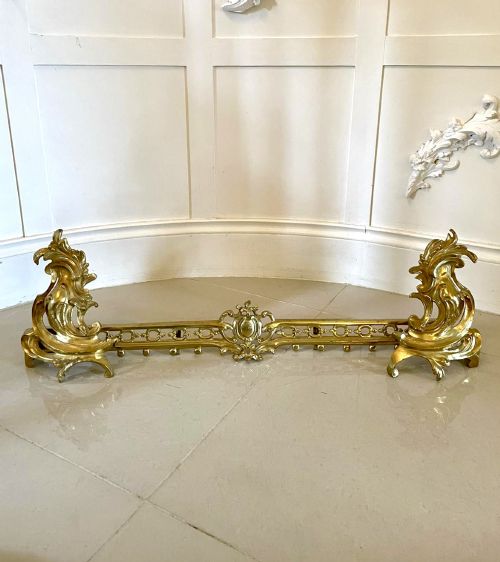
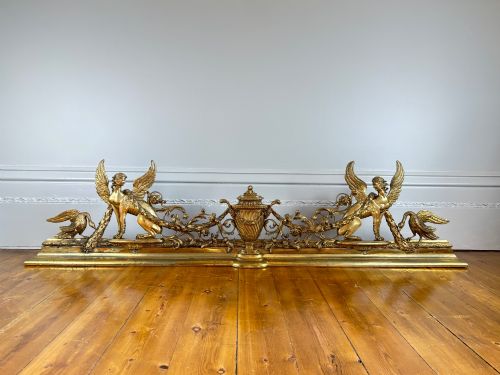
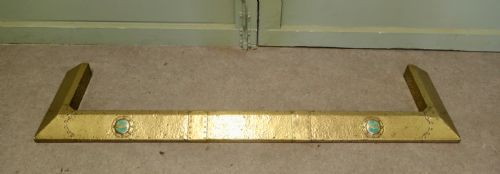
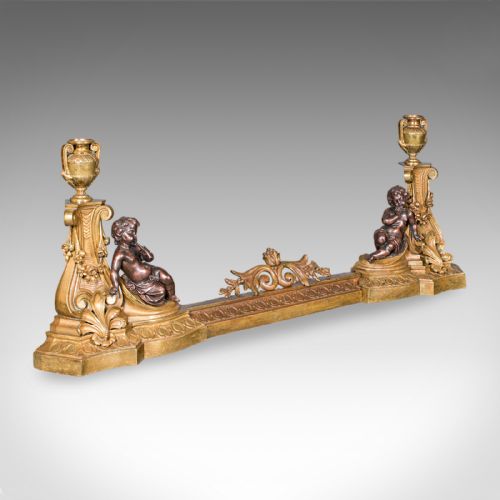
The pieces span the Georgian, Victorian, and Edwardian periods, with nineteenth-century examples dominating the selection. Styles vary from restrained neoclassical designs to ornate French Rococo and linear Arts and Crafts interpretations.
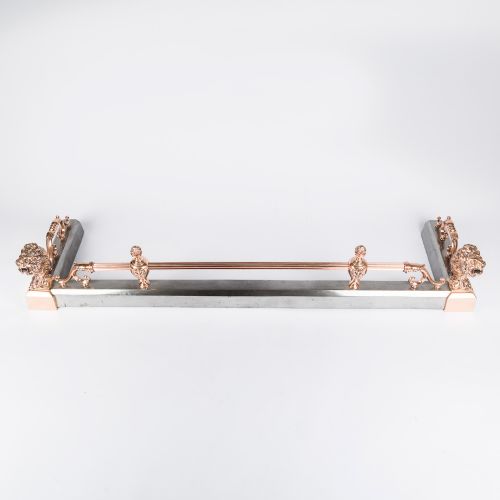
Makers and workshops utilised both simple adjustable frames and large architectural assemblies spanning several feet. Many incorporate secondary metals like iron, steel, or bronze alongside the primary brass structure.
Materials and construction methods
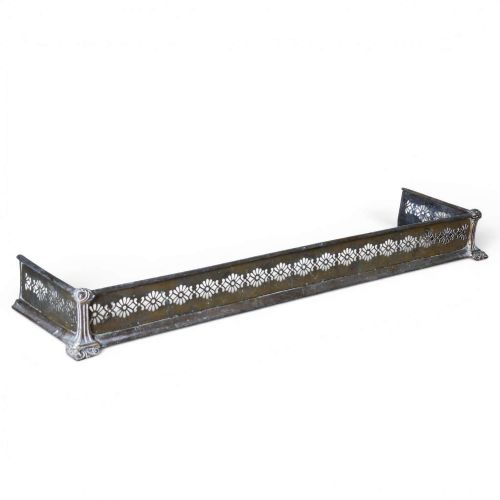
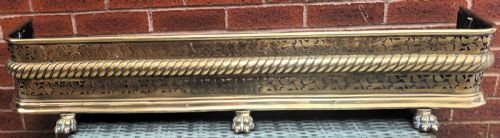
Makers formed these guards using sheet brass, cast brass, and wire mesh, frequently combining iron and steel for structural strength. Pierced decoration was achieved through meticulous hand-sawing and stamping, creating intricate openwork patterns across the metal gallery.
Extended and adjustable frames allowed a single guard to fit varying hearth dimensions, whilst gilt bronze and dore bronze finishes provided a richer surface appearance. Leather upholstery appeared on the top rails of club fenders, offering a seat close to the fire.
Listings feature items spanning the Georgian, Victorian, and Edwardian periods, constructed from brass, iron, steel, leather, and wire mesh.
Distinctions in manufacture and design
Superior quality rests in the weight of the metal and the crispness of the pierced or cast ornamentation. Heavy gauge brass and well-defined neoclassical motifs separate standard production pieces from finer workshop outputs.
The presence of original components, such as matching fire irons or intact leather upholstery on club fenders, elevates a piece. Subtle patination on the brass and steel surfaces indicates age and careful preservation over generations.
E F Caldwell New York
The Brass Hearth Fender Guard Glossary
- Fender
- A low metal guard placed around the hearth to keep burning fuel and ash contained. It marks the boundary of the fireplace.
- Club fender
- A low-seated hearth surround featuring upholstered top rails originally designed for sitting beside the fire. These often adjust in length.
- Spark guard
- A mesh or wire screen designed to catch flying embers before they reach the room. Folding variants allow for easy storage.
- Pierced brass
- Metal sheet perforated with decorative patterns using saws or punches. This technique lightens the visual weight of the guard.
- Dore bronze
- Bronze objects gilded with a mercury amalgam technique, producing a bright and durable gold-coloured finish. This process was common in nineteenth-century French workshops.
Brass Hearth Fender Guard: Frequently Asked Questions
How do I measure for a fender?
Measure the width and depth of your hearth stone to ensure the inner dimensions of the fender fit comfortably around the opening. Leave a small clearance around the perimeter for stability.
Take note of the hearth height so the fender sits properly without rocking on uneven stone surfaces.
What is a club fender used for?
A club fender incorporates padded leather seats on the top rails, allowing people to sit close to the fire for warmth. They were popular in nineteenth-century libraries and drawing rooms.
The elevated seating position also provided a comfortable vantage point for conversation near the hearth.
Are these fenders adjustable?
Many nineteenth-century examples feature sliding mechanisms that allow the frame to expand or contract to fit different fireplace widths. These adjustable versions were practical for changing rooms or homes.
Check the sliding joints during selection to ensure the locking mechanism remains secure and functional.
How do I date a brass fender?
Dating relies on stylistic clues, such as the geometric lines of Arts and Crafts pieces or the scrolling ornamentation of French Rococo revivals. Construction marks and screw types also offer chronological indicators.
Victorian and Edwardian pieces often display heavier casting and more varied material combinations than their Georgian predecessors.