


Brass Hat Hooks
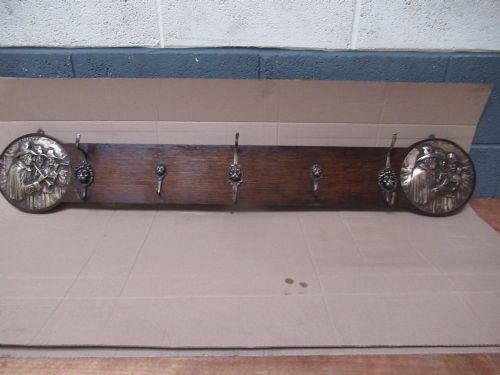
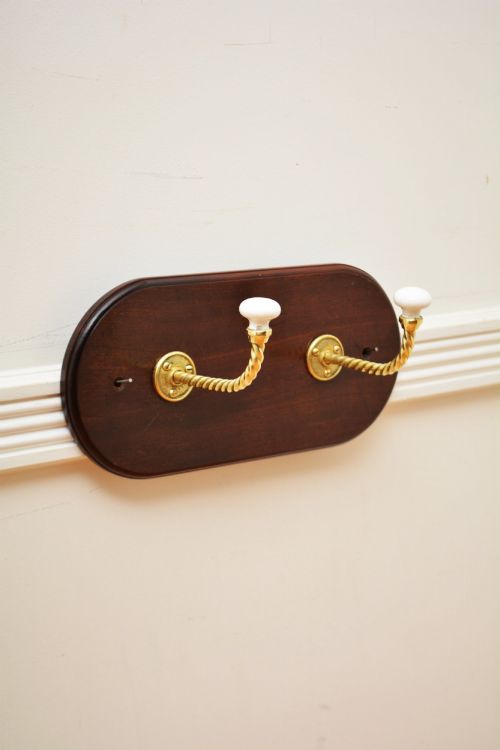
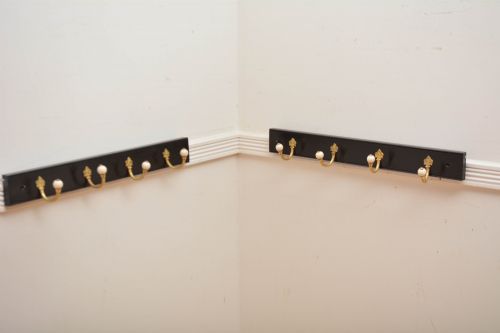
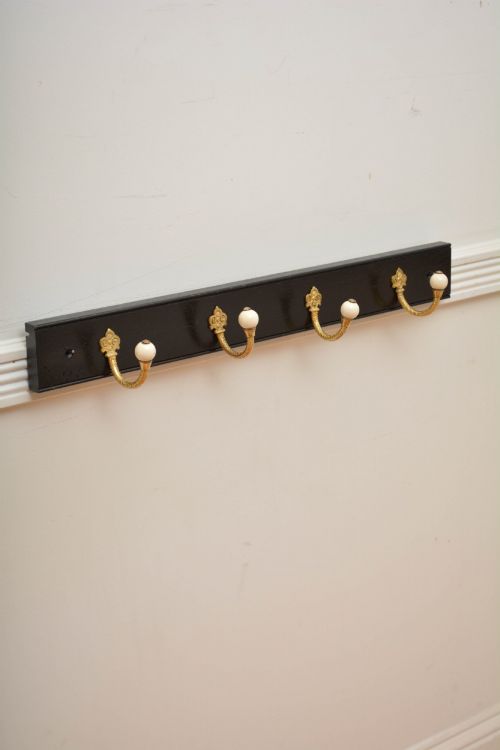
Solid brass hat hooks anchor hallway organisation, offering heavy metal hooks mounted to timber backboards for everyday outer garments.
Brass Hat Hooks
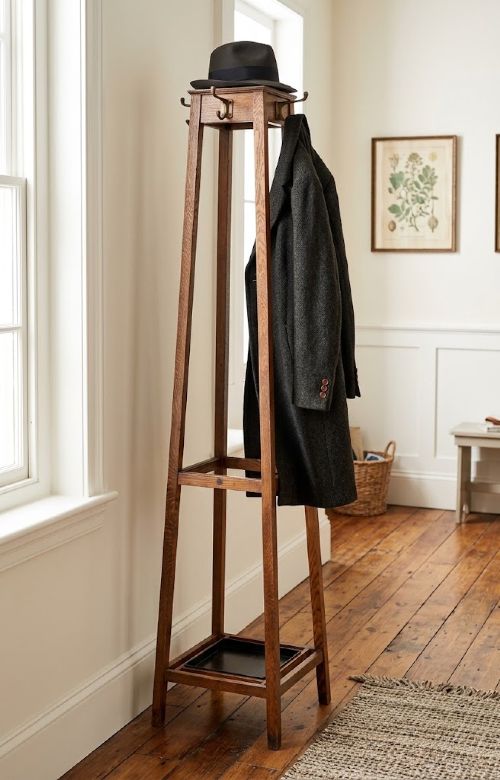
Brass hat hooks encompass single wall-mounted fixtures and long multi-hook coat racks designed to hold headwear and heavy coats in hallways and entrance spaces. These pieces span the Victorian, Edwardian, and Art Deco periods, drawing on English, French, and Dutch vernaculars.
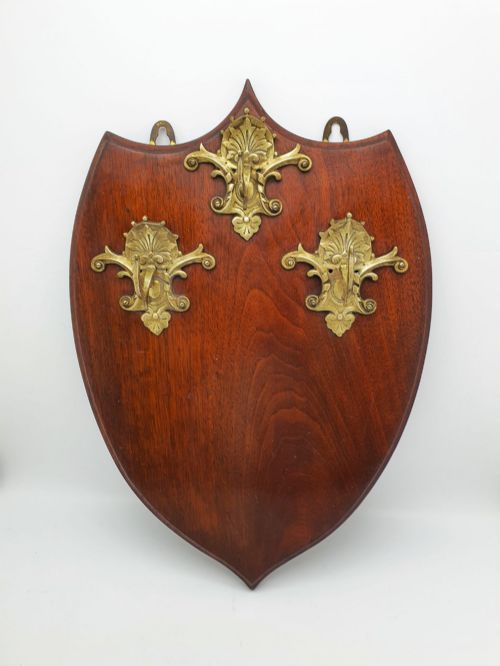
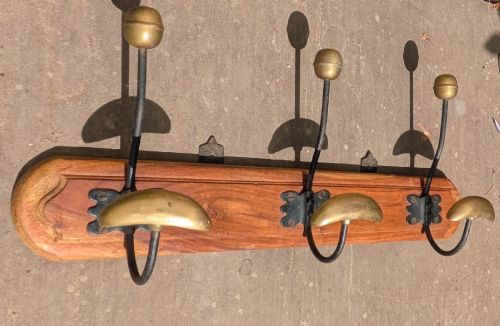
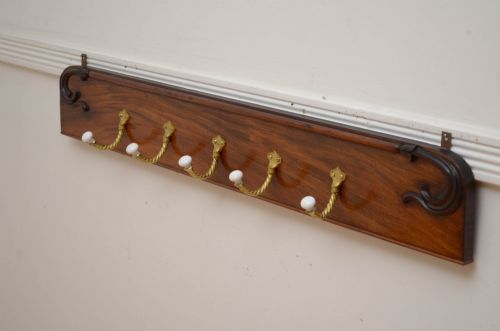
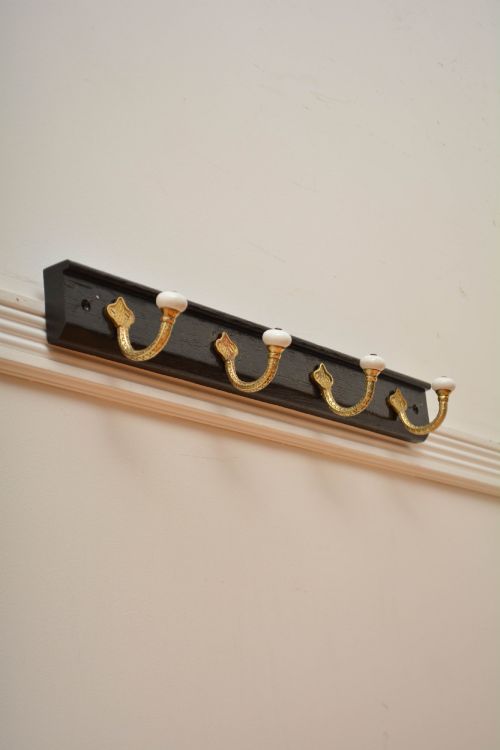
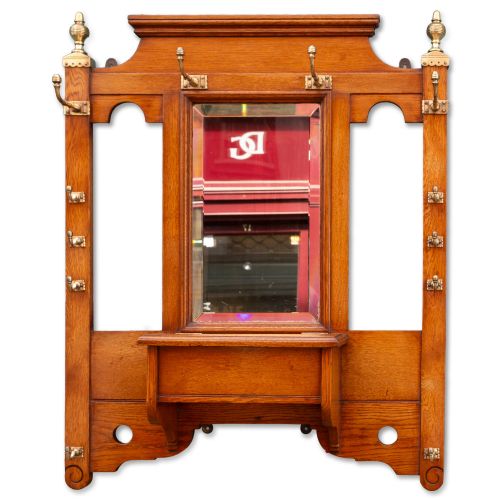
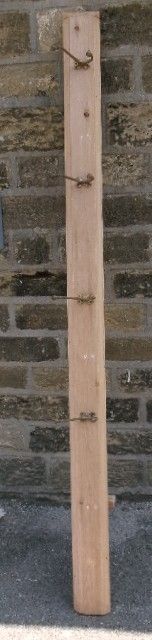
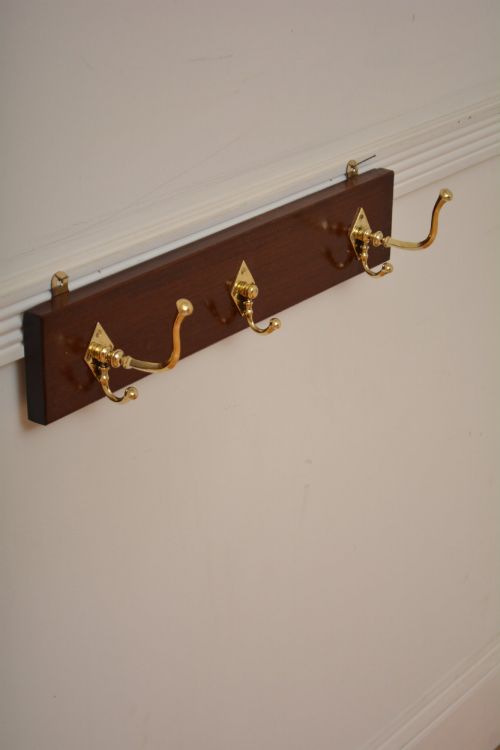
The most common formats found here are Victorian pine or oak backboards fitted with cast brass double hooks, alongside French portmanteaus incorporating mirrors and umbrella trays. Walnut, mahogany, and ebonised wood provide darker contrasting backings for polished brasswork.
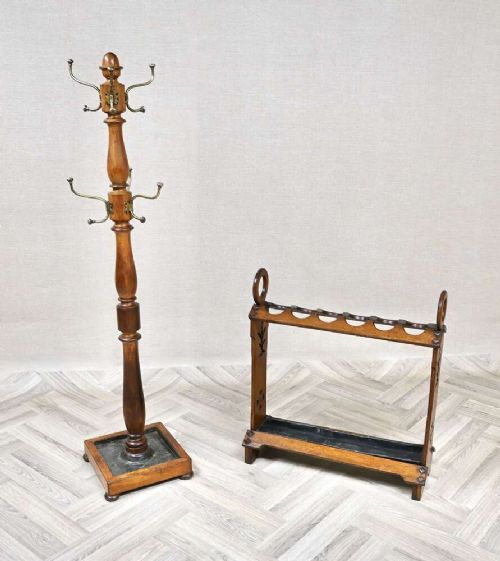
Makers such as Jas. Shoolbred occasionally appear among workshop pieces, while many items remain unsigned functional hardware from the nineteenth and early twentieth centuries. Pieces range from modest pairs of hooks to substantial hall stands integrating umbrella storage and bevelled glass mirrors.
Materials and construction
Makers cast brass hooks using sand-casting methods, leaving subtle texture variations on the reverse and crisp detailing on the front mounting plates. Craftsmen then mounted these metal components onto timber backboards using flathead screws threaded into seasoned oak, mahogany, walnut, or pine.
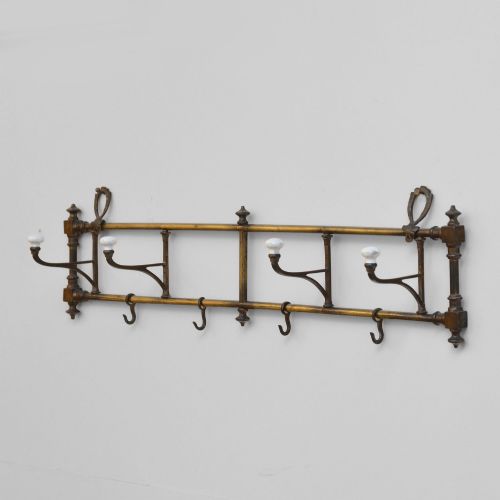
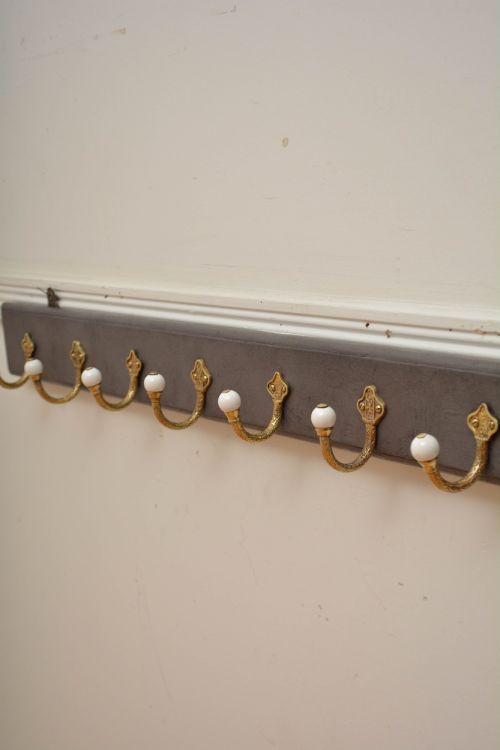
Backboards often utilise turned wooden pegs or applied mouldings, with ebonised finishes achieved by staining and polishing hardwoods to imitate more expensive ebony. Ceramic inserts or porcelain terminals occasionally appear riveted or screwed directly into the brass bracket arms.
Brass Hat Hooks Retail Price Guide 2026
Typical asking prices for brass hat hooks among the pieces listed under this phrase on Sellingantiques today, from the lower quarter to the upper quarter. They describe what is for sale here now, not the wider market.
The listings span from 1880 through the 1930s, featuring oak, mahogany, walnut, and ebonised wood alongside cast brass and ceramic elements.
Quality variations
Quality rests primarily in the weight of the brass casting and the crispness of the relief work on the mounting plates and hooks. Thicker, heavier brackets resist bending under heavy overcoats, whereas lighter utilitarian pieces show more pliable metal thickness.
The choice of backboard timber further separates standard utility hardware from domestic display pieces, with figured mahogany and solid walnut outranking basic pine. Original mounting screws, intact ceramic details, and unpolished patination elevate the integrity of surviving examples.
Jas. Shoolbred
The Brass Hat Hooks Glossary
- Backboard
- The horizontal or vertical timber plank that carries the metal hooks and fastens to the wall. It distributes the weight of garments across multiple fixing points.
- Portmanteau
- A combined wall-mounted hall fixture integrating hat hooks, a mirror, and sometimes umbrella compartments. These French pieces often display decorative brass bracket arms.
- Ebonised
- Wood stained and polished to a deep black finish. This technique was popular in Victorian joinery to create a formal contrast against bright brass fittings.
- Aesthetic Movement
- A late nineteenth-century design style focusing on visual beauty over strict historical revival. Pieces from this era often feature refined brass mounts and clean geometric lines.
- Equestrian Crop Hook
- A specialised mounting hook incorporating horse head motifs or riding crop designs. These items reflect nineteenth-century sporting interests in country house hallways.
Brass Hat Hooks: Frequently Asked Questions
How do I mount an old coat rack?
Old coat racks require sturdy fixings into wall studs or solid masonry using appropriate wall plugs and screws that match the depth of the original screw countersinks.
Because antique backboards vary in length, checking the distance between pre-drilled fixing holes ensures the rack mounts securely without splitting historical timber.
Are brass hooks strong enough for heavy coats?
Victorian and Edwardian cast brass hooks possess high tensile strength designed to bear the weight of heavy wool overcoats and damp winter garments.
Heavier cast examples handle daily domestic use easily, provided the backboard itself is anchored firmly to the wall structure.
How do I clean tarnished brass?
Light dusting and occasional wiping with a dry microfiber cloth preserve the natural aged patina that develops over decades of handling.
Avoiding harsh chemical metal polishes prevents the removal of the dark oxidation layers valued by collectors.
How do I date a wooden hall stand?
Dating relies on timber choices, such as solid mahogany and heavy oak seen in nineteenth-century pieces, alongside hardware styles like Aesthetic Movement mounts or Art Deco geometry.
Mirrored backings with original bevelled glass plates and pegged mortise joinery further indicate Victorian or Edwardian manufacture.